As JetZero approaches Greensboro, what has NC learned from VinFast and Boom?

On Monday morning, top North Carolina officials plan to celebrate another landmark jobs project from an unproven manufacturer near the center of the state.
Three years after the electric vehicle company VinFast ceremonially broke ground in Chatham County and two years after Boom Supersonic completed its superfactory in Greensboro, the California aerospace startup JetZero will officially begin constructing its promised 14,500-worker campus — also in Greensboro.
Those first two facilities have yielded few to no jobs and one recent lawsuit, with North Carolina as the plaintiff. What then can make JetZero soar where VinFast and Boom so far haven’t?
“I’ve gone out and seen their demonstrator aircraft in California,” North Carolina Secretary of Commerce Lee Lilley told The News & Observer last month from his Raleigh office. “And I think their pathway to get to production looks to me, not easy, but certainly one that seems achievable. And it’s in a marketplace where there’s clearly a need for some disruption.”
In a 30-minute interview, Lilley addressed JetZero’s potential to topple the Boeing-Airbus duopoly with its manta ray-like design. He also discussed the state’s litigation against VinFast and whether North Carolina can do economic incentives better. There was also a lot of talk about data centers, of course.
A former lobbyist and adviser to Gov. Roy Cooper, Lilley was appointed to head the Commerce Department by Democratic Gov. Josh Stein at the start of his term. The N&O’s conversation with Lilley has been lightly edited for clarity and length.
N&O: Starting with VinFast. My first question is when did you lose faith in the company?
Lilley: Well, the question is really better, What do we want to do? What’s the General Assembly asked us to do with the site? What do we want to do with this great site? It’s there, and the state is invested in it to create and generate tremendous economic activity.
The attorney general’s determined that VinFast is in breach of that agreement, so that’s the reason that they’ve moved forward to file that lawsuit. I can’t say a lot about open litigation at this time. I mean, I think our statement speaks for itself, and the filing speaks for itself. But the bottom line is we need to make sure that companies that we work with live up to their agreements. The attorney general’s determined that they haven’t, and that’s why we’re here today.
N&O: Is the goal to claw back every penny spent on the site?
Lilley: The goal is to recognize that the company’s in breach, and so we’re pursuing legal action to ensure that that site ultimately generates economic activity, and that when we make these agreements with companies, that taxpayers’ investment is protected.
N&O: Just going back to the first question, and I hear you want to look ahead. But what lessons are there to learn from VinFast and that experience?
Lilley: Well, the story is not complete yet. I think the lesson that I would take from it at first blush is the state is wise to continue to invest in economic development that’s yielded great results for us across the state.
The state is also wise to include in those agreements protections for those taxpayer investments, whether they’re on the job development investment grant side where you have to meet those performance standards in order to receive a grant, or on-site development, additional appropriation that comes from the General Assembly, that we protect their investment. So, the lesson is, make sure that those investments are protected.
N&O: Last question on that. Do you think there’s another way to do large incentives like this, where the state still invests in sites, but the award is less tethered to a specific company?
Lilley: We do, and the General Assembly does as well, and that’s the source of the megasite program, select site program, where we’ve gone out and identified those tracts, which we think deserve some additional public investment to make them more shovel-ready.
Will JetZero take off?
N&O: When people hear that JetZero is going to break ground in Greensboro, why should they be more optimistic, at least compared to VinFast?
Lilley: I don’t think that they’re really comparable in this case. I will say what I think Jet Zero is doing is, they’re very far along in the development of their finances for this project. Very far along in the development of their product.
The two main producers of aircraft (Boeing and Airbus) have a lot of orders that go back years that they have to meet. What JetZero is proposing is something that is pretty novel, and I think needed in the industry. So we’re pretty pleased with their progress so far. We’re still working through their agreement with the state, so that we’ve got all that protected, but we like where it is.

NC’s data center conundrum
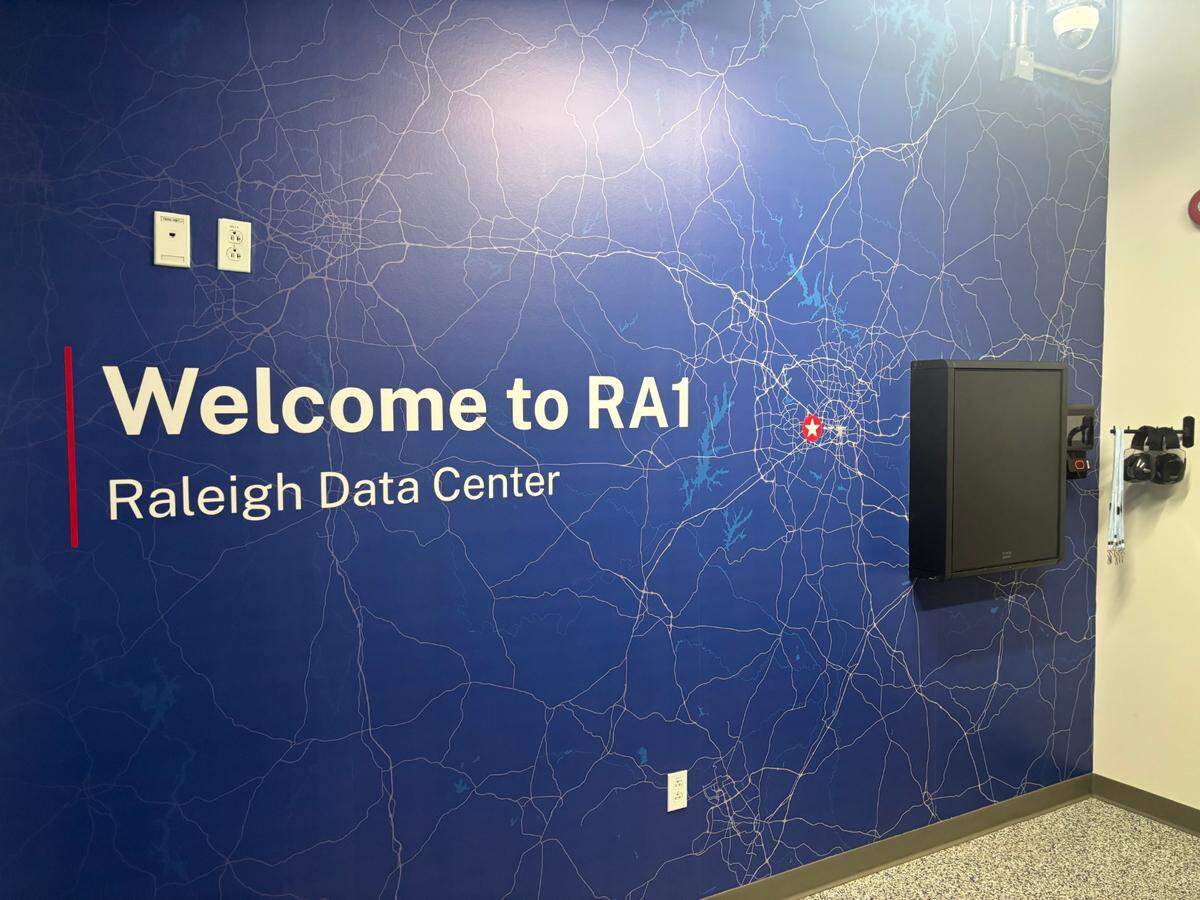
N&O: On data centers, how would you advise a rural NC county commissioner who has a hyperscale data center proposal in front of them?
Lilley: I’ve advised them to talk to other communities that have done this or that have taken this on. I’m not in a position to tell them do it or don’t. What I advise them, and I have advised them when they call me, is to say, ‘Well, call Richmond County, and ask them what were the decision points that they had to go through, what were the things that made them feel confident about the AWS project, and how do they feel about it today, and how they feel about it going forward? And then bring that into your consideration.’
I mean, there’s no getting around the fact that elected officials at the local level have to listen to their constituents, and if the constituents say we don’t want to do this, it’s going to be a tough road for them. If it’s something that they are interested in, because they think it will generate real economic activity, not just property taxes, but significant construction activity, significant long-term employment activity, especially relative to the scale for a rural community, then you know there’s some good opportunities there.
N&O: What is your role in addressing, managing, steering data center development in the state?
Lilley: Well, unlike a lot of other large economic development projects, we don’t offer discretionary incentives for data center projects, even large hyperscale projects. We do frequently meet with developers. They share with us what they’re looking for, what their interests are. They often want to talk about workforce and workforce availability.
What we tell them is a couple of things. The first is, (we’re) very, very clear that we’re not here to help you with the local political issue. That’s something you’ve got to work out on your own. You find a community that wants to host you, great. You find work with a utility that’s going to be able to provide the power and protect ratepayers, great. You make sure you’ve got the water questions squared away, great.
Then we’re there to help do the things that Commerce typically does. Help you with your workforce. Help you understand how to work within state government around permitting. Make sure that this is going to be a successful project that generates economic activity and higher wages in the area.
N&O: Governor Stein has encouraged the state to look at removing the specific data center sales incentives. Do you think data center developers would stop looking here if those incentives were removed?
Lilley: Well, I think the governor’s read on this is correct. That policy was put into place when it was very early in the days of data centers, and they were quite small, and we were actually trying to create an incentive for the development of data centers around the state, and it worked.
I think the governor’s view of this today is that, given the demand for compute, that that’s probably not a particularly meaningful incentive, which is not to say that developers don’t want to have it, but it’s probably not the deciding factor for them. Our understanding from lots of discussions with (developers) is that the deciding factor are those three issues I talked about before: local support, availability of power and availability of water.
Your question was, what does that mean for overall data center development in North Carolina (if we stop the sales tax incentives)? I don’t know. I think we’ll see. I think it probably has some impact. But Ohio just announced they are suspending their sales tax exemption for data centers. Lots of other states are doing this.