NC Senate leader Berger, Speaker Hall now in final talks about overdue state budget
AI-generated summary reviewed by our newsroom.
- North Carolina budget is overdue and includes raises, programs and tax policy.
- Destin Hall and Phil Berger are meeting to resolve remaining budget issues.
- In May they agreed on raises and a planned 3.49% income tax rate in 2027.
The finish line on the overdue state budget is in sight.
Millions of North Carolinians await a new state budget, which funds raises for teachers and state employees and pays for programs and capital projects across the state. It also includes policy, like setting the income tax rate. It is also now a year late.
It is coming during “tight budget times,” a top budget writer says.
While the top Republicans who control the General Assembly announced an agreement on raises and tax policy in May, it will be several more days, or weeks, until the budget comes out. Once it does come out, it’ll be fast-tracked through a few committees and on the floor within days.
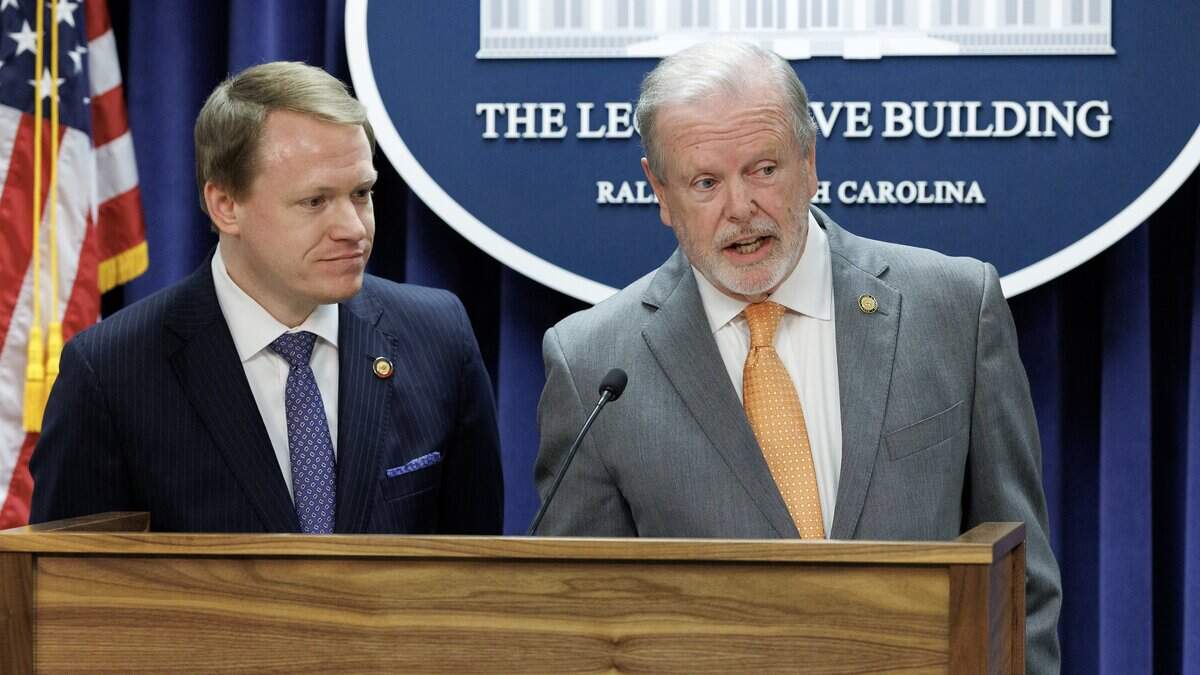
We are now at the final phase of budget negotiations: Republican House Speaker Destin Hall and Republican Senate leader Phil Berger are meeting.
“We’re working through provisions, we’re working through differences that existed as far as spend (amount). We’ve got a ways to go — we’re nowhere close to being finished, but we are making progress,” Berger said Wednesday.
He said having the budget ready by the end of June is “achievable.” That means the week of June 29, which is already when lawmakers hope to wrap up the bulk of the legislative session. But he and Hall have many talks ahead.
House budget chairs’ work is complete, waiting now on Hall and Berger
Rep. Donny Lambeth and Rep. Dean Arp, two top House budget writers, said their work, and the work of other top budget committee chairs, is done. What’s left to negotiate is now between Berger and Hall. The leaders met throughout the day on Wednesday and planned to continue to do so in the coming days.
“We finished our work. We turned everything into the corner offices to tie up any loose ends, and there’s always a few loose ends,” Lambeth told The News & Observer. Berger and Hall both have a suite of offices in the corners of the Legislative Building, hence are referred to as “the corner offices.”
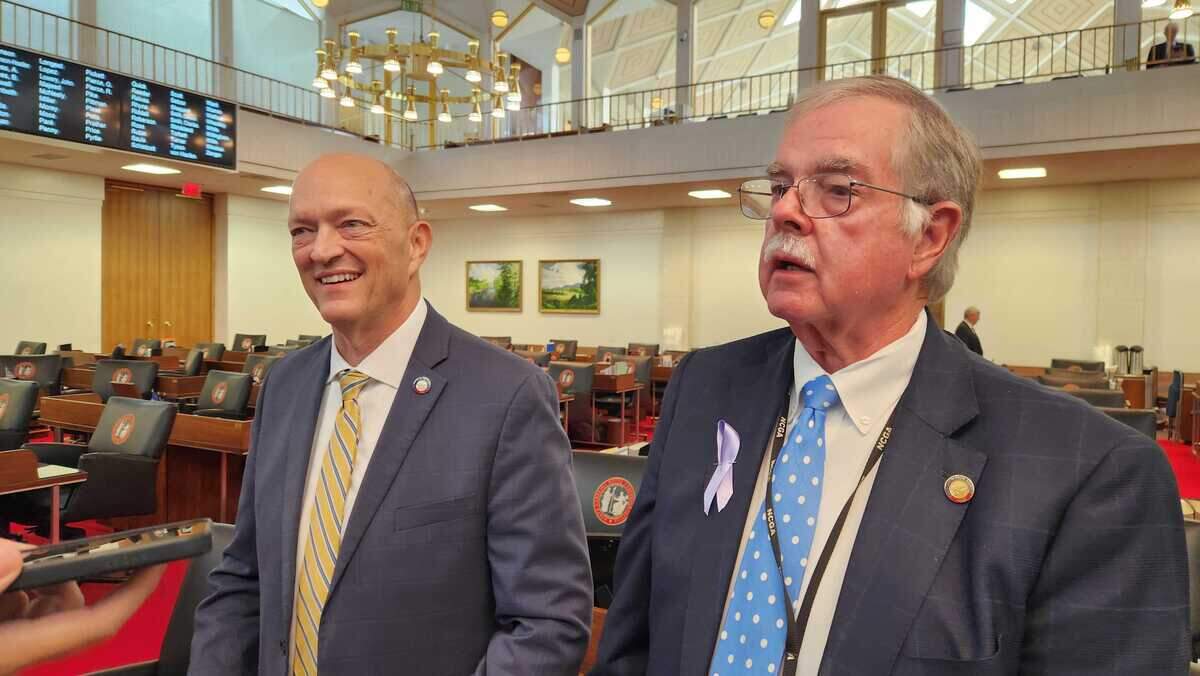
Lambeth said he’s encouraged that Berger and Hall are already meeting. In past budget cycles — Lambeth has served in the House under a previous speaker and governors — the list to sort out has been dozens of pages long. This time, they sent Hall and Berger about five pages of things they need to sort out. That list could grow longer depending on what the leaders want to add to the budget, which often contains policy beyond just spending taxpayer money.
NC Innovation, which gives seed money to innovative business startups and university research, has been a point of contention in budget talks for years. Lambeth said that it is on the list of House vs. Senate disagreements this year as well. But he and Arp declined to be specific about what other major provisions could be in the budget, or are being negotiated still. Lambeth did confirm that there are some changes in the raises package, with potentially higher raises in the works for noncertified school personnel.
But like everything in the budget, that could change. The finish line is in sight.
Berger said after the Senate session late afternoon Wednesday that once he and Hall finish a meeting, they plan for their next meeting, but beyond that there is no set schedule. It could be days or weeks, and lawmakers usually take a break around the Fourth of July.
On Thursday, Berger said he had “extremely productive conversations” with Hall the day prior and settled on a few items, but declined to elaborate. He expects to meet with Hall next on Monday or Tuesday.
Legislative Democrats ready for budget now
Democrats, who take a backseat to budget talks because Republicans control both chambers, are tired of waiting. Both House Minority Leader Robert Reives, a Chatham County Democrat, and Senate Minority Leader Sydney Batch, a Wake County Democrat, pointed out on Thursday that it has been 1,000 days since a comprehensive state budget was passed.
A majority of House Democrats voted with Republicans in 2025 on the House version of the budget, mostly because the amount of raises along with plans to slow tax cuts. Democratic Gov. Josh Stein has been talking with House budget writers, Lambeth said Wednesday.
“I don’t know that there’s ever been a date set out a month beforehand, that has ever been met by any General Assembly,” Stein told The N&O in early June, when a mid-June budget target date was floated by Republicans.
That was back in September 2023, when a deal was reached on a two-year spending plan. The legislature is tasked with passing a two-year budget in odd-number years, but failed to do so in 2025.
The stalemate was between Republicans, with Hall arguing for higher raises and Berger arguing for faster tax cuts. The impasse dissipated last month.
‘These are really tight budget times’
They agreed in May to give teachers an average 5% raise and state employees a 3% raise, with significant raises for law enforcement and correctional officers. They also agreed to reduce the state income tax to 3.49% in 2027, as well as adding a constitutional amendment to November ballots that would cap the personal income tax rate at 3.5%.
Lambeth cautioned that “not every (state) agency got everything they want,” in the budget the chairs sent to Hall and Berger to finalize.
“These are really tight budget times,” Lambeth said, and that he had to make hard decisions to allocate money “in a fair way.”
“Not every agency is going to be thrilled,” he said, and added that in every state budget, there are aspects that people don’t like, including lawmakers of both parties.
Republicans have declined to share the total spend number, which is likely to be more than $33 billion, as the final budget is not decided.
State law does not require the legislature to pass a budget by the end of the fiscal year, which is June 30. If no new budget becomes law, spending levels remain at the amount in previous budgets.