
Students at these colleges can use their student IDs to vote. Many others can’t.
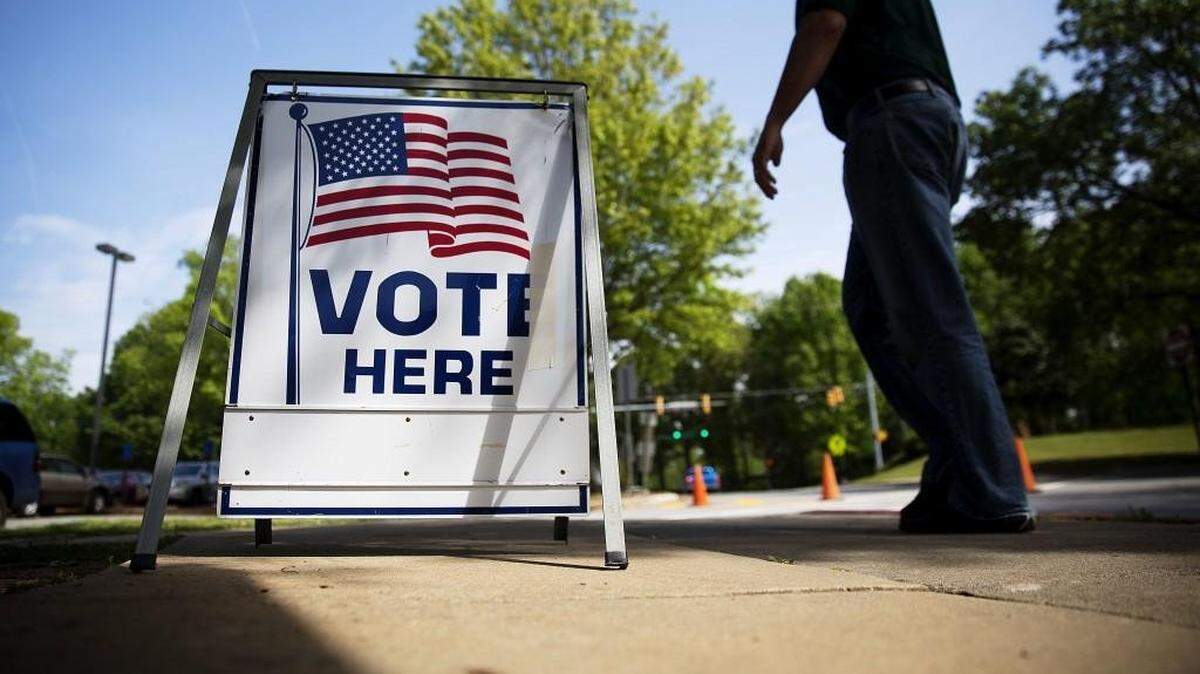
Using a student ID or government employee ID to vote next year could be complicated.
Dozens of community colleges, private colleges and state and local government agencies either didn’t apply to have their identifications accepted at the polls, or their applications were rejected — and new applications won’t be accepted until after the 2020 elections.
Voters looking to use a student or employee ID might need to consult a list on the State Board of Elections website to determine if their ID is considered valid. And it won’t be clear for a few more weeks how many UNC System schools will have their student IDs accepted.
The elections board recently released a list of 44 approved IDs, adding to the roughly 80 IDs approved in the first round of reviews earlier this year. The latest approvals include student IDs for 11 private colleges and universities and four community colleges; the board rejected student IDs from St. Andrews University and employee IDs from the city of Gastonia because the applications were submitted after the deadline.
No UNC System campuses were on the latest list, but 12 of them that had their applications rejected in the first round have until Friday to reapply. As of last week, only UNC-Chapel Hill and UNC-Charlotte had filed new applications, although others — including UNC-Wilmington and Western Carolina University — say they plan to submit applications by the deadline.
The requirement that tripped up many of the UNC System schools was the provision in the voter ID law that requires ID photos to be “taken by the university or college or its agents or contractors.” Some had previously allowed students to submit their own photos.
In its new application, UNC-Chapel Hill officials explain that while self-submitted photos are still used, university staff review another photo ID for the student and their physical appearance to ensure they match the submitted photo.
A similar process is in place at UNC-Wilmington, according to Mark Lanier, assistant to the chancellor. “We’ll submit that formally, and hopefully our student ID will be approved,” he said.
None of the state’s private colleges or community colleges had rejected applications in the first round, so the list of accepted IDs for those is finalized. That means IDs from about 19 of the state’s 58 community colleges will be accepted at the polls, along with IDs from 20 of the 36 private schools that are part of N.C. Independent Colleges and Universities.
The community colleges system office has heard a number of concerns from college administrators who didn’t apply, including the cost of upgrading ID-producing equipment, an inability to meet security requirements, and a lack of policies and procedures to verify the student’s identity as required in the law.
Asheville–Buncombe Technical Community College recently told WLOS that its ID-making station would need to be moved to a campus police station to meet security requirements, and that the move might require additional staff.
But the security rules in the law are relatively vague, requiring only that “the equipment for producing the identification cards is kept in a secure location.” Community-college system office spokeswoman Jane Stancill also said some colleges likely opted out because their “student ID policy already requires an ID that would otherwise be eligible for a voter ID.”
Hope Williams, president of the Independent Colleges and Universities organization, said some private schools didn’t apply because most of their students are from North Carolina and likely already have valid voter IDs like a driver’s license. Others, she said, were concerned about the cost of modifying their IDs to comply with state requirements.
“Campuses usually have set timeframes for this kind of major change so we may see more campuses apply as they make those changes in the future,” she said. Students from colleges and universities that aren’t on the list can still get a photo ID for free at county election offices.
Many of the colleges and universities — public and private — that applied to the elections board are now facing subpoenas from the Southern Coalition for Social Justice, which is suing to overturn the voter ID law.
A subpoena sent to the UNC System and community college system seeks a massive amount of student and employee data, including each student and employee’s name, home address, date of birth and driver’s license number, as well as documents showing how many are registered to vote and what their “racial demographics” are.
The N.C. Department of Justice refused to comply on behalf of both the UNC and community college offices, noting that students’ personal information is confidential under federal law.
“Plaintiffs have not even attempted to explain how their subpoena, seeking a multitude of confidential information about students and employees as well as information about their racial demographics and voter registrations, is reasonably calculated to lead to evidence relevant to plaintiffs’ claims in this litigation,” Attorney General Josh Stein and assistant attorney general Nora Sullivan wrote in September.
The Southern Coalition did not respond to questions from the NC Insider about its reasons for seeking the information.
Here are the 42 universities and colleges with approved student IDs for voting:
Appalachian State University
Beaufort County Community College
Bennett College
Brevard College
Central Piedmont Community College
Davidson College
Duke University
Edgecombe Community College
Elizabeth City State University
Elon University
Fayetteville State University
Halifax Community College
Isothermal Community College
Johnson C. Smith University
Livingstone College
Meredith College
N.C. Central University
N.C. State University
Pfeiffer University
Piedmont Community College
Roanoke-Chowan Community College
Rowan-Cabarrus Community College
Shaw University
St. Augustine University
UNC-Asheville
Warren Wilson College
Wayne Community College
Winston-Salem State University
Caldwell Community College and Technical Institute
Cape Fear Community College
Carolinas College of Health Sciences
Chowan University
Cleveland Community College
Forsyth Technical Community College
Gardner-Webb University
Lees-McRae College
Mars Hill University
North Carolina Wesleyan College
Queens University of Charlotte
Southeastern Baptist Theological Seminary
Wake Forest University
William Peace University
For more North Carolina government and politics news, listen to the Domecast politics podcast from The News & Observer and the NC Insider. You can find it on Megaphone, Apple Podcasts, iHeartRadio, Stitcher or wherever you get your podcasts.
This story was originally published November 13, 2019 at 5:46 PM.