
Where candidates for NC governor stand on state issues
The 2020 campaign for North Carolina’s governor has been shaping up for years as a challenge of Democratic Gov. Roy Cooper by Republican Lt. Gov. Dan Forest.
The battle for the Executive Mansion won’t start until after the state primary on March 3. Forest has a fellow Republican challenger. Cooper will also be on the primary ballot, challenged by a frequent candidate for office. Early voting is already underway.
We asked Cooper, Forest, Republican candidate Rep. Holly Grange and Democratic candidate Ernest T. Reeves what they think about major issues important to North Carolinians. Here’s where they stand on Medicaid expansion, state employee raises, climate change, corporate incentives and how they think they are best to shape the future of the Old North State.
Click a candidate's name to read an explanation to his or her answer.
What do you think is or is not working well under the current office-holder? If not, how would you change it if elected?
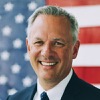 Dan Forest (R):
Leadership is hard work. We must make timely decisions on critical issues to move our state forward. There has not been an effective effort by the governor to work closely with the General Assembly for the good of our people, nor has there been any effort to cast a long-term vision for our state.
Governor Cooper has failed to deal effectively with the hurricane disasters of the past several years, and families are still suffering due to the lack of help from the executive branch.
The governor and I also have very different views on education and how to move things forward. There has been no education plan from the governor other than teacher pay and eliminating school choice. I believe it’s critical to provide students with options for a sound education - especially Opportunity Scholarships for families with no other options.
I am a strong supporter of the tax policies that have jump-started our economy and put North Carolinians back to work. The governor does not agree that these policies are good for NC.
I strongly disagree with the governor’s stance on the following:
-Born Alive bill veto
-ICE bill veto
-Budget veto
-Handling of the Atlantic Coast Pipeline
-Handling of lawsuits against our farmers
 Holly Grange (R):
I don't think much is working well at all. Governor Cooper's administration has been a failure in leadership. I will bring a mission focused style of leadership to Raleigh. Leaders bring people together to get things done and that's exactly what I will do as Governor. My administration will work with the legislature, not pick fights. My administration will balance budgets, not bloat them. My administration will give teachers raises, not veto them. My administration will stand up for our veterans and their families, not hold their scholarships hostage. My administration will be transparent and serve with honor, not hide millions of dollars in a pipeline slush fund. As Governor, I will lead. Roy Cooper has not.
 Ernest T. Reeves (D):
Candidate did not respond to the question.
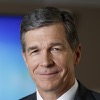 Roy Cooper (D):
I have a mission statement for our state. I want a North Carolina where people are better educated, healthier, and have more money in their pockets so that there will be more opportunities for people to have lives of purpose and abundance. As governor of North Carolina, I’ve fought for good-paying jobs, strong public schools, access to quality, affordable health care, and a more prosperous North Carolina. It has been the honor of a lifetime to lead this state and strive toward those goals. We have made progress for our state, but there’s still more work to do.
Do you support any expansion of Medicaid? Explain why or why not.
Dan Forest (R):
I am for high-quality, affordable health care for all North Carolinians. Medicaid expansion does not fit the bill.
The Affordable Care Act promised hardworking families more access, better care, and no tax increases to pay for it. These were broken promises. Now these same promises are being made by Governor Cooper regarding Medicaid expansion. Our people are smarter than this political rhetoric.
When I'm Governor, I'll focus on providing better access for patients by encouraging doctors to practice in our rural communities. I'll work with the General Assembly and the State Treasurer to ensure more price transparency so citizens know how much prescription drugs and vital health services cost. I'll fight to get those left in the coverage gap created by the ACA on private insurance. And lastly, I'll sign a budget that funds bipartisan reforms to Medicaid that have been blocked by Governor Cooper.
Holly Grange (R):
I am against Roy Cooper's plan to expand Medicaid to all. I believe there are conservative solutions to the coverage gap including work requirements and having recipients pay a premium.
Ernest T. Reeves (D):
Yes. I fully support expansion of Medicaid throughout North Carolina. In my opinion no citizen should be without access to healthcare. The state has an obligation to help those in need. More importantly, the federal government will currently fund 90% Medicaid expansion through 2020 with no current federal end date.
Roy Cooper (D):
Right now, thousands of working North Carolinians fall into a health care coverage gap, which means they are working full-time, but still can’t afford health care. When they seek care in the emergency room, it’s expensive and the cost is increasing insurance premiums for everyone else. I’m fighting to expand Medicaid to close that coverage gap and extend coverage to half a million people, including families and veterans, without additional state tax dollars. No person in this state should have to choose between basic necessities and access to quality health care that saves lives. A large majority of states, red and blue, have expanded Medicaid with great success, including Vice President Mike Pence when he was Governor of Indiana. Expanding Medicaid would cover an estimated 500,000 or more North Carolinians, boost the economy by $4 billion and create an estimated 40,000 jobs.
What percent annual raises should teachers receive from the General Assembly? Do you think that should be the same raise as other state employees? If no, explain why higher or lower.
Dan Forest (R):
For far too long, our state has pointed fingers and bickered over fractions of percentage points rather than discuss a fundamental mindset shift to put students first in education.
We have schools throughout our state that have seen multi-generational failure, and no amount of increased funding has or will break that cycle. I’m done fighting and re-fighting the same tired battles rather than discussing whether we’re preparing our students for the modern world.
When I am Governor, we will offer parents choices in education and the ability to find the setting that works best for their child. We will also move toward a competency-based system that makes sure our children are learning rather than being shuttled through an outdated and ineffective system.
The Republican General Assembly has done a great job providing raises over the past six years and will continue to do so. No other state in the country has addressed teacher pay six years in a row. Another pay raise is in the budget that the governor won’t sign.
Additionally, there’s no reason to put a cap on the amount our state’s best teachers should earn. We will empower principals to determine how much we pay teachers based on performance and demand, not requiring state legislators to propose one-size-fits-all solutions. And I have always believed that teachers who are using their subject-area master’s degree inside the classroom should be compensated for that expertise.
Holly Grange (R):
I want North Carolina to be the top state in the region when it comes to teacher pay. I believe we need to recruit and retain the best teachers in the country. We have given teachers pay raises every year that I've been in the legislature and I believe the 3.9% raise we gave this year is fair. It's certainly bigger than 0% which Governor Cooper has given them by vetoing those raises.
Ernest T. Reeves (D):
I am OK with the current proposed pay raises for teachers and other state employees as outlined by the unsigned (vetoed) state budget. As a general rule, I personally believe that our nation’s (annual) military pay raise should be among the highest as a group. It is 3.1% for 2020.
Roy Cooper (D):
Education is the key to our future success, and students deserve a good teacher in every classroom. If we don’t keep our teacher salaries competitive we will lose good teachers to other states and the private sector. From my first day in office, I’ve fought for better teacher pay and funding for our classrooms and North Carolina has raised teacher pay, expanded pre-kindergarten programs and re-established the Teaching Fellows Program to recruit highly qualified teachers. General Assembly leaders have prioritized corporate tax cuts over teacher pay raises. We don’t have to pit teachers against other state employees. Instead of giving teachers significant raises comparable to those given to other state employees or passing a bond to build new schools and get students out of trailers, legislative leaders have focused on passing sweeping tax cuts for corporations which has shortchanged the people of North Carolina. My 2019-20 budget proposed a 9.1% increase for teachers, and my compromise offer included an increase of 8.5% over two years with no plateaus and a pay raise for every teacher. Legislative Republicans, on the other hand, want just a 3.9% increase over 2 years with some teachers left out.
What do you think is the biggest issue in North Carolina that you would be able to shape if elected (or re-elected)?
Dan Forest (R):
1. Jobs. It is time for North Carolina to cast a vision for the future and determine what markets and industries we need to attract to provide well paying jobs for our citizens. As the world economy transitions, we must make sure that our education system is prepared, but also that our state is prepared and that we are willing to do the hard work to attract the right types of companies.
2. Education. It is time to get serious about bridging the education divide in North Carolina. There is no excuse for a failing school. A couple years ago I led the charge to make North Carolina the first state in the nation to have every classroom connected to high speed broadband. That was a start and a good foundation, now we need to make the necessary investments to be the first state in the nation to fully implement competency based education so that we know our students are prepared for their futures. Competency education moves away from seat time and age based progression and ensures that students are competent in subject areas before they advance. Gifted students in certain subjects can move more quickly, and those that need more study can take more time before they move to the next subject.
3. Law and Order. The government’s first priority should be the safety and security of the people. We must restore law and order if we are to protect our civilized society. When a handful of sheriffs allow violent criminals to roam free in our state, purely for political reasons, the entire state suffers.
Holly Grange (R):
I will be a jobs champion for North Carolina. We will work to recruit rock solid American companies to our state and ensure we're bringing good, high paying jobs. We will work to train a workforce that is ready for the 21st Century economy. Investing in the development of strategic partnerships to boost our skilled trades programs is so important in that mission. The best way to lift someone out of poverty is with a great job. My mission will be to give families that financial security. I want families to not just have a job that allows them to survive, but to save and go on vacation. I believe we can accomplish that mission.
Ernest T. Reeves (D):
Minimum wage. I will fight to increase the minimum wage in North Carolina. The minimum wage must be increased to help out citizens to live a better quality of life. In fact, outside of the defense of our great nation (safe environment), Social Security, and Medicare — I believe that minimum wage increase and education are the two most important factors in terms of economic mobility.
Roy Cooper (D):
My team and I have fought for better pay for teachers and other educators instead of sweeping corporate tax cuts. We’ve engineered success in recruiting jobs and growing businesses. I’ve vetoed bad budgets that valued corporate tax cuts over classrooms, clean water and better health care, and I’ve vetoed extreme right-wing social legislation that’s wrong for our people and our economy. We’ve worked hard and gotten results, but there’s more to do. I’m asking the people for a second term to complete our mission of a better educated, healthier and more prosperous North Carolina.
What’s a policy issue that you and the other party agree on?
Dan Forest (R):
I have always made it my policy to lead through influence, and influence only comes through building trust. I have spent the last seven years building trust with members of the General Assembly. I count them as friends - Republicans and Democrats. That’s why I have a strong track record of championing bills with significant bipartisan support such as protecting free speech on college campuses, providing stiffer penalties for human trafficking, supporting the Small Business Healthcare Act, and Burt’s Law to help protect those taken advantage of in group homes.
Moving forward we need to seek bipartisan solutions for issues such as restoring law and order, reforming education policy, encouraging affordable housing and increasing government transparency.
Holly Grange (R):
I've worked across the aisle with my colleagues on many bills. I think we've found common ground in taking care of our veterans and as a veteran myself, that is something I take very seriously. I have also worked across the aisle on many bills concerning our first responders, the National Guard, Active Duty military and their families. These are definitely issues that cross party lines.
Ernest T. Reeves (D):
Not a policy -- but North Carolina is a great place to live and a great place for businesses!
Roy Cooper (D):
In addition to being appointed by the President to serve on his Commission on Combating Drug Addiction and the Opioid Crisis, I’ve worked with the legislature across party lines to combat the opioid crisis in North Carolina. We launched the state’s first Opioid Action Plan in 2017 and, as a result, opioid prescriptions have dropped by 24%, emergency room visits for opioid misuse have declined by 10% and opioid related deaths have decreased by 5%. We have only begun to turn the tide on this epidemic, though, and we have more work ahead to keep helping people and saving lives.
What should the government do (or not do) to combat the effects of climate change?
Dan Forest (R):
I strongly believe in good stewardship of the environment - protecting clean air, clean water and conserving land for future generations. The problem is that the term “climate change” has become a catch-all for both environmental stewardship and apocalyptic alarmism. If we want to address these issues, then we must stop tossing everything into one basket and begin tackling one solvable problem at a time. I believe there is a place for good regulatory policy related to the environment, but I also believe in innovation over regulation. It’s time to stop using the environment as a political football and start solving problems.
Holly Grange (R):
We have a God given responsibility to protect our coasts, our forests, our waterways, our mountains and other natural resources in North Carolina. I believe we can work together to continue making strides in renewable energy and being good stewards of our beautiful state.
Ernest T. Reeves (D):
The government should brief all citizens on what climate change is and is not. Moreover, they should continue promoting the efficient uses of energy throughout the state and especially in our government buildings, investing in clean energy and technologies, the planting of trees, and maintaining environmental policies (i.e. cap and trade) that are current (measurable) and enforceable.
Roy Cooper (D):
Fighting to make sure North Carolinians have access to clean air and clean water and doing our part to reduce dangerous emissions is how we build a true line of defense against climate change. To date, my administration has secured historic environmental wins. We’ve ordered Duke Energy to dig up remaining coal ash ponds in North Carolina and worked to establish permanent water supplies for residents who have spent years drinking bottled water because of coal ash. We launched a Clean Energy Plan and established a goal to cut North Carolina’s greenhouse gas emissions by 40% by 2025 and 70% by 2030, and renewed our state’s commitment to reducing pollution. We’ve fought offshore drilling and have stood against those who would threaten our coastal economy and our beaches. We need to continue to invest in renewables and make sure we achieve a carbon neutral North Carolina.
Should North Carolina continue giving out corporate incentives?
Dan Forest (R):
Yes
Holly Grange (R):
Yes
Ernest T. Reeves (D):
Yes
Roy Cooper (D):
Candidate did not respond to the question.
Would you change the state's incentives programs, and how?
Dan Forest (R):
I believe incentives can be valuable when trying to attract a game changing industry to our state in the right locations. Much like BMW transformed South Carolina, there are many areas of our state that need that type of catalyst to jump-start their economy. These transformative projects result in a net positive to the taxpayer, not only through jobs, but through the increased tax base that more than pays for the incentives. In these special instances, state and local governments have a role to play.
It is important to remember that while the big corporate wins get most of the attention, most jobs are created by small businesses. All too often the government finds itself in the position of picking winners at the expense of existing companies (some that may have been loyal taxpayers for many years) that may find themselves with new competition with an unfair market advantage.
Since most businesses are small businesses that never get to see a government incentive, the best incentive is tax relief for all companies that pay taxes, small and large. Tax relief allows them to make decisions that can lead to growth in the economy in a fair and equitable way and helps all communities, not just the big cities where most corporate incentive money lands.
Holly Grange (R):
Absolutely. I believe in attracting companies that do business the right way and bring with them good paying jobs. I believe any incentives should ensure that the jobs promised are delivered. We need guarantees from companies that new jobs are North Carolina hires and that infrastructure investments benefit our communities. We need to be competitive with neighboring states in attracting these businesses.
Ernest T. Reeves (D):
North Carolina should always have robust corporate incentive programs to attract and maintain businesses. But, it is critically important that taxpayers' money (incentives) given to corporations (businesses) include mandatory provisions that allow for a certain number of local hires (North Carolina residents) in the community where the businesses are located as well as a guaranteed increased minimum wage. The minimum wage in North Carolina is too low and needs to be raised to at least $10 an hour by 2022.
Roy Cooper (D):
You can’t compete for new jobs and major companies with one arm tied behind your back, and we need every tool at our disposal to compete. My administration together with the legislature has demonstrated a commitment to job creation and wage growth by both supporting small business and attracting out of state talent to North Carolina to create jobs and contribute to a robust economy. We have recruited and announced tens of thousands of new jobs across the state. A large number of these projects are located in rural and economically distressed counties. Our exceptional workforce has drawn global companies to our state and more are coming. In attracting and retaining these companies, our workforce has been steadily growing the state into a worldwide leader in several key industries, including technology, manufacturing, pharmaceutical companies, and others.
Candidate Info
Dan Forest
RaceGovernor
PartyRepublican
EducationDegrees in architecture, UNC Charlotte
Professional ExperienceFormer Office President and Partner at Diversified Architectural Consulting, the state’s largest architectural firm.
Public offices heldLt. Governor
FamilyWife, Alice; children, Jake, Haley, Max, Olivia
Campaign websitehttps://www.danforest.com/
Holly Grange
RaceGovernor
PartyRepublican
EducationUnited States Military Academy at West Point, West Point, B.S., 1982 University of Southern California, Los Angeles, M.S. Systems Management, 1988Northern Illinois University College of Law, Chicago, J.D. Cum Laude, 2006
Professional ExperienceArmy/U.S. Army Reserve, Corps of Engineers Officer/Major, Attorney, State Representative
Public offices heldState Representative 2016-Present
FamilyDavid Grange, husband; Matt and David Grange, sons
Campaign websitehollygrangenc.com
Ernest T. Reeves
RaceGovernor
PartyDemocrat
EducationA.A. Liberal Arts, Highline Community College, Des Moines, Washington; B.A. Communications (2 Year Green to Gold Active Duty Scholarship Winner); graduated Magna Cum Laude, Saint Augustine’s University, Raleigh, North Carolina; Graduated Top 10% of U.S. Army Signal Officers’ Basic Course (SOBC), Fort Gordon, Georgia; Graduate, Headquarters, United Airlines Talent Management Program (TMP), Chicago, Illinois.
Professional ExperienceFormer candidate, City Council, Greenville, North Carolina (D-NC, 2019); former special election candidate, U.S. Congress, 3rd Congressional District (D-NC, 2019); former general election candidate, U.S. Congress, 3rd Congressional District (D-NC, 2016); former candidate, U.S. Senate (D-NC, 2016); former candidate, mayor of Greenville, NC (2015); former candidate, U.S. Senate (D-NC, 2016); former Escort Officer for U.S. Ambassador Paul Bremer, Administrator of the Coalition Provisional Authority of Iraq (Special White House Duty) 2003; military officer assigned to the staff of U.S. Ambassador Darrell Trent, 2003; Junior Executive Officer for Executive Services Organizational Management Office for the Office of the Administrative Assistant to the Secretary of the Army; Escort Officer for the 2003 Dwight D. Eisenhower National Security Conference; Master of Ceremony for the Administrative Assistant to the Secretary of the Army, The Pentagon (Headquarters, Department of the Army) 2003 Organizational Day; 2003 HQDA Birthday Ball Committee Member; Secretary of the Armed Forces Communications and Electronics Association, Tokyo; served two years as Commander of the Pontiac Recruiting Company which covered three counties and an area of 2,230 square miles with command responsibility of 77 high schools, 15 colleges, and six recruiting stations for recruitment of U.S. Army Active Duty and U.S. Army Reserve goals over six cities. Served nearly four years on a nominative assignment to Seattle-Tacoma International Airport on behalf of Headquarters, U.S. Army Personnel Command (Mobilization), Washington, D.C. Coordinated with some of the nation’s largest airlines and organizations in the movement of Army, DOD personnel and others throughout the nation and world as directed. Participated in movement of nearly 10,000 DOD personnel and family members from the Philippines during the eruption of Mount Pinatubo through Seattle-Tacoma International Airport and McChord Air Force Base, Tacoma, Washington, in 1991. Served as a lawn care assistant to my late father, Mr. Alfred Reeves Sr., who worked directly for U.S. Senator John P. East (R-NC) as his personal longtime lawn care professional.
Public offices heldNone
FamilySingle, no kids
Campaign websiteernestreeves.com
Roy Cooper
RaceGovernor
PartyDemocrat
EducationBorn and raised in Nash County, Cooper attended public schools and worked summers on the farm. His mother worked as a school teacher and his father practiced law and farmed in Nashville, the county seat. He went on to the University of North Carolina at Chapel Hill where he was a Morehead Scholar, and then earned his law degree from the University of North Carolina School of Law.
Professional ExperiencePlease see below for a brief bio.
Public offices heldRoy Cooper was elected to the North Carolina House of Representatives in 1986 representing his home community. He was appointed to the North Carolina Senate in 1991 to fill a remaining term of a vacant seat and then was elected to serve the district through 1999. He chaired the Judiciary Committee among other committees. As a legislator, he fought to increase pay for teachers and reduce class sizes. He wrote North Carolina’s first children’s health insurance initiative, passed laws that set a national standard against predatory lenders, pushed for tougher safety standards and higher quality for child care centers, gave victims new rights through the Crime Victims Bill of Rights, banned guns from schools, and helped create a graduated license program to give young drivers more training. He continued to practice law as the managing partner of the law firm Fields & Cooper in Rocky Mount and Nashville, North Carolina. In 2000, Cooper was elected Attorney General. As North Carolina’s top law enforcement official, he worked to protect families across the state. He cracked down on child predators, worked to increase penalties for drug dealers, and oversaw a sharp decrease in crime. He prioritized consumer protection by fighting utility rate increases and by putting payday lenders out of business and cracking down on telemarketers.
FamilyRoy and his wife, Kristin, have three grown children -- Hilary, Natalie, and Claire.
Campaign websitewww.roycooper.com
For more North Carolina government and politics news, listen to the Domecast politics podcast from The News & Observer and the NC Insider. You can find it on Megaphone, Apple Podcasts, iHeartRadio, Stitcher or wherever you get your podcasts.
This story was originally published February 18, 2020 at 10:01 AM.
.jpg)