Where candidates to represent Durham, Orange and Wake in U.S House stand on key issues
North Carolina’s 4th Congressional District has a new look.
When state lawmakers redrew North Carolina’s congressional districts, the reliably Democratic 4th district was expanded to bring in more counties.
Represented by Democrat David Price, the old 4th District included parts of all of Durham, Orange and Wake counties.
Under the new map, which voters are using for the 2020 primary and general election, the district includes all of Durham, Orange, Granville and Franklin counties as well as parts of Wake, Chatham and Vance counties.
Price has represented the district since 1987, except for one two-year term (1995-97). Price faces a Democratic challenger in Daniel Ulysses Lockwood.
Republicans Debesh Sarkar, Nasir Shaikh, Robert Thomas and Steve Von Loor are on the primary ballot. Price defeated Von Loor 72.3% to 24.0% in 2018.
The primary is March 3 and in-person early voting has started. We sent this survey to all candidates in the primary.
Click a candidate's name to read an explanation to his or her answer.
Would you vote to keep, expand or end the Affordable Care Act?
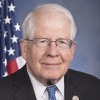 David Price: Keep
Explain your response. What is your plan for expanding affordable health care to more Americans?
Health care should be a basic human right, yet millions of Americans continue to lack access to quality, affordable care. I have cosponsored several pieces of health care reform legislation which offer a range of paths to universal coverage, including Medicare for All (H.R. 1384), Medicare for America (H.R. 2452), Medicare Buy-In and Health Care Stabilization Act (H.R. 1346), and the Protecting Pre-Existing Conditions and Making Health Care More Affordable Act (H.R. 1884).
 Daniel Ulysses Lockwood: End
Explain your response. What is your plan for expanding affordable health care to more Americans?
Would only vote to end in order to replace it with a better system, which is Medicare for All.
 Debesh Sarkar: End
Explain your response. What is your plan for expanding affordable health care to more Americans?
We must let the market assist - this is how we can rein in heath care costs. Choice and competition are the answer. More big government programs and socialism are not what we need.
 Nasir Shaikh: End
Explain your response. What is your plan for expanding affordable health care to more Americans?
The health-care system does need changes. Medicare for All is not the prescription. Our health-care system is very highly regulated, with very few checks and balances. There is no competition in many markets. There is no transparency in costs. Why can't a patient call a hospital or doctor's office and get a price on an X-ray, blood test or any procedure and shop for the best price? If you could it would force competition and prices would come down. An example of this is what has happened in LASIK surgery. It is not regulated, insurance does not cover. Prices have come down nearly 90% and providers have increased.
Why can't individuals pool together and form medical groups or pharmacy clubs to better negotiate medical pricing and bulk purchasing to lower drug costs? Why can't we purchase drugs from Canada which have been researched and produced for Canadian citizens? Why can't we purchase insurance across state lines? Why are doctors being harassed by local and state medical boards and insurance companies for non-compliance issues when their practices begin to to be a patients-with-cash only system and they refuse to take patients with insurance or Medicare?
Do you support Medicare for All?
David Price: Yes
Explain your response.
I want to see the proposal considered as a path to universal coverage. No American should have to choose between putting food on the table and affording basic medical coverage. The Affordable Care Act was a major step forward in providing coverage to more people, but millions of Americans remain without health insurance. Without further delay, North Carolina must expand Medicaid to provide health care to thousands of families stuck in the middle of a bitter Republican effort to block this coverage. Once a Democratic president and Senate join the House majority in 2021, we must work together to end the sabotage of the Affordable Care Act and enact policies that put us firmly on the path to universal coverage.
Daniel Ulysses Lockwood: Yes
Explain your response.
Medicare for All is the only bill that covers all residents and includes comprehensive coverage for all health-care needs (physical, mental, dental, vision, reproductive, gender affirmative treatments). Because health care would be free at point of service and place a cap on the cost of prescription drugs, many Americans will be able to stop picking between food and meds they desperately need. Moreover, M4A includes a jobs re-training and placement program for those displaced by the dismantling of the health-insurance industry. One million North Carolinians are currently under or uninsured. This issue is incredibly urgent. We must radically change our health-care system so that no one goes without the care or meds they need.
Debesh Sarkar: No
Explain your response.
The left's "Medicare for All" fantasy would explode spending, severely increase taxes, and end private insurance. That is bad on every level. We need more competition, not less.
Nasir Shaikh: No
Explain your response.
Medicare for All is a pipe dream, rather it would be an absolute nightmare for America. The government can't even adequately handle and run the VA. How do we expect it to handle another 300+ million people added to the system? What do you do with the people who have great insurance from their employers? Do you really want to destroy the private health insurance industry?
This is part of an article from The Atlantic which I often quote. "The Urban Institute, a center left think tank highly respected among Democrats is projecting that a plan similar to what Warren and Sanders are pushing would require $34 trillion in additional federal spending over its first decade in operation. That's more than the federal government's total cost over the coming decade for Social Security, Medicare and Medicaid combined, according to the most recent CBO projections."
All we are told is cost will go up for wealthy Americans and evil corporations while costs will decrease for hard working middle class families. These are political lies. Every Democratic candidate with a complicit MSM knows this to be a lie.
There will need to be a safety net for those who are truly in need of insurance and cannot afford it. That's where redesigning and streamlining Medicare needs to begin.
Do you support a wall on the Southern border?
David Price: No
Explain your response and how you would work to stop or limit illegal immigration.
I support fact-based proposals to secure the border, including increased screening technology and well-staffed ports of entry, but I do not support dumping federal funds into an ineffective border wall. President Trump’s wall has become a symbol of a broader set of Trump immigration policies that are unconscionable, and making it nearly impossible to reach consensus on meaningful reforms.
For decades now, Congress has promised, yet failed, to reform our broken immigration laws to meet the needs of our economy and allow millions of otherwise law-abiding undocumented residents to come out of the shadows and become full members of society. During each of these attempts, there was an understanding from presidents of both parties that as a nation of immigrants, our enforcement priorities should be geared toward those who pose a threat to our communities.
I believe that an enforcement-only approach to immigration is simply untenable. I support comprehensive immigration reform that would put an end to the exploitation of undocumented workers, provide children a chance at the American dream, and give us a practical way to match the economy’s labor needs with our visa allowances and the supply of legitimate immigrant workers. Despite continued Republican opposition, I will keep working with like-minded colleagues to ensure that we take a practical, comprehensive, and humane approach to addressing this issue.
Daniel Ulysses Lockwood: No
Explain your response and how you would work to stop or limit illegal immigration.
The richest country in the world should be doing more to ensure the safety of those displaced by economic hardship and the global climate catastrophe. Curbing illegal immigration is as easy as making immigration easier. We have both the resources and the moral duty to make it as easy as possible to come into the United States. Moreover, we should be shuttering corrupt and unneeded agencies like ICE (created in 2003) and prosecuting the leadership of these agencies for the crimes being committed against innocent people at the border and in the concentration camps. We have a moral imperative to be kind and welcoming to immigrants and we must condemn the racism and xenophobia directed at them.
Debesh Sarkar: Yes
Explain your response and how you would work to stop or limit illegal immigration.
We must stop the flow of illegal immigration at our border, and we must implement policies like E-Verify to cut off the hiring of illegals. Further, we must force our law enforcement officials to work with ICE and make sure criminal illegals are deported and not let back out into our neighborhoods. This is a public safety issue first and foremost.
Nasir Shaikh: Yes
Explain your response and how you would work to stop or limit illegal immigration.
1. Secure our border. Build the Wall. Pay for the wall by charging a fee on all remittances sent overseas. Start with 15% fee.
2. Charge a border wall fee on all items coming into America via Mexico.
3. All drug monies captured by federal, state and local authorities to be allocated towards building, maintaining and supporting border wall.
4. Federalize National Guard as needed to help with CBP.
5. Commit US Army personnel to assist with satellite and drone technology across entire mileage of border wall.
6. Eliminate chain migration visa program. Limit to only spouses, children and parents of US citizens.
7. Eliminate visa lottery program.
8. Eliminate any visa program that is not merit based.
9. Re-examine asylum and refugee visa programs .
10. Once border wall complete, border is secure, then begin guest worker program for employment.
11. Merit based immigration based on America's need in the STEM fields as well as others. This to be done only after making sure Americans in those fields have filled those positions.
12. We need to stop the practice of allowing foreigners to come to America for the sole purpose of giving birth. The 14th [Amendment] needs to be challenged in this regard. this was not the intent of the framers of our Constitution.
Do you believe humans are contributing to global climate change?
David Price: Yes
What should the government do (or not do) to combat the effects of climate change?
When we generations [from now] look back at this time, I’m certain climate will be the one issue where our ancestors say, “what were they thinking, and why didn’t they act?" The disastrous impacts of climate change influence my policy decisions, from my Transportation and Housing (THUD) Appropriations Subcommittee Chairmanship to how we should rebuild in the face of storms. By now, we know all too well the threats of climate change right here in North Carolina. It’s meant harsher weather, shrinking coastlines, and more powerful storms.
Throughout my career, I have championed clean air and water protections, conservation of natural habitat, investments in clean energy, and U.S. leadership in combating climate change. I was a strong supporter of President Obama’s landmark Clean Power Plan, his raising of automobile fuel efficiency standards, and his leadership in negotiating the Paris Climate Accords, and I have been an outspoken critic of President Trump’s decision to withdraw from the Accords.
A major focus of mine as THUD Chair is incorporating principles of resiliency into existing federal programs. For example, I’ve secured HUD recovery funding that allows states -- including North Carolina -- to invest in a broad range of recovery projects that mitigate threats from future storms so we can rebuild smarter. I’ve also included provisions in annual funding bills to require localities that receive certain HUD block grants to incorporate resiliency in their planning process, and prioritized robust funding for transit, rail, and other transportation alternatives that reduce emissions and give Americans more choices when they need to commute or travel.
In the current Congress, I am a co-sponsor of both the Green New Deal and legislation that would require federal agencies to develop realistic plans to ensure our nation moves to 100% renewable energy over the next three decades. I’m also leading the fight against President Trump’s efforts to allow drilling and seismic testing off the North Carolina coast and have sponsored legislation to reinstate the Obama Administration’s drilling safety regulations. I am proud to have received a 100% rating from the League of Conservation Voters.
As we look to the future, we need big, bold solutions to tackle climate, and I’m working in the House to make that happen.
Daniel Ulysses Lockwood: Yes
What should the government do (or not do) to combat the effects of climate change?
We are in the middle of a climate catastrophe. Our planet is warming at alarming rates resulting in crop failure, increased natural disasters, massive displacement of peoples from hotter regions, and the loss of entire species due to things like fires and ocean acidification. The time has long since passed for drastic change. We must act immediately and radically to overhaul our infrastructure, transform our energy grid, and change the way we develop sustainably. The only approach that even begins to meet the scale and urgency of the problem is the Green New Deal. This massive jobs program, combined with a much needed investment in clean energy, is the only way we can even hope to combat climate change. The Green New Deal will also replace our aging and dangerous pipes, address environmental justice for marginalized communities and environmental refugees, and save Americans money by investing in weatherizing homes and electric public transportation. We should nationalize industries like water, energy, and internet service. We need to hold corporations like Duke Energy accountable when they poison our planet with coal ash spills all across the state.
Debesh Sarkar: Yes
What should the government do (or not do) to combat the effects of climate change?
I think the climate is changing and changes all the time. I think humans are one of many factors contributing to that, but the data is mixed and we cannot give in to the left's "Chicken Little, sky is falling" theatrics. We should all be good stewards of the earth, but every step we take should be measured and always consider the impacts on our economy and be based on fact, not the zealotry of left wing extremists.
Nasir Shaikh: No
What should the government do (or not do) to combat the effects of climate change?
Let me preface my answer by saying maybe. The climate is always in a state of flux, always changing. The real question is how much is due to nature and how much is due to humans? Conservatives like myself acknowledge needing to protect the environment. The EPA should not be weaponized as a social or political tool to stifle economic and energy development. We need to incorporate all kinds of energy production to include oil, gas, coal, nuclear, wind, solar and fracking. President Trump's energy policy has allowed the United States to become the world's #1 exporter of energy. In regards to climate policy I am 1000% behind President Trump's decision to rescind the Paris Climate Accord. That would be have been disastrous for America. With the left trying to convince Americans that the Green New Deal is just what the doctor ordered, we need to ask which doctor? Dr. Strange-Glove! The Left's new entry into identity politics is the religious marriage of climate change with politics. The Left has a new religion to promote and it is the Church of Climatology. This is why the extremists from the Church of Climatology have constantly changed their climatology descriptors just as much as the climate changes. From global cooling to global warming and now to climate change. What will they call it next? Getting rid of carbon based energy which has brought billions out of poverty is not the solution. Destroying the American energy sectors are not the answers. The government should allow for the full potential of the American private sector to develop new streams of energy and let them compete in the marketplace without playing favorites. We need to look at all forms of energy to include oil, gas, wind, solar, clean coal and nuclear.
Do you support the USMCA trade agreement? And what would you do to improve wages and job opportunities for Americans?
David Price:
I have always evaluated trade agreements that come before the House on a case-by-case basis, based on how it will affect the district I represent, the state of North Carolina, and the country as a whole. After successful negotiations led by Speaker Pelosi and Congressional Democrats to strengthen several provisions within USMCA, I voted to support this important update to NAFTA. I’m working to ensure American workers and American jobs are protected, which is why I was pleased to see that the final USMCA included provisions to enhance the enforcement of labor protections, the monitoring of Mexico’s labor reform implementation process, and the mechanisms for rapid responses to any labor violations. I have consistently fought to ensure a level playing field for American workers and supported “Buy America” provisions to ensure that domestic suppliers are given full consideration in federal procurement decisions, and will continue to do so going forward.
The economy has grown as our nation recovered from one of the most devastating recessions in our history, but not everyone has felt this growth. Too many Americans are left behind by a regressive tax system that gives away huge tax breaks to corporations and the wealthy while burdening those in the lower and middle class. I’ll fight to undo the 2017 tax cuts on the wealthy, and reinvest those savings into education, health care, and a better life for everyday Americans. An economy that works for everyone means a livable minimum wage, universal health care, paid family leave, a progressive tax system, reduced tuition for college and training programs, clean energy jobs and research, as well as incentivizing corporations to spend earnings on workers, not stock buybacks. These policies will help improve job opportunities and growth, while strengthening our safety net and ensuring that every American is given a fair shot.
Daniel Ulysses Lockwood:
No. The USMCA, effectively NAFTA 2.0, does little to address the shortcomings of the original agreement. Opposed by large labor unions like the United Food and Commercial Workers, this trade agreement does very little to create or protect good-paying American jobs. USMCA does nothing to put a stop to corporations closing American factories and outsourcing labor, and environmental groups (i.e. Sunrise Movement, Sierra Club) have clearly stated that this will do little to combat climate change. Any trade agreement worth considering would include regulations about where companies can dump their waste, and would work to make it harder for energy corporations to pump dangerous crude oil through fragile pipe systems. This agreement fails to even mention the concept of climate change. All things considered, this trade agreement does little to protect American workers and little to protect the environment.
We can immediately start to improve wages by raising the federal minimum wage to at least $15 an hour with yearly raises tied to inflation. The GND will have to include a massive jobs mobilization effort. Saving our planet will require rapid and radical changes to our infrastructure; we will create a huge number of skilled jobs with this program. Strengthening workplace democracy by making unions stronger and killing right to work laws will give workers more power over their lives and bosses, providing them with better jobs and higher wages.
Debesh Sarkar:
Yes. NAFTA was a disaster and USMCA substantially improves the agreement. To improve wages and job opportunities for Americans we need to stay the course -- under President Trump our economy is exploding and all Americans are seeing the benefit. We need to further unleash our economy by continuing to decrease regulation and help job creators, just as our president has done the past three years.
Nasir Shaikh:
I absolutely support President Trump and his USMCA trade agreement. Elites on both sides, Republicans and Democrats, especially the Clinton administration, sold out the middle class of America and not only gutted but destroyed the manufacturing base of this country.
We need to continue the policies of President Trump by exerting pressure on those countries who are not fair traders by employing tariffs on their goods. I am for free trade but with the caveat being it needs to be fair trade first, then trade freely. Make deals equitable for both sides. ... [Leaders] put corporate and foreign interests ahead of America and American workers. By introducing merit-based immigration policies we can increase the pay of unskilled labor because we will not be diluting the workers pool by allowing unskilled labor to enter the market. All companies in the U.S. must abide by E-verify. If companies do not comply, they should be fined $100,000 for every illegal alien they were illegally employing. Fines should go to continued funding for the border wall.
Candidate Info
David Price
RaceNC4
PartyD
EducationRep. Price received his undergraduate degree at UNC-Chapel Hill and went on to Yale University to earn a Bachelor of Divinity and Ph.D. in Political Science.
Professional experienceBefore he began serving in Congress in 1987, Price was a professor of Political Science and Public Policy at Duke University. He is the author of four books on Congress and the American political system.
Previous public offices held (if any)
FamilyRep. Price and his wife Lisa live in Chapel Hill and are parents of two children and two grandchildren.
Websitehttps://priceforcongress.com/
Daniel Ulysses Lockwood
RaceNC4
PartyD
EducationB.A. Journalism and Mass Communication - UNC Chapel Hill 2015
Professional experience- Client Website Coordinator - Etix - July 2017 to present- Freelance Brand Strategist - April 2016 to present- Advertisement Design Independent Contractor - Charlotte Observer - Oct. 2016-17- Temp Video Editor - The Friday Institute - Aug to Oct 2016- Volunteer Designer - Bernie for President - Feb to May 2016
Previous public offices held (if any)
Family
Websitehttps://www.lockwood4nc.com
Debesh Sarkar
RaceNC4
PartyR
EducationCalcutta University (Engineering Degree), Columbia University (Masters, Architectural Technology)
Professional experienceSenior Structural Engineer at NC Department of Transportation since 2001
Previous public offices held (if any)None - first time running for office
FamilyWife, Rajyashree; daughters, Deboshree and Deboleena
Websitehttps://www.debeshsarkar2020.com/
Nasir Shaikh
RaceNC4
PartyR
EducationMD from Ross University School of Medicine
Professional experienceJoined Mannatech Inc. after graduation from medical school in 1994. Mannatech is an R&D company and pioneer in the field of Glycobiology. I was a part of its new product development committee, member of the training and development division, and compensation plan committee, as well as part of its doctors speaking bureau. I was also elected to be on Mannatech's Directors Associate Council Board from 1998-2006. I was the first MD to become a Presidential Director in the company. I was also a part of Mannatech's international team when we opened up an office in Australia.Currently i have my very own radio and TV conservative talk show, "The Dr. Nasir Shaikh Show" which is produced by the Conservative Commandos Radio Network and is also a part of the AUN-TV Broadcasting Network in California. We are in 14 radio markets and 12 cities in northern California.
Previous public offices held (if any)
FamilyI am married to my wife, Samina. We have three children: two boys, Hasan and Sultan, and our daughter named Kirren.
Websitewww.DrNasirShaikh.com
For more North Carolina government and politics news, listen to the Domecast politics podcast from The News & Observer and the NC Insider. You can find it on Megaphone, Apple Podcasts, iHeartRadio, Stitcher or wherever you get your podcasts.