
Bloomberg and Sanders — neither life-long Democrats — now want to lead the party
Which two candidates are now leading the pack to become the Democratic Party’s 2020 nominee for president?
A U.S. senator who still labels himself an independent and a former New York City mayor who was first elected as a Republican.
Bernie Sanders and Mike Bloomberg — No. 1 and 2 in a new national poll of Democratic voters’ preferences — are battling each other for the chance to take on Donald Trump, a Republican president who, not too many years ago, was a registered Democrat, then an independent.
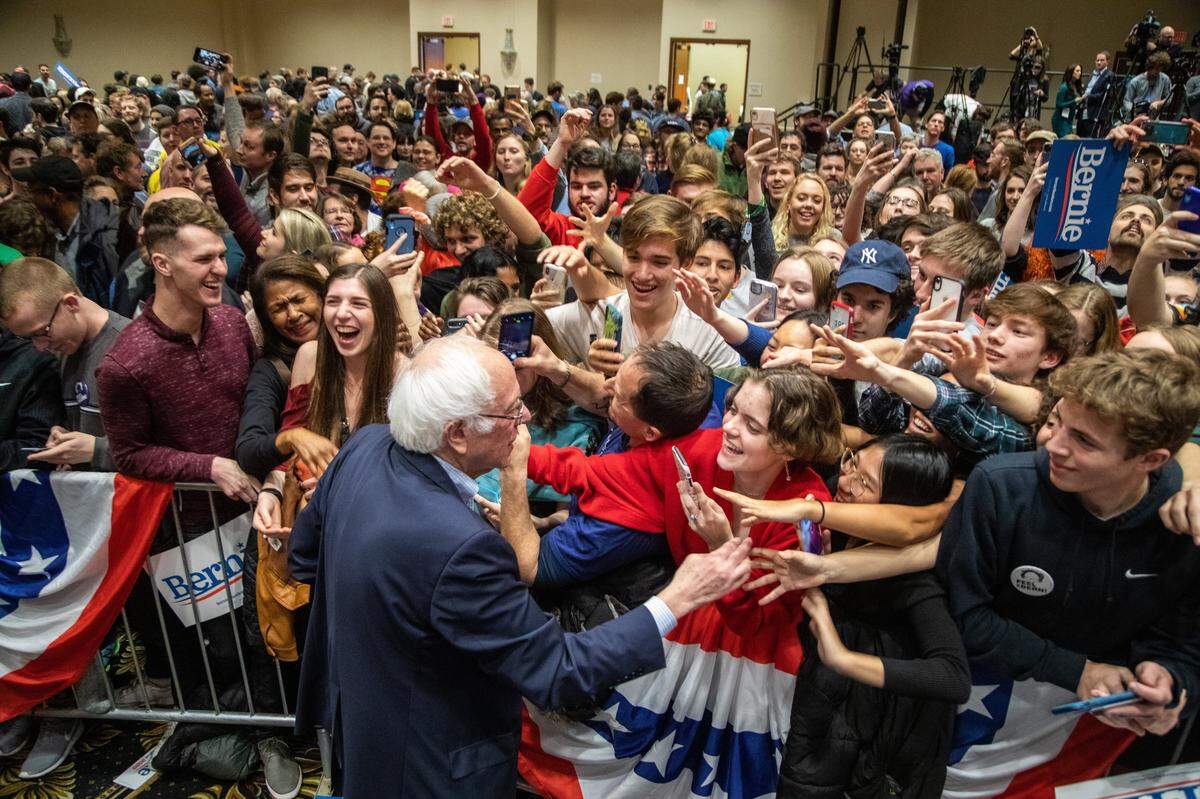
Political parties, in recent years, have become takeover targets for moguls and ideologues looking for vehicles to accelerate their ambitions and agendas.
These candidates’ policy positions don’t always match up with the parties’ historical stands on issues. But they gain entrance — and sometimes control — because they have something the parties want.
In billionaire Bloomberg’s case, it’s the millions of dollars he’s willing to spend to bankroll liberal causes — and to try to beat Trump. Sanders, meanwhile, has energized millennial voters — a mostly left-leaning group that wants change, but doesn’t always show up in big numbers on Election Day. And Trump? His populism has delivered a loyal base of voters to the GOP.
“What we have now,” said Michael Bitzer, a political scientist at Catawba College, “is a political party system where the parties are so weak that they are influenced and can be captured by the politics of personality — Trump — or by the politics of money — Bloomberg — or by the politics of ideology — Sanders.”
Stormy debate
On Wednesday night, Sanders and Bloomberg debated four more traditional Democrats, all of whom trailed the new front-runners in the NPR/PBS NewsHour/Marist poll released Tuesday.
Unlike the others on the debate stage in Las Vegas, former Mayor Bloomberg is not competing in Saturday’s Nevada caucuses. He’ll debut on ballots around the country on March 3, when Democrats in North Carolina and 13 other Super Tuesday states get to vote. Super Tuesday voters will select 34% of the party’s convention delegates.
Still, Bloomberg’s rivals went after him during the debate for past comments about race and sex that are particularly controversial in a Democratic Party that has embraced the #MeToo and Black Lives Matter movements. Also possible fodder as the campaign intensifies: Bloomberg’s strong support for charter schools, which puts him at odds with teacher groups aligned with the Democratic Party, and his opposition, until recently, of raising the minimum wage.
Sanders, who has accused Bloomberg of trying to buy the Democratic nomination with his flood of TV ads, continued those attacks during the debate. But Sanders, a self-described “democratic socialist,” has also come under fire from former Vice President Joe Biden and the other more moderate candidates — including Bloomberg — argue that he would take the Democratic Party too far left.
Despite all the incoming fire, Sanders and Bloomberg are surging as the Democratic race shifts into higher gear with the approach of Super Tuesday. In the latest NPR/PBS News Hour/Marist poll before the debate, Sanders was way out in front, with 31% of the vote nationally — up nine points from the last poll in December.
Bloomberg was the favorite of 19%. He was only at 4% in December, a month after he announced his candidacy.
The rest of the field: Biden, 15%; Sen. Elizabeth Warren, 12%; Sen. Amy Klobuchar, 9%; former South Bend, Ind., Mayor Pete Buttigieg, 8%; and businessman Tom Steyer, 2%.
Following the voters
Duke University political scientist Kerry Haynie said parties’ openness to candidates who have trod their own independent roads partly means they are “following where the voters have already gone.”
Voters who register as unaffiliated are the fastest-growing group on North Carolina’s political landscape. They now make up 33% of registered voters. There are more of them than N.C. Republicans (30%) and nearly as many as N.C. Democrats (38%).
Both parties allow unaffiliated voters to participate in their primaries in North Carolina. And with their votes up for grabs on Election Day, too, “the parties have become looser in controlling their own process (of nominating a president),” said Haynie.
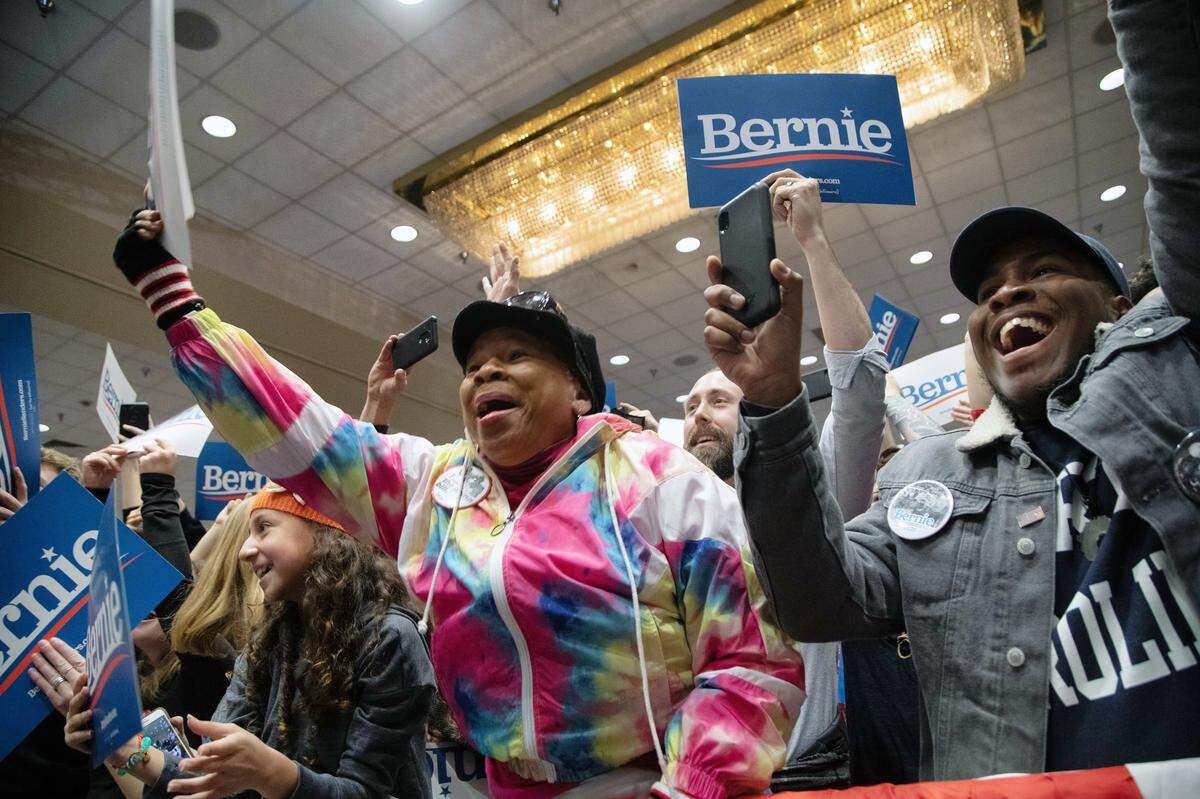
The Democratic Party has accommodated Sanders, who on his Senate website continues to call himself “the longest serving independent member of Congress in American history.” He caucuses with Democrats in the Senate, but is still labled I-VT — independent from Vermont.
Identity crisis?
Over the years, Bloomberg has been a Democrat, a Republican, and an independent. He switched his registration from Democrat to Republican to run for mayor atop the GOP ticket in 2001. He left the Republican Party in 2007 and was unaffiliated until 2018. Anticipating a possible run for president, he became a Democrat again.
But even as late as 2016, Bloomberg contributed $11.7 million to help re-elect a Republican senator, Pat Toomey, of Pennsylvania. Conservative on most issues, Toomey endeared himself to Bloomberg by pushing for background checks for gun purchases. Gun control and efforts to address climate change are among the liberal causes Bloomberg has spent billions to promote.
Another Bloomberg pledge is to make sure Trump isn’t re-elected, whether Bloomberg wins the nomination or not.
That’s why so many Democrats, according to Tuesday’s poll, are willing to look past Bloomberg’s past transgressions, including his defense, as recently as 2015, of “stop and frisk,” a police practice that critics say profiles mostly young men of color. Just before entering the presidential race, Bloomberg apologized for not giving up on “stop and frisk” during his years as mayor.
Bitzer attributes Bloomberg’s steep rise in the polls to one thing: “The overriding concern of Democrats is to beat Trump.”
Still, Bitzer added, Bloomberg will have to follow up all his TV ads with a debate performance that demonstrates he can take on Trump when it comes time for that debate.
Even if parties aren’t the disciplined powerhouses they used to be, they nevertheless operate in an era of strong partisanship, said Chris Cooper, a professor of political science at Western Carolina University.
“Parties are not able to control as much as they used to,” he said. “But people are identifying with parties more.”
So while the Republican establishment was not able to keep Trump from getting its party’s 2016 nomination for president, the GOP now has a base utterly devoted to the new Republican Party he’s fashioned.
Cooper said it’s too early to tell what will happen with the Democratic Party — and who will end up leading it.
“The Democratic Party, much like the Republican Party four years ago,” he said, “is struggling to find its identify this (election) cycle.”
This story was originally published February 19, 2020 at 5:00 AM with the headline "Bloomberg and Sanders — neither life-long Democrats — now want to lead the party."