What to know about candidates for the state House and Senate in the Triangle
In the 2018 elections, a wave of energized Democratic voters flipped enough seats in the North Carolina legislature that Republicans lost their veto-proof supermajority. That gave Democratic Gov. Roy Cooper more power and set the stage for higher stakes in the 2020 elections.
This year, Democrats have their sights set on taking back control of the legislature. They held a majority at the General Assembly for over a century before the Tea Party wave of 2010 swept Republicans into power, which they were then able to entrench with favorable redistricting, despite numerous maps being struck down as unconstitutional.
There’s a new round of redistricting scheduled for 2021. So the political party that controls the legislature after this November’s elections gets to decide how the state’s political maps for the next decade are drawn.
With so many other contests on the ballot during the primary elections, however, state legislative races can sometimes get lost in the crowd. So The News & Observer sent questions to everyone running in a primary for the General Assembly in the Triangle this year.
The candidates who responded provided some biographical details about themselves, as well as their stances on hot-button political issues that they would be considering if elected — including gerrymandering, state employee raises, health care and more.
Wake County primaries to watch
As the two parties jostle for that post-2020 power, the Triangle is a key part of the political equation.
Republicans want to flip back some of the suburban districts the GOP lost in 2018 in the Triangle — as well as in Charlotte, Wilmington, Fayetteville and Greensboro. Democrats will only win back a majority if they hold onto those seats and make gains in more rural areas.
For Democrats to retake a majority in either chamber in 2020 they need to gain five seats in the 50-member Senate, or six seats in the 120-member House of Representatives.
Republicans held three of Wake County’s 11 N.C. House seats going into the 2018 elections, and three of the five N.C. Senate seats. Now Democrats hold all 11 House seats and four of the five Senate seats. The lone Republican left representing any part of Wake, Durham or Orange counties at the state legislature is Sen. John Alexander.
But Alexander is not running for re-election. And after a court-ordered redraw of the districts last year, Alexander’s north Raleigh district could be more favorable to Democrats than it was in 2018 when Alexander won by less than 1%. There are primaries on both sides of the aisle for his Senate District 18 seat, and it could again be a close race in the general election.
Two Republicans — Scott McKaig and Larry E. Norman — and two Democrats — Angela F. Bridgman and Sarah Crawford — are campaigning to replace Alexander. A Libertarian, Jason Loeback, doesn’t have a primary contest.
Another primary to watch is the GOP race in southern Wake County’s House District 37. Democrat Sydney Batch defeated the incumbent, Republican John Adcock, in 2018 by less than 1% of the vote.
Adcock isn’t in the race again, but three other Republicans — Erin Paré, Anna Powell and Jeff Moore — are competing to take on Batch and Libertarian Liam Leaver this November.
Durham
By contrast, Senate District 20 in Durham is all but guaranteed to be won by a Democrat in November, so the Democratic primary will likely decide Durham’s newest state senator.
The race is to replace Floyd McKissick Jr. He stepped down earlier this year, after more than a decade at the legislature, after Cooper appointed him to the state Utilities Commission.
All three of the Democrats running to replace McKissick — Gray Ellis, Pierce Freelon and Natalie Murdock — responded to the N&O’s questionnaire. A Republican, John Tarantino, doesn’t have a primary.
For more North Carolina government and politics news, listen to the Domecast politics podcast from The News & Observer and the NC Insider. You can find it on Megaphone, Apple Podcasts, iHeartRadio, Stitcher or wherever you get your podcasts.
Click a candidate's name to read an explanation to his or her answer.
What key issue or issues did the legislature not address this session that you would sponsor a bill about during the next session, if elected?
 Antoine Marshall (D):
Gentrification and the lack of affordable housing is a major issue in my district and other urban centers around the state that has gone ignored by the General Assembly. I would implement a good cause eviction policy, allow municipal governments to create inclusionary zoning policy and levy impact fees, and provide protections from source of income discrimination.
 Rosa U. Gill (D):
Passing of the ERA, four year staggered terms for Wake County Commissioner and Board of Education, DPI being responsible for failing schools, increase wages to a living wage and repeal legislation that limits women's reproductive rights.
 Kim Coley (R):
Born Alive Bill
 Erin Paré (R):
Expansion of educational freedom/school choice. Require law enforcement to cooperate with ICE to ensure criminal illegal immigrants are kept off the street. Tax-policy that supports small businesses, entrepreneurship, fosters job creation, and allows North Carolinians to keep more of their hard earned money.
 Anna Powell (R):
Legislation to speed up road building, and other needed infrastructure improvements
 Abe Jones (D):
The legislature to seriously consider a state assault weapons ban to cover weapons such as the AR-15 and AK-47.
 Quanta Monique Edwards (D):
That is difficult to answer, because the NC General Assembly entertained in excess of 1,700 bills during last year's session. However, if I had to put forth new legislation, revisit an existing bill or add support to a bill in process, it would be bills related to affordable housing, Medicaid expansion along with the expansion of other health care needs, safe schools and education.
 Verla Insko (D):
Medicaid expansion, non-partisan gerrymandering commission, teacher pay, early childhood education, increase per pupil funding, adequate funds for community colleges and UNC, infrastructure bond, increase minimum wage, climate change program, restore funds cut from behavioral health programs, expand IDD Innovations waiver.
 Larry E. Norman (R):
Education -- require schools to teach true American history.
 Scott McKaig (R):
1. Criminal justice reform (lots to do there). 2. Reducing our state health and pension deficits. 3. Reducing health-care costs for everyone (not expanding Medicaid and worsening an already bad situation). 4. I would like to close Central Prison.
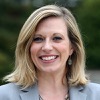 Sarah Crawford (D):
During the last session, the legislature failed to meet its responsibilities when it comes to public education and has not afforded every child in North Carolina a sound, basic public education. We need to fully fund public education and ensure that all teachers and school personnel get the raises they deserve. Additionally, the legislature failed to expand Medicaid, which is fully funded, and would mean that hundreds of thousands of people gain health-care coverage.
 Gray Ellis (D):
Our mental health-care system is broken at best, nonexistent at worst and no one is paying attention. One in five North Carolinians lives with mental illness. One in seven of those living with mental illness don’t have health insurance. I support legislation requiring health insurance companies to cover mental health treatment. I will fight for increased funding and expansion of treatment options. Finally, I would support the establishment of mental health courts in every county to help ensure we are not using incarceration as a substitute for treatment.
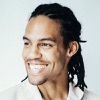 Pierce Freelon (D):
House Bill 99, known as the Anti-Discrimination Act of 2017 -- prohibits law enforcement officers from racially profiling people and would require law enforcement agencies to collect homicide statistics, including data about people killed by their officers and require officers to receive annual training concerning discriminatory profiling. Rep. Rodney Moore filed a similar bill, HB 193, in 2015 but the bill never made it out of committee.
The bill’s primary sponsors were: Rodney Moore and Kelly Alexander Jr., both of Charlotte, Reps. Cecil Brockman of High Point and Amos Quick of Greensboro. It was first raised in 2017, shortly after the killing of Keith Lamont Scott. This was only a few years after the killing of an unarmed Black man, Johnathan Ferrell, who was seeking help from the police following a car crash.
Issues of discriminatory practices persist in Durham today. My work as Vice Chair of the Durham Human Relations Commission has revealed the extent of the disparities in marijuana arrests and traffic stops.
Even though studies show that white and black people use marijuana at identical rates, Durham police arrest records reveal that over 80% of marijuana arrests are young black men, despite their being less than 20% of the population. Recent studies also show that, when it’s daytime and it’s easier for an officer to determine the race of a driver the tendency to stop black drivers is significantly higher than when it’s nighttime and the officer’s vision (and consequently the race of the driver) is obscured. This quantitative data reveals systematic discrimination. It’s alarming and I will fight to make sure implicit and explicit bias is directly addressed through legislative action.
Here is a link to the study:
http://dig.abclocal.go.com/wtvd/docs/vod_durham_final.PDF
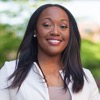 Natalie Murdock (D):
Climate change is an issue that should be a priority at every level of government. Despite the governor’s best efforts, in this session, the General Assembly has not passed a single act on addressing the climate crisis. If elected state senator, I would sponsor legislation pushing for the creation of more solar and wind energy, particularly in low income areas. While we rank second in the nation in solar energy production, aggressively pursuing the creation of more solar energy should be predicated on creating a healthy environment for our children, not solely competition. In wind energy production we rank 30th, yet studies by Oceana, Wind Exchange and our own environmental analysts show that North Carolina has more offshore wind potential than any other state in the east. Wind power alone has the potential to supply 112% of the state’s energy needs, potentially saving the state over $2 billion. For economic, environmental but most importantly moral reasons, it is imperative that the state aggressively pursue clean energy development in a manner that ensures a healthy future for our children and economic justice for low income and minority people who have been most impacted by climate change.
 Angela F. Bridgman (D):
Veto Reform. When elected, I will work to place a constitutional amendment on the ballot to impose the same 10-day limit on the legislature that the governor has. If they cannot override in 10 days, veto stands and they must come to the table and negotiate in good faith.
This would prevent future budget impasses and the pain inflicted on many citizens as a result. It would also restore the three co-equal branches of government called for by the NC Constitution. If one branch can hijack the process and delay it indefinitely, that is not a co-equal branch of government.
Do you support any form of Medicaid expansion?
Antoine Marshall (D): Yes
Explain your Medicaid stance
The leading opposition to expansion of Medicaid is that it would increase state funding cost. Given that the federal government will cover 90% of the costs of expanding Medicaid, the experience of the 37 states that have decided to expanded Medicaid have proven that is not the case. It is incomprehensible why the General Assembly would allow taxpayer dollars to go to benefiting citizens in other states, fiscally irresponsible to refuse to allow a policy that would provide economic benefit to rural hospitals, and unethical given that their failure to expand Medicaid has literally cost lives.
Rosa U. Gill (D): Yes
Explain your Medicaid stance
In addition to Medicaid expansion being an economy driver (creating jobs & receiving federal dollars) it will help thousands of North Carolinians get access to affordable health care. This will help reduce the health care disparities for women and the minority population. A study by the American Journal of Public Health concluded that expanding Medicaid could reduce infant mortality rates among African American babies. We need to expand Medicaid without work requirement and co-pays.
Kim Coley (R): No
Explain your Medicaid stance
Why expand anything not presently working as intended for those originally designed?
Erin Paré (R): No
Explain your Medicaid stance
I support competitive, free-market based reforms to North Carolina's health-care system to increase quality and lower costs. I oppose Medicaid expansion for the following reasons: Traditional enrollees -- the blind and disabled, low-income parents and children, the elderly and pregnant women -- would be at risk of having to compete for access to care with an additional 500,000+ more people -- mostly able-bodied, childless adults. States that have expanded Medicaid have experienced significant cost overruns. Such cost overruns will likely result in the need to divert resources from other budget priorities, such as transportation and education. Unfortunately significant improvements still need to be made to how current Medicaid recipients receive care. We need competition in health care and to rein-in government mandates to increase quality, access, and lower the cost.
Anna Powell (R):
Explain your Medicaid stance
Candidate did not respond to the question.
Abe Jones (D): Yes
Explain your Medicaid stance
NC should expand Medicaid assistance to cover over 500,000 citizens that would have been covered if the federal assistance previously offered had been accepted.
Quanta Monique Edwards (D): Yes
Explain your Medicaid stance
Medicaid should be expanded in three distinct directions. First, there should be an expansion by making an adjustment to the qualifying income limits. Right now, a family of three must not earn more than $8,400 annually to qualify for Medicaid. This is unacceptable. Second, there should be an expansion in benefits screening at state subsidized and state operated mental health facilities for benefits eligibility. If we can identify benefits eligibility then chances are that NC can reduce the number of revolving door mental health patients. Third, expand Medicaid coverage for seniors. This would include prescription drug coverage by expanding the limits before reaching the prescription drug coverage gap. Also, I feel that Medicaid recipients should receive cost concession in transportation to medical facilities and simple errands related to maintaining the needs of their households.
Verla Insko (D): Yes
Explain your Medicaid stance
I support full Medicaid expansion but would vote for the House Republican version if it were the only option.
Larry E. Norman (R): No
Explain your Medicaid stance
Government cannot continue to spend funds that it cannot afford to spend. I believe that we should focus on private, free market solutions in health care.
Scott McKaig (R): No
Explain your Medicaid stance
We need to reduce health-care costs to everyone. We should start by requiring doctors and hospitals to disclose the costs of service prior to performing any services. The costs should not be determined on what your insurance is willing to pay. We need to scale back insurance mandates, eliminate certificate of need laws and increase scope of practice for affordable practitioners. The answer to our problem is driving down costs for everyone, not adding 500,000 people to Medicaid. Also the notion that 90% of the cost will be covered by "free federal dollars" is profoundly ignorant of where these "free dollars" come from.
Sarah Crawford (D): Yes
Explain your Medicaid stance
Politicians in Raleigh have repeatedly refused billions of dollars to extend health-care coverage to more than 500,000 North Carolinians through Medicaid expansion. This has cost the state $6 billion and countless jobs. From my experience at Tammy Lynn Center, I have seen firsthand the important role that this needed coverage plays in providing families the care they need and deserve. I will stand for North Carolinians and fight to protect families from the partisan politics that have denied health-care coverage to hundreds of thousands.
Gray Ellis (D): Yes
Explain your Medicaid stance
I find it unacceptable that North Carolina has not protected some of its most vulnerable citizens, often referred to as the "gap" citizens. Over 600,000 North Carolinians would qualify for coverage under Medicaid expansion, over 200,000 of whom do not currently have reasonable access to coverage. The most vulnerable members of our community often have to choose between paying for their basic needs or paying for health care. This is more than a moral issue, it is becoming a fiscal disaster for our families, hospitals and our state.
Pierce Freelon (D): Yes
Explain your Medicaid stance
My district contains some of the most prominent health facilities in the country yet, North Carolina has America’s second worst health system according to a WalletHub study. Medicaid expansion is the best ethical and economic choice, and it will provide high quality health care for over 600,000 North Carolinians.
I will represent Durham’s passion for treating health and access to health care as a human right. Medicaid expansion has the potential to bring 37,200 more jobs into the state, including over 4,000 for District 20 alone. North Carolina Medicaid expansion is the long overdue, healthy option backed by health care providers at Duke University School of Medicine and the leadership of Dan Blue and Mike Woodard in the NC General Assembly. Personally, it’s central to the promise of my father’s vision of our city. “Durham’s vitality is built upon the health of our residents and the capacity of our community to foster and enhance the wellbeing of every citizen,” Phil Freelon advised. His quote is engraved on Durham’s Human Services Complex building which he designed before he passed away in 2019. He and I had many conversations about the systemic injustice of our health-care system over the years that I was one of his primary caretakers. We recognized the privilege of his access to our state’s best ALS research, facilities, treatment, and equipment; and I promised him I would fight for all North Carolinians to have access to care.
As a state-level proponent of the Affordable Care Act, I will work with communities, other policymakers, medical professionals and the private sector to drive policies that reimagine our health-care system as one that establishes and maintains the conditions of good health rather than only treating disease. For this reason, I also support a full scope of pro-choice healthcare including: expanding Medicaid to provide more access to care; working to expand access to people of working class, rural or marginalized communities; expanding youth access to sexual education, family planning, and contraceptive resources.
Choice is the watchword of patient agency that spurs my Medicaid advocacy. High quality health care is a human right that everyone deserves access to.
Natalie Murdock (D): Yes
Explain your Medicaid stance
We must expand Medicaid. For our state to turn down free money that could be used to close the coverage gap for thousands of North Carolinians is simply cruel. Accepting federal funds to expand Medicaid will close the insurance gap among thousands of North Carolinians who currently lack access to care.
Over 13% of Durham County residents lack health care. The average household is one medical emergency away from being launched into bankruptcy. States across the nation are rolling back women’s reproductive rights. Funding for access to women’s health care is under attack. Our rural communities need greater access to health care. We must continue to fight for Medicaid expansion and fund preventable health measures.
For me, Medicaid expansion is more than a campaign slogan. I know what it feels like first hand to go without health care coverage. There are thousands of lives at stake and we must expand Medicaid in 2020.
Angela F. Bridgman (D): Yes
Explain your Medicaid stance
Currently, 37 states have expanded Medicaid. The taxes we already send to Washington are used, in part, to fund these programs in other states. Apparently, the NC GOP would prefer to subsidize health insurance for citizens of other states instead of our own citizens.
62% of rural hospital/clinic closings are in states that do not have expanded Medicaid. We must work to keep these clinics and hospitals in rural areas of our state open, and deliver coverage to the 600,000 citizens of our state who currently lack coverage.
What percent annual raises should teachers receive from the General Assembly? Do you think other state employees should receive the same raise, or a different amount?
Antoine Marshall (D):
I believe that teachers should get the 9.1% raise laid out in Governor Cooper's budget. I believe other state employees should receive raises commensurate with the difficulty of staffing those positions. Most state employees should get a cost of living adjustment, while we need to drastically raise the salary of difficult to staff positions such as correctional officers.
Rosa U. Gill (D):
I think that teachers and all state employees should receive annual increases greater than or equal to the rate of inflation or cost of living.
Kim Coley (R):
North Carolina's teacher pay should reflect our value in those educating our children. A guaranteed percentage does not secure a sustainable income for the teachers amidst tax increase year after year. Teachers are required to multi-task a wide spectrum of needs for 17-27 individuals that the teachers themselves may not have the educational background to properly administer to their students. North Carolina should provide teachers the resources from trained assistants to qualified supporting staff, ensuring a healthy learning environment for all within the classroom. State employees are not in the same category as our teachers. Addressing state employees should be a separate question. I don't like the concept of a percentage-based "one-size-fits-all." Across the state, state employees face different obstacles, challenges, county support or not having support, and I feel these issues should be taken into account when considering the pay increase and value of the employee.
Erin Paré (R):
As PTA President for a Wake County public school, and mother of two children in public schools, I see how hard teachers and school staff work each and every day to provide the best education to our youth. I want our teachers to be well compensated for their work in achieving excellence in student outcomes. I also support linking a teacher bonus pay incentive to measurable growth in student performance. Setting and achieving goals in competitive teacher pay should remain our priority in North Carolina. We also need to recognize that pay for essential school support positions, such as teacher assistants, and some essential state employees, remains low and stagnant. We need leadership in the legislature that will take a critical look at state needs from a cost-wise perspective, and advocate for spending that achieves best outcomes.
Anna Powell (R):
Governor Cooper has vetoed two meaningful pay raises for our teachers for purely political reasons, I support any raise proposed by the General Assembly. We must also give our other state employees the same respect by increasing pay, especially for hard-to-fill positions, such a prison workers.
Abe Jones (D):
Teachers should receive an annual raise of at least 10%, and, yes, other state employees should receive raises, but not necessarily what teachers receive, though that should be the goal.
Quanta Monique Edwards (D):
State employees should receive a periodic raise according to their position, tenure, education and experience. I would like to see an increase for state employees who earn less than $60,000 annually and the raise should be no less than 2% every other year.
Verla Insko (D):
Due to the massive cuts in education since 2012, I support Governor Cooper's average 9% increase over two years for teachers with no teacher getting less than 3%. I favor a 2% annual pay raise for other state employees.
Larry E. Norman (R):
I do not have sufficient information to form a belief as to what percent raises should be allowed to any government employee.
Scott McKaig (R):
I think decisions on teacher pay have to be considered with the rest of the budget. I would love to give teachers larger raises, but I don't believe a standard annual pay raise is appropriate for anyone. Those decisions should made with each budget and should be based on a combination of factors including performance and the state's overall financial health.
Sarah Crawford (D):
All state employees, including teachers, should be given, at a minimum, a cost of living adjustment on an annual basis. We do need to accelerate raises for teachers to bring average teacher pay up to at least the national average.
Gray Ellis (D):
North Carolina ranks below average in teacher pay. At the very least, the General Assembly should immediately raise teacher pay to match the national average - $60,462. When I was growing up, education was a point of pride for North Carolina. We need to be better than average. I would support legislation that raises average teacher salary to $65,000.00 by 2023.
In regard to other state employees, my answer would depend on the position they held. In general, I support a living wage for every resident of North Carolina. Specifically, I believe the minimum wage should be raised to $15.00 for every person employed in North Carolina.
Pierce Freelon (D):
Republicans have proposed a 4% raise over the next two years. Cooper’s compromise suggests double that amount: about 8.5% over the next two years. I side with the governor, and believe an 8% raise will send a powerful message to our educators that their commitment, expertise and hard work is valued.
According to Public Schools First NC, as of 2019 North Carolina ranked 37th out of 50 states in teacher pay, but as recently as 2017, North Carolina was ranked 47th in the country. This is woefully inadequate.
If we want to recruit and retain talent, we need to put our money where our mouth is and stop short-changing our children. Put the children first, and pay the teachers what they deserve.
Some other state employees received a 2.5% pay increase (including correctional officers, troopers and rank-and-file state employees) last year when “mini-budgets” were passed, but teachers were left out of the conversation.
While I don’t believe wages have increased sufficiently for folks to keep up with the increased cost of living, I don’t think there’s a one-size-fits-all solution to state employee raises. The teacher raise issue requires specific urgency because of the nuances of the job: teachers are required to have college degrees, and teacher pay, relative to other jobs that also require a college degree, is disproportionately low. We’re losing brilliant talent to other fields and disciplines that require similar qualifications, and the ones who suffer are our children. I can’t express enough the extent to which this should be one of our top priorities. Studies show that well-educated children who are cared for intellectually and emotionally, who are healthy physically and nourished culturally, are less likely to have run-ins with corrections officers and state troopers. So by investing in our children we are reducing our need long-term to invest in law enforcement and the prison industrial complex. All state employees should be paid a living wage, but determining how much of a raise each employee receives would need to be determined on a case-by-case basis.
Natalie Murdock (D):
According to a 2016 report by the NC Justice Center, teacher pay would require a raise of between 54 and 77 percent to get on track with similar professions in the state. During the previous session, Republicans in the GA championed their salary raise of just a few percentage points, but failed to explain how much of recent teacher salary raises are due to local supplements rather than state funding. In fact, the proposed teacher raise amounts to just $70 more on a paycheck for a teacher who has taught for over 25 years. So, before addressing an annual raise plan, we need to address the fact that our public school teachers are horribly underpaid across the board, and we need to raise the base pay for teachers pursuant to the Justice Center’s recommendations. In the face of annual decreases in new, highly trained teacher employment, it is particularly important to dramatically increase teacher pay so that NC can attract the best teachers available. We should restructure the pay schedule so that beginning salaries start from the current 25th level of compensation for certified teachers with a bachelor’s degree ($52,000). Once we reach a base salary level appropriate for society’s most important profession, we should institute a 2-5 percent annual raise for teachers, depending on teacher certification and advanced degrees (as opposed to so called performance-pay models). We should also cover the expense of certification programs such as NBPTS to ensure that teachers are not using their own income to improve our public schools.
This may seem like an expensive proposal, but even the most conservative studies have shown investments in public education to yield a return of 4 percent over 12 years; more rigorous studies estimate returns of up to 14 percent. If I had the opportunity to make an investment that yields such high returns for our future and our children, I would invest as much as I possibly could.
Angela F. Bridgman (D):
Higher than even Gov. Cooper proposed, because even his proposed raise does not raise our teacher pay to the national average. We need to at least raise teacher pay to the national average.
Other state employees have their own contracts, and they received raises. School support staff, however, did not and they should.
Courts have ruled against North Carolina legislators numerous times in gerrymandering cases. Would you support redistricting reform before new maps are drawn again in 2021?
Antoine Marshall (D): Yes
Explain your stance on redistricting.
We need a non-partisan redistricting commission in order to ensure fair elections.
My ideal redistricting commission would be comprised of:
- Three retired justices or judges from the North Carolina Supreme Court or Court of Appeals selected by the attorney general; two of the panel would be from the same party as the governor, the other of differing party affiliation
- Four members of the legislature, one selected by the majority and minority leader of both chambers of the General Assembly
- Seven qualified citizens from an application process. two Republicans, two Democrats, and three independents selected by lottery.
Nine of the members of the commission would have to approve the map and it would go to the governor who has the option to veto or approve the maps.
Rosa U. Gill (D): Yes
Explain your stance on redistricting.
Yes. I would support a Nonpartisan Redistricting Commission to draw the maps because it would create a fair system that would allow voters to choose their leaders instead of politicians choosing their voters.
Kim Coley (R):
Explain your stance on redistricting.
An updated census of growth and a calculator are simple solutions to drawing maps.
Erin Paré (R): Yes
Explain your stance on redistricting.
Redistricting reform must protect the interests of the voters, not interested parties. The redistricting process must be as transparent to the public as possible; maintain the integrity of the process through a politically balanced redistricting commission; and apply constitutional requirements. Redistricting reform legislation must maintain a focus on communities. Drawing district lines is the job of the legislature, not the courts.
Anna Powell (R):
Explain your stance on redistricting.
It doesn't seem that any state has been able to create a process in which redistricting is non-partisan.
Abe Jones (D): Yes
Explain your stance on redistricting.
The state legislature, controlled by the current Republican legislature, has engaged in unprecedented partisan gerrymandering particularly designed to undercut African American voters. The state should redraw the maps again after the 2020 Census, but not before the elections in 2020. Time has run out.
Quanta Monique Edwards (D): Yes
Explain your stance on redistricting.
I favor allowing an independent commission to redraw district maps provided it has relevant information on past, present and future population trends in a particular area. Based on the information, the independent panel can decide if the district lines need to be redrawn and if so, how should they be redrawn.
Verla Insko (D): Yes
Explain your stance on redistricting.
With at least 7 non-partisan or bi-partisan plans under consideration, I favor all of them over the process we currently are using or have used in the past.
Larry E. Norman (R): Yes
Explain your stance on redistricting.
We must find answers on redistricting to make sure that all citizens are properly represented. Our state has been subjected to gerrymandering by the Democrats for years.
Scott McKaig (R): Yes
Explain your stance on redistricting.
I want fair maps. Fair for everyone, not just whichever party gets to draw them.
Sarah Crawford (D): Yes
Explain your stance on redistricting.
Yes, I support an independent, nonpartisan redistricting effort. We need to ensure fair maps and fair representation, so that voters are choosing the politicians instead of politicians choosing their voters.
Gray Ellis (D): Yes
Explain your stance on redistricting.
I would support the appointment of an independent redistricting body. Gerrymandering deprives voters of their constitutional right to representation.
Pierce Freelon (D): Yes
Explain your stance on redistricting.
In North Carolina voter suppression has taken the form of gerrymandered districts which have been cut to “target African Americans with almost surgical precision” and voter ID laws which risk disenfranchising rural and elderly voters of color. Students of color particularly have been demographically targeted for gerrymandering. According to files publicly disclosed in 2019, Republican strategist Thomas Hofeller compiled race based data for that purpose, including maps aggregated by critical mass of voting-age African Americans at North Carolina A&T State University. Is it by design or coincidence that across the nation, non-white representation of the electorate has declined? During congressional hearings, federal-level experts note that residents in Indian Country and mobile homes are regularly denied their democratic right to vote; the outcome of Shelby County v Holder led to the introduction of H.R. 4617, the Stopping Harmful Interference in Elections for a Lasting Democracy (SHIELD) Act by Sen. Patrick Leahy in 2019. Overall, discomforting patterns of race and class-privilege emerge from Republican-majority caucuses. As a North Carolina state senator, I will demand fair districting in the new 2020 maps.
An independent process for drawing our districts would look transparent and center the Fair Districts Pledge of senator elect, Senate District 20 as a start. Independent review of NC maps is necessary to balance (or correct) the bias of Republican supermajorities in both chambers of the NC General Assembly. North Carolina’s independent process could resemble that of Michigan: “The commission comprises 13 members, including four Democrats, four Republicans, and five unaffiliated voters or members of minor parties. In order for a map to be enacted, at least seven members must vote for it, including at least two Democrats, two Republicans, and two members not affiliated with either major party.” Among the unaffiliated voters are members of the general public -- anyone -- who apply for this civic participation online. Durham/District 20 has had great success with civic participation such as Participatory Budgeting; I foresee we would easily rise to the challenge of facing down gerrymandering too.
Natalie Murdock (D): Yes
Explain your stance on redistricting.
North Carolina needs an independent commission that will fairly draw legislative and congressional districts. Such a commission must remove all partisanship from setting up legislative and congressional districts. Further, all districts must be compact, have equal population as much as possible, and represent communities of common interest. The work of such a commission can be reviewed by the court to ensure fairness and compliance with the state and federal constitution. Such a commission can also set up judicial and other districts to ensure partisan and racial gerrymandering ends at all levels of government.
Angela F. Bridgman (D): Yes
Explain your stance on redistricting.
We need to have a non-partisan independent redistricting committee, such as was proposed in HB 69 cosponsored by Reps. Hardister and McGrady.
I am on public record in support of this, via my testimony at a public hearing in September on this issue. We need to take the drawing responsibility out of the hands of elected officials who have a vested interest in the outcome.
Extreme partisan gerrymandering is wrong, no matter which party engages in it, as I explained in my testimony ... as it deprives citizens of the most important tool of democracy -- the ability to hold your elected officials accountable.
Candidate Info
Antoine Marshall
ChamberHouse
District33
PartyDemocrat
EducationBachelor of Arts in American Studies from Claflin University; Juris Doctor from Wake Forest School of Law
Professional experienceCongressional intern in the Capitol Hill offices of U.S. Rep. James Clyburn and U.S. Rep. Donna Christensen. Licensed attorney since 2012. Six years as a Legal Aid attorney. Former Legislative Aide for a NC senator. Currently manages a solo practice law firm.
Previous public offices held (if any)N/A
FamilyWife, Chrishele; two daughters, Chrisette and Janell, ages 2 and 3.
Websitewww.marshall4house.com
Rosa U. Gill
ChamberHouse
District33
PartyDemocrat
EducationBS degree in Mathematics, Shaw University, and additional graduate studies
Professional experienceRetired high school mathematics instructor. Director, Crash Reporting Section with DMV/DOT
Previous public offices held (if any)Wake County Board of Education and NC House of Representatives
FamilyMarried - Jimmie Gill; two adult daughters and two grandchildren
Websitewww.rosagill.com
Kim Coley
ChamberHouse
District36
PartyRepublican
EducationSome college.
Professional experienceSmall business owner/ Minister/ Real Estate Investor
Previous public offices held (if any)
FamilyMarried/ 2 Children
Websitewww.TrustKimColey.com
Erin Paré
ChamberHouse
District37
PartyRepublican
EducationM.A., International Commerce and Policy, George Mason University; B.A., Government and International Politics, George Mason University
Professional experienceSmall Business Owner, Play It Again Sports in Holly Springs. Founder and Director of a local nonprofit serving community youth. Public Policy Consultant, Senior Government Affairs Representative, Washington, D.C., seven years.
Previous public offices held (if any)none
FamilyHusband, Wayne Paré and two children, Madison (12) and Cole (9)
Websitehttp://erinfornc.com
Anna Powell
ChamberHouse
District37
PartyRepublican
EducationFuquay-Varina High School, Elon University (History, Political Science)
Professional experienceRealtor with Century 21
Previous public offices held (if any)None
FamilyHusband, Robbie and son, Tripp
Websitehttps://voteannapowell.com/
Abe Jones
ChamberHouse
District38
PartyDemocrat
EducationGraduate of William G. Enloe High School, 1970; Harvard College, AB in History, 1974; and Harvard Law School, JD, 1977
Professional experienceLaw clerk to U.S. District Court and U.S. Court of Appeals; Assistant Attorney General, NC Department of Justice; Assistant U.S. Attorney (Eastern District of NC), 1979-1983; private practice, Adams, McCullough, & Beard; Superior Court Judge for North Carolina (District 10).
Previous public offices held (if any)Wake County Commissioner, 1990-1994.
FamilyTwo daughters: Carly Prentis Jones (34-year-old) and Elisabeth Penn Jones (26-year-old).
Websitehttps://abejonesfornchouse.com/
Quanta Monique Edwards
ChamberHouse
District38
PartyDemocrat
EducationI am a product of the Wake County Public School System and a graduate of UNC-Chapel Hill
Professional experienceI earn my living as a licensed real estate broker and I own a real estate firm. As a housing advocate and board member for various causes, I have taken on affordable housing initiatives across the state and in the local area, addressed the needs and concerns of first time young mothers and their children and worked with various not for profit organizations around health care needs for small business owners.
Previous public offices held (if any)
FamilyMy family's background is rooted in agricultural farming, education and serving the community. We are military veterans, government employees, police officers, teachers, principals, and business owners. Also, I consider the members of Wake Chapel Church to be my family and support system because Wake Chapel is where my daughter and I were baptized. I have four sisters and I am the oldest. I raised my daughter as a single parent and my daughter is absolutely my number one smile.
Websitewww.Edwards4NC.com
Verla Insko
ChamberHouse
District56
PartyDemocrat
EducationBA, Fresno State College; MPA, UNC-Chapel Hill
Professional experienceJunior high school science teacher, Berkeley, California and Honolulu, Hawaii (Kamehameha Schools), Health Program Administrator, UNC-Chapel Hill School of Medicine.
Previous public offices held (if any)Chapel Hill Carrboro Board of Education, Orange County Board of Commissioners.
FamilyHusband: Chet, son Erik (Melani) and grandchildren Lauren and Nathaniel. Son Kurt (Gina) and grandson Thomas
Websitewww.verlainsko.com
Larry E. Norman
ChamberSenate
District18
PartyRepublican
EducationBA, NC State; JD, Campbell College School of Law
Professional experienceAttorney, private practice, 40 years
Previous public offices held (if any)North Carolina Social Services Commission. Franklin, Vance, Granville, Warren Area Mental Health Board
FamilyMarried -- four children and nine grandchildren
Websitewww.NormanforNCSenate.com
Scott McKaig
ChamberSenate
District18
PartyRepublican
EducationEast Wake High School; BA, UNC- Greensboro; JD/MBA, Campbell
Professional experienceAttorney since 2008. Currently the CFO and General Counsel of a non-profit
Previous public offices held (if any)None
FamilyMy partner Katie Riebe and I have two sons (Liam 8, Aiden 6)
Websitewww.scottmckaig.com
Sarah Crawford
ChamberSenate
District18
PartyDemocrat
EducationB.A. from NC State University
Professional experienceNational Director of Partnerships and Programs, Single StopDirector of Development and Public Affairs, Tammy Lynn Center for Developmental Disabilities
Previous public offices held (if any)
FamilyHusband Dan, Two kids Emily (10) and Abby (8)
Websitesarahfornc.com
Gray Ellis
ChamberSenate
District20
PartyDemocrat
EducationNorth Carolina State University, North Carolina Central University School of Law
Professional experienceWake County Juvenile Court Counselor; Partner at Burton & Ellis, PLLC; Owner and Managing Partner at Ellis Family Law, PLLC; Board Certified Specialist in Family Law; Vice President of Meals on Wheels of Durham.
Previous public offices held (if any)none
FamilyI have a partner and children
Websitewww.grayellisforncsenate.com
Pierce Freelon
ChamberSenate
District20
PartyDemocrat
Education2008, M.A., Pan-African Studies (Syracuse University); 2006, B.A., African and Afro American Studies (University of North Carolina at Chapel Hill)
Professional experienceAdjunct Professor - UNC-Chapel Hill, Department of African, African American and Diaspora Studies; Department of Music Adjunct Professor - North Carolina Central University - Department of Political ScienceAdjunct Professor - Piedmont Community College - General Education and Developmental Studies Founder of Blackspace (Digital makerspace)Director, Writer, Composer - History of White People in America (Official Selection of the 2018 and 2019 Tribeca Film Festivals)Co-founder of Beat Making Lab (PBS web-series; won an Emmy award in 2015)Co-founder of Next Level ($2 million cultural diplomacy and conflict resolution program by UNC Chapel Hill and the U.S. State Department)Co-founder of Poetic Justice (Hip Hop/spoken word after-school program with Durham Crime Prevention Council)Field Organizer - Voices for Working Families (Non-profit voter registration, education and mobilization organization) Public Intellectual - recent speaking engagements include: Commencement Speaker, UNC-Chapel Hill Department of Music; Convocation Speaker, UMass Lowell; Durham City/County Martin Luther King, Jr Keynote; Triangle Diversity Alliance Keynote; Bill & Melinda Gates Foundation International Conference on Family Planning (Addis Ababa, Ethiopia); Global Voices: Citizen Media Summit (Nairobi, Kenya); Mashable’s Social Good Summit (New York, NY); United Nations Foundation (Rio de Janeiro, Brazil); Sound Diplomacy (Chengdu, China); JHS Distinguished Speaker Series, Durham Public Schools.
Previous public offices held (if any)Vice-Chair of Durham Human Relations Commission; Chair of Public Housing Accountability Committee
FamilyI have been married to Kathryn Freelon for 11 years. We have two children and a Golden Shepherd named Jean Grey. I am the son of jazz musician Nnenna Freelon and the late architect Phil Freelon. My sister Maya Freelon is a visual artist. My brother Deen Freelon is a Professor in the Communications Department at UNC Chapel Hill.
Websitewww.piercefreelon.com
Natalie Murdock
ChamberSenate
District20
PartyDemocrat
EducationUNC-Chapel Hill, BA, Political Science and Communication Studies
Professional experienceNatalie began her career working with Chris Kromm at the Institute for Southern Studies in Durham, NC. She furthered her career at the City of Asheville Economic Development Office and Advantage West Economic Development Group where she developed a passion for agribusiness. Most recently Natalie served as the Deputy Director of Communications and Community Outreach and Partnerships Manager for Attorney General Josh Stein, Traveling Press Secretary for the Deborah Ross for Senate Campaign and Director of Marketing and Communications for GoTriangle regional transit agency. In 2017 she launched her own firm, Murdock Anderson Consulting. Natalie served as the Vice Chair of Precinct 5, 1st Vice-Chair of the Durham County Democratic Party, Secretary of the Durham Democratic Women and 3rd Vice President African-American Caucus of the North Carolina Democratic Party. She also serves on the Upper Neuse River Basin Association, Durham County Transportation Advisory Board, UNC-Chapel Hill Institute for the Environment Board of Visitors, and Black Leaders Organizing Collective (BLOC) Board. She previously served on the City of Durham Participatory Budgeting Steering Committee. She is also the proud graduate of Yale Campaign School and is a Goodman Fellow.
Previous public offices held (if any)Durham County Soil and Water Conservation District Supervisor (elected 2018)
FamilyI am an only child with a loving mother and father who reside in Greensboro
WebsiteNatalieForNCSenate.com
Angela F. Bridgman
ChamberSenate
District18
PartyDemocrat
EducationSullivan College, Louisville, KY (not completed)
Professional experienceSelf-employed business owner, medical billing and coding
Previous public offices held (if any)
FamilyMother, Rosalie, age 72
Websitewww.bridgmansenate18.com