
Here’s one key way Trump plans to win North Carolina
In 2016, Anna Blue of Robeson County liked much of what she was hearing from then-Republican presidential candidate Donald Trump. But his words and promises were not enough to get her to vote for him.
“Every politician we’ve had — they always say all the things they’re going to do,” she explained. “And then nobody ever does anything.”
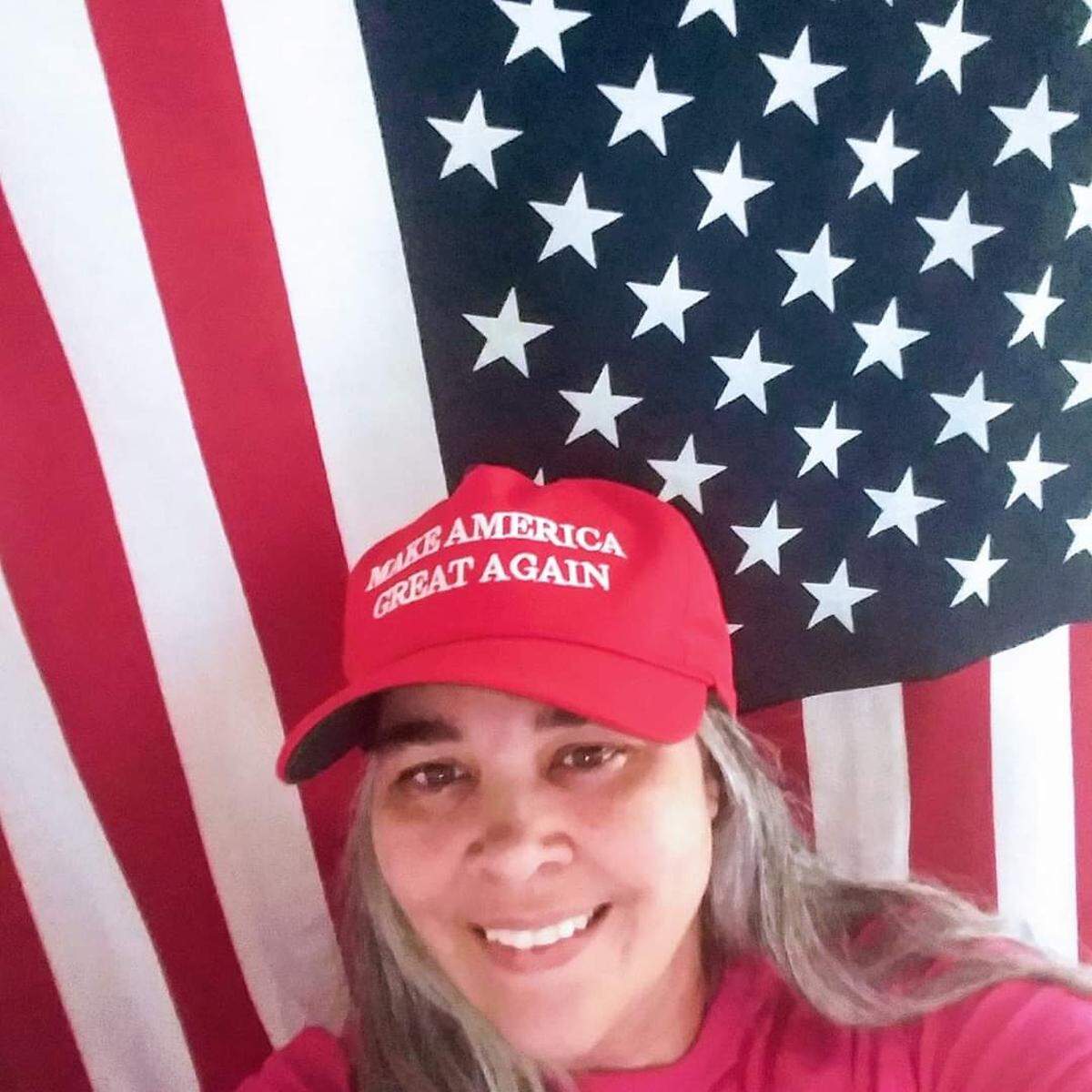
But Trump’s record in the White House has converted Blue, who cited his slashing of business regulations and his decision to move the U.S. Embassy in Israel to Jerusalem. The 46-year-old conservative Christian and mother of three daughters has now become such a MAGA-hat-wearing fan of the president that she not only registered so she could vote to re-elect him, she’s also volunteering for his N.C. campaign, knocking on doors and registering other voters.
“He’s had the guts to keep his word, and he’s done things that needed to be done,” said Blue, who will be among the Trump volunteers helping out Saturday when the president holds a campaign rally in Fayetteville — his fourth trip to the state in as many weeks.
In its bid to again win North Carolina’s hotly contested 15 electoral votes, the Trump campaign says one of its most important initiatives is identifying, registering and turning out thousands of voters like Blue — small town and rural conservatives who may be attracted to the president’s populist style, but who don’t often make it to the polls.
Political scientists, pollsters and campaigns call them “dormant” or “low-propensity” voters. And the Trump campaign is targeting them as a way of expanding its base of enthusiastic supporters. The bet is that adding these late-to-the-party voters may prove easier than persuading enough voters who are still unsure about Trump. And, if the strategy works, new voters like Blue could offset what polls say is a drop-off in Trump support from many who did vote for him in 2016.
During a recent appearance on ABC’s “This Week with George Stephanopoulos,” Trump campaign adviser Jason Miller said that more than 20 percent of the people who showed up at a Trump campaign rally in Nevada “didn’t even vote in 2016. That’s why our internal polls show us actually winning Nevada.” Most public polls show Democrat Joe Biden slightly ahead in that battleground state.
The Trump campaign would not disclose what, if anything, it’s learned about the North Carolinians who have attended Trump’s 2020 rallies.
But spokesman Gates McGavick confirmed that the campaign’s final push includes targeting “first-time President Trump voters.”
This summer, Republicans are slightly outpacing Democrats in North Carolina in recent voter registrations, according to the state Board of Elections.
Among those who registered between June 6 and Sept. 12, the board said, 70,407 signed up as Republicans and 67,087 registered as Democrats. During the same period, those registered as unaffiliated swelled by 90,754.
Overall, Democrats in the state still outnumber Republicans, 2.55 million to 2.14 million, according to the board, with 2.37 million registered unaffiliated.
The Obama model
Turning non-voters into voters worked for Barack Obama in 2008. That was the year he became the first Democratic presidential candidate since Jimmy Carter in 1976 to carry North Carolina.
“It’s easy pickings — if you can get them to turn out to vote,” said Michael Bitzer, a political scientist at Catawba College.
But there’s a debate among those who study American politics about whether this pursuit of voters without a long history of voting is worth the money and effort.
“It’s a tough nut to crack — the fool’s gold of every campaign: The notion that you can get enough non-voters to become voters,” said Chris Cooper, a political science professor at Western Carolina University. “Even though Trump is a unique candidate, I don’t think he has a magic formula.”
At least not on his second go-around, added Cooper, who acknowledged that Trump the businessman candidate may have attracted some new voters in 2016.
“Even with Obama, it was 2008 that brought the big change in voter behavior, not 2012 (when Obama won re-election, but lost North Carolina),” he said. “And, likewise, 2016 would be the change election for Trump, not 2020.”
But Republican pollster Brock McCleary, who directs an N.C. poll for the Raleigh-based Civitas Institute, said Trump’s unique appeal is still turning longtime non-voters into voters this year.
“There is a misconception that Trump’s coalition is as it was in 2016,” he said. “There are converts, people who took a pass on the last presidential election but have seen a brand of straight talk and populism that resonates with working-class Americans.”
There are a lot of them in a swing county like Robeson, which went for Obama in 2008 and 2012, but for Trump in 2016. Nearly 60 percent of its voters are registered Democrats, but Republicans have become competitive.
And Blue, who shares a Native American ancestry with many in Robeson County, said she has knocked on doors of Democrats and never-before-voters who say they want to vote for Trump this year.
“We registered five people who never voted before, including one in her 60s,” said Blue. “She saw my flier and said: ‘That’s why I want to register. I want to vote for him.’”
Biden in NC
But the Biden campaign in North Carolina is also registering new voters and trying to turn out already-registered voters who sat out the 2016 election.
And it could be easier to find them than Trump supporters who didn’t vote in 2016.
That year, only 24 percent of registered N.C. Republicans didn’t vote, said Bitzer, who also authors a popular blog, “Old North State Politics.”
In 2016, 40 percent of registered Democrats stayed home, according to Bitzer’s analysis.
“Black voters not showing up — that is what happened in 2016,” said Cooper of Western Carolina University. “And they will be easier to activate. They know how to vote. They know the system. Getting them re-activated will be easier than growing new voters.”
And Democrats in North Carolina and around the country have made it a top priority to raise turnout this year among African-American voters. They hope to get close to Obama-era enthusiasm for a ticket that includes the first Black woman to run for vice president, Sen. Kamala Harris.
“We have an advantage in voter registration and absentee ballot requests,” said Maya Humes, spokesperson for the Biden campaign in North Carolina. “And (we) are putting in the work to turn out a diverse coalition of North Carolinians, including Republicans, Democrats, and Independents to vote for Joe Biden.”
A Pew Research analysis of the 2016 election found that four in 10 Americans who were eligible to vote didn’t do so. The study found that, compared with those who voted, these non-voters were more likely to be younger, less educated, less affluent, non-white and much more Democratic in their political leanings.
And a University of Southern California Dornsife Poll released in August found that, nationally, 52 percent of non-voters in 2016 said they planned to vote for Biden in 2020 and 32 percent said they were for Trump.
Trump tweets a draw
In North Carolina, where polls say the presidential race is a toss-up, it may not take many new voters to turn the tide.
One thing’s for certain, said Blue: She’s a sure vote for Trump in 2020.
That’s been her plan since his Inauguration Day in 2017, when she teared up at all the Christians on stage offering prayers and reading from the Bible.
She finally registered to vote in 2018 so she could do her part in trying to elect a Republican congressman who would support Trump’s agenda. That year, she and her daughters showed up at Charlotte’s Bojangles Coliseum at 7:30 a.m. to make sure they got good seats that night at a rally starring Trump.
Blue was also there recently when Trump flew into Wilmington and Winston-Salem. And she’ll be there in Fayetteville on Saturday.
“The president we see at the rallies — he’s so relaxed, so Donald Trump,” she said. “We’ve been at rallies where he talked for two hours. And we hung on every word.”
Blue said she chooses not to wear a mask at these events and feels safe in such crowds. “For me and my teenage daughters,” she said, “if we get sick, we’re more than likely going to be OK.”
She also gives Trump a passing grade on his handling of the COVID-19 virus. “I think he’s done what he could,” Blue said. “He can only do so much.”
And those Trump tweets?
“We don’t have to guess where he stands. We have Twitter, so we know exactly where he stands,” she said. “He’s rough around the edges. He’s not perfect. But when I vote for him in 2020, I’m not voting to make him the spiritual leader. I’m voting for him to get America back to where it used to be.”
This story was originally published September 19, 2020 at 6:00 AM with the headline "Here’s one key way Trump plans to win North Carolina."