
‘Historic’ candidate makes Fayetteville’s U.S. House race competitive
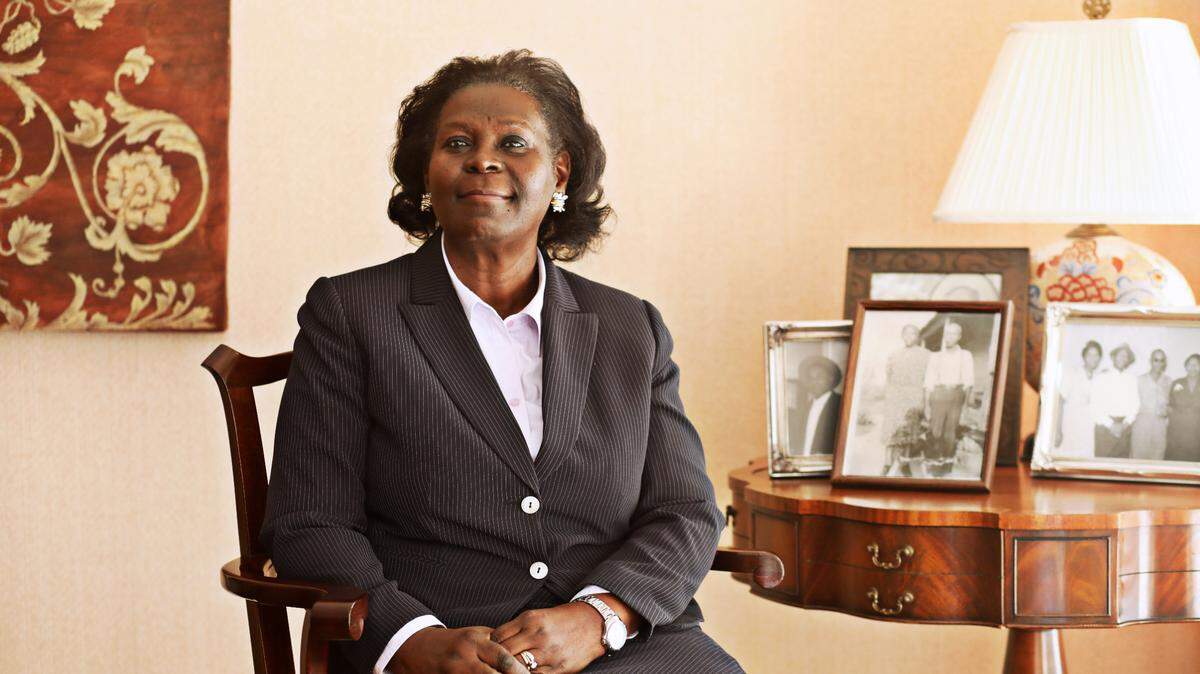
With two weeks to Election Day, Democrats have their sights on a district that was all but written off in recent cycles: North Carolina’s 8th Congressional District.
Rep. Richard Hudson, a Republican from Concord who has been the area’s congressman since 2013, is facing his first major challenge for re-election from Pat Timmons-Goodson, a former North Carolina Supreme Court justice.
The district, whose residents voted for President Donald Trump over Hillary Clinton in 2016, 53% to 44%, is precisely the kind that Democrats are targeting across the country to expand their majority in the House.
With the district stretching from Cabarrus County — where Hudson lives — to Fayetteville, Timmons-Goodson’s home base, a Democratic win would likely require the same coalition that former Vice President Joe Biden needs to replicate nationwide.
Democrats will need Cabarrus’s educated suburbanites — who broadly backed Trump in 2016 — to team up with the party’s base of women and voters of color, most prevalent in the Fayetteville area. That coalition will need to outvote the strong enthusiasm for Trump in the counties between those two population centers.
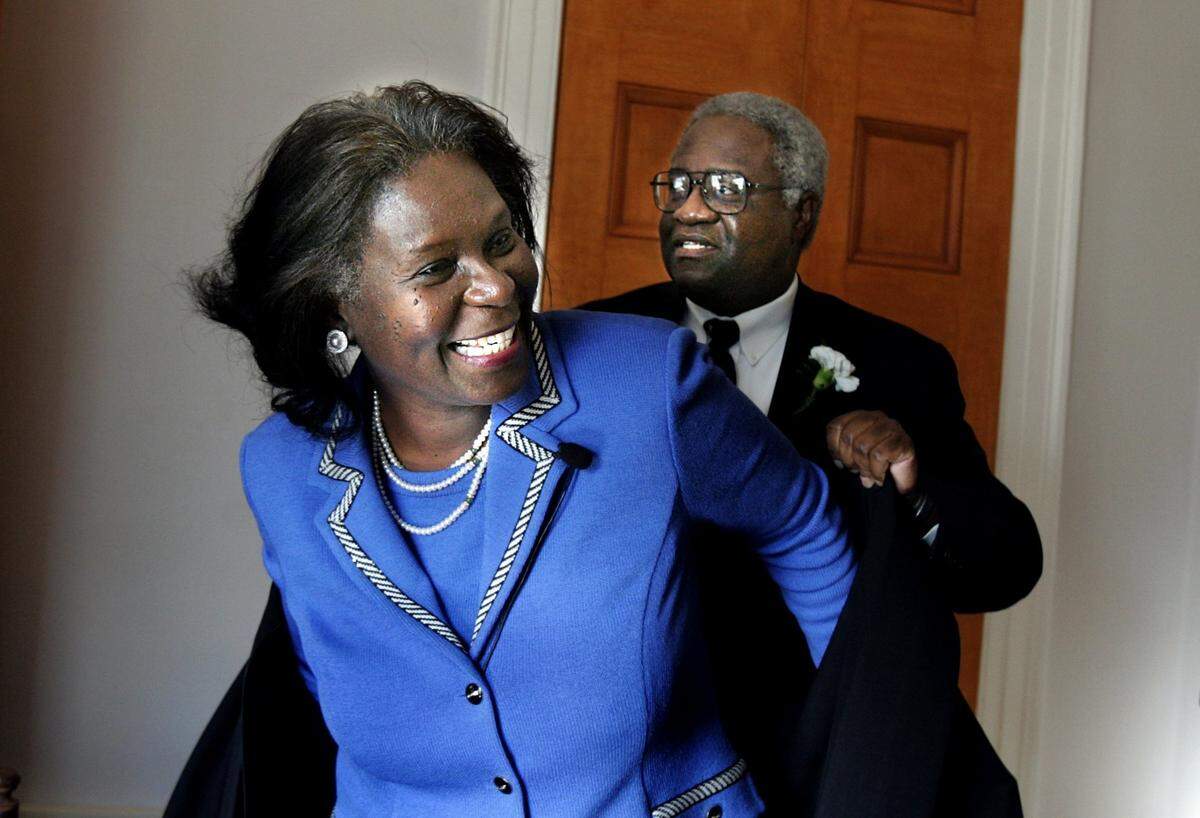
What gives the Democrats the most confidence in this district is their candidate. Timmons-Goodson was the first black female judge in the state’s 12th Judicial District, the first black woman elected to the N.C. Court of Appeals, and then the first black woman on the Supreme Court of North Carolina.
“I have a lot of respect for my opponent, she’s a historic figure in our state,” Hudson said in an interview. Timmons-Goodson served on the state Supreme Court from 2006 to 2012, initially appointed by Democratic Governor Mike Easley. President Barack Obama nominated her to the federal bench in 2016, but Republican U.S. Sen. Richard Burr blocked the appointment.
The Eighth
The 8th Congressional district is defined by “the military, agriculture, and working people,” said Robin Hayes, the Republican who represented much of the area in Congress from 1999 to 2009. Fort Bragg, one of the largest military installations in the world, is located in the district, contributing to the high number of veterans — a typically conservative constituency — who live in the surrounding area.
How those veterans vote will be a key bellwether of the race. In his pitch to voters, Hudson touts a recent military pay raise, as well as more support to military families and veterans.
“Probably one of the biggest honors of my life is that I’m Fort Bragg’s congressman,” he said.
Timmons-Goodson’s top issue in her pitch to voters is healthcare. A laser-focus on healthcare was a key part of the blueprint that Democrats used in the 2018 midterm elections, in which they retook the U.S. House of Representatives.
“The citizens of the 8th Congressional District, as many as possible, ought to have affordable, accessible healthcare,” Timmons-Goodson said in an interview. She supports a public option, a government insurance option that would compete with private providers, as well as a cap on prescription drug prices.
It’s clear that this won’t be as easy for Hudson as past races have been. 2019’s court-ordered redesign of the earlier GOP-designed maps saw the district add some liberal voters. It also meant that a quarter of district residents were new to Hudson. Polling released by Democrats this month had Timmons-Goodson in the lead, 45% to 42%. Republicans haven’t publicized their own polling data.
One thing that the Democrats think plays in their favor: the trailblazing Black woman on the ticket. That could help boost voters of color unmotivated by the old white man at the head of the Democratic ticket.
“Probably the most reliable voting bloc for the Democratic party has been Black women,” said Whitney Ross Manzo, a political science professor at Raleigh’s Meredith College.
“If part of the problem in 2016 is that some Democrats aren’t super motivated to turn out, putting Black women on the ballot could incentivize Black women to get out and vote,” she said.
So far, Hudson has lost at least one voter. Hayes, the former Congressman, will not be able to vote for Hudson, Hayes said. Hayes was sentenced to a year’s probation for his role in the Greg Lindberg bribery scheme in August. As head of the state Republican Party, Hayes was integral in attempting to funnel bribes through the party to the state insurance commissioner, federal prosecutors said.
Regardless, he backs Hudson’s re-election. Hudson worked as an aide for Hayes prior to Hudson’s election to Congress.
Democratic donations
Timmons-Goodson is getting the full support of the Democratic Party’s election machine. She was endorsed by Obama and former Vice President Joe Biden, as well as U.S. Sen. Elizabeth Warren of Massachusetts. Former South Bend, Indiana Mayor Pete Buttigieg raised money for her. The Democratic Congressional Campaign Committee is advertising for her, as is EMILY’s List.
That support has translated to a recent fundraising advantage over Hudson. The Timmons-Goodson campaign reported raising $1.8 million in the third quarter, outpacing Hudson’s $1.1 million. Hudson has more cash on hand, though, at $1.6 million compared to Timmons-Goodson’s $610,000.
“We have a tremendous amount of momentum,” said Timmons-Goodson. The Cook Political Report, a nonpartisan political newsletter, says the race leans Republican.
Hudson is not without support from his GOP allies. The Congressional Leadership Fund, a major Republican group, has started airing ads against Timmons-Goodson. And at a September Trump rally in Fayetteville, Trump called Hudson a “warrior.”
Still, Hudson is facing a difficult environment for Republicans nationwide. It’s particularly difficult in North Carolina, where Democrats are spending tens of millions of dollars in the state to boost races higher on the ballot.
Hudson is betting, as the incumbent, that the voters know him and will return him for another term in Congress.
“I’m conservative,” Hudson said, but “my approach from the beginning has always been to reach across the aisle, work with Democrats, and get things done.”
This story was originally published October 20, 2020 at 6:00 AM with the headline "‘Historic’ candidate makes Fayetteville’s U.S. House race competitive."