
Black voter turnout could swing the election in North Carolina
Nearly 1.5 million North Carolina voters are Black, and they lean largely toward Democrats. Their votes on Tuesday could determine who wins the White House.
Even a small change in Black voter participation could have a large impact in a state that voted for President Barack Obama in 2008 but supported President Donald Trump in 2016.
African American voters, particularly in South Carolina, helped propel Joe Biden —former vice president to the the country’s first Black president — to the Democratic Party nomination this year. Biden’s running mate, California Sen. Kamala Harris, is the first woman of color and HBCU graduate to be on a major party’s national ticket.
Here’s a look at some of the historical voting data.
Early voting among Black voters
Black voters in North Carolina, as self-identified through voter registration, cast nearly 900,000 votes before Election Day. That number accounts for 19.5% of total early votes, both in-person and absentee by-mail.
While that percentage is down from early voting in 2016 (22%) and 2012 (27%), the number of voters who didn’t disclose their race on their registration has more than tripled since the 2016 election. That makes it difficult to compare year to year.
In raw numbers, more Black voters cast ballots during the early-voting period (both in-person and mail-in) than in 2016 — 883,845 in 2020 to 693,246 in 2016.
But overall voting by North Carolinians during that time period jumped by more than 1.4 million. White voters, for example, cast 800,000 more early votes in 2020 than they did in 2016.
The number of voters who didn’t disclose their race jumped from fewer than 100,000 in early voting in 2016 to more than 435,000 in early voting in 2020.
The N&O reported in 2017 that Black voter turnout in the 2016 election in North Carolina was 64.3%.
Biden and Harris, who is Black and Indian-American, have been courting the Black vote in a variety of ways. The campaign filmed ads in Black-owned barbershops in battleground states. Three ads were filmed in a Durham barbershop, part of a $280 million television and digital ad campaign. In one of Harris’ visits this fall, she had a conversation with Black voters outside a Black-owned barbershop in Raleigh.
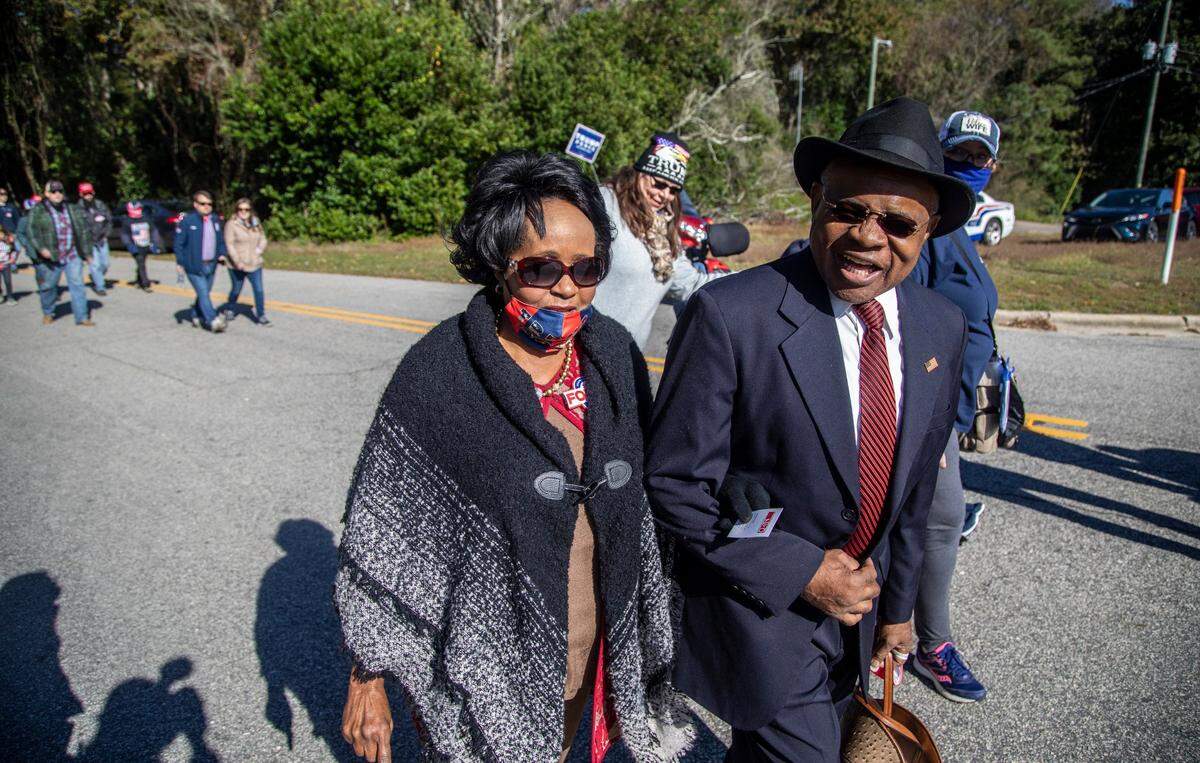
N.C. Sen. Natalie Murdock, a Durham Democrat, is deputy director of coalitions for the Biden-Harris campaign in North Carolina, focused on African American outreach and engagement.
“For a lot of voters of color, particularly black voters, we can market early voting but some folks just love voting on Election Day,” Murdock said in a phone interview with The News & Observer on Monday.
She said that COVID-19 has meant more digital organizing and phone banking than in-person visits to communities across the state. Democrats have mostly held virtual or distanced, small events, while Republicans have held large in-person rallies.
Campaign endorsements
Both campaigns received endorsements from Black celebrities and used them in get-out-the-vote efforts.
Rappers Common and DaBaby worked to get out the Black vote in North Carolina for Democrats. Common met with N.C. A&T State University students at the HBCU in Greensboro. Actress Kerry Washington campaigned for Biden-Harris in Durham.
On Monday, the Trump campaign touted his support from Black voters, including high profile support from rappers Lil Wayne and 50 Cent. The Trump campaign said in a news release that “members of the Black community are coming out in support of the President’s policies that have helped them and their families,” and that Trump would deliver four more years of success and opportunities if reelected.
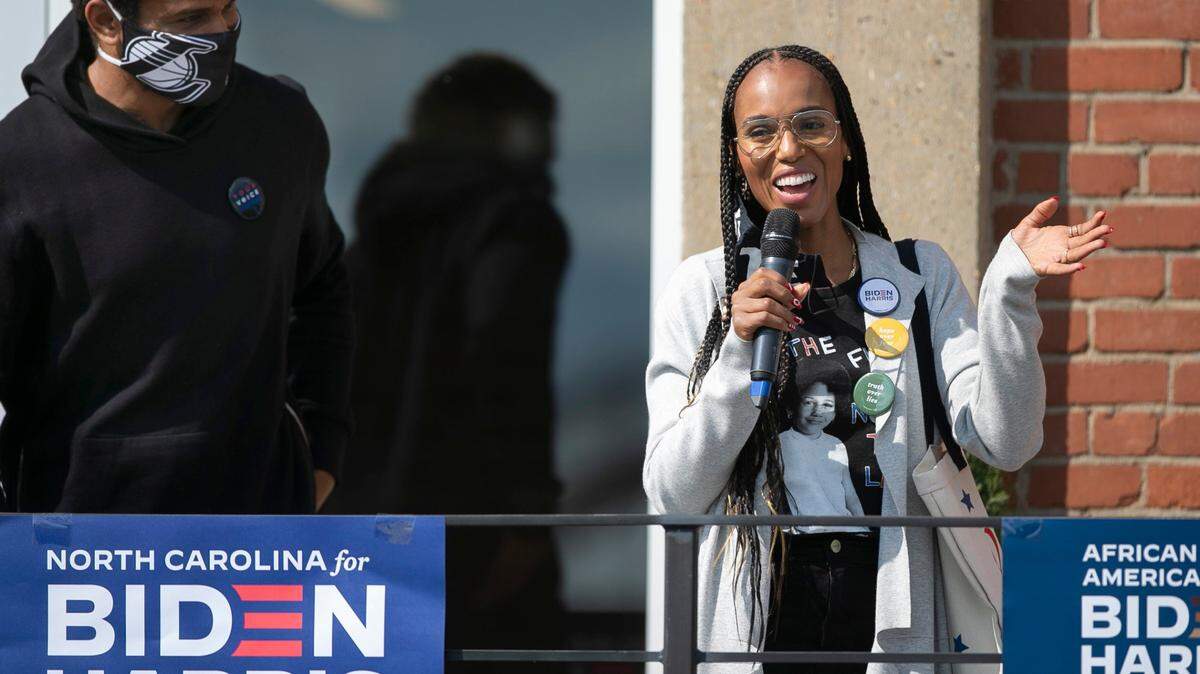
In elections past, a big driver of Black voters during early voting was called Souls to the Polls, when predominately African-American churches would organize congregations to vote after church services on Sundays during early voting.
Then came the coronavirus pandemic.
Murdock said Souls to the Polls still happened this year; it just looked different. In Durham, congregations met at their church parking lot and caravanned to the polls in separate vehicles — easier for social distancing than shuttle buses.
Bishop Claude Alexander, senior pastor of The Park Church in Charlotte, told The News & Observer in a phone interview on Friday that his church met up on a Sunday during early voting within walking distance of a large polling place: Bank of America Stadium.
Alexander is also a volunteer poll chaplain with a group called Lawyers and Collars. Alexander said that clergy in the group wear masks that say “Lawyers and Collars” along with their tradition’s vestments like a clerical collar or robe. They observe from the distance required by law.
He said having a free, fair and safe electoral process is both a civic concern and a spiritual concern. He wants to make sure voters have access to the polls.
“I will be praying that individuals will be able to express themselves through their vote. And that there will be no incidents to hinder or diminish that experience,” he said.
“I guess the second thing that I will be praying is that the process will be conducted in such a way that the virtue of our democracy continues to be held as an example to the world, regardless of outcome,” he said.
Alexander added that ”more people, I would say that includes more African Americans, have participated certainly in the early voting process than have for a long time.”
The HBCU connection
It’s not just Souls to the Polls and targeting advertising that serves as a reminder to Black voters to go vote.
Harris is the first candidate on a major party ticket who is a graduate of an HBCU, Howard University, and a member of a Divine 9 sorority. This fall, Divine 9 Greek organization members promoted a “Stroll to the Polls,” as they walked in their respective sororities’ and fraternities’ colors to vote.
When Harris campaigned in North Carolina in September, she visited Shaw University, an HBCU in Raleigh. She watched the Shaw drumline and cheerleaders perform outside before the event at the barbershop.
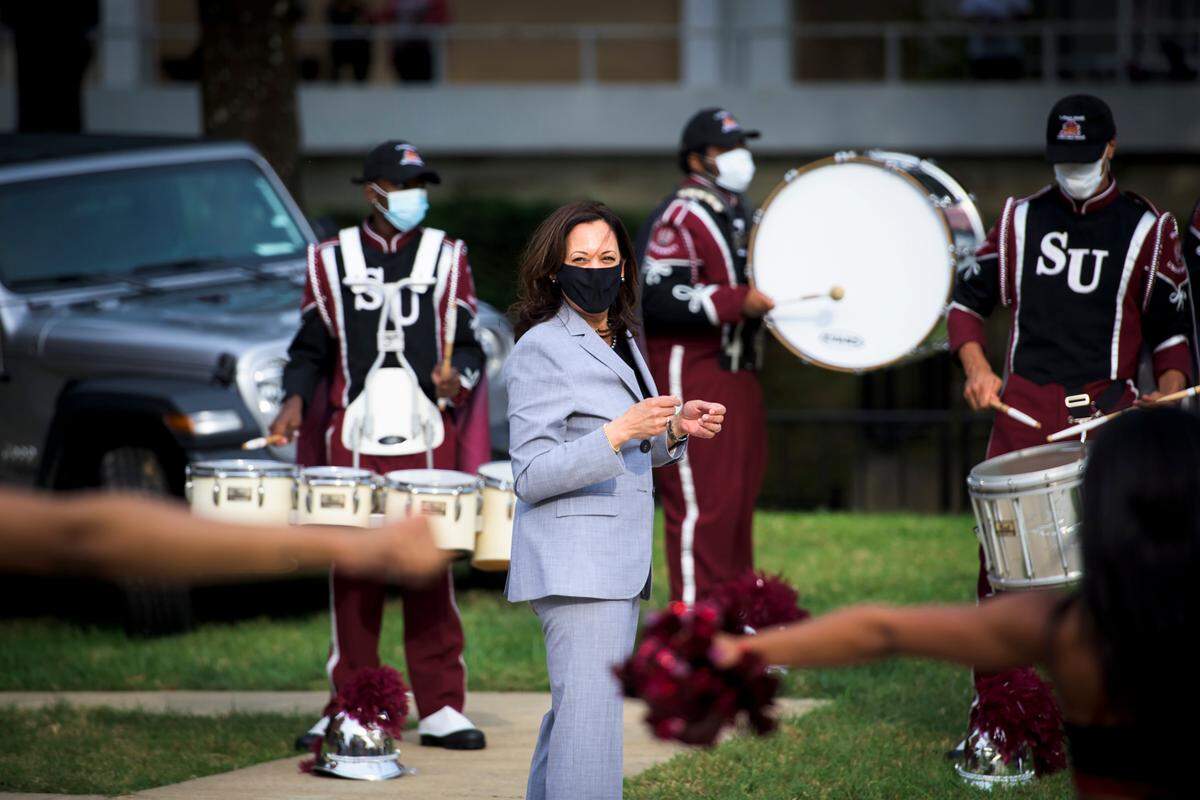
Murdock said HBCUs like N.C. Central University in Durham held get-out-the-vote events like having student athletes march together to the polls, too.
Murdock added that having Harris, a woman of color, on the ballot makes a difference in voter enthusiasm.
“So many women are finally seeing someone like themselves on the ballot,” she said. “I think having a Black woman on the ticket has really galvanized the base.”
News & Observer reporter David Raynor and McClatchy reporter Brian Murphy contributed to this story.
For more North Carolina government and politics news, listen to the Domecast politics podcast from The News & Observer and the NC Insider. You can find it on Megaphone, Apple Podcasts, iHeartRadio, Stitcher or wherever you get your podcasts.
This story was originally published November 2, 2020 at 6:39 PM.
.jpg)