
New political party, working to stay on the NC ballot, could pull votes from Tillis
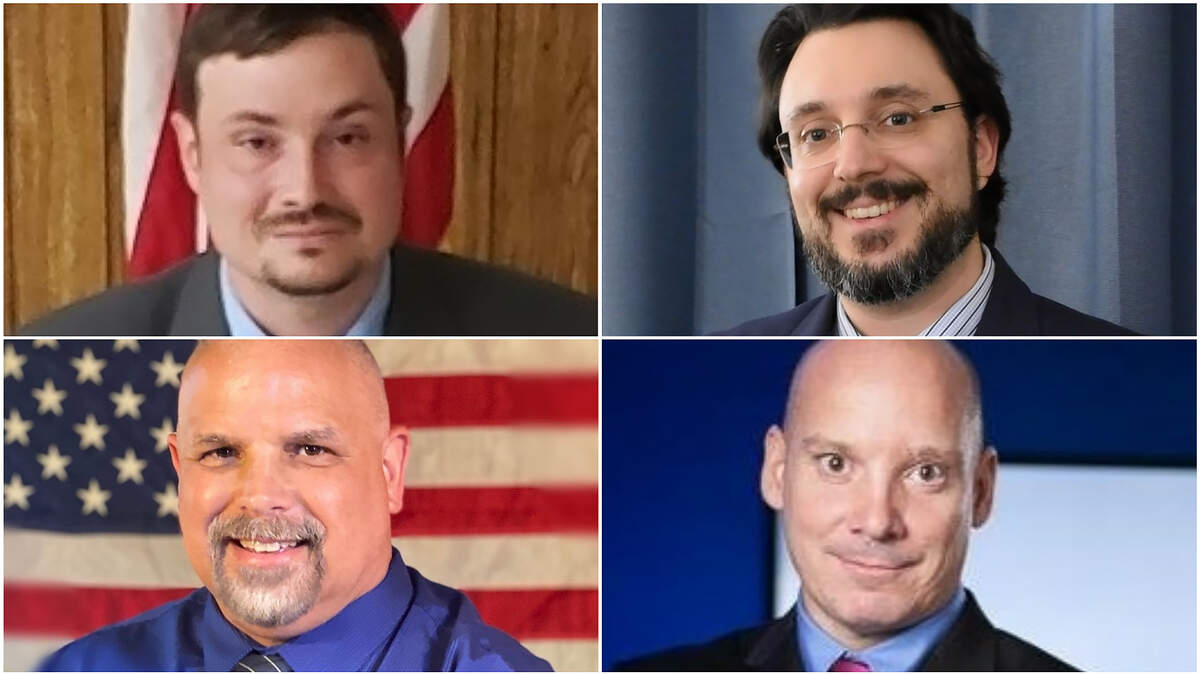
North Carolina’s newest political parties are on the ballot for the first time in a major election, and one of them could spell trouble for U.S. Sen. Thom Tillis’ re-election bid if the final vote tally is close.
But the presence of the N.C. Constitution Party on the ballot could be short-lived if its candidates don’t get at least 2% of the vote in either the presidential or governor’s race. It’s a key test for the fledgling party that’s even harder as its candidates campaign in a pandemic with limited resources and fewer in-person politicking opportunities.
Both the Constitution and the N.C. Green Party got ballot access for the first time in 2018 under a new law that lowered the threshold for third parties to get recognition.
The Green Party qualified because the new law allowed parties that were on the presidential ballot in at least 35 states in the previous election. The Constitution Party didn’t meet that requirement, but it succeeded in gathering thousands of signatures when the legislature lowered the petition requirement from 90,000 to about 12,000.
With no major statewide races in 2018, both new parties fielded candidates for state legislature and local offices, and the Constitution Party even won a county commissioner race in Greene County. This year, though, the Green Party didn’t field candidates in statewide races, although it has its presidential ticket on the North Carolina ballot as well as a candidate in the 11th Congressional District race, one N.C. House race and one county register of deeds race.
That means voters don’t have a Green Party option for U.S. Senate or for governor, but both races have a Libertarian and a Constitution Party candidate vying for support.
Since the Green Party often attracts voters who might otherwise choose a Democrat — and the Constitution Party draws conservatives away from the Republican Party — the third party dynamic in the Senate race could harm Tillis.
“On a close race, it could absolutely matter,” said Chris Cooper, a political scientist at Western Carolina University. Libertarian candidates also “tend to pull a little more from the Republican side,” Cooper added.
It’s difficult so far to measure the impact of Libertarian Shannon Bray and Constitution Party candidate Kevin Hayes, because many opinion polls don’t name them — instead asking whether a voter supports Tillis, Democrat Cal Cunningham or “some other candidate.”
A Meredith College poll this month did name all four candidates, and it found that 3.8% of likely voters polled support Bray, while 0.6% said they’ll vote for Hayes. That’s notable in a race where the RealClearPolitics polling average has Cunningham with a 1.8 percentage point lead this week over Tillis, and some recent polls have the race tied.
Coronavirus adds hurdles
Both Hayes and Bray are running low-profile campaigns on shoestring budgets, and the limitations on in-person gatherings during COVID-19 have made it harder to get their messages out.
Hayes said his original plan was to meet voters at gun shows, county fairs and other large events across the state. With those events mostly canceled, he’s teamed up with the Constitution Party candidate for governor, Al Pisano, for a 100-county road trip they call the “Tar Heel Liberty and Freedom Tour.”
They roll through small towns in a “Libertymobile” pickup truck festooned with campaign signs and a loudspeaker that plays a looped recording of the candidates’ voices introducing themselves.
“We’re doing it the old fashioned way,” Hayes said, adding that voters are surprised to see candidates visiting their towns. “There’s been no candidate statewide that have ever been in these communities. Nobody cares about those people, it seems like.”
Bray has held several public outdoor events with the Libertarian Party’s vice presidential candidate, Spike Cohen, and its candidate for governor, Steven DiFiore. But Bray said most of his campaign has been going door-to-door and building a following online. He’s already planning to run for U.S. Senate again in 2022.
Bray, Pisano and Hayes all say they’ve been shut out of participating in debates and other public forums that feature the major parties’ candidates. Debates for governor and Senate have occasionally featured Libertarian candidates in the past, but this year polling and fundraising requirements disqualified them from participating.
“That is a form of election meddling,” Pisano said. “They’re telling the people, you’re going to see the candidates that we pick. ... Forest and Cooper both got one hour of free airtime for their campaigns.”
The Green Party’s most prominent North Carolina race this year is the 11th Congressional District, where Tamara Zwinak is running against the major party candidates for former U.S. Rep. Mark Meadows’ old seat.
Asked why they didn’t field candidates for governor and U.S. Senate, party co-chairs Tony Ndege and Tommie James said the earlier candidate filing deadline this cycle, last December, created a challenge, but “we certainly plan on running far more candidates in future years.”
They argue that North Carolina’s 2% requirement for third parties in presidential and gubernatorial races is “anti-democratic,” and they “certainly hope we achieve our goal and then some. If we do not, then we are confident that we will meet the goal of petitioning for ballot access within the upcoming year.”
Contrasting platforms
All of the third party candidates draw sharp contrasts with their Democratic and Republican opponents. In the Senate race, Hayes says Tillis isn’t strong enough on gun-rights issues, particularly the “red flag” laws that allow for someone to temporarily lose access to guns if they’re considered a danger to themselves or others. He says that if he’d been included in debates, his views would have forced Tillis to move further to the right.
Bray criticizes Tillis for voting to divert funding from the state’s military bases to fund a border wall, and he says Cal Cunningham’s sexting scandal involving the wife of a veteran is a concern.
“I feel like they both have taken a shot at the military,” said Bray, a Navy veteran and cybersecurity expert who works for the Department of Defense. “That’s a hard line for me.”
In the governor’s race, Pisano joins Republican Dan Forest in opposing Gov. Roy Cooper’s coronavirus-related restrictions on business, but Pisano said Forest took too long to speak out against the measures. The Constitution Party candidate says Cooper has “elevated himself to the level of a king,” while Forest “followed his motto, run Forest run, and ... he disappointed all of us.”
Pisano, a retired police officer, also blasts Cooper’s handling of protests and riots that occurred over the summer. “That is not a protest, that is mayhem, that is thuggery,” he said.
DiFiore, the Libertarian candidate for governor, did not respond to requests for an interview.
The Green Party, meanwhile, has ample criticism of Democrats from the opposite end of the political spectrum.
“The Democrats will never fight for us — they serve Wall Street, the war industry, and the corporate developers,” Ndege and James said in an email. “They will only occasionally concede to our demands and then spend the rest of the time eroding those concessions in lockstep with Republicans.”
The Green Party and its presidential candidate, Howie Hawkins, want to legalize marijuana, switch to a nationalized universal healthcare system and abolish the U.S. Senate, which they argue is “anti-democratic” because representation isn’t based on population.
This story was originally published October 28, 2020 at 4:12 PM.