‘We are in control’: How a decade of Republican majorities reshaped North Carolina
When Republicans swept North Carolina’s legislature in 2010, clinching a majority in both the House and Senate for the first time in more than a century, they vowed to accomplish an ambitious agenda in their first 100 days.
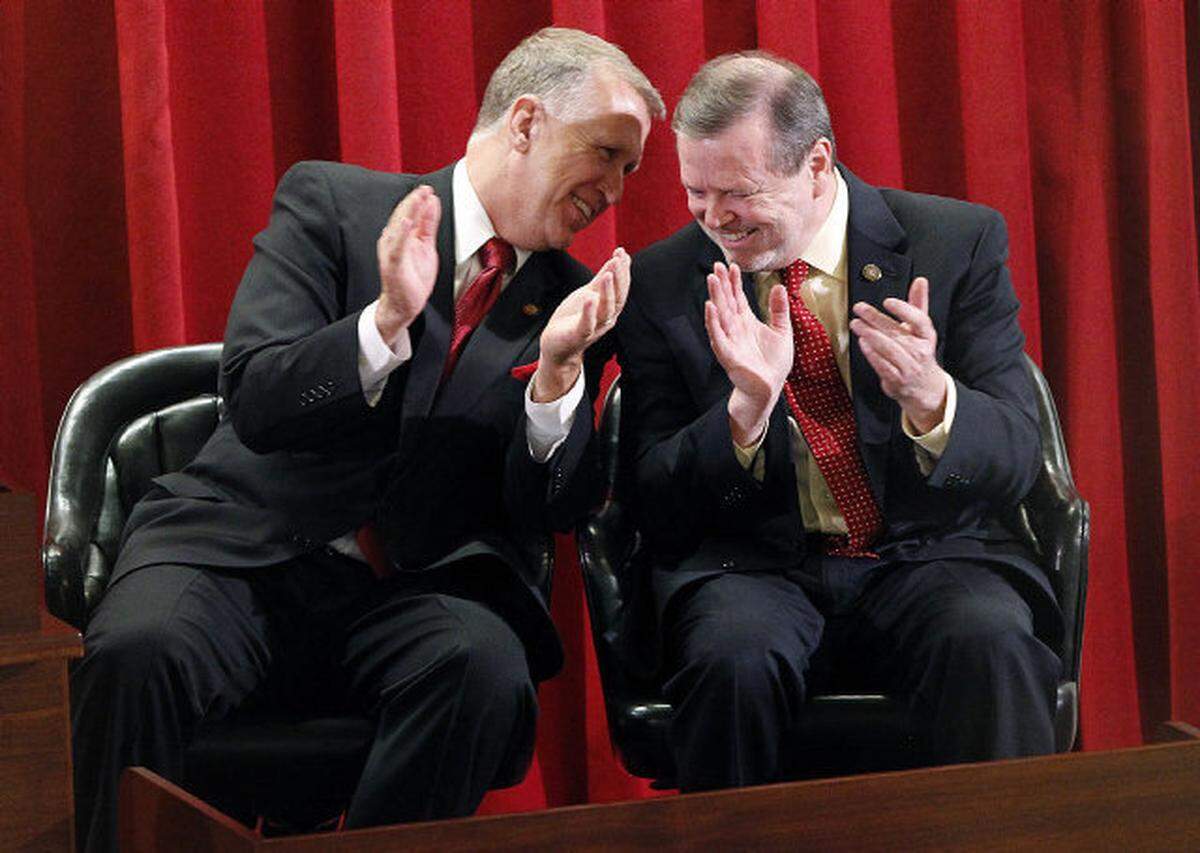
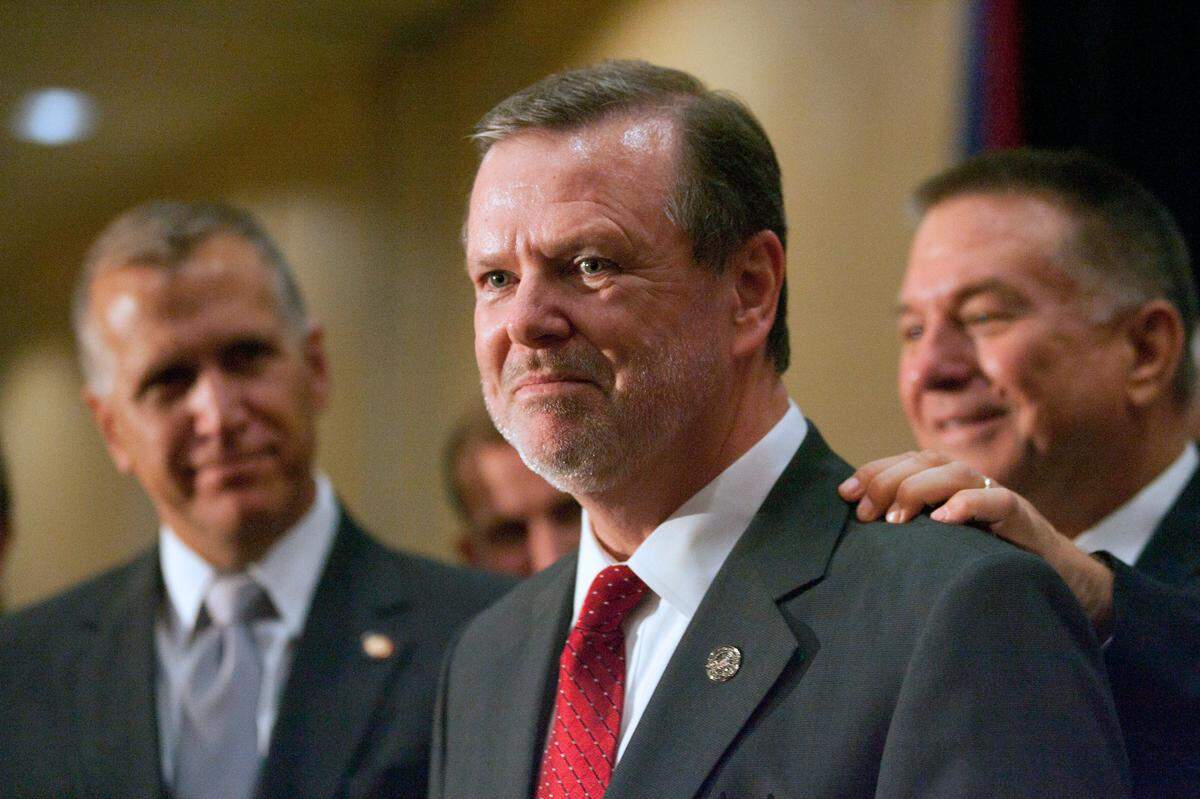
In that time frame, Republicans made good on more than half of their promises. Led by Senate leader Phil Berger, a Republican from Eden, and then-House speaker Thom Tillis, now a U.S. senator, Republicans ushered through legislation that lowered tax rates, slashed regulations and ended caps on charter schools.
“It’s like anything else, you have to be focused on where you’re trying to go,” said Rep. Julia Howard, a Republican from Mocksville who has served in the legislature since 1988. “We just decided that we were all in and we were going to try and do everything we could to win. And more importantly, once we were elected, to do those things that we had said we were going to do.”
Without enough votes to override gubernatorial vetoes, the GOP majority didn’t accomplish every item on their 10-point agenda in the first 100 days. In the months and years that followed, though, Republicans made up for nearly every mark they missed.
“They tried to exercise their power and position to the max while they had the advantage,” said Ferrel Guillory, founder of the Program on Public Life at UNC-Chapel Hill. “Republicans thought that this was their time to do as much as they could do to embed their agenda on state government.”
The last decade of GOP control has meant a shift in North Carolina’s policies — sometimes at a break-neck pace — away from where they were under Democratic control.
Tuesday’s election will decide whether the state shifts back.
Every legislative seat in North Carolina’s General Assembly is up for grabs, and Democrats have their sights set on winning a majority ahead of the next round of redistricting. Beyond that, some of Democrats’ first priorities would likely be undoing the legacy Republicans leave behind.
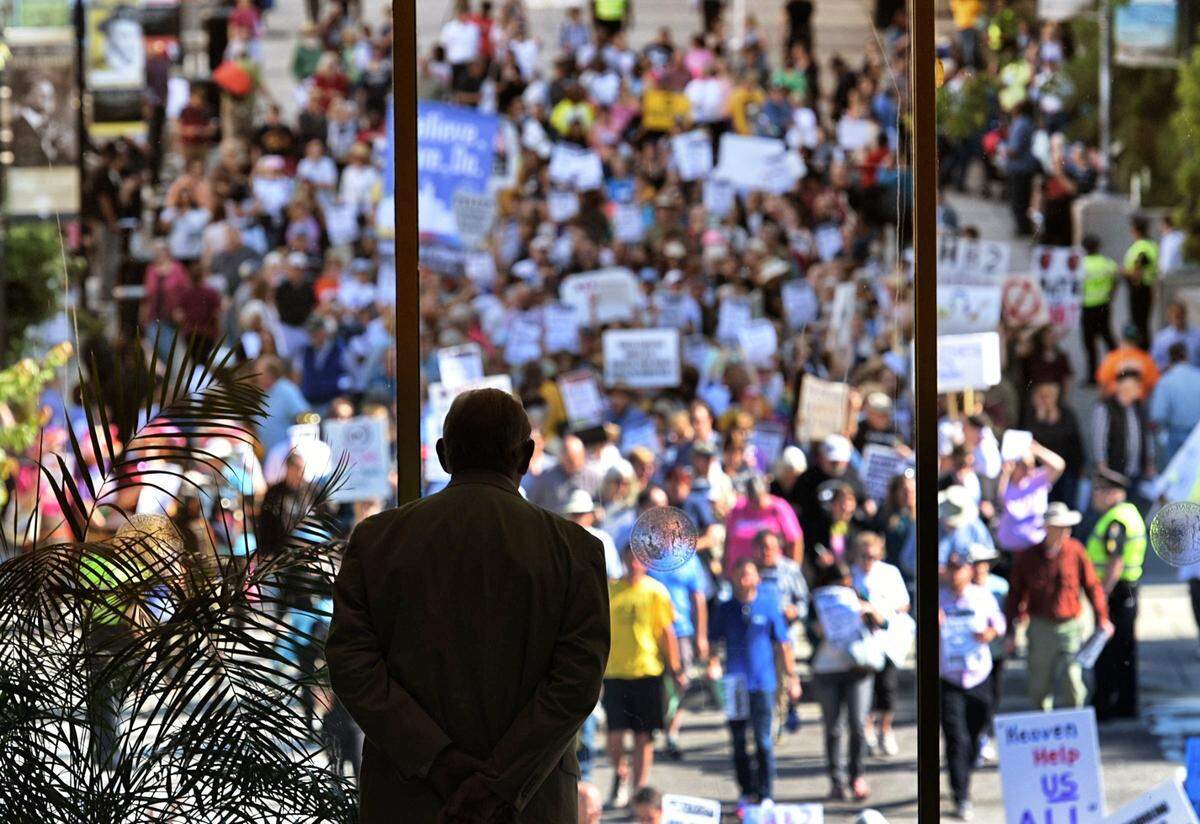
“Republicans that have taken over the last 10 years have been committed to a regressive ideology rooted in classicism and racism that is detrimental to the very people they swore to uphold, to help,” said Rev. William Barber II, who led the protest movement when Republicans won a supermajority in 2013. “They used their power in every way to retrogress the state of our public policies in North Carolina and to hurt the least of these.”
For six of the past 10 years under Republican legislative control, a Democrat has been in the governor’s mansion, creating a barrier for Republicans in their attempts to pass particularly partisan bills into law.
The courts have served as another hurdle. Republicans have faced court challenges in particular over their redistricting efforts and changes to voter ID laws.
And in protest of a wide range of Republican policies, from anti-abortion laws to corporate tax cuts, Barber led the Moral Monday movement at the legislature.
Yet Republicans successfully ushered through changes to policies ranging from unemployment insurance benefits and tax cuts to school vouchers.
“I don’t think people appreciate just how dramatically state fiscal, education and transportation policy in particular have changed in the last decade,” said Jim Blaine, who served as Berger’s chief of staff until 2018. “People always ask me, ‘How did y’all do that?’”

Republicans work together, sweep statehouse
In 2008, North Carolinians elected Democratic Gov. Bev Perdue, helped elect President Barack Obama, and voted to keep Democrats in the majority in the state legislature.
The midterm elections, held two years later, were another story.
“It was a cataclysmic year for Democrats across the nation,” said Morgan Jackson, Gov. Roy Cooper’s senior adviser. “I tip my hat to them from an operative standpoint for what they pulled off in 2010, but the state has suffered the consequences.”
With Democrats in charge and the state still reeling from the recession, Republicans had a leg up in 2010.
“It was the Republican economy of 2008 that brought Barack Obama into the White House, and it was the Obama economy of 2010 that built the Republican legislative majority,” said longtime Republican consultant Paul Shumaker, who has worked for Tillis’ campaign.
When Republican legislators complained about Obama, Shumaker shot back.
“I don’t understand what problem you have with him,” Shumaker told them. “You made him. Secondly, he made you.”
By August 2010, Shumaker said, Republicans were confident they’d win a majority in the Senate, so they shifted their focus to winning a majority in the House.
“Quite frankly, it was probably the first time in a decade that Republicans across the board had worked together,” Shumaker said. “Our goal was to win a majority in the Senate and try and make the House competitive.”
By October, Republicans believed they’d seize control of the House, too.
And they did. Appealing to suburban swing voters in particular, the GOP won control over both legislative chambers.
Both Democrats and Republicans upped their fundraising efforts in 2010, but the GOP was more well-funded than it had been in recent years.
North Carolina businessman and philanthropist Art Pope, and the conservative organizations he has founded, funded or led, contributed more than $2 million to Republicans in 22 legislative races that year, The News & Observer reported.
Pope said his company, Variety Stores, only donated $200,000 that year.
“The issues and the quality candidates allowed Republicans to win,” Pope said in a recent interview with The N&O. “It was not because Republicans spent the most money.”
‘Off to a running start’
When they got to work on Jan. 26, 2011, Republicans’ first task was balancing a projected $3.7 billion budget deficit.
They “got off to a running start,” Pope said.
Though Senate leader Berger and House Speaker Tillis said repeatedly that “everything is on the table,” there was one thing that wasn’t: tax increases.
.JPG "IMG_1.JPG_2_1_R17MVCGP(2).JPG")
Perdue vetoed 19 bills between 2011 and 2012, including a $19.7 billion budget the legislature passed in June 2011.
“I cannot support a budget that sends the message that North Carolina is moving backwards, when we have always been a state that led the nation,” the N&O reported Perdue said.
It was the first time a North Carolina governor had vetoed a budget bill.
Perdue’s budget proposal extended a temporary sales tax increase implemented by Democrats, but Republicans’ version of the budget did not include that extension, The N&O reported.
The final version of the budget also spent some $37 million less on K-12 education than Perdue proposed.
Five Democrats broke with their party, and the legislature successfully overrode the governor’s veto.
“With unemployment at frightening levels and tens of thousands of families struggling, state legislative leaders slashed funding for the services and programs that help North Carolinians through tough times,” wrote two co-chairs of the board of directors of the NC Justice Center, which advocates for low-income North Carolinians, in the group’s annual report. “These battles will continue — and possibly escalate — in 2012.”
That year, the male-dominated General Assembly also required women seeking an abortion to wait 24 hours, receive counseling and be shown an ultrasound and, with Democratic support, passed a constitutional amendment banning same-sex marriage, which the state’s voters would later ratify but was canceled by court rulings nationally.
The legislature failed in its attempts to override Perdue’s veto of a voter ID bill
.

A step further
Also in 2011, the legislature drew new maps for North Carolina’s state and congressional districts, consolidating Republican power. The courts, just as they often did during the era of Democratic control, would later find those maps to be unconstitutional.
But before they were overturned, Republicans ran in the districts they had drawn and won a supermajority in 2012 — gaining enough votes to override any gubernatorial vetoes.
That same year, North Carolinians voted to elect the state’s first Republican governor in two decades, Pat McCrory. Critics say the Republican-majority legislature set the agenda even with one of their own in the governor’s mansion.
“They decided that they wanted to undo 100 years of policy and legislation in almost the first two weeks of when they were sworn in,” Jackson said. “They led Pat McCrory, as a Republican governor, around by the nose. He essentially was a rubber stamp for them.”
In its 2013 session, with no need to cooperate with the other side of the aisle, Republicans took the changes they enacted in the first two years of their tenure a step further.
“I would just remind you of one thing,” said then-House Republican leader Edgar Starnes, according to an N&O story from 2013. “The Republicans won the election. We are in control.”
The Republican supermajority, with McCrory’s support, repealed the Racial Justice Act, which allowed defendants on death row to challenge their sentences if they proved race played a significant role in their case, and ended the Earned Income Tax Credit for the working poor while slashing personal and corporate income taxes.
“They’ve prioritized these corporate tax giveaways at the expense of public education,” Jackson said. “When the governor talks to CEOs about coming to North Carolina, the first question they ask is not about what the corporate tax rate is, it’s about the workforce.”
Legislators also passed legislation requiring specific types of photo identification at the polls, reducing early voting and ending same-day registration.
Three years later, the U.S. 4th Circuit Court of Appeals said the General Assembly “rushed through the legislative process” and called the move “the most restrictive voting law North Carolina has seen since the era of Jim Crow.”
Republicans are particularly proud of one thing they accomplished in the 2013 session.
“There was just this one piece of legislation that always stands out to me,” said former N.C. GOP Executive Director Dallas Woodhouse. “And that is when they reformed the unemployment insurance system.”
After borrowing more than $2 billion from the federal government to cover state-funded unemployment benefits in response to the 2008 recession, the N&O reported, Republicans sought to overhaul the unemployment system to pay that money back.
Businesses had to pay higher federal unemployment taxes until the debt was paid off.
In 2013, North Carolina’s seasonally adjusted unemployment rate was 9.2% — down from the 11.4% peak during the recession but still the fifth highest in the nation, the N&O reported.
And that year, Republicans successfully reduced the maximum duration an unemployed person could collect benefits — from 26 weeks to no more than 20 and as few as 10 — and the maximum amount of those weekly benefits — from $506 to $350 — with the support of McCrory.
“It came with a difficult political price at a difficult political time,” Woodhouse said. “Having the courage to do that meant something.”
Also among the list of other notable legislation that became law under McCrory and the Republican supermajority: The law making removal of historical monuments or statues, like Confederate war memorials, more difficult; the Opportunity Scholarship program, which gave low-income North Carolina families $4,200 to pay for private schools; and a budget bill eliminating master’s degree pay for future teachers.
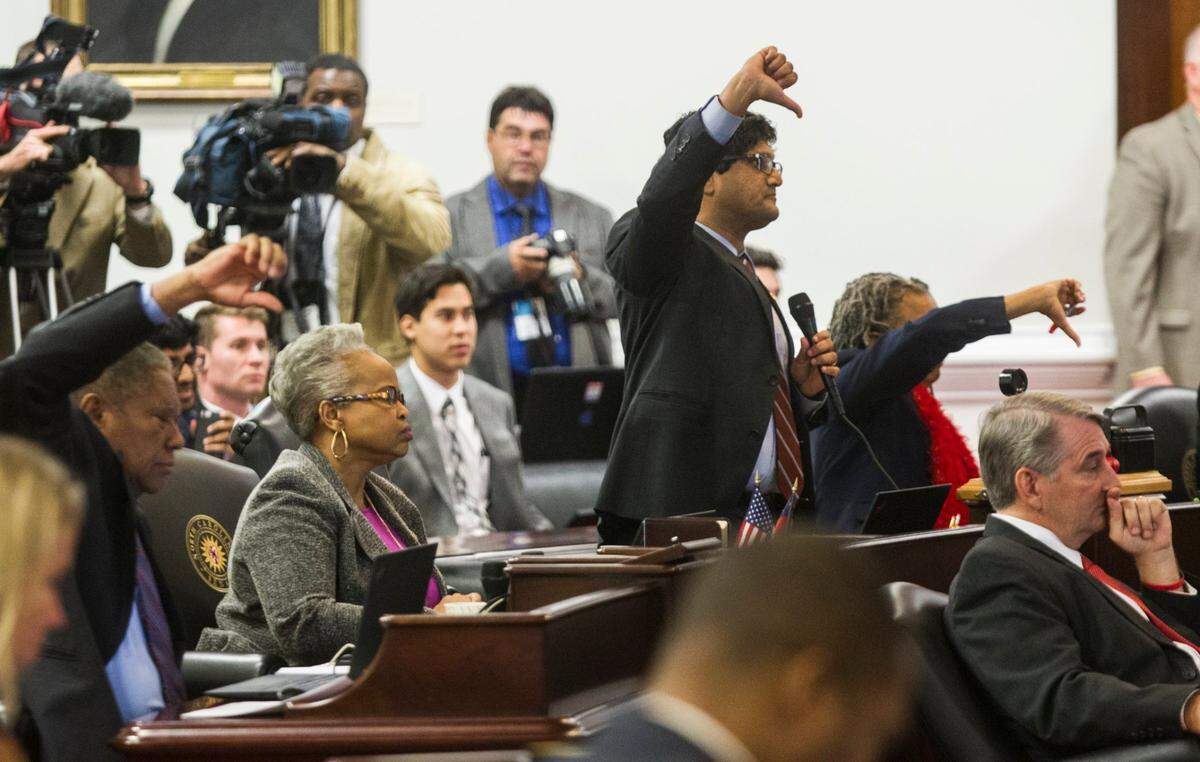
For Democrats, the most memorable issue Republicans took on is House Bill 2, also known as the “bathroom bill.”
In March 2016, the legislature passed a law reversing a Charlotte ordinance that had extended some LGBTQ rights. McCrory signed the bill into law that same day, just months before the election.
The Charlotte ordinance had protected transgender people who used bathrooms based on their gender identity. The new law banned local ordinances from expanding protections to the LGBTQ community, The Charlotte Observer reported, and required people in schools and other government buildings to use the bathroom matching the gender on their birth certificate.
The blowback was fierce, with the NBA pulling the 2017 All-Star game from Charlotte. The bill also became a talking point in the governor’s race that year.
“It cost Pat McCrory his election,” Jackson said. “It was incredibly damaging (to North Carolina’s reputation).”
Erosion of power
Republicans’ advantage in North Carolina began to erode in 2016, when McCrory lost to Cooper.
Republicans held onto their control in the legislature that year. They passed a series of bills limiting Cooper’s powers, but without a Republican governor, accomplishing their agenda became more difficult.
Cooper and Republicans struck a deal to partly repeal HB2 just months into his term.
The biggest hit to GOP control came in the 2018 elections, when Democrats broke the Republicans’ supermajority.
Without the votes to override Cooper’s vetoes, Republicans failed to get much of their agenda passed. In 2019, the legislature did not have the votes to override Cooper’s veto of their budget, which lacked the Medicaid expansion and higher teacher raises the governor had called for.
In the latest legislative session, Republicans attempted to reopen businesses shuttered by Cooper to slow the spread of the coronavirus, only to be met with gubernatorial vetoes.
And while Republicans have kept North Carolina as one of a dozen states that have not agreed to expand Medicaid health insurance coverage, Cooper has championed Medicaid expansion.
Despite Democrats’ critiques of the last decade of a GOP majority in North Carolina’s legislature, Republicans maintain that they’ve served the state well.
“North Carolina is a small ‘d’ democracy,” Pope said. “The party with the best candidates who have had the best policies can win when they’re outspent. When you look at all the accomplishments with the Republican majority, often with Democratic support… We came into this coronavirus recession better prepared than any time in state history.”
To shift the balance of power in North Carolina, Democrats will need to pick up five additional seats in the Senate and six in the House. If they do win, they’ll get to lead the process of redrawing congressional and state legislative districts meant to last the next 10 years.
For more North Carolina government and politics news, listen to the Domecast politics podcast from The News & Observer and the NC Insider. You can find it on Megaphone, Apple Podcasts, iHeartRadio, Stitcher or wherever you get your podcasts.
This story was originally published October 30, 2020 at 11:09 AM.