
Democratic Gov. Cooper reelected as GOP maintains NC legislative control. What’s next?
North Carolina voters have given Democratic Gov. Roy Cooper a second term. What does that mean for the state’s coronavirus response? Medicaid expansion? The next state budget?
While several statewide races in North Carolina were too close to call, Cooper defeated Republican Lt. Gov. Dan Forest 51% to 47%, according to unofficial results from the State Board of Elections.
Divided state government will continue. Republicans maintained their majority control of the state House and Senate, though they did not win enough seats to gain a veto-proof majority.
Does this mean a redo of the 2019 battle over the state budget? Maybe.
Cooper told The News & Observer earlier this fall that if Democrats won the legislature, he would want to sign Medicaid expansion into law in the first few weeks of the session that starts in January. That didn’t happen.
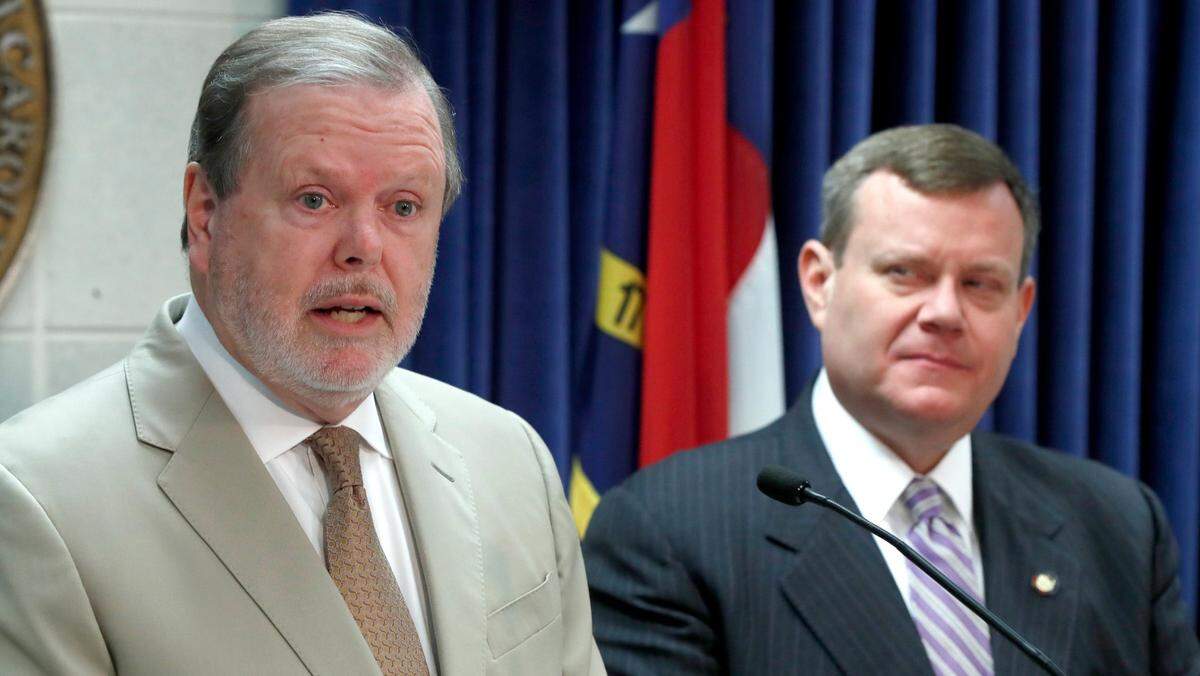
Senate leader Phil Berger, an Eden Republican, and House Speaker Tim Moore, a Kings Mountain Republican, were reelected to their legislative seats and want to remain in the same leadership roles they currently hold.
Berger said at a news conference Wednesday at NCGOP headquarters that the Republican-led legislature retaining control was a vote of confidence for their policies around low taxes, expanded school choice and investments in teacher pay.
He said that they were already planning for the next session of the General Assembly and that people should expect to see the same policies as the previous session. The legislature convenes on Jan. 13.
The 2019 legislative session was defined by the standoff, then stalemate, over the state budget between Cooper and the Republican-majority legislature. Cooper vetoed the budget, citing the lack of Medicaid expansion, corporate tax cuts and not high enough raises for teachers. The House overrode his veto, but not the Senate. In the end, the General Assembly passed a series of smaller budget bills and rolled over the previous year’s budget. Teachers did not receive raises, as the sides disagreed over the amount. However, all teachers received bonuses this summer. Most parents also will receive a $335 check this fall from COVID-19 relief funds, which was a Republican-led decision.
Berger told reporters on Wednesday that he congratulates Cooper on his reelection and looked forward to working with him. Berger said looked forward to “getting more things done in the next two years than we did in the last two years.”
Berger said he doesn’t think that Cooper won because of his position on Medicaid expansion. Throughout the 2019 budget battle, Republicans claimed that Cooper had a “Medicaid expansion or nothing ultimatum.” Cooper said there wasn’t an ultimatum.
What’s next for Cooper’s coronavirus response?
Moore said he called Cooper Wednesday morning to congratulate him and “had a great conversation” and wanted to work together for the good of North Carolina.
While the 2019 legislative session was dominated by the budget, the short session in 2020 was all about COVID-19 response. Berger and Moore joined Cooper at the signing of the first coronavirus relief package to spend federal CARES Act funds, and the second package was also passed with bipartisan support.
However, during the summer, several Republican-led bills were passed that tried to force Cooper to lift COVID-19 restrictions faster than his phased reopening plan. Cooper vetoed them all, including ones that would require the governor to get agreement from the rest of the Council of State for more executive orders.
The Council of State has a slight Republican majority, and some of those races were still too close to call as of Wednesday. Republicans on the Council of State who were reelected, including Agriculture Commissioner Steve Troxler and Treasurer Dale Folwell, have said that they want more communication and discussion from Cooper about statewide decisions on COVID-19 response.
Cooper has the state currently in Phase 3, the final phase of reopening and lifting restrictions. That executive order is set to expire on Nov. 13. The statewide mask mandate remains in place. Cooper and N.C. Department of Health and Human Services Secretary Dr. Mandy Cohen have said repeatedly that they base decisions on the most recent trends and data of COVID-19 cases before making decisions on the next step, calling it a “dimmer switch” approach.
In his acceptance speech Tuesday night, Cooper talked about how North Carolinians are resilient, inclusive, creative and “do not give up easily.”
He said in the coming weeks, North Carolinians “have to work harder than ever to understand each other’s perspective.” He urged people to respect each other even if they held different political beliefs, saying everyone needs to come together. Cooper said they should “focus on what we have in common rather than our differences.”
He touched briefly on policy issues, mentioning health care, thriving public schools, clean air and water, and the “reckoning of systems that have excluded too many people.”
For more North Carolina government and politics news, listen to the Domecast politics podcast from The News & Observer and the NC Insider. You can find it on Megaphone, Apple Podcasts, iHeartRadio, Stitcher or wherever you get your podcasts.
This story was originally published November 4, 2020 at 3:21 PM.
.jpg)