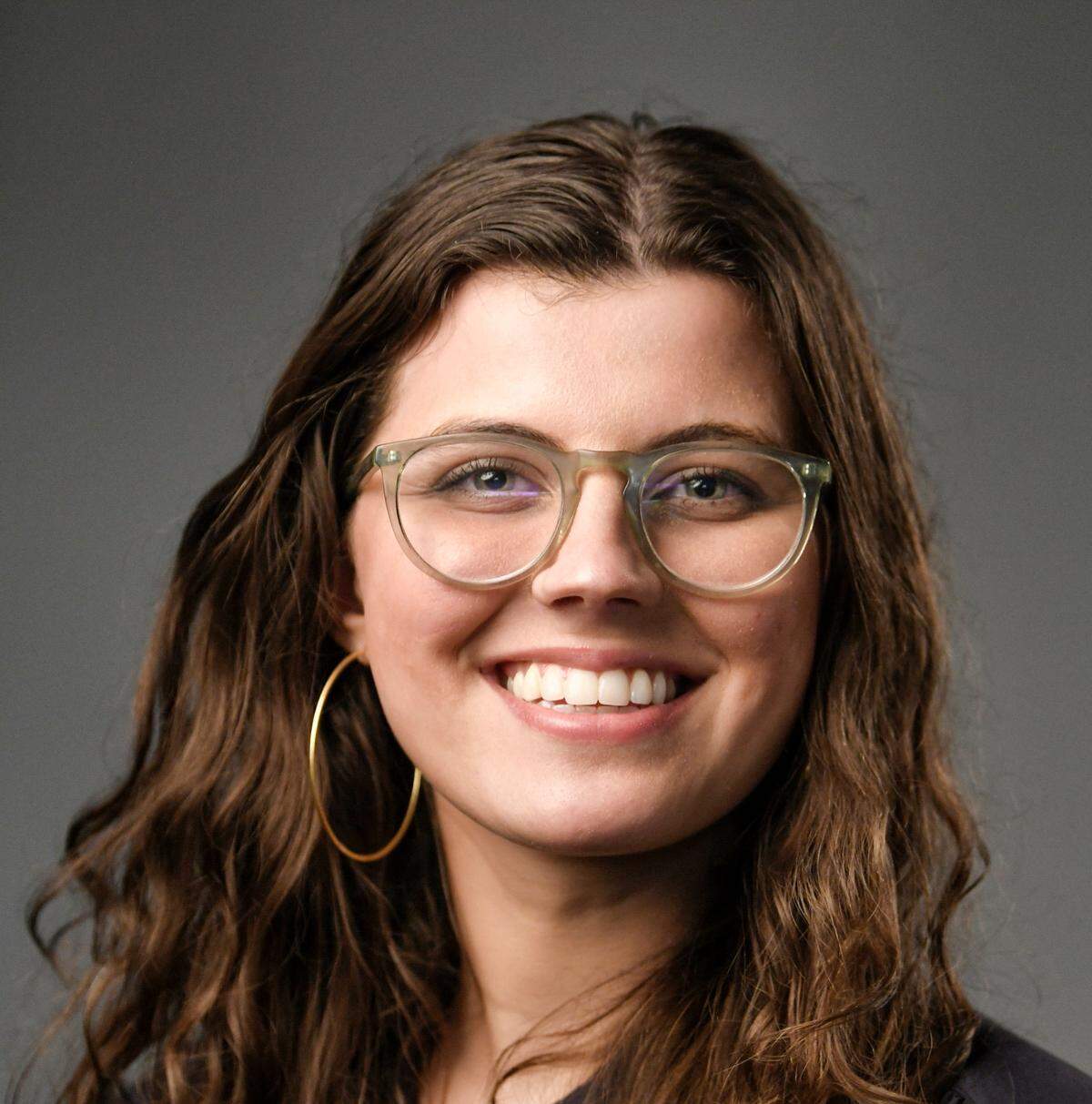
How Wake County’s last red district helped NC GOP lawmakers expand their majority
For Democrats to win a majority in North Carolina’s General Assembly, they needed one of the party’s rising stars to hang on to her seat.
So donors across the country poured more than $1 million into Rep. Sydney Batch’s campaign for House District 37 — a purple, suburban district in southwestern Wake County — signaling her seat was key to taking back control of the legislature and the power to draw congressional and state legislative districts that would last for the next decade.
“We put everything we had into defending Rep. Batch,” said Rep. Graig Meyer, a Democrat who served as a campaign chair for the House Democratic Caucus. “We knew that if we weren’t going to be able to hold District 37 ... There was no way we were going to get to a majority in this election.”
In the end, money didn’t translate to votes for Batch and most other Democrats vying for legislative seats. Despite outraising Republican Erin Paré by nearly five times, Batch lost by more than 3 percentage points on election night, despite the 4-point advantage the North Carolina Free Enterprise Foundation estimated Democrats had in the district.
The outcome of Batch’s race is representative of the struggles Democratic candidates for the state legislature had across the state this year. The millions of dollars they raised weren’t enough to overcome a number of factors Democrats didn’t foresee. Among them: Unexpectedly high turnout among Trump voters.

Trump effect
Batch, a family law attorney, was one of the Democrats who rode the “Blue Wave” in the midterm election of 2018, flipping District 37 from red to blue and helping break the GOP’s supermajority in both the state House and Senate.
“2018 was probably the best environment that Democrats have run under in the last four years, given the fact that Trump wasn’t on the ballot, and it was a midterm,” said North Carolina Democratic Party spokesman Robert Howard.
Winning District 37, which encompasses both Holly Springs and Fuquay-Varina, was never going to be an easy feat, but Democrats hoped to capitalize on their momentum from 2018 and win a majority in both legislative chambers in 2020.
“I thought I was going to lose,” Paré, a small business owner in Holly Springs, told The News & Observer on election night.
To flip the House, Democrats needed to pick up an additional six seats. Instead, they lost six. Democrats appear to have won an additional two seats, with votes still being counted, for a net loss of four.
Experts say Trump on the ticket made the difference.
The president visited North Carolina nine times ahead of Election Day, garnering enthusiasm among his base that likely translated to votes for Republicans across the state.
Second Lady Karen Pence was one of many Trump surrogates who made trips to the Triangle area in the days ahead of the election. Pence spoke at Finnegan Run Farms, located in District 37, where Paré gave the opening prayer just a week before the election.
Those efforts appear to have paid off. A record 75% of North Carolina’s registered voters cast a ballot. And some 80% of District 37 voters cast their ballots in the House race there.
“As much as every campaign in North Carolina would like to take credit for driving that turnout, that’s solely based on Trump,” said Democratic political strategist Morgan Jackson. “The thing about Trump that you have to appreciate is that he has the ability to motivate voters.”
If campaign advertisements are any indication, it was clear Democrats weren’t prepared for such a large turnout among Republicans in District 37. While the rest of Wake County has grown bluer since the last presidential election, this district was the only one that turned red this year.
Yet ahead of Election Day, North Carolina’s Democratic Party sent mailers to voters describing Paré as “pro-Trump.” That was a mistake, said Paré’s campaign manager and former Wake GOP chairman, Charles Hellwig.
“The biggest attack that Sydney made on Erin was comparing her to Trump,” Hellwig said. “I understand why they would do that, but the problem is Trump won the district.”
Hellwig believes that every time Democrats indicated Paré supported Trump, she won more votes.
Trump was leading in the state as of Wednesday, and North Carolinians voted for Republican incumbent U.S. Sen. Thom Tillis as well. Democratic Gov. Roy Cooper was one of the few in his party who won a bid for statewide office.
“It has traditionally been the belief that higher turnout benefits Democrats,” Jackson said. “That was not the case this time.”
One other force working against Batch was the fact that the district lines were redrawn following her 2018 victory, Jackson and Meyer said.
A court ruling reverted the district’s map back to what it was ahead of the 2018 election.
“This is the one Democratic seat in the state that actually got worse due to redistricting,” Jackson said. “When you think about the changes, most of the (redistricting) changes benefited Democrats. Unfortunately Batch gained two additional precincts that are much more Republican, and that could’ve been the difference in the race.”
To Jackson, redistricting and “Trump-level turnout” were the key reasons Democrats lost District 37.
“The election came down to two things: incredible turnout from sporadic Republican voters and the fact that her district got worse during redistricting, not better,” Jackson said.
Coronavirus and Cal Cunningham
Two other significant factors contributed to the demise of Batch and other Democratic candidates for the legislature, experts, candidates and strategists on both sides of the aisle said.
The first was the coronavirus pandemic, which changed how Democrats campaigned.
Batch and Paré both credit Paré’s win in part to the fact that Republicans canvassed and knocked on doors, while Democrats didn’t, out of concern that they would contribute to the spread of COVID-19.
“The impact of not canvassing definitely negatively affected me because there’s no other substitute to meeting a voter or constituent at the door,” Batch said. “It’s very hard to make the impact and make that connection by phone.”
Hellwig said he thinks door-knocking helped increase voter turnout, too, and thinks Republican turnout this year will be well-above what it was in 2016.
“If that’s the case,” Hellwig said, “door-knocking, and the Democrats not door-knocking, is a big part of that.”
It’s unclear how news of Democratic U.S. Senate candidate Cal Cunningham’s marital infidelity affected Democrats down the ballot, but it certainly didn’t help, said Chris Cooper, who heads the political science department at Western Carolina University.
“It didn’t damage the Democratic brand irreparably,” Cooper said. “I think it did damage some of the races that were on the margins.”
Among the races on the margins: District 37.
“Sometimes the top of the ticket, at the U.S. Senate level, can mobilize voters,” Cooper said. “With Cunningham, I would argue that his decision to essentially not campaign, or at least turn the volume down on his campaign, probably hurt some Democrats down-ballot.”
The fact that now President-elect Joe Biden didn’t garner as many votes as Democrats hoped didn’t help either, Cooper said.
Despite Paré’s surprise at the outcome of her race, she’s eager to get to work.
“I really do think we have a bright future ahead of us,” Paré said on election night. “I think it just shows that, hopefully, we can all come together after this big competition and get some big things done.”
Paré hopes to tackle economic and education policy first, and what she hopes to accomplish is far different than what Democrats wanted to get done if they took the majority.
Paré, a former military spouse who co-owns a Play It Again Sports store with her husband, Wayne, considers herself a fiscal conservative and empathizes with other small business owners’ concerns about the local economy in light of the coronavirus pandemic.
And though she’s a former PTA president and her two children attend public schools in her district, she’s an advocate of school choice.
“Any way that I can help promote those choices for families, I’m ready to do that on day one,” Paré said.
For more North Carolina government and politics news, listen to the Domecast politics podcast from The News & Observer and the NC Insider. You can find it on Megaphone, Apple Podcasts, iHeartRadio, Stitcher or wherever you get your podcasts.