Rep. Destin Hall isn’t NC House Speaker yet, but he is fundraising like one
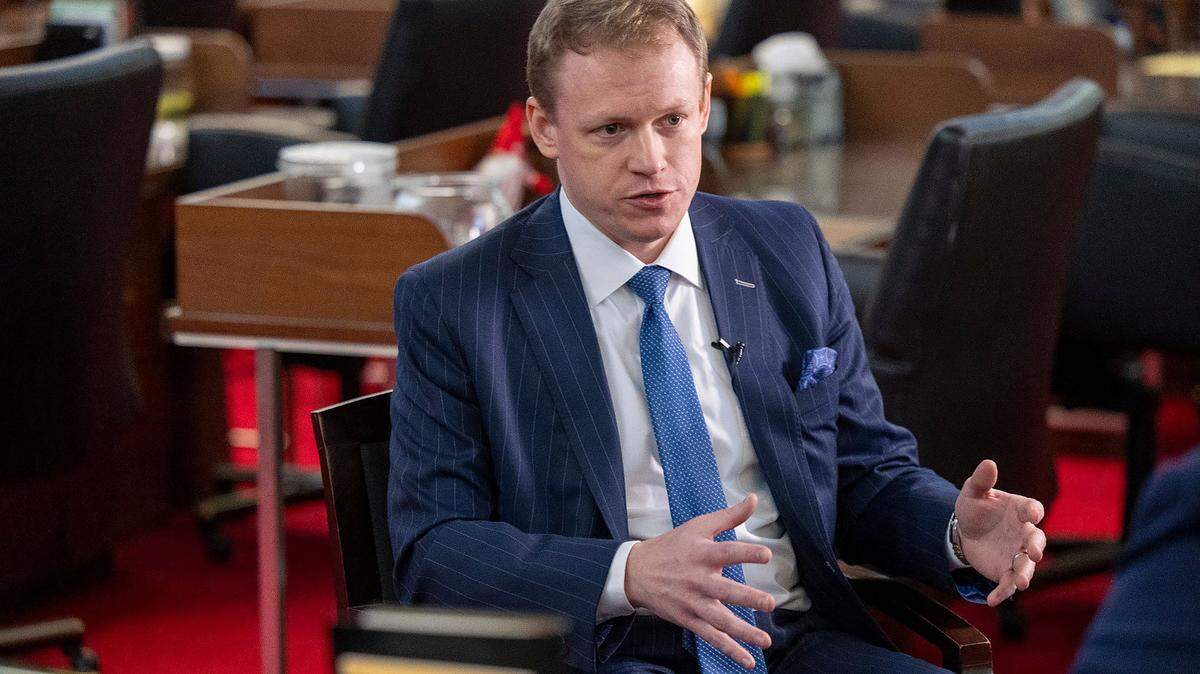
Rep. Destin Hall, a 37-year-old Republican from Caldwell County, is not yet North Carolina House speaker, but he has already stepped into one of the position’s most important election-year roles: fundraising.
And he’s pulling in big donations.
Hall, who has gained the support of top leaders in the House Republican Caucus to replace Speaker Tim Moore in 2025, has raised over $1.5 million this election, according to campaign finance reports. And the bulk of that money is going to his fellow House members.
Jordan Shaw, an adviser to Hall, told The News & Observer that Hall transferred $1 million to the House Republican caucus campaign committee.
That’s the largest single contribution to the caucus in history, according to House GOP Caucus Director Stephen Wiley.
“I’m thrilled by the level of support we’re seeing across the state for continued conservative leadership in Raleigh,” Hall said in a statement to The N&O.
“We are focused on protecting and expanding our Republican majority in the North Carolina House this November, and I will continue to work as hard as I can with my fellow House members and candidates to ensure we have the resources to be successful.”
Shaw said Hall has given an additional $134,000 in individual contributions to other House Republicans, though he did not provide a list of the candidates who received those donations.
Because Hall’s contribution to the caucus happened after the second quarter of the year, it has not yet been reported in quarterly campaign finance reports.
Hall aims to carry on Speaker Moore’s fundraising legacy
After Moore announced he was running for Congress — making his record-breaking fifth term as speaker his last — leaders of the caucus quickly united behind Hall to be his successor.
As chair of the Rules committee, Hall already wielded considerable influence over the chamber. He and House Majority Leader John Bell were each contenders for the speakership, but the two ultimately agreed, alongside other party leaders, to support Hall for the top position and select Bell as the next rules chair, the Associated Press reported.
Moore has set a high standard for fundraising during his time as speaker, most recently bringing in over $3 million in the 2022 midterms — over $2 million of which he gave to the caucus, Wiley said.
This year’s fundraising efforts come as Republicans aim to maintain or grow their fragile one-seat supermajorities in the House and Senate.
With complete control over the General Assembly, Republican lawmakers have been able to overturn a record number of Democratic Gov. Roy Cooper’s vetoes, enacting major conservative legislation like a 12-week abortion ban with exceptions, stricter election laws and restrictions on gender-affirming care.
But if Republicans lose just one seat in either chamber, they also lose the power to override the governor’s veto unless at least a few Democrats vote with them. If Republican Lt. Gov. Mark Robinson wins the gubernatorial race, this likely won’t be a major issue for the party. But if Democratic Attorney General Josh Stein wins, Republicans would not be able to pass conservative laws by themselves.
House Democratic Leader Robert Reives isn’t surprised that Hall is delivering on fundraising for the opposition.
“In my mind, he is raising as a speaker should raise,” Reives told The N&O.
But the top-down approach to fundraising has its drawbacks, he said.
“Speaker Moore has always been kind of the big overall fundraiser, and has distributed money and (support from) donors to people who are not Speaker Moore,” Reives said. “So it makes their caucus a little bit more dependent on the top of the leadership scale, whereas with us, a lot of our fundraising comes in a more diverse way.”
Reives himself has raised about $417,000 this cycle and the Democratic House caucus has about $409,000 in its account.
Even when Democrats were in the majority, they relied more heavily on individual fundraisers within the caucus rather than letting leadership take charge, Reives said.
He pointed to several consequential House races where Democrats are currently outraising their opponents, including Nicole Sidman’s campaign to unseat Democrat-turned-Republican Rep. Tricia Cotham in Mecklenburg County.
In the last reporting period, Sidman raised more than $260,000 — over four times as much as Cotham, The Charlotte Observer reported.
Democrats also lead Republicans in fundraising for several statewide races.
In the governor’s race, Stein raised $13.6 million last quarter to Robinson’s $5 million. And in the race for attorney general, Democratic U.S. Rep. Jeff Jackson raised three times as much as his Republican opponent, U.S. Rep. Dan Bishop.
The next batch of campaign finance reports are due on Oct. 29 and will show Hall’s contribution to the caucus and individual House Republicans.
All members of the General Assembly are up for reelection this year on Nov. 5.