Will lawsuits, misinformation ‘lay the groundwork’ for NC election challenges? What to know
The specter of former President Donald Trump’s false election claims still looms four years after his defeat, especially in battleground North Carolina, which could be the decisive state in determining whether Trump or Vice President Kamala Harris takes the White House.
With Republicans filing a flurry of election lawsuits, and misinformation spreading about voting, some see the same forces from 2020 coalescing once again, sowing the seeds for unfounded allegations of fraud and a stolen election before votes are even counted.
Daniel Kreiss, a professor at UNC-Chapel Hill who studies disinformation, called the implantation of doubt and conspiracy into the election process a “strategic campaign” by the GOP.
“It is done to lay the groundwork to enable groups that lose on the right to contest a freely and fairly held election if the outcome does not work out in their favor,” he said.

RNC lawsuits target voter rolls
In battleground states across the country, the Republican National Committee has embarked on a prolific campaign to sue election officials over a litany of voting practices they claim could lead to fraud or interference.
In North Carolina, the RNC and state Republican Party have jointly filed at least five lawsuits against the State Board of Elections since August. These challenges run the gamut from complaints about digital student IDs being used for voting to claims that hundreds of thousands of people could be improperly registered on the state’s voter rolls.
Republicans say the lawsuits are necessary to force the board, which has a 3-2 Democratic majority, to follow state elections law.
“The lawsuits are a last resort when discussion and engagement fail to achieve adherence to state law,” said Matt Mercer, a spokesperson for the NC GOP. “It is not something we take pleasure in, but will use every option to ensure compliance with the law in the administration of elections.”
These legal efforts represent the culmination of years of messaging on election integrity, which became a primary focus for the Republican Party following Trump’s loss in 2020.
RNC Chair Michael Whatley, who previously served as executive director of the NC GOP, received Trump’s backing to lead the national party partly due to his embrace of false claims of election fraud in 2020, The New York Times reported earlier this year.
So far, the RNC’s lawsuits have had limited success.
While the N.C. Court of Appeals blocked the state from accepting UNC-Chapel Hill’s digital IDs for voting, every other complaint the RNC has brought in North Carolina has either been dismissed or delayed — unlikely to reach a resolution before Election Day.
However, achieving a resolution before Election Day may not actually be the point of the lawsuits, critics say.
“If you spend enough time casting enough lawsuits, sowing doubt into the process, then the hope is that you can find some judge somewhere who will rule in your favor in the post-election period and then use that as a mechanism to say, ‘Well, we can’t trust what’s going on,’” said Damon Circosta, who previously served as chair of the North Carolina State Board of Elections on the appointment of Democratic Gov. Roy Cooper.
Mercer denied the idea that the lawsuits were being used to plant seeds for denying election results.
“Democrats want to talk about anything other than the merits of these cases,” he said. “The NCSBE’s own actions have created these issues we seek to address.”
Perhaps the most notable lawsuit filed by the RNC is a challenge to the state’s voter rolls, which argues that 225,000 people were improperly allowed to register without providing certain identifying information and should therefore be removed.
In a close election (as all models predict this one will be), 225,000 voters could be the difference between Trump or Harris carrying the state — and potentially, the presidency.
In its lawsuit, the RNC warned that, hidden within this vast list, noncitizens could have illegally registered to vote, which has “brought the security and validity of the state’s elections into question.”
They have not, however, provided any specific examples of noncitizens within this list, nor provided substantial evidence that any of these registered voters are ineligible.
The RNC’s lawsuit rests on a voter registration form that the group argues didn’t clearly tell voters that they were required by federal law to provide either a driver’s license number or the last four digits of their Social Security number to register, resulting in 225,000 registrations without those forms of identification included in the state’s database.
Myriad reasons could explain the missing numbers, including clerical errors, match issues with Social Security’s national database or the fact that some voters registered before the federal law requiring those numbers passed in 2002.
Regardless, even if one of these voters did not actually have a form of identification and were therefore ineligible to vote, they would be asked to show ID at a polling place if they tried to vote.
One of the voters who appears in the state’s database without those identifying numbers is Rani Dasi, a member of the Chapel Hill-Carrboro City School Board.
Dasi, who said she has been voting since the early 1990s and is currently serving her third term in elected office, was shocked when a colleague told her she appeared on the list of potentially ineligible voters.
“I asked her if she had been hacked,” Dasi said.
After finding out about the list, Dasi checked in with the Orange County elections board, which found no problems with her registration. She also voted without issue in this election.
“I got lucky to find out,” Dasi said. “...But I think most people would probably not know until it’s brought into court and tried to be used against them post-election.”
An attorney for the GOP has argued in court that, while the party’s original lawsuit does ask for all 225,000 voters to be removed, the court could instead require those voters to cast provisional ballots and provide the necessary identifying information.
So far, Republicans have been largely unsuccessful in making their case.
Chief U.S. District Judge Richard E. Myers II, a Trump appointee, ruled that Republicans did not have the right to sue over the federal voter registration law in question.
A separate portion of the GOP’s lawsuit remains alive, and after a stop at an appeals court, it now returns to Myers – although any ruling he issues is likely to be appealed.
In a similar case out of Virginia, the U.S. Supreme Court on Wednesday ruled in Republicans’ favor, allowing a purge of approximately 1,600 voter registrations to continue.
False claims of noncitizen voting
That lawsuit, and another which alleges the state isn’t doing enough to remove noncitizens from the voter rolls, follows a trend pushed by Trump himself of Republicans falsely claiming that immigrants without authorization to live in the country are illegally voting in large numbers.
“Our elections are bad, and a lot of these illegal immigrants coming in, they’re trying to get them to vote,” Trump said at the presidential debate in September.
It is illegal, per both state and federal law, for noncitizens to vote and there is no evidence to suggest that they are doing so in substantial numbers.
The conservative Heritage Foundation conducted a nationwide study of elections between 2003 and 2023 and found 24 instances of noncitizen voting.
A separate study conducted by the liberal Brennan Center found 30 incidents of suspected noncitizen voting out of 23.5 million votes in selected jurisdictions in the 2016 election.
Several safeguards prevent noncitizens from registering to vote, but even if they were able to do so, they would be required to show a photo ID at their polling place. If they did not provide one and instead submitted an ID exception form, county election officials would review their registration and potentially cancel their vote.
Furthermore, the potential motivation for a noncitizen to vote doesn’t make sense, Circosta said.
“Who are these noncitizens who are risking a felony conviction to cast a single vote in a single state?” he said.
Last year, Republican lawmakers passed a bill requiring the State Board of Elections to work with state courts to inspect jury questionnaire responses in an attempt to find noncitizens on the voter rolls. Courts are required to share the names of any potential juror who self-identifies as a noncitizen with the board, who then checks that information against the state’s voter rolls.
Since implementing that law in July, the board identified nine potential noncitizens.
There are nearly 7.8 million registered voters in North Carolina.
Overseas voters
Another RNC lawsuit targeted a state law regarding military and overseas voters, arguing it could potentially allow ineligible non-residents to vote.
The disputed policy, which has been in place for over a decade, allows the adult children of North Carolina residents, who currently live abroad, to participate in the state’s elections even if they have never lived in the state.
The lawsuit, which follows a trend from the RNC in other battleground states, was rejected by a trial court and the state Court of Appeals.
Disaster and delays at play
Lawsuits aren’t the only factor that could be used to cast doubt on North Carolina’s election.
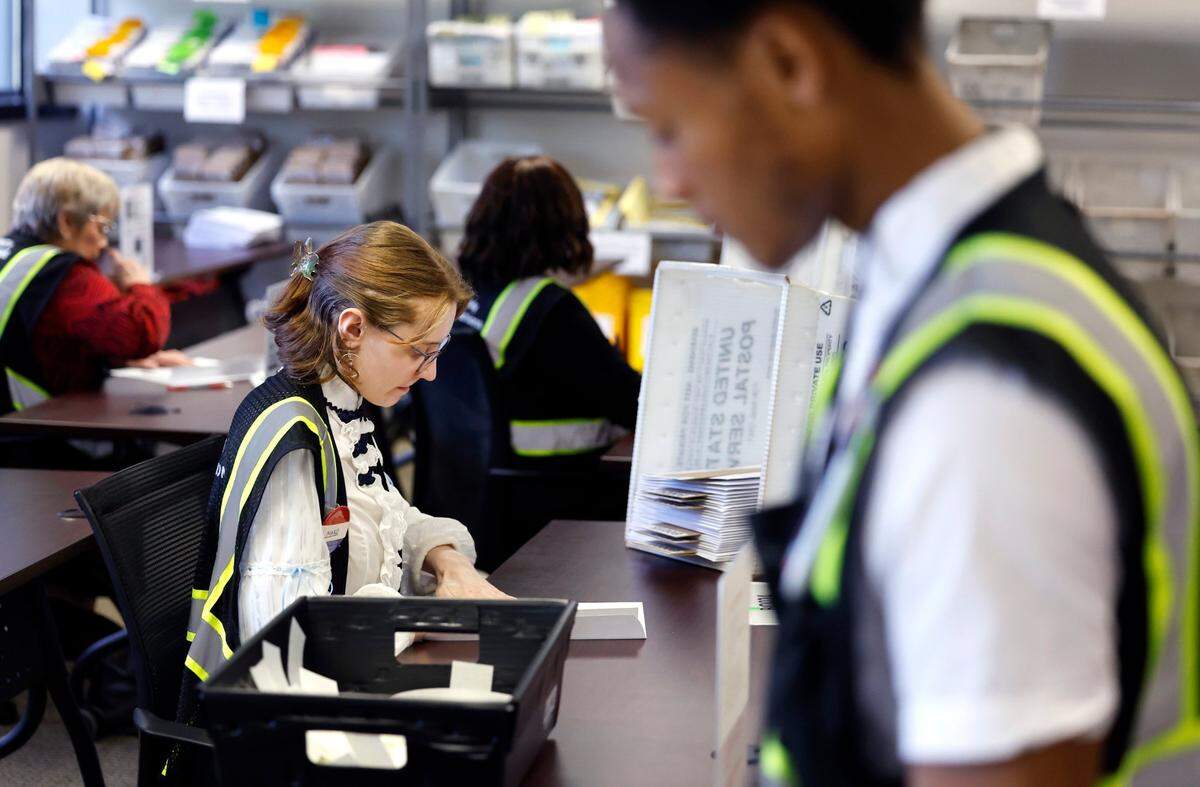
Election officials have already had to contend with several disruptions to voting, beginning with a two-week delay in sending out absentee ballots.
This came about after the state Supreme Court ruled that third-party independent presidential candidate Robert F. Kennedy Jr. had to be removed from the ballot.
After spending months fighting to get on the state’s ballot — and defending his right to do so in court — Kennedy launched a hasty attempt to withdraw his candidacy after partially suspending his campaign and endorsing Trump.
Republicans, who had vociferously supported Kennedy’s right to be on the ballot beforehand, then backed his eleventh-hour effort to be removed.
The court’s ruling forced county election boards to reprint the millions of ballots that had already been prepared for the election and spend hundreds of thousands of dollars in the process.
Then, just days after absentee ballots were mailed out, Hurricane Helene hit and devastated much of Western North Carolina.
In the aftermath, a surge of conspiracy theories spread about the government’s response to the crisis, with one post with nearly 4 million views claiming that the hurricane was about “cheating in the election.”
The chair of the ultra-right U.S. House Freedom Caucus, Andy Harris, even said North Carolina legislators should give Trump the state’s electors before votes are counted, Politico reported. Jackson later walked this claim back after top Republicans rebuked it.
Lawmakers and the State Board of Elections have made myriad efforts to ensure voting continues uninterrupted in the affected counties, but conspiracies persist, including from Trump, who has repeated false claims that the Federal Emergency Management Agency is spending money on illegal immigrants instead of hurricane relief.
“The fact that this preys both on natural disasters and racial and ethnic fears is not a coincidence,” Kreiss said. “It’s opportunistically designed to undermine public confidence in an election among supporters who map onto a particular partisan group.”
And although Republican lawmakers initially passed a bill to make voting easier for all residents of Western North Carolina in the disaster zone, they later targeted two specific counties in a bill requiring them to open up more early voting sites.
Those two counties, Henderson and McDowell, both lean heavily Republican.
The RNC has also publicly complained about several early voting plans in the wake of Helene, most recently sending out a press release demanding Buncombe County open more early voting sites in rural areas.
“This is unacceptable partisan voter suppression by the Democrat board members,” Whatley said.
Buncombe, which leans heavily Democrat, already has 10 early voting sites which are open seven days a week.
In a letter to the county elections board, the RNC claimed that the existing early voting sites are clustered around Asheville, inconveniencing rural voters and “effectively diluting their voices in relation to their urban, metropolitan, ‘upper-class’ neighbors.”
A spokesperson for the Buncombe County elections board noted that there are already several sites located outside of Asheville, such as in Black Mountain, Leicester and Weaverville.
“Voters have taken great advantage of the opportunity to vote early at sites located in areas that can be safely accessed without danger of compromised roads or power outages,” the spokesperson, Lillian Govus, said in an email.
The RNC’s demand came over a week after early voting had already begun.
How could it play out?
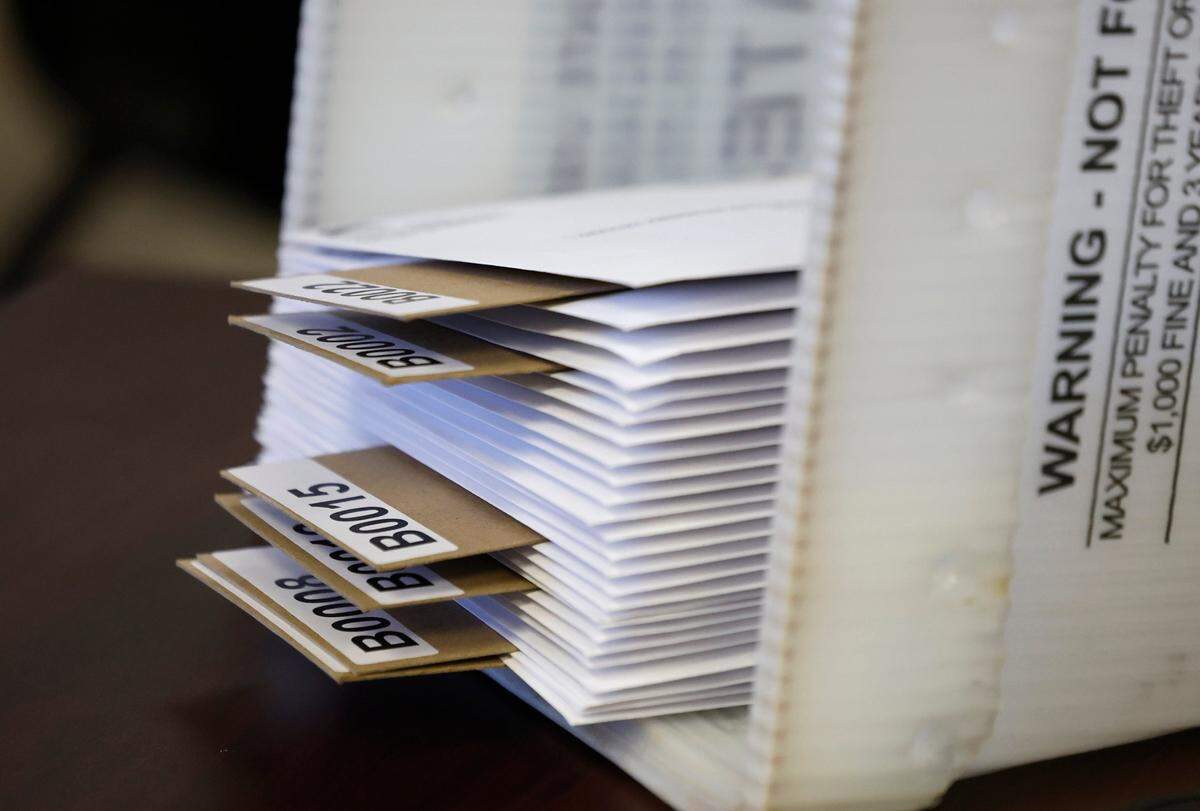
The results North Carolinians see on Election Night will be unofficial.
It isn’t until the end of the 10-day canvass period, in which election workers engage in a rigorous audit process of ballots, that the results are officially certified by the State Board of Elections.
Throughout that period, a number of factors could complicate the process, including voter challenges, recounts or further litigation.
Andy Jackson, director of the conservative Civitas Center for Public Integrity, said he doesn’t think claims of an unfair election will get very far, especially considering Trump’s own comments on the state’s electoral process after 2020.
“North Carolina produced a big victory for us, without a fraudulent outcome — missing ballots, illegal voting, dead people voting, and all of the other Democrat tricks,” Trump said in a 2021 statement.
Others, however, worry that enough legal challenges, misinformation and delays could combine to cause chaos in the post-election period.
“This should be deeply concerning to North Carolinians,” Ann Webb, policy director at Common Cause NC, a group that advocates for voting rights, said. “We have a very secure and strong election system that is incredibly accurate, and efforts to delay accounting and certification could undermine the process of finalizing our elections and ensuring that we have a peaceful transfer of power.”
This story was originally published October 31, 2024 at 5:00 AM.