NC agriculture candidate responds to scrutiny over farm credentials. Here’s what we know
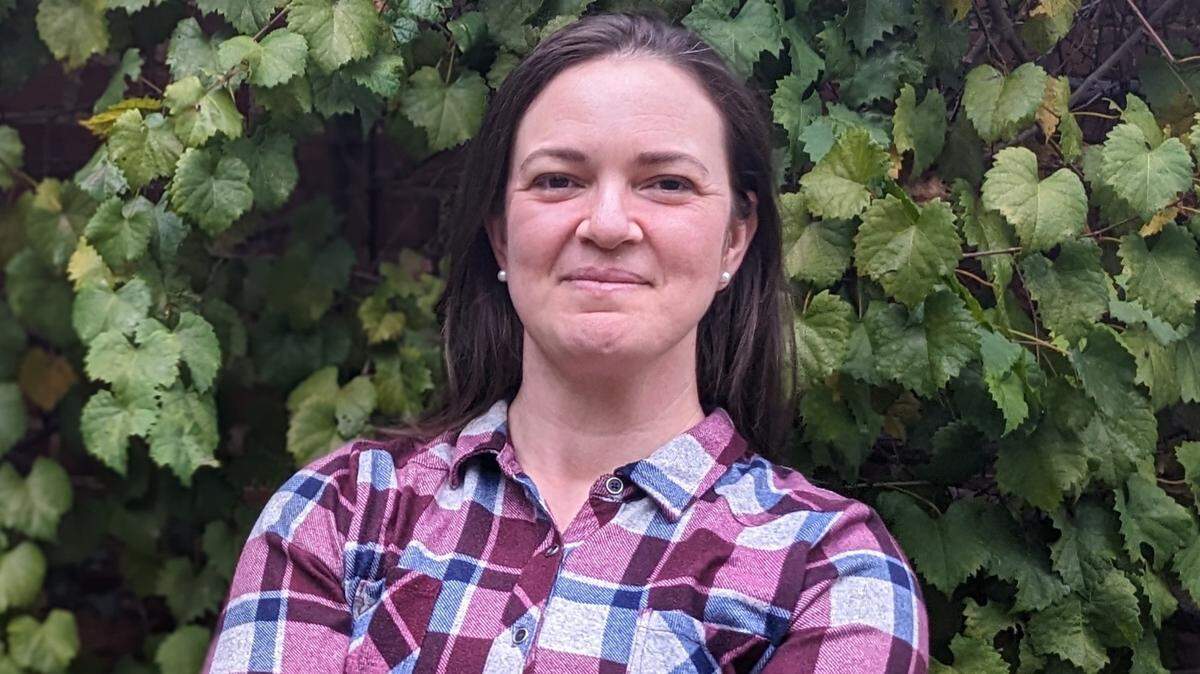
Sarah Taber, a Democratic candidate for North Carolina agriculture commissioner, is facing scrutiny over her farming credentials and the accuracy of her self-described experience.
In response to a questionnaire from The News & Observer, Taber described herself as a small farmer with 27 years of agricultural experience. She stated that she began her career at age 14 through hands-on field jobs, eventually working her way through crop school to later “combine practical knowledge with technical training to help farmers improve their livelihoods.”
Taber said that all her clients remain in business, and are collectively valued at $4 billion, with some having expanded beyond small business status. She has similar information on her campaign website.
Taber is challenging five-term Republican incumbent Steve Troxler, who has held the position since 2005. This November, Taber and Libertarian Sean Haugh are vying to unseat Troxler.
However, questions have arisen about the specifics of Taber’s farming operations and the extent of her involvement in developing her clients’ businesses: The Assembly first reported that her role in their development may be limited.
Several supporters of Troxler have also raised concerns about Taber’s self-description as a “small farmer,” a matter that The Assembly also examined.
Defining ‘farmer’
Voter rolls list Taber’s address as a home on a quarter-acre lot in Fayetteville, according to Zillow.
Taber told The N&O in an email Thursday that the quarter-acre property is her home and that, “It’s a normal part of the farm career arc for beginning farmers to own very little property of their own. In fact, many farmers spend most of their careers managing other people’s properties — as I have done & will continue to do. ‘She only has a quarter-acre’ is not a ‘gotcha’ and people who farm for a living know that.”
Taber said in an email that she produced vegetables, nuts and herbs, with her main crops being pecans, berries, figs and vegetables.
According to North Carolina law, the agriculture commissioner and members of the Board of Agriculture must be “practicing farmers engaged in their profession.”
There are no specific licenses or certifications required to become a farmer, according to NC State University, which provides education, conducts research, and provides services focused on farming and agricultural practices.
However, different federal, state, and local agencies define “farmer,” “farming,” and “agriculture,” according to NC State.
The NC Department of Agriculture & Consumer Services – led by the agriculture commissioner – defines a farm “as a tract of land cultivated for the purpose of agricultural production” that has $1,000 or more of agricultural products being produced or sold. The department defines a “small farm” as one that is 179 acres or less or earns $50,000 or less in gross income per year.
Meanwhile, for tax purposes, a farm “includes livestock, dairy, poultry, fish, fur, fruit and truck farms. It also includes plantations, ranches, ranges, and orchards and groves.” Not considered farming: providing agricultural operations as a service, such as custom harvesting and custom farming. Farmers report profits and losses on Schedule F, a tax form.
Asked to release her tax forms, Taber said via telephone she’d be “happy to release“ them when her opponent does. Troxler declined to release his tax forms but said to look at statements of economic interest, which shed light into his business.
Taber said via email she made all required financial disclosures when filing to run. She added that “stating ‘I file Schedule F’s’” has long been accepted as proof that Troxler is a farmer, and said she has filed them since 2019.
“Troxler’s farm is only 10 acres — the minimum size required for a tax break. 3 of those acres are in forestry. His own supporters have described small farms like his as not being ‘real farms’ but ‘gardens,’” she said.
Involvement with companies
Founders of companies that The Assembly reached out to said that she performed a small amount of work or primarily focused on food safety certification, which occurred before these businesses significantly expanded. The Assembly also found that one operation is no longer in business, prompting Taber to retract her previous claims that all of her clients were still operational.
But Taber said that claims about her being involved in a small amount of work or just food safety are “not accurate. That’s coming from founders & CEOs who weren’t involved in the day-to-day running of their companies. I worked with each of these companies for 1-4 years on a lot of different issues, not just food safety.”
Taber said she had worked with various companies, assisting GreenLife with water chemistry and pest control, Superior Fresh with equipment design and wastewater management, Bowery with facility design and addressing a plankton bloom, Iron Ox on equipment and facility design for robot harvesting, and Plenty in resolving operational issues and ensuring safety while also handling recruitment.
She also said she’d worked with Falling Waters Farm, which eventually closed its doors in 2023, and that she had missed this company going out of business. “Honest mistake,” she said. She suggested reaching out to staff who had worked at these six companies.
As for the directors of these companies, five told The Assembly that her consulting focused on food safety, while a sixth acknowledged her involvement but could not recall her specific role. Jon Shope, founder of Falling Waters Farm, the company that closed, told The Assembly that Taber’s early-stage consulting was important.
The Assembly reached out to seven companies where Taber claimed to have worked. Five directors confirmed that her consulting primarily focused on food safety, while a sixth acknowledged her involvement but could not remember her specific role. One company is no longer in operation.
Taber also said she worked with these companies during “their rapid expansions” and that the $4 billion number came from valuations of the companies listed above.
Troxler’s work
The N&O reached out to Troxler’s campaign for comment and asked him to release his tax forms. Nathan Babcock said Troxler did not have any comment and that, regarding the Schedule F forms, he would refer to the economic interest forms filed with the state. Forms show income from The Homeplace of Browns Summit, LLC. The state’s secretary of state website shows that Troxler is a member of that company.
Troxler’s address in public records is a home in Guilford County. He is listed as the owner of multiple other properties in the county, including one over 10 acres in size, according to Zillow.
The address of the company listed in economic interest forms is one of the addresses listed as being owned by him.
Babcock said that The Homeplace of Browns Summit LLC is Troxler’s farm.
Troxler is an NC State graduate from Guilford County who owns a farm that has grown tobacco, wheat, vegetables and soybeans, according to the agriculture department’s website.
He is the past president of the National Association of State Departments of Agriculture, an organization which represents the elected and appointed officials of state agriculture departments, among other things.
Haugh said in his questionnaire that he is “most famous for delivering pizzas,” a nod to the media attention he garnered while unsuccessfully campaigning for the U.S. Senate in 2014 and 2016. He also sought a state House seat in 2020 and 2022. In his responses, he indicated that he is retired, attended “some college,” and has played a significant role in the development of the Libertarian Party of North Carolina since 1994.