Democrat Allison Riggs takes lead in NC Supreme Court race, but it’s not the final count
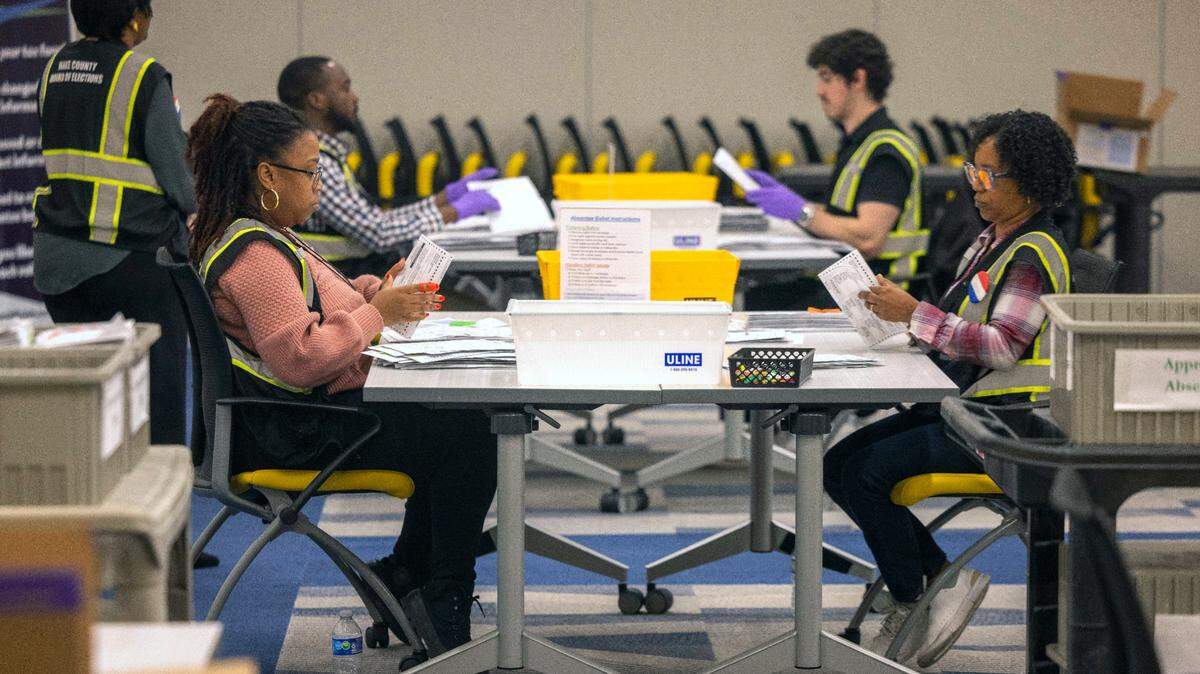
Wake County’s final vote count Friday helped vault Democrat Allison Riggs, who had trailed her opponent since Election Night, to a narrow lead in her race to keep her seat on the North Carolina Supreme Court.
The count flipped the result of a razor-thin state Senate race to Democrats, too – meaning both races could be headed toward recounts.
But first, Wake’s election board members spent an hour debating the eligibility of voters who died before Election Day.
After hearing evidence in the case of 70 challenged ballots, as well as 33 ballots with issues that had not been remedied, the board decided not to count 97 ballots on Friday. The votes they threw out included most of a group of ballots that had been challenged on the grounds that they came from dead voters. But a slim majority of the board decided to count three of the ballots submitted by people who later died.
Since Wednesday, the board has met to review more than 6,200 provisional ballots, including more than 4,000 absentee ballots that arrived by Election Day. This review involves hearing evidence and hand-sorting through such ballots. It’s part of the canvass, a process to make sure votes are correctly counted.
Each of North Carolina’s 100 counties’ boards of elections met Friday to canvass, though not all finished their work and certified the results of the election.
The Wake board did finish, after hearing 70 challenges to ballots on Friday, including allegations that 45 votes came from deceased voters, two from people with felony convictions, two from noncitizens and 11 from those who had already voted.
North Carolina’s elections boards are controlled by Democrats but include members of both parties.
Voters who died before Election Day
Wake County resident Kelly Parzanese addressed the board, asking that her father’s ballot be considered, even though he died on Nov. 2. The 78-year-old Vietnam War veteran Michael Talbot “wasn’t your average voter,” according to Parzanese. She said her father was enthusiastic about voting early — waiting more than an hour to do so in person on Oct. 24.
Board Director Olivia McCall presented evidence on behalf of the board, including Talbot’s ballot and death certificate.
Counting Talbot’s vote would conflict with longstanding legal precedent, Democratic board member Gerry Cohen said. But state practices vary.
“The 50 states are really split on this issue,” Cohen said. He called North Carolina’s tradition, which predates early and absentee voting procedures, “mean-spirited and reprehensible.”
Board Chair Erica Porter said the board has never taken on this issue and, instead, has deferred to the state for guidance.
Board member Keith Weatherly opposed counting Talbot’s ballot.
“My duty and obligation is to obey state law,” he said. “Your issue is with the state, not with us.”
Board member Greg Flynn, a Democrat, became emotional, sharing that his father died this year, apologizing to Parzanese and expressing disagreement with the law.
“I’m willing to talk to whoever I need to in the legislature,” Porter said.
The board’s two Republicans supported throwing out Talbot’s vote, but were outvoted. It was the first of three 3-to-2 votes to accept the votes of those who voted and then died, including:
Korean War veteran Wilfred Michael “Mike” Shea. Mary Shea asked the board to count her father’s ballot.
Daniela Smith-Davis. The 18-year-old died on Oct. 23, after submitting her vote.
“A blanket denial of these challenges brings complications to the canvass,” Flynn said. “But, here, in 2024, the protective measures we have — voter ID, the technology we have, the lists we create, the information we get — really negates the need for this law.”
The board’s GOP appointees weren’t persuaded.
“I’m open to seeing if we can make any headway with the General Assembly,” board secretary Angela Hawkins said. “But as we sit here today, I can not change my position, which would be to remove the votes cast.”
Weatherly added that those not dedicated to abiding state law should not be serving on the board.
“I take offense to that,” Porter responded.
“Voting is very important to me. Being the only person of color on this board does not sit lightly with me,” she said. “I’m the first person in my family with the full right to vote. I take what we do seriously. To insinuate that I should not be on this board is very hurtful.”
Challenges to the remaining 42 ballots from deceased individuals were unanimously supported.
Challenges based on crimes, citizenship, multiple votes
The board also removed the ballots of 12 people said to have been convicted of felonies. These were identified as currently serving a felony sentence, including being on probation or parole without their rights restored.
Two noncitizen ballots were rejected. One individual indicated they were a citizen during same-day registration, but later reached out to the board to explain that they were mistaken.
“From our documentation, we would not have known,” McCall said.
Another individual indicated that they were not a citizen on their voter registration but cast a vote anyway.
Lastly, the board investigated 11 ballots from voters for whom there were multiple submitted. Three of these challenges were dismissed, as the individual who submitted the challenge did not appear to testify. The remaining eight were unanimously sustained.
Six of these involved individuals who cast their vote in person after submitting an absentee-by-mail ballot that was still pending. “We can work with the state board to remedy this on the front end for future elections,” McCall said.
What’s left to decide
The state Senate seat sought by Republican Ashlee Adams and Democrat Terence Everitt was among two state Senate and two state House seats that could end up going to recounts. If all results hold up, Democrats will have ended Republicans’ supermajority in the legislature, with the GOP falling one seat short of the three-fifths majority needed to override the governor’s vetoes in the House.
Everitt’s apparent win would earn Democrats another seat in the Senate, but Republicans would still maintain a supermajority in that chamber, controlling 30 of its 50 seats. Successful veto overrides require votes by a three-fifths majority in both chambers. He trailed by 38 votes on Election Night, but won the seat by 134 votes once Wake finished counting Friday night.
In the last uncalled statewide election, Riggs took the lead in the Supreme Court race for the first time since Election Day.
Republican Jefferson Griffin, a Court of Appeals judge, had led by about 10,000 votes once Election Night results were tallied, but as outstanding provisional and absentee ballots came in, Riggs slowly ate away at his lead.
Friday evening, she led the race by just over 100 votes. By Saturday morning, that lead had dwindled to just 24 votes out of the more than 5.5 million votes cast in the race.
“We’re watching good election administration in action” Riggs posted on X Friday evening. “I’m grateful to our election workers across the state who are working hard to ensure every vote counts.”
Several counties still need to count their provisional ballots, which could shift the race back in Griffin’s favor.
Regardless of which candidate ends up on top, the race may head to a recount. Whichever candidate comes in second must decide by Tuesday whether to call for one.
If Griffin wins, Republicans would grow their majority on the court to 6 to 1. That would leave Justice Anita Earls, who is up for reelection in 2026, as the sole Democrat on the court.
Who’s still counting
Several counties did not finish counting outstanding ballots on Friday as scheduled.
While most county boards of elections completed their canvass process, some will not finish until early next week, according to the State Board of Elections.
“The primary purpose of canvass is to ensure that the ballots of eligible voters are counted and those of ineligible individuals are not, that the county board followed all laws in the election and post-election processes and that the certified results are accurate, no matter how long the process takes,” Karen Brinson Bell, the state board’s executive director, said in a news release. “The state board will continue to support these county boards as they work through the process.”
The board said Chatham, Craven, Cumberland, Forsyth, Randolph and Yancey counties will all have to resume the canvass process next week.
Other counties, which were still counting ballots as of Friday evening, may also have to postpone the process.
In the Spotlight designates ongoing topics of high interest that are driven by The News & Observer’s focus on accountability reporting.
This story was originally published November 15, 2024 at 9:36 PM.