
Democrats running in NC House district disagree on future tax cuts
AI-generated summary reviewed by our newsroom.
- Democratic primary candidates split on reducing NC’s 3.99% income tax.
- Wilkins backs gradual rate cuts to leave more money for households.
- Walker opposes rate cuts now, urging funding for schools, health, infrastructure.
To help voters learn which candidates are on their ballot and where they stand on important policy issues, The News & Observer is publishing candidate questionnaires in all state and federal races in North Carolina on the March 3, 2026, ballot.
Below are the candidates running for NC House District 25 who responded to our questionnaire, in order by the date their responses were received. Some candidates did not provide a photo.
District 25 is located in Nash County and is currently represented by Rep. Allen Chesser, a Republican who is seeking reelection.
Chesser does not have any Republican opponents, but there is a Democratic primary for the seat between Lorenza Wilkins and Harris Walker.
Lorenza Wilkins
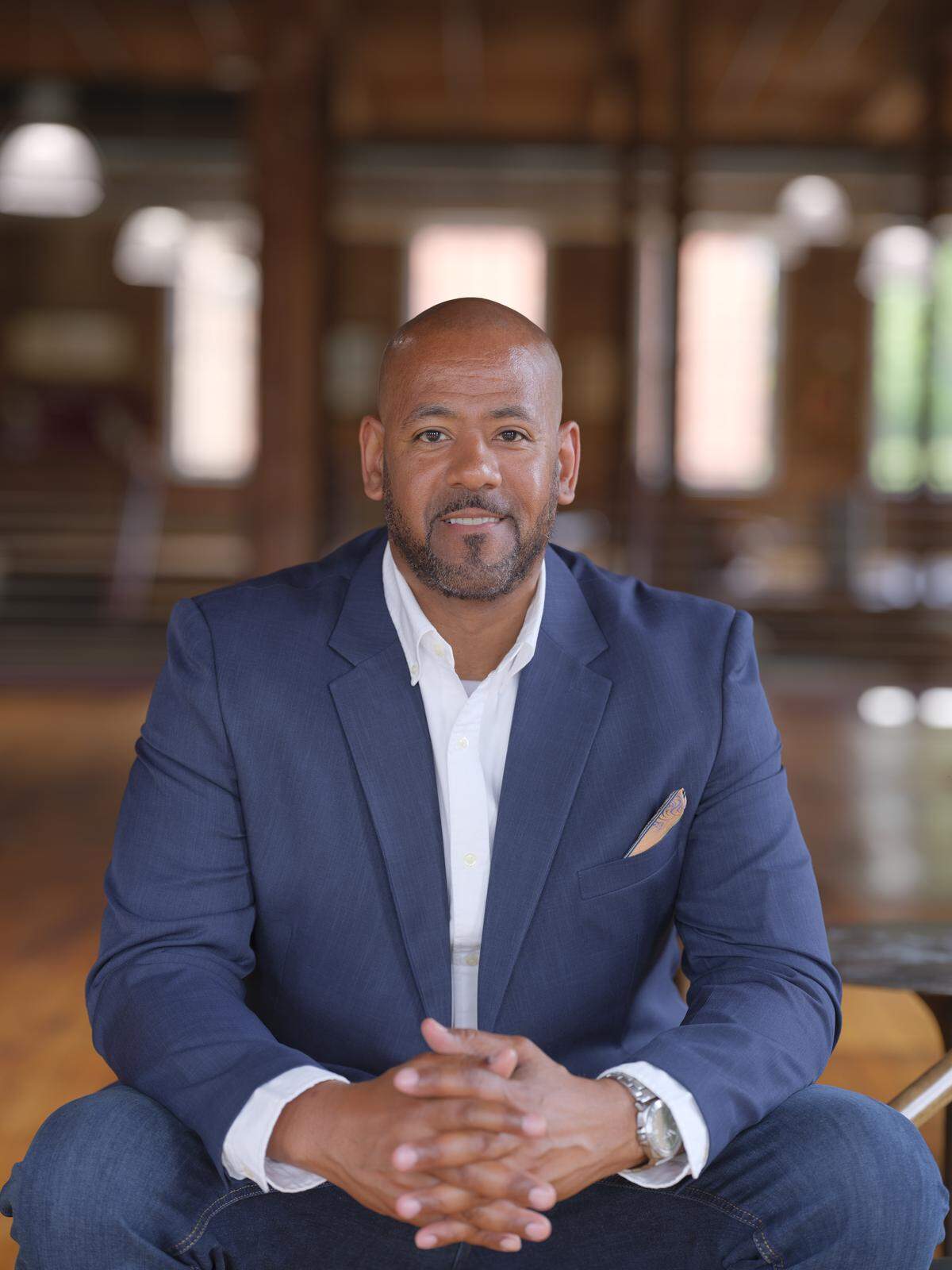
Age as of March 3, 2026: 53
Political party: Democratic
Campaign website: lorenzawilkinsfornc.com
Current occupation: Chief Administrative Officer, Inter-Faith Food Shuttle
Professional experience: Dr. Wilkins’ background includes multi-level experience in the private, public, and social sectors; currently serving as Chief Administrative Officer at the Inter-Faith Food Shuttle. Dr. Wilkins is a graduate of Leadership Triangle and Goodmon Fellow, serves as Board Chair at the Reintegration Support Network, is a results-driven servant leader, inducted into the National Society of Leadership and Success, and a member of the National Small Business Association’s Leadership Council.
Education: Doctorate of Business Administration, Project-Based Research
Please list any notable government or civic involvement: 2024 Candidate for N.C. House District 25
What is the most important issue in your district and what do you want to do about it? As I am out actively listening to and engaging the residents of N.C. House District 25, I am hearing that lowering costs, protecting health care, and strengthening investments in public schools and small businesses as the top issues. What I would like to do about these priorities is begin by passing a state budget that levels the playing field for all and support legislation that creates opportunity for every neighbor to create economic mobility for themselves and their families.
The legislature sets teacher base pay. What do you think the salary range should be for teachers, from starting to 30+ experience? Starting pay rate = $57,912. Bachelor’s pay rate = $69,398. Master’s pay rate = $68,289. Top master’s pay rate = $100,649. Top salary/Ed.D/Ph.D = $111,826.
As of January, North Carolina was the last state not to have passed a new, comprehensive budget. What would you do to help make sure a budget passes? 1. Focus on fiscal discipline. 2. Promote public engagement. 3. Support legislative efficiency. 4. Advocate for balanced budget requirements.
North Carolina’s income tax rate for individual taxpayers is 3.99%. Should that be reduced further? Yes. The state of North Carolina has ranked No. 1 in the nation three of the last four years. A gradual decrease in North Carolina’s income tax rate for individuals puts more money in the pocket of North Carolinians which helps individuals and families better manage their finances.
Do you think the state is using taxpayer money efficiently? Why or why not? Somewhat. We need more investments in public schools, mental health and small business advocacy.
Do you support legalizing medical marijuana use? Why or why not? Yes. In situations where medical research/science and data demonstrate a clear benefit/improvement to the quality of life for individuals.
What do you see as the biggest barrier to health care access in your district, and what actions would you take to address it? Affordability is the biggest barrier to health care access in N.C. House District 25. More than 670,000 people are at risk of losing their health care coverage due to changes to federal payment rates triggered by an N.C. law that will end Medicaid expansion.
Harris Walker
Age as of March 3, 2026: 38
Political party: Democratic
Campaign website: www.harriswalker.com
Current occupation: Head of Government Affairs and Strategic Market Access
Professional experience: Head of Government Affairs and Strategic Market Access, Focused Energy. Head of Government Affairs, Arcadium Lithium. Director of Government Affairs, U.S. Department of Energy / National Nuclear Security Administration. Communications and Strategy Senior Manager, Deloitte.
Education: B.A., strategic communications and political science, High Point University. Graduate studies, national security studies, National Defense University. Lean Six Sigma Green Belt (American Society for Quality). Executive Leadership Program (Center for Creative Leadership).
Please list any notable government or civic involvement: Board member, Nash UNC Healthcare Foundation. Board member, Boys and Girls Club of the Tar River Region. Board member, Good Shepherd Day School. Board member, High Point University Alumni Board (2013–present). Previously served on multiple City of Alexandria, Virginia, commissions prior to returning home to Nash County.
What is the most important issue in your district and what do you want to do about it? The biggest issue in House District 25 is whether our kids have a future here — good schools, good jobs, and a cost of living families can handle. I’ll fight to raise teacher pay and strengthen career/technical education and apprenticeships, expand access to affordable health care and mental health services, and invest in infrastructure (roads, water, broadband) so we can attract employers and help small businesses grow.
The legislature sets teacher base pay. What do you think the salary range should be for teachers, from starting to 30+ experience? In Washington, D.C., a 10-year first grade teacher with a master’s made about $125,000 plus great benefits. D.C. costs more — about 23% higher overall than Rocky Mount and nearly three times as much on rents — but this isn’t mainly cost-of-living; it’s what we value. To recruit/keep the best, North Carolina should start teachers at $50,000 ($55,000 with master’s) and grow to $95,000–$105,000 at 30+ years, plus strong benefits and hard-to-staff/rural supplements.
As of January, North Carolina was the last state not to have passed a new, comprehensive budget. What would you do to help make sure a budget passes? I’d treat the budget like a deadline, not a talking point: set a public timeline, start negotiations early, and push leadership into a real conference committee that meets weekly until it’s done. Keep the focus on must-fund basics — schools, Medicaid, public safety, infrastructure - not partisan leverage. If talks stall, pass a clean stopgap to protect classrooms and health care while negotiations continue. No riders — just a budget, a vote and accountability.
North Carolina’s income tax rate for individual taxpayers is 3.99%. Should that be reduced further? Not right now. At 3.99%, NC already has a low flat income tax, and we’re still struggling to fund the basics — strong public schools, teacher pay, mental-health and health care access, roads, water and broadband. More rate cuts risk weaker services or higher local property taxes and fees. I’d prioritize targeted relief for working families and make the smart investments that attract jobs and people: schools, workforce training, infrastructure, and accountable, performance-based incentives.
Do you think the state is using taxpayer money efficiently? Why or why not? Not consistently. Some programs deliver real value, but too often spending is driven by politics, not results — weak oversight, contracts that aren’t competitive, and incentives that don’t clearly pay taxpayers back. I’d push outcome-based budgeting, regular independent audits and “sunset” reviews, transparent reporting, and stronger procurement rules, so dollars go where they help Nash County families most.
Do you support legalizing medical marijuana use? Why or why not? Yes. I support legal, tightly regulated medical marijuana for patients with mental health needs or chronic pain, when recommended by a licensed physician and dispensed through licensed providers. What concerns me is today’s largely unregulated market for intoxicating hemp/THC products in North Carolina. I’d pair medical legalization with strict lab testing, clear dosing, childproof packaging, age 21+ sales, seed-to-sale tracking, and tough penalties for diversion, impaired driving, and youth-use prevention.
What do you see as the biggest barrier to health care access in your district, and what actions would you take to address it? Biggest barrier is affordability and lack of nearby providers — especially primary care and mental health — so people delay care or rely on the ER. I’ll fight to strengthen coverage (including Medicaid), recruit/retain rural doctors and nurses, and expand community clinics, telehealth, and school-based/behavioral health services, so care is closer and faster.
This story was originally published February 16, 2026 at 5:00 AM.