Dallas Woodhouse resigns from NC auditor’s office following early voting controversies
AI-generated summary reviewed by our newsroom.
- Dallas Woodhouse resigned from the State Auditor’s Office amid voting controversies.
- The auditor’s office had previously said Woodhouse would take a non-elections role.
- Woodhouse drew criticism for pressuring counties on early voting location decisions.
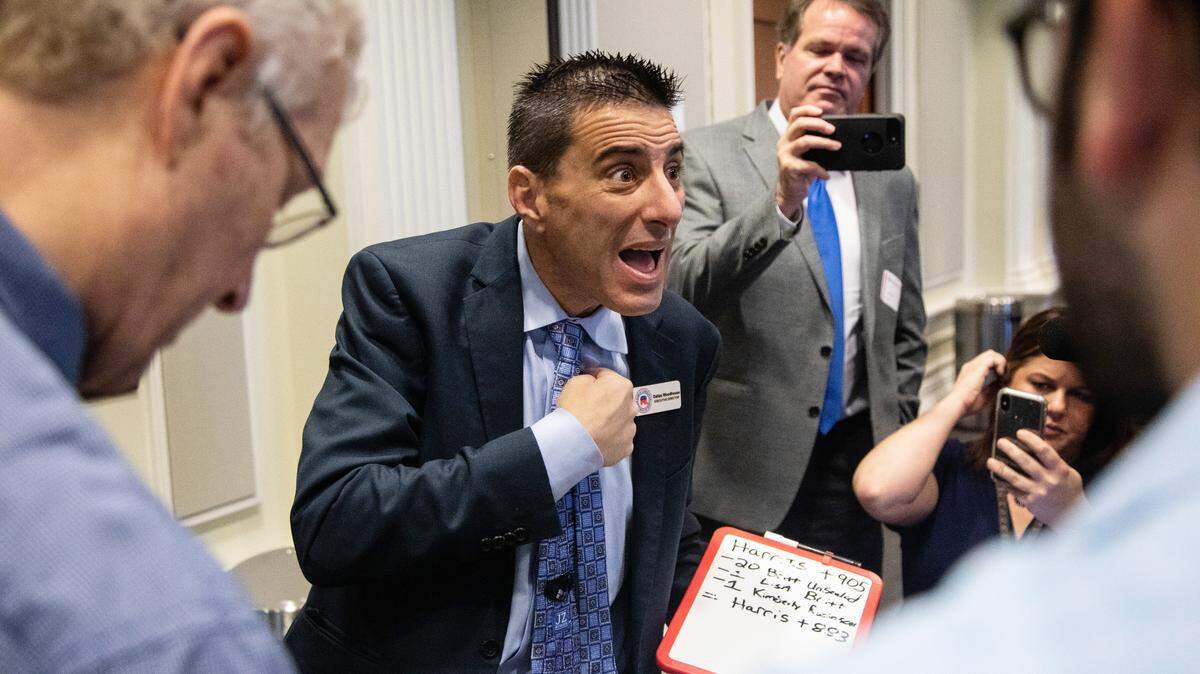
Dallas Woodhouse, the former leader of the North Carolina Republican Party who served in a controversial new role as an elections liaison for the State Auditor’s Office, has resigned his post on Monday after a series of controversies involving his influence over early voting plans.
In his resignation letter, obtained by The News & Observer, he wrote that he “knew my time would be short” and that he would return to the private sector after helping the auditor’s office transition to its new election responsibilities.
“I am certain that my advice was not always correct,” Woodhouse wrote. “Looking back, there are recommendations I might make differently today. I certainly would have been more precise in my communications at times. But every recommendation I offered was made honestly, thoughtfully, and with integrity. My only objective was to help local boards comply with the law while improving voter access and strengthening public confidence in our elections.”
The resignation, reported by The Assembly and WRAL and confirmed by The N&O on Tuesday, comes less than a week after the auditor’s office said Woodhouse had been reassigned to a new non-elections role focused on “strategic initiatives that relate to constituent services and communications.”
A spokesperson for Auditor Dave Boliek said he accepted Woodhouse’s resignation on Monday, but did not provide further comment.
Boliek, a Republican, gained control of appointments to state and local election boards last year after Republicans passed legislation stripping that power from Democratic Gov. Josh Stein. Shortly after the law took effect, Boliek hired Woodhouse to serve as a liaison with the state’s 100 county election board chairs.
His position, which had never existed when the governor had control over election boards, was intended to “ensure election integrity while encouraging maximum participation in elections.”
However, as local boards prepared for the midterms, news of Woodhouse’s involvement in early voting plans drew scrutiny.
Last month, Republican officials in Jackson County said they had been pressured by the GOP and the auditor’s office to reject an early voting site on Western Carolina University’s campus. In texts obtained by NC Local, Woodhouse told the chair “don’t let them have a vote” about the plan.
And in Pasquotank County, Woodhouse told the board chair to “drop Sunday,” according to a text message obtained by Common Cause NC, a voting rights group.
Woodhouse’s involvement drew high-profile criticism, including from Gov. Stein.
“Every lawful voter deserves to have his or her voice heard,” he wrote on social media last week after news of Woodhouse’s reassignment broke. “Yet under Auditor Boliek’s watch, the State Board of Elections has been directing counties to eliminate Sunday voting and remove early voting from college campuses including the country’s largest HBCU. It’s cynical politics and it’s wrong. To ‘reassign’ the former Executive Director of the NC Republican Party is too little too late. The administration of our elections should have been free from partisan influence from the beginning and should remain so.”
Early voting plans are due to the State Board of Elections by July 24. Any county that fails to unanimously approve a plan must have their sites and hours decided by the state board, which has a 3-2 Republican majority.