Orange-Chatham voters have rare chance to pick DA, guide future of criminal justice

District attorney races rarely attract competition or attention, but the winner can wield significant power.
In Orange and Chatham counties, voters will choose a new Orange-Chatham District Attorney on May 17 and will have the rare opportunity to elect one of two assistant district attorneys to the role — Jeff Nieman and Kayley Taber.
Taber, if elected, would be the first female district attorney to serve in District 15B, which covers Orange and Chatham counties. That may be one of the few differences separating her and Nieman.
Both have pledged to keep special courts and programs established under longtime District Attorney Jim Woodall, who is retiring. They have also vowed to tackle systemic issues, such as racial and financial inequity, and to zero in on rehabilitation, instead of incarceration.
Both have taken the death penalty off the table, joining Durham District Attorney Satana Deberry as the only N.C. district attorneys ruling out that option. Woodall sought the death penalty in one case — the 2008 murder of UNC Student Body President Eve Carson.
“It’s a racist punishment,” Nieman said at a recent UNC School of Law campaign forum. “It’s been proved to be racially disparate in how it’s handed out. It’s not a deterrent. It doesn’t provide the closure that victims deserve, and many other reasons.”
Taber agreed, noting that the district attorney’s office has failed some people. This election, she said, is “a unique opportunity to elect an incredibly experienced, trauma-informed woman to this job.”
It’s “about where (victims and offenders) have been, what are their experiences, what is their life experience that has contributed to their trauma that may have resulted in them ending up in the criminal justice system,” Taber said. “Because I believe until we can look at that, we really can’t formulate a plan to help them move forward, to better integrate back into our society.”
Nieman, on the other hand, has been endorsed by over 70 attorneys and 35 former and current public Orange and Chatham officials for what he said are “progressive approaches to prosecution” that “are in my bones.”
“Our responsibility is to seek justice, not merely convictions,” Nieman said. “In some cases, depending on the crime and the situation, justice may demand convictions and punishment, but our duty is to never lose sight of the primary goal of a prosecutor, and that is to seek justice.”
Wide authority, legal system priorities
North Carolina has 44 judicial districts, managed by district attorneys who are elected in partisan races to four-year terms. The winner of the District 15B primary will oversee 22 employees, including seven ADAs in Orange County and two in Chatham County.
District attorneys are quite powerful, from charging someone with a crime and asking for a specific punishment, to asking the court to dismiss charges. Their priorities determine how tax dollars will be spent and influence local crime and traffic enforcement.
Juries and judges, who operate as traditional checks on a DA’s discretion, have taken a back seat as more cases end in plea bargains and judges operate within structured sentencing systems.
That leaves the ballot box, and in some cases, removal from office, as the only recourse for a district attorney who is failing to perform or isn’t aligned with community expectations.
A majority of Americans don’t know their district attorney is elected, or that they can seek change in the office and, as a result, the local legal system, said Carissa Hessick, a UNC School of Law professor and director of the Prosecutors and Politics Project.
A 2020 Prosecutors and Politics Project study found only 39% of N.C. prosecutors faced a challenger in the 2014 and 2016 elections. Of those, 29 district attorneys were re-elected and four challengers were seated. The other 11 races filled open seats.
District attorneys nationwide are more likely to face a challenger in 43 communities with over 1 million residents, the study found. Only 25% of U.S. prosecutors face re-election challenges.
This year, only a handful of North Carolina district attorney races are contested, including in Wake and Mecklenburg counties, Hessick said. The Orange-Chatham race “comes down to the little differences,” she said.
It’s only the fifth Orange-Chatham DA race with competitors in the last 40 years, Carl Fox, former District Attorney and Chief Superior Court Judge, told The News & Observer in an interview.
In 1978, former DA Wade Barbour faced a challenger, Fox said, and he faced challengers in three of five races from the 1980s to early 2000s. Woodall was appointed in 2005 and has run unopposed in every election.
Police misconduct, decriminalization, issues
The conversation about judicial reform in recent years has grown to include the response to police misconduct and the local role in lobbying state lawmakers for change, Hessick said.
Other issues, such as diversion and bail reform, are aimed at reducing the number of people going to jail, while some communities want a higher level of transparency and tracking on systemic issues, such as racial disparities.
The decriminalization of poverty is another growing concern, “in part, because things have gotten worse,” Hessick said.
“States have continued to add more fines and fees, and the longer those things are on the books, the bigger the universe of the people they affect,” she said. “I think the other piece of it is people are starting to see that those things are incredibly ineffective.”
Having a choice for district attorney is a reason to get excited, she said, advising voters to consider whether a candidate advocating for new priorities is getting more resources or moving around resources — and deprioritizing something else.
“Maybe those things are less important, but I’d love to hear prosecutors talk more about their priorities, not just what they think is important, but also what they think maybe doesn’t need as much as it gets right now,” Hessick said.
Nieman reflects on challenges, policies
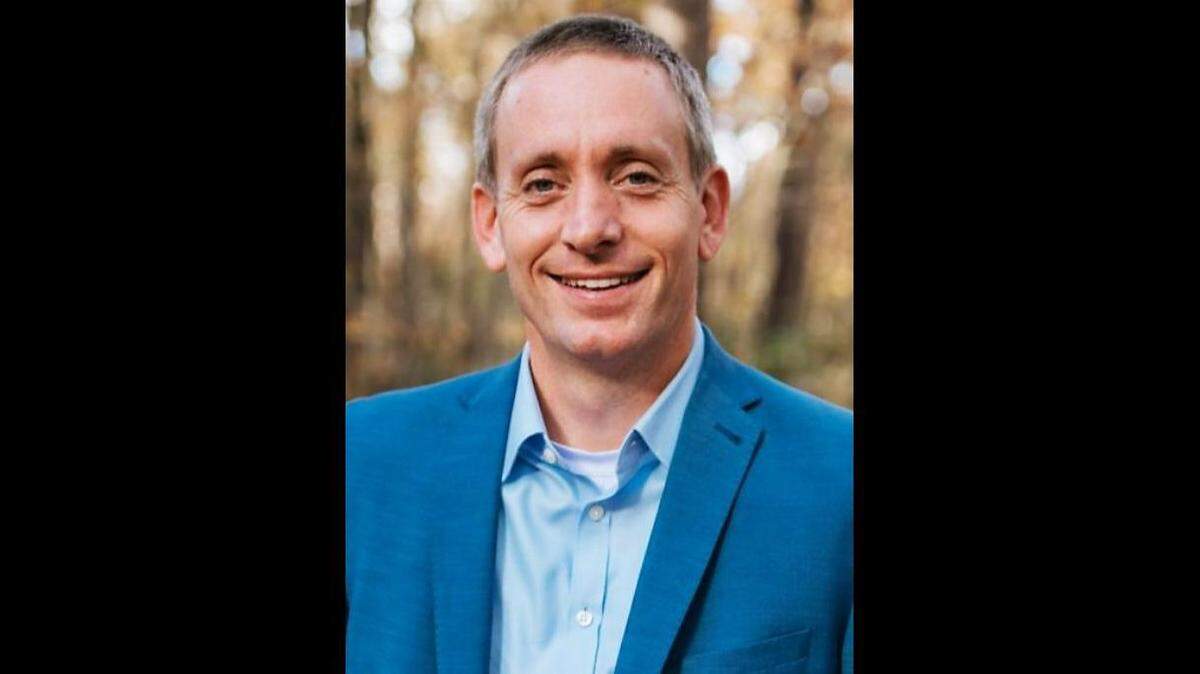
Nieman, an assistant district attorney for 16 years, helped create the state’s first Outreach Court for people experiencing homelessness and the Volunteers for Youth diversion court program.
He also co-founded the N.C. Driver’s License Restoration Project, which helps lower-income drivers resolve fines for minor traffic offenses, such as running a stop sign, avoid more charges and jail time, and get their driver’s license restored.
If elected, every employee will undergo racial bias training, and recruitment will focus on diverse, progressive staff members from area law schools, Nieman said. He remains committed to diversion programs, addiction and mental health services, and to second-chance programs that remove nonviolent offenses from a person’s record.
But traffic offenses that endanger the public, from speeding to driving while impaired, would get a hard look, Nieman said, as well as court costs, which are “astronomical,” and cash bail, which is “fundamentally undemocratic.”
“How is it possible that in a democratic society that we consider ourselves in, people’s status awaiting trial on a crime they haven’t been convicted of, it depends on how much money they can either give a bond or the magistrate?” he said.
Taber on expanding outreach
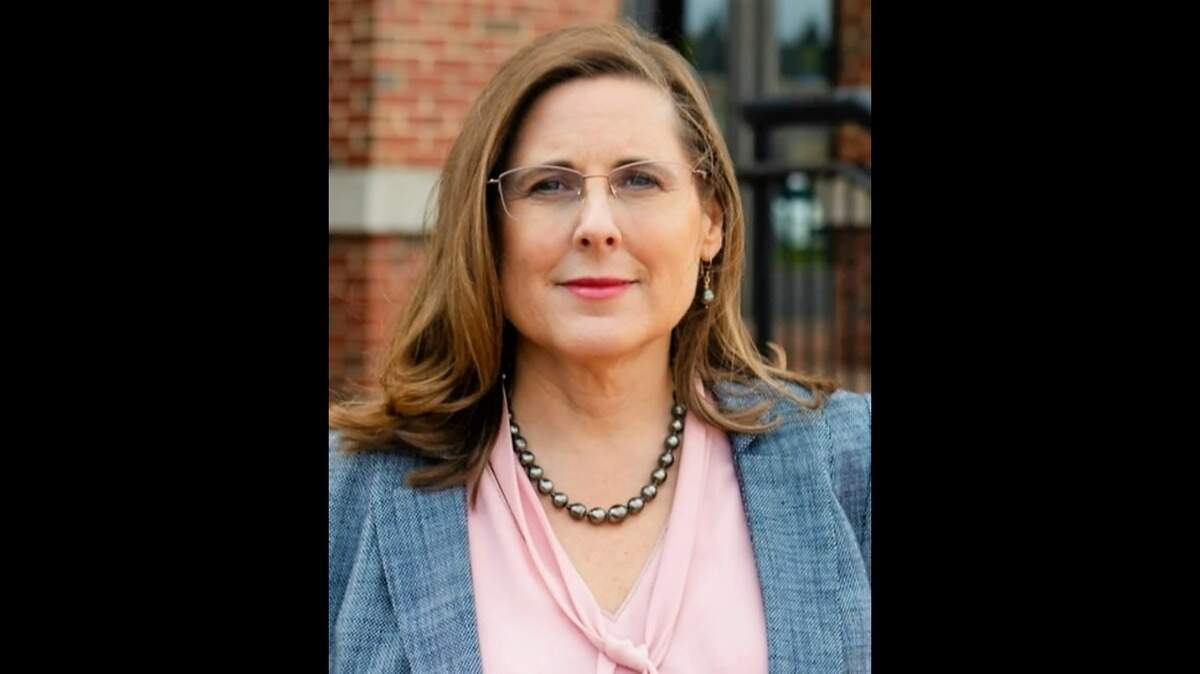
Taber has been an assistant district attorney in Orange and Chatham counties since 1999, and as managing district attorney, she has assisted Woodall in managing the Chatham County office.
Her longtime focus on children, women and victims has led to state laws addressing video voyeurism, child abuse and child trafficking, as well as a child abuse manual for the Conference of District Attorneys, she told The News & Observer.
She also helped to establish Orange County’s mental health court and expand its programs into Chatham County, and is interested in more “prospective expungements,” to help low-income offenders get fines and fees waived based on the likely outcome of their case.
Taber agrees with Nieman’s stance on diversity, diversion and second chances, and the decriminalization of addiction and mental health. But she noted the district attorney’s office has failed some offenders who faced deep-rooted challenges.
“It shouldn’t depend on how much money you make, it shouldn’t depend if you have insurance, it shouldn’t depend if you live in rural Orange or rural Chatham,” Taber said. “You have a human right to be protected, and that’s key for Orange and Chatham.”
Her first step as DA, she said, would be to increase diversion and rehabilitation programs, including the SOHRAD program — Street Outreach, Harm Reduction and Deflection — which now serves residents experiencing homelessness in Orange County. She would expand that program to Chatham County, she said.
The goal is to turn “what everybody else thinks about the criminal justice system on its head,” she said.
“A lot of people judge the prosecutor’s offices by the number of people they’ve convicted or the number of people they’ve sent to prison,” Taber said. “My goal and my metric for success is how many people are living healthy lives in the community, how many people can we divert out of the criminal justice system, how many people can we give them the support they need to thrive.”
Learn more about the candidates at an Orange County Justice United assembly from 7 to 8:30 p.m. April 26. The event will be held online and in-person (outside) at Piney Grove Missionary Baptist Church, 1929 Piney Grove Church Road in Hillsborough. Register for the event or get more information at https://tinyurl.com/bdhwxytj.
This story was originally published April 22, 2022 at 9:50 AM.