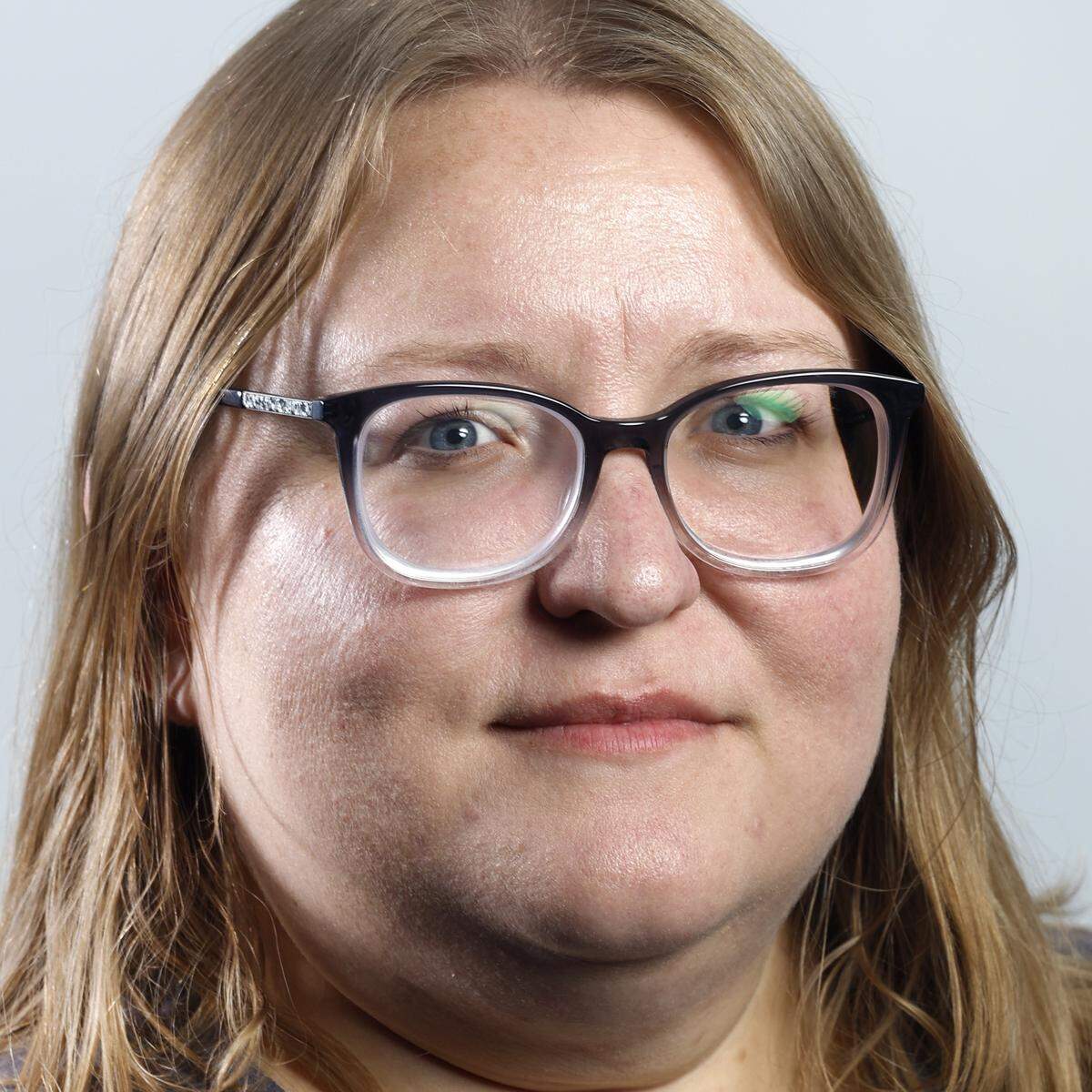
Irina Comer, candidate for Wake County Commissioner, District 3
The News & Observer sent a questionnaire to each of the Wake County Board of Commissioners candidates running in 2022.
In District 3, Democrat Cheryl Stallings faces Republican Irina Comer.
Incumbent Maria Cervania, who was first elected in 2020, is not seeking another term and instead is running for N.C. House District 41.
Early voting in the Nov. 8 election begins Oct. 20.
Name: Irina Comer
Age: 44
Political party: Republican
Occupation and employer: Business Broker; Self-Employed
Education: MBA, NYU Stern School of Business
Political or civic experience: None
Campaign website: www.irinaforwake.com
What is Wake County doing right, and wrong, on managing growth?
Governing is principally about making hard decisions with finite resources. Wake County needs to focus on the services that government is best equipped to provide — public safety, emergency services, education, and the like — and ensure we provide them reliably and with high quality. That aim is inhibited whenever we embark on pet projects, be that a commuter rail boondoggle or a Peloton to nowhere. The best near-term growth focus is affordable housing, and the focus needs to be zoning and development.
Housing prices are a function of supply and demand. A limited supply of housing drives up housing costs. Taxing and spending to redistribute wealth does not create affordable housing; it creates a permanent reliance on government. To fill the gap on middle housing, we need to create development space for developers in areas that make sense for duplexes, fourplexes, multiplexes, etc. We have space, but we need a fundamental reset of how we view zoning and development restrictions.
How should the county support K-12 schools, students and teachers?
Wake County Public School System funding is continually increased, but enrollment continues to decline and quality continues to suffer, particularly over the past two years. Funding, in and of itself, is clearly not the answer. Public education needs competition like any other venture. Magnet, charter and private schools do more with less, and those options should not be reserved for the wealthiest and most privileged among us.
If Wake County public schools are failing, then residents should be able to use vouchers for schools that are succeeding. That competition is likely to spur Wake County public schools to make much needed reforms, prioritizing in-person education, significantly reducing administrative headcount, and focusing on attracting and retaining the best educators available. If they do so, then our teachers would necessarily benefit, both in terms of increased compensation and more fulfilling professions. Our children (and our teachers) deserve no less.
What do you think Wake County should do, if anything, to address racial injustice issues, and what kind of changes would you propose?
I think we can all agree that racism still exists in Wake County; the real debate is about how much of that racism is individual versus institutional. (I note that half of the current commission are minorities.) Regardless, one thing should be beyond serious argument: Racism, whether institutional or individual, will never be adequately remedied by anti-racism. As an immigrant, I know that America is beautiful in its abundant opportunity. Equal access to that opportunity is key to achieving outcomes regardless of socioeconomic status. The most basic key to accessing opportunity is a quality education. And a quality education for all is blissfully something Commissioners can and should help to provide. These goals are also furthered by a well-staffed, well-funded, and well-trained public safety apparatus, which in turn requires investment in line-level sheriff’s deputies, EMS personnel, and mental health professionals, with a contemporaneous focus on training and community outreach.
What new steps should Wake County take to recruit businesses to the area?
Wake County is already a highly attractive destination for businesses. Unemployment rates and future job growth projections are both well ahead of the US national average, and people are generally attracted by the great quality of life we enjoy here. However, we need to focus on preserving the desirability of Wake County, and that effort will principally involve resisting the urge to imitate the policies of those metropolitan areas from which people are relocating here. One direct way of preserving attractiveness is to maintain a competitive tax rate. Wake County property taxes rise every year, an increase that will be compounded when properties are revalued in 2024. Additionally, Wake County has a higher rate of sales tax than more than half of the counties in the country. Businesses will not continue to move to Wake County if they cannot find competent employees, and those employees will move elsewhere if we do not maintain both an attractive quality and cost of living.
What’s the top issue facing the county? What specific legislation or changes would you propose to address this issue?
The seemingly inexorable, upward march of property taxes and government spending. The commission has increased property taxes in seven of the past 10 years and shows no sign of reversing that trend. Current commissioners aim to maximize tax revenue and then look for ways to spend it. That leads to inefficient government services and a very high tax burden for working families. People move to Wake County for a better and more affordable life. If we adopt the tax-and-spend policies of the jurisdictions they are leaving, that will not continue. We need to focus on providing the services that are most needed in the community and which the government is best suited to provide. Commissioners should then dynamically size the tax burden to meet that need. For property taxes, that requires a constant focus on both tax rates and property values. Commissioners should also continually assess whether government programs continue to add value. Because when it comes to taxes, less is truly more.
If elected, what would your two or three priorities be during your first year in office?
1. Lowering taxes. The current approach of maximizing taxes and looking for opportunities to spend money leads to inefficient government services and a high tax burden for working families. Commissioners should focus on providing the services that are most needed in the community and then dynamically size the tax burden to meet that need. That requires a continual focus on rates and values, as well as program value.
2. Schools. Our public schools used to be enviable, but now suffer both declining quality and enrollment. Magnet, charter and private schools do more with less, and residents should be able to access successful schools for their kids. The competition will drive WCPSS to make necessary reforms, improving public schools.
3. Public safety. Residents deserve to live and work in a safe community. A well-functioning public safety apparatus requires investment in line-level sheriff’s deputies, detention officers and EMS personnel, as well as adequate transparency for residents.
What unique skills or life experience would you bring to local governance?
I have broad and deep experience in financial analysis, accounting, and business. The Wake County Board of Commissioners’ principal responsibility is setting and administering the county budget, which is now roughly $1.7 billion per year. Financial acumen and the ability to scrutinize and understand dense budget materials are key to being a successful Commissioner. I began my career with PwC, the largest accounting firm in the world, mainly doing financial due diligence for business transactions. I worked at PwC for a decade before attending NYU Stern and obtaining an MBA. After Stern, I worked on Wall Street with BofA in its mergers and acquisitions group. I left BofA and started my own business after I got married. I own a business brokerage firm that helps small business owners sell their businesses, aspiring entrepreneurs buy a new business, and existing business owners value their businesses. My skill set and experience are unique, and have not been present on the commission for many years.