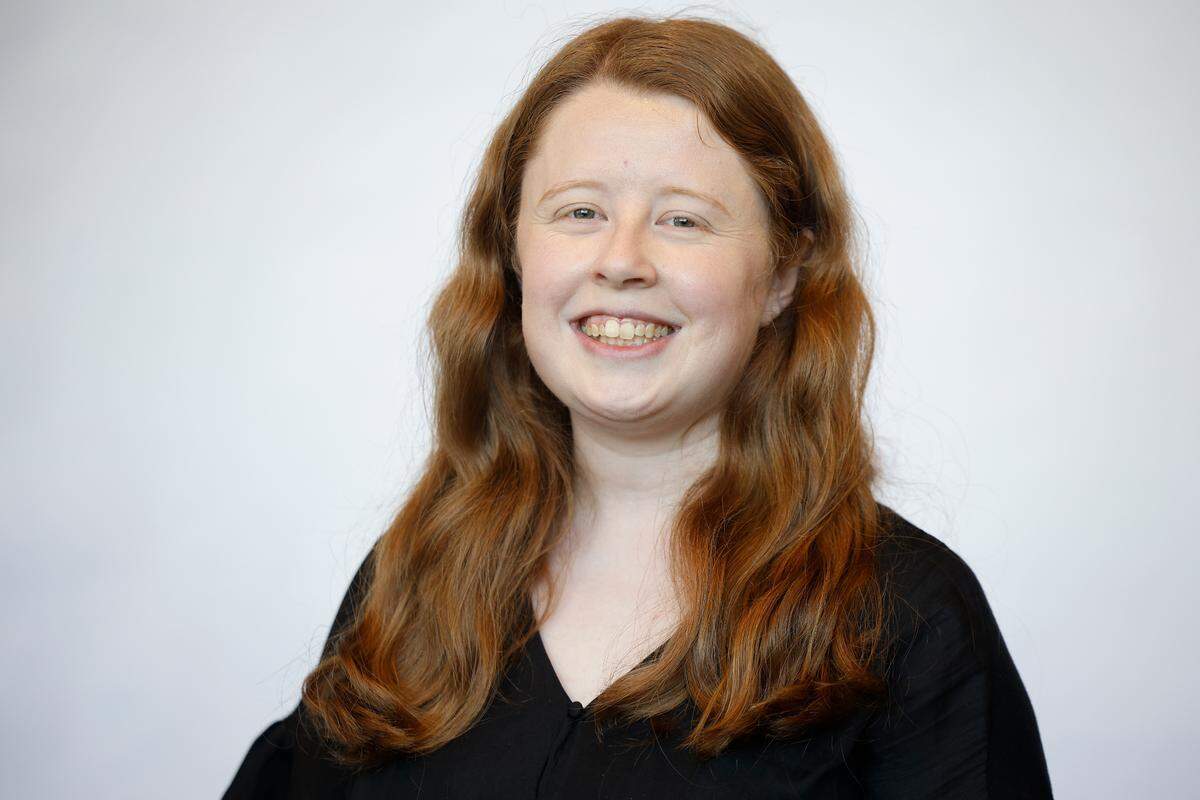
Carla Cunningham, challengers discuss immigration, ICE in House District 106 race
To help inform voters in the March 3, 2026, election, this candidate questionnaire is available to be republished by local publications in North Carolina without any cost. Please consider subscribing to The Charlotte Observer to help make this coverage possible.
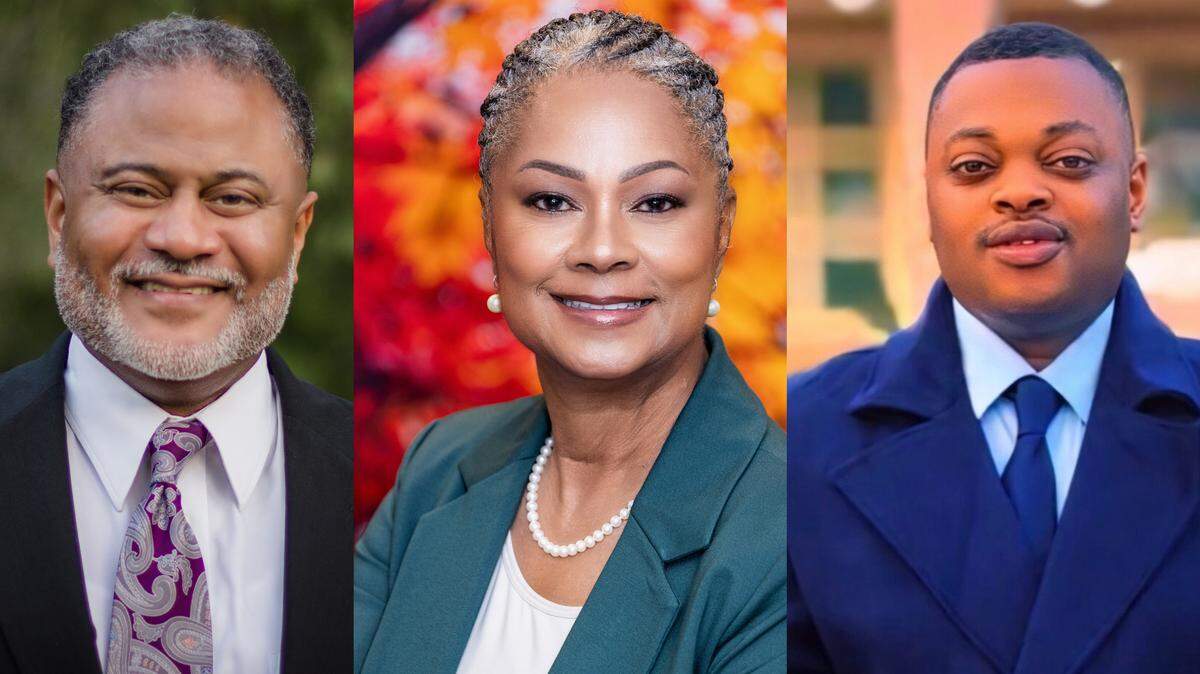
This story focuses on the Democratic for North Carolina House District 106, which features incumbent Carla Cunningham and challengers Vermanno Bowman and Rodney Sadler. The district stretches from Interstate 85 near Hidden Valley and Derita, up through parts of north Charlotte and into Huntersville.
The Charlotte Observer and News & Observer asked all candidates in this race to complete a questionnaire to inform voters about their opinions on big issues facing voters.
Vermanno Bowman
Political party
Democratic
District number
106
Age as of March 3, 2026
28
Campaign website
Current occupation
Quality control coordinator
Professional experience
Organizer and political strategist with experience in voter engagement and field operations across North Carolina. Served as deputy regional organizer and get out the vote director during the 2024 election cycle, managing a team of 26 fellows at UNC Charlotte and helping nearly double turnout in a campus precinct compared to 2020. Former member of the NC Democratic Party State Executive Committee. Military Police Officer in the North Carolina Army National Guard with domestic public safety service.
Education
BS in political science from Liberty University
Please list any notable government or civic involvement.
Served on the State Executive Committee of the North Carolina Democratic Party. Deputy Regional Organizer and get out the vote director during the 2024 election cycle, leading voter registration and turnout efforts and managing a team of 26 campus fellows at UNC Charlotte. Member of the Charlotte Mecklenburg NAACP, engaged in civil rights advocacy and voter engagement initiatives. Military Police Officer in the North Carolina Army National Guard, serving on domestic public safety missions.
What is the most important issue in your district, and what do you want to do about it?
The most important issue in my district is affordable housing. Rents are rising faster than wages, pushing families, seniors and young people out of their communities. I will fight to expand the supply of truly affordable housing, strengthen tenant protections, support first-time homebuyers and ensure state resources are used to keep housing stable, safe and accessible for working families.
The legislature sets teacher base pay. What do you think the salary range should be for teachers, from starting to 30+ experience?
Teachers deserve to be paid as the professionals they are. Starting teacher pay should be at least $50,000, with experienced teachers earning $80,000–$90,000+ after 30 years. I strongly support eliminating the raise cap after 15 years so veteran educators can continue earning increases based on experience and impact. Fair pay is essential to retention, respect and student success.
To what extent should Charlotte-area law enforcement cooperate with federal immigration authorities? And should the General Assembly impose more requirements for local law enforcement to work with ICE?
Local law enforcement should focus on public safety, not federal immigration enforcement. I do not support expanding requirements that force police to cooperate with ICE. Those policies undermine trust, discourage victims and witnesses from coming forward, and make communities less safe. Immigration enforcement should remain a federal responsibility, while local agencies focus on keeping everyone safe.
As of January, North Carolina was the last state not to have passed a new, comprehensive budget. What would you do to help make sure a budget passes?
Passing a budget requires leadership and good faith negotiation. I would prioritize showing up, staying at the table and centering shared goals like funding public education, health care and infrastructure. That means rejecting political brinkmanship, pushing for transparency and working across differences to deliver a budget on time that meets the real needs of North Carolina families.
North Carolina’s income tax rate for individual taxpayers is 3.99%. Should that be reduced further?
I don’t support further across-the-board cuts to North Carolina’s income tax rate right now. At 3.99%, our income tax is already low. Cutting it further would mainly benefit higher earners while reducing the revenue we need to fully fund public schools, expand health care access, invest in infrastructure and keep taxes from being shifted onto working families through higher sales or property taxes.
Do you think the state is using taxpayer money efficiently? Why or why not?
Not consistently. While North Carolina has the resources to invest in people, too often we underfund public schools, health care and infrastructure while prioritizing broad tax cuts and poorly evaluated incentives. Efficiency means using taxpayer dollars transparently and strategically to deliver real results for working families, not cutting revenue in ways that weaken essential services.
Do you support legalizing medical marijuana use? Why or why not?
Yes. I support legalizing medical marijuana because patients should not be criminalized for seeking relief from serious conditions like chronic pain, cancer, PTSD or epilepsy. Medical marijuana can be a safe, regulated treatment option when prescribed by a physician, and legalization allows the state to set standards, protect patients and focus law enforcement resources on serious crime.
What do you see as the biggest barrier to health care access in your district, and what actions would you take to address it?
The biggest barrier to health care access in my district is affordability. Too many families are uninsured or underinsured because premiums, deductibles and prescription costs are too high. I support Medicare for All as the long term solution to guarantee universal coverage. In the meantime, I will fight to protect Medicaid, expand community health clinics and lower prescription drug costs so cost is never a barrier to care.
Carla Cunningham
Political party
Democratic
District number
106
Age as of March 3, 2026
64
Campaign website
Current occupation
NC state House representative
Professional experience
Rep. Carla Cunningham has served District 106 since 2012, bringing 30+ years of nursing experience to the legislature. A champion for health equity, mental health and vulnerable communities, she has secured over $23 million for Mecklenburg County. She helped launch the Eat Well program, now serving 150,000 residents, and serves on key statewide health councils. Her work has earned major honors, including Legislator of the Year awards.
Education
B.SN, RN, Winston-Salem State University; A.A., Gaston College
Please list any notable government or civic involvement.
NC Commission for Mental Health, IDD, Substance Abuse Services (2011-2013); Elected, NC State House of Representatives, 2013-present
What is the most important issue in your district, and what do you want to do about it?
While the Belk College of Business predicts 2026 will be a landmark year for North Carolina’s economy, the main concern in District 106 is whether that growth benefits everyday residents. Rising housing costs, property taxes and living expenses continue to burden working families and seniors. Economic success is meaningless if people can’t afford to stay in their homes or access opportunities in the communities they helped create.
The legislature sets teacher base pay. What do you think the salary range should be for teachers, from starting to 30+ experience?
Teacher pay in Mecklenburg County needs to keep up with the cost of living in Charlotte, where a household might require nearly $100,000 annually to get by. CMS teachers earn approximately $50,000 to $58,000, while the average rent nears $2,000 a month. When educators can’t afford to live where they work, schools suffer. Competitive pay is crucial to attract, retain and respect our teachers — and to provide students with classroom stability.
To what extent should Charlotte-area law enforcement cooperate with federal immigration authorities? And should the General Assembly impose more requirements for local law enforcement to work with ICE?
The presence of Border Patrol and ICE is not good for North Carolinians or Charlotteans. We don’t want them randomly entering our communities. I supported House Bill 318, which requires the sheriffs to cooperate with ICE because it is better for them to retrieve detainees from jails, rather than CBP and ICE coming into our neighborhoods.
As of January, North Carolina was the last state not to have passed a new, comprehensive budget. What would you do to help make sure a budget passes?
As the last state without a new budget, we cannot afford another year of inaction. Our schools, infrastructure and communities need updated investments. I commit to putting good governance over partisanship, engaging in good-faith negotiations and doing everything in my power as your representative to push for a responsible, timely budget to be passed in 2026.
North Carolina’s income tax rate for individual taxpayers is 3.99%. Should that be reduced further?
The rate should not be reduced further. It is already competitive and supports essential services. With many seniors on fixed incomes, we should expand targeted relief rather than broad cuts that mainly benefit high earners. Additional reductions would threaten investments in teacher pay, mental health, infrastructure and our courts — priorities I have consistently supported for our state’s long-term stability.
Do you think the state is using taxpayer money efficiently? Why or why not?
The rate should not be reduced further. It is already competitive and supports essential services. With many seniors on fixed incomes, we should expand targeted relief rather than broad cuts that mainly benefit high earners. Additional reductions would threaten investments in teacher pay, mental health, infrastructure, and our courts—priorities I have consistently supported for our state’s long term stability.
Do you support legalizing medical marijuana use? Why or why not?
As a former nurse, I have always supported medical marijuana for its benefits to cancer patients, those with chronic illnesses and individuals suffering from PTSD. I co-sponsored House Bill 328 to prohibit Delta-8, Delta-9 and vapor products on school grounds. These substances pose significant risks to minors, including impaired judgment and thinking, and should not be present in environments dedicated to education.
What do you see as the biggest barrier to health care access in your district, and what actions would you take to address it?
The biggest obstacle to health care access in District 106 is costs. Last year, I supported Senate Bill 479, the SCRIPT Act, which lowers drug prices, increases supply chain transparency and provides essential support to independent pharmacies. I also introduced 16 bills focused on expanding health care access and supported 10 addressing issues from mental health to teen suicide prevention. As a former nurse, I remain committed to strengthening community-based care and improving affordability.
Rodney Sadler
Political party
Democratic
District number
106
Age as of March 3, 2026
58
Campaign website
Current occupation
Baptist minister, Bible scholar
Professional experience
Associate Professor of Bible, Director of the Center for Social Justice and Reconciliation at Union Presbyterian Seminary. Previously served in pastoral supply roles at several Presbyterian congregations and as interim pastor at Mt. Carmel Baptist Church (American Baptist) and Sardis Baptist Church (Cooperative Baptist Fellowship). Author: “Can A Cushite Change His Skin: An Examination of Race, Ethnicity, and Othering in the Hebrew Bible”
Education
Howard University (1989, B.S. Psychology/Philosophy), Howard University School of Divinity (1992, M.Div.), Duke University (2001, Ph.D. Hebrew Bible and Biblical Archaeology), Studied at Hebrew University (1990)
Please list any notable government or civic involvement.
I am not a politician. I have never run for or held a political office before, and my main political involvement has been in movements of working people. The first time I stepped foot in the NC General Assembly, it was not to seek election but to take arrest, peacefully protesting against the immoral leadership of the Republican-controlled legislature. I have served as tri-chair of the NC Poor People’s Campaign, co-chair of the Reimagining America Project and board president of Meck MIN.
What is the most important issue in your district, and what do you want to do about it?
Right now, working people in Mecklenburg County can’t afford to live. The basic things — paying the electric bill, going to the doctor, keeping a roof over your head — get more expensive every day, while wages stay rock-bottom and jobs get harder and harder to find.
I will be a champion for a Mecklenburg where we can all afford to thrive. I will fight to raise our minimum wage, for Medicaid expansion, and stand up to corporate interests hiking our rents and utility rates.
The legislature sets teacher base pay. What do you think the salary range should be for teachers, from starting to 30+ experience?
It is a disgrace that NC ranks 43rd in the nation for teacher pay. In a state with abundant resources — and with a constitutional mandate for fully funded public schools — we should be above the national average. Our educators, our kids and our public school families deserve far better. We must raise the whole pay scale so that our average matches at least the national average of $72,000 — so, a pay scale that starts at least at $63,800 and goes at least to $80,250.
To what extent should Charlotte-area law enforcement cooperate with federal immigration authorities? And should the General Assembly impose more requirements for local law enforcement to work with ICE?
Everyone in Charlotte — no matter the color of our skin or where we were born — deserves to get safely to work and safely to school. Charlotte law enforcement is tasked with keeping our communities safe. We should not collaborate with Trump’s ICE and CBP, which do the exact opposite. In November, they created such fear that 30,000 students stayed home from school. I would never vote for a measure like House Bill 318, because I learned from my parents to love God, love my neighbor and love the stranger.
As of January, North Carolina was the last state not to have passed a new, comprehensive budget. What would you do to help make sure a budget passes?
It is a national embarrassment that the Republican majority is playing political games that leave working families out to dry, endangering our healthcare, our public schools, and our livelihoods. Let us be clear: they set the agenda, and we need a new majority that will put people first. In the meantime, I know that most North Carolinians, no matter our party, want healthcare, strong public schools, and good jobs – and I will gladly work across the aisle for a budget that puts people first.
North Carolina’s income tax rate for individual taxpayers is 3.99%. Should that be reduced further?
We need a fair tax system where the wealthy few pay their fair share. The Republicans’ proposed tax cuts will give more breaks to billionaires and big corporations while leaving the rest of us footing the bill. I oppose this upward wealth redistribution and will fight to maintain or increase the corporate tax rate, so that working families can have health care, strong public schools and good jobs.
Do you think the state is using taxpayer money efficiently? Why or why not?
Right now, the MAGA-controlled General Assembly is misusing our money to redistribute wealth upward: to billionaires and big corporations, on the backs of working families. They give Duke Energy free rein to raise utility bills. They siphon hundreds of millions out of our public schools and into private school voucher schemes. They want to bring the corporate tax rate down to zero, so working people foot the bill. Our public wealth should go to public schools, health care and quality housing.
Do you support legalizing medical marijuana use? Why or why not?
Yes, I support legalizing medical marijuana use. All of us deserve health care as a fundamental human right, and medical marijuana has demonstrated effectiveness for a variety of conditions, including glaucoma, from which several members of my family suffer. The War on Drugs – including the criminalization of marijuana possession – has devastated Black, Brown, and working-class communities, here in Charlotte and around the country. We must move to public policy that fights poverty, not the poor.
What do you see as the biggest barrier to health care access in your district, and what actions would you take to address it?
Our health is one of the most precious, fragile things we have in life. All of us – Black, Brown, Asian, or white; rich or poor – deserve health care as a basic human right. The biggest barrier to health care access is a system designed to put profit over people – and the only real solution is universal single-payer healthcare. Right now, while Trump threatens our hard-won Medicaid expansion, I will continue to fight for Medicaid, as we did in the Moral Mondays Movement.
This story was originally published February 13, 2026 at 5:00 AM with the headline "Carla Cunningham, challengers discuss immigration, ICE in House District 106 race."