
Virginia may grapple with a problem NC has seen before: an even political split
Virginia legislative leaders could look to North Carolina to solve a unique problem – an even split between Democrats and Republicans in its House of Delegates.
On Tuesday, it became likely that the Virginia House of Delegates will have an even split between the two parties after a recount of votes found a Democrat had won a seat by a single vote. However, on Wednesday, a panel of judges decided a questionable ballot should be counted in favor of the Republican, leaving the race in a tie that could be decided by drawing lots.
An even split is a scenario the North Carolina General Assembly has had to grapple with.
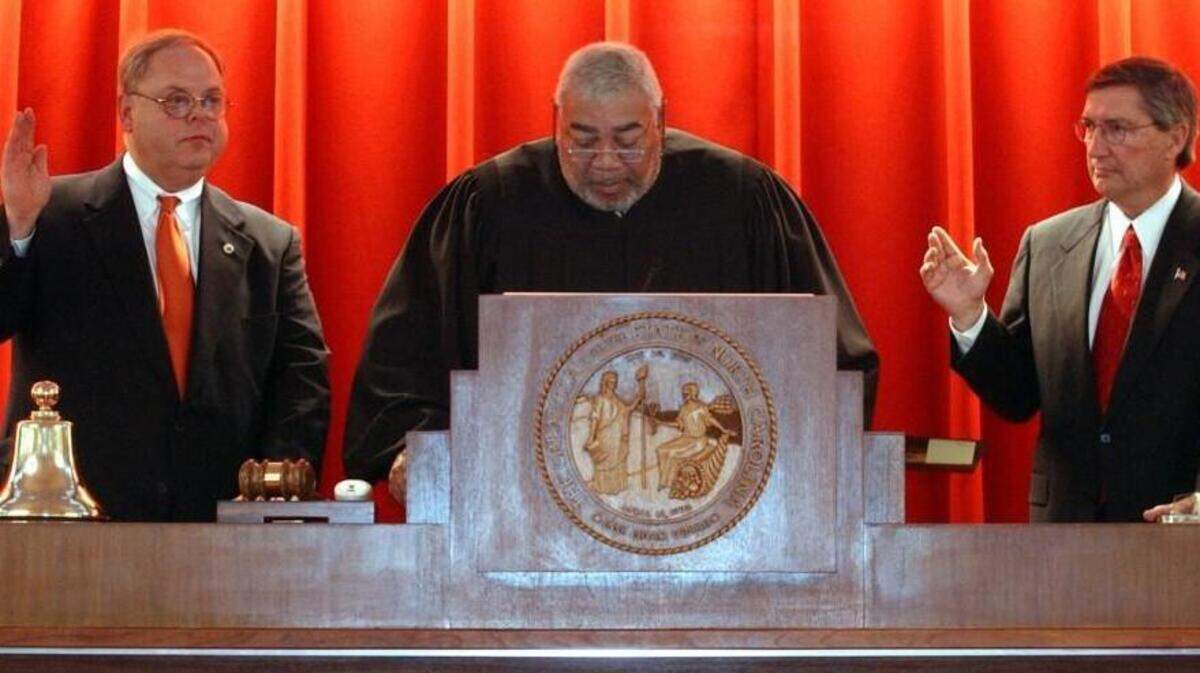
In 2003, the N.C. House of Representatives had a 60-60 split between Republicans and Democrats, and the session began with House Principal Clerk Denise Weeks presiding over the chamber. Gerry Cohen, former legislative drafting director, on Tuesday tweeted that during the 2003 divide he was tasked with mediating meetings to find a solution, because a constitutional provision provides for only one speaker. Eventually he suggested a resolution that would appoint co-speakers of the House.
The resolution was adopted and Rep. Richard Morgan became the Republican speaker while Rep. Jim Black was the Democratic speaker. They alternated their days of presiding over the body, and committees had an equal number of members from each party, with chairpersons named jointly by both speakers.
North Carolina isn’t the only state that has taken that route. In 2011, for example, Oregon’s House of Representatives also had co-speakers when it was evenly divided.
North Carolina’s even split occurred after Rep. Michael Decker of Forsyth County switched from being a Republican to a Democrat, supporting Black for speaker. Black later pleaded guilty to bribing Decker to make the switch with $50,000 and a job for his son in 2003.
“Despite the dark stain of federal convictions, many legislators serving at that time say the House functioned very well during that time because the opinions of all members were heard, every single vote mattered, forced bipartisanship,” former Rep. Nathan Ramsey, a Buncombe County Republican, said Tuesday on Twitter.
Lauren Horsch: 919-836-2801, @LaurenHorsch
This story was originally published December 20, 2017 at 2:11 PM with the headline "Virginia may grapple with a problem NC has seen before: an even political split."