NC bill intended to help kids in trouble with the law excludes too many, critics say

North Carolina leaders are considering legislation intended to improve the state’s ability to hold children accountable for committing crimes and increase mental health evaluations and treatment for a vulnerable population.
Critics, however, say that the bill wrongly excludes too many young defendants.
The latest juvenile justice legislation introduced into the General Assembly outlines a new process for teenagers and younger kids accused of crimes whose age or mental health may prevent them from understanding the judicial process or defend themselves against allegations.
Children and teenagers who face serious felony charges will not be eligible, however. Instead, they will be transferred to the adult court system and follow its rules, which place more emphasis on punishment than rehabilitation.
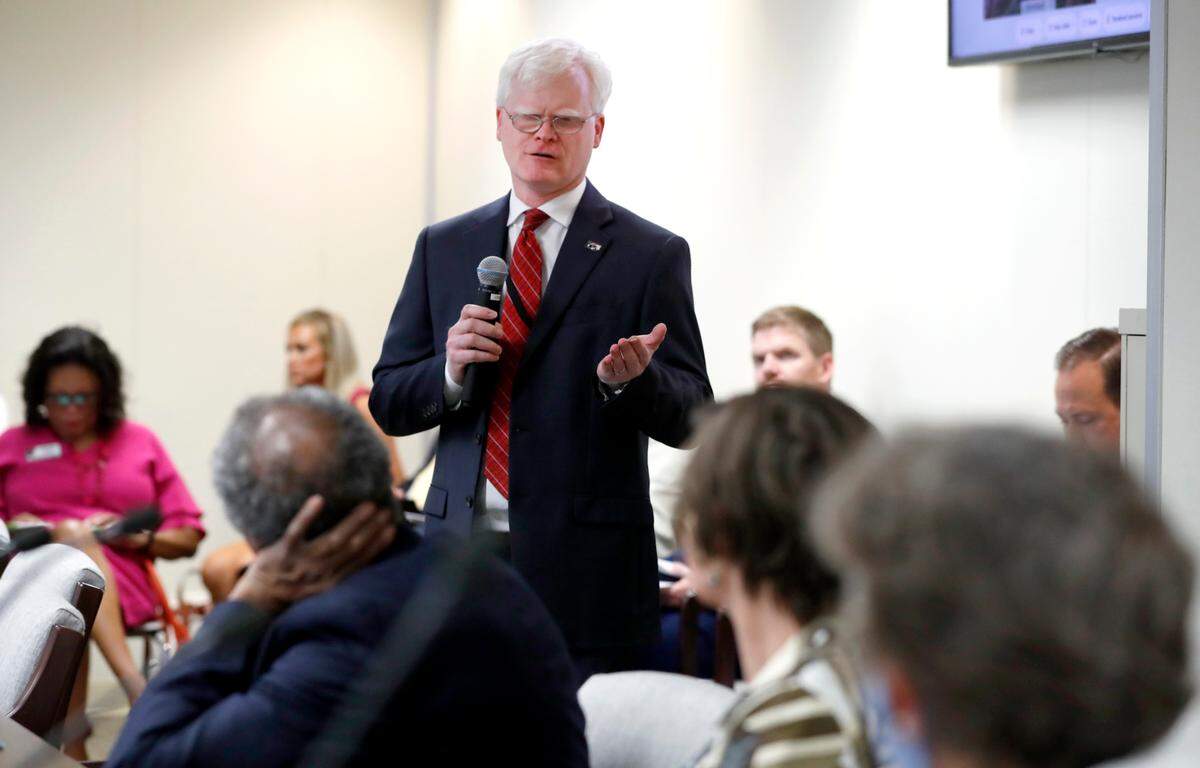
The proposed change will help more kids, especially the younger ones, to be evaluated and receive needed services, said William Lassiter, who oversees North Carolina’s Division of Juvenile Justice and Delinquency Prevention.
The current evaluation process, which is the same as adults, falls short of addressing unique needs of youth, including assessing whether they are mature enough to understand the system, Lassiter and other experts said.
“We should have had a juvenile standard a long time ago,” Lasssiter said.
New process
The bill outlines a process that includes inquiring about the “capacity” of children under 12 the first time they appear in court. In the judicial system, capacity centers on how well a child understands the judicial process and can participate in their defense.
In other instances, the prosecutor, attorney or others may raise the concern, allowing the court to appoint a forensic evaluator after a hearing.
The evaluation will determine whether a child is unable to understand or participate in the process due to mental disorder, intellectual disability, neurological disorder, brain injury or developmental immaturity.
Under the current law, the definition of not having capacity centers on not understanding the system “by reason of mental illness or defect.” That phrasing doesn’t make it clear whether youth who are too immature to understand the system fit in that category, Lassiter and other experts said.
The bill also outlines a process to provide services for three years for kids who are charged with the most serious offenses but are found not to have capacity.
The proposed change is estimated to cost about $200,000 the first year and $1 million the second year to pay for the evaluations and services, Lassiter said.
With exclusions
The proposal to improve evaluations of young defendants’ capacity was discussed years ago by the Juvenile Justice Jurisdiction Advisory Committee, which was established in 2017 to plan what became monumental changes in North Carolina’s juvenile justice system.
Those include no longer automatically transferring 16- and 17-year-olds accused of crimes to adult court – unless they are charged with serious crimes or have previous felony convictions. That change went into effect December 2019.
The legislation now under consideration would create a standard process by which the mental capacity and maturity of young defendants would be evaluated while they are under the juvenile justice system, followed by plans for services for each child.
The bill also makes plain that this process wouldn’t apply to youths charged with the most serious crimes, which some deeply familiar with North Carolina’s efforts to reform juvenile justice oppose.
State Rep. Marcia Morey, a Durham Democrat, said a child’s age, not their charge, should decide where they are evaluated.
It’s unfair that these kids are moved to the adult system, where their names and charges will become public, even if they are later determined to have a severe mental illness, Morey said.
“They are still young people,” said Rep. Abe Jones, a Wake County Democrat and former Superior Court judge. “We need these people to come in and help them out.”
Advocates also said the process leaves out the kids who need it the most.
A survey of children and teens committed to youth development centers, the most restrictive and intensive Juvenile Justice system disposition, revealed that 100% had at least one mental health diagnosis. On average, they had three mental health or substance use disorder diagnoses. In some cases, they had as many as nine.
The Juvenile Jurisdiction Advisory Committee’s initial capacity proposal called for all young defendants to be evaluated in the juvenile court system.
But such proposals get refined over time with compromises to win support from the influential North Carolina Conference of District Attorneys and other influential organizations, according to Lassiter and others.
Those compromises included protecting a current process to automatically transfer 16- and 17-year-olds indicted by a grand jury for Class A through Class G felonies to adult court, meaning they would have to follow the adult capacity consideration process.
Thirteen- to 15-year-olds charged with Class A felonies are also automatically transferred to adult court.

‘Most violent felonies’
This and other similar bills working their way through the General Assembly strike a balance between preserving the practice of transferring youth facing serious felony charges and setting up better procedures to address capacity issues for other youth, wrote Kimberly Spahos, executive director of the NC Conference of District Attorneys.
Wake County District Attorney Lorrin Freeman agrees, saying the cases transferred to the adult system are “almost always the most violent felonies, including cases involving murder,” Freeman wrote in an email.
Superior Court judges routinely hear these motions in those cases and are best positioned to make the determination, she wrote.
“Inasmuch as these are most often cases of significant community impact as to public safety, I have concerns about these sorts of matters being considered and determined under the cloak of confidentiality that exists in juvenile court,” she wrote.
The current system allows charges to be dismissed for defendants who will never be able to understand court proceedings or help defend themselves.. The new bill better outlines a remediation process that will prevent future dismissals or situations where kids abuse the loophole to escape charges, Lassiter said.
Julie Boyer, a Winston-Salem based attorney who specializes in juvenile cases, said in her experience those types of cases are rarely dismissed. Typically, with serious charges, court officials work to rehabilitate the child or is transferred to adult court.
Boyer, who often represents children charged with serious charges, said it’s unfortunate that most of her clients won’t benefit from the changes in capacity assessments.
Virginia Bridges covers criminal justice in the Triangle and across North Carolina for The News & Observer. Her work is produced with financial support from the nonprofit The Just Trust. The N&O maintains full editorial control of its journalism.