NC lawmakers pitch new bill banning use of hemp and kratom for everyone under 21
AI-generated summary reviewed by our newsroom.
- North Carolina House introduced a bill banning hemp consumables for anyone under 21.
- An amendment added kratom consumable products to the bill’s under‑21 age restriction.
- Violators face a Class 2 misdemeanor and fines starting at $500 and rising to $1,500.
As the legislative session in North Carolina neared the close of its second month, no bill dealing with hemp regulation had moved.
That changed Wednesday, when House lawmakers introduced a rewritten Senate bill that previously dealt with farmland, turning it into one that would make it illegal to sell or give hemp-derived consumables to anyone under 21, or to possess them if under 21.
Lawmakers unveiled the rewrite during an agriculture committee hearing. Rep. Jeffrey McNeely, a Stony Point Republican, offered an additional amendment, which was approved, to add consumable kratom products to the bill’s age restrictions.
Rep. Jimmy Dixon, a Seven Springs Republican and senior chair of the agriculture committee, said he thinks the language in the bill “is universally accepted by all of us here, as well as a large number of our constituents out there. We all are completely aware that there are a lot more issues surrounding” cannabis that have been discussed and will continue to be discussed.
“But ladies and gentlemen, to be sure, we’ve got the good sense to put an age limit on these types of products. That is the lowest-hanging fruit that there is.”
“I don’t know about your districts, but in my districts we’ve had a 14-year-old in the emergency room after purchasing a product, and so this is just an attempt to do the most elementary thing possible to work towards a resolution of this very, very complicated issue.”
McNeely added, “It’s sadly comical when there’s a 14-year-old (who) can go in and buy the product, and they get caught selling it to a 10-year-old, and the 10-year-old could have went in and bought it himself. We got a problem. We definitely got a problem.”
“I hope we keep bringing this to light, and we get something accomplished before we get out of short session here,” he said.
Rep. Howard Penny, who was chairing the committee, said that additional amendments had been handed to the committee just prior to the meeting and will be heard when the bill reaches the House floor.
Rep. Pricey Harrison, a Greensboro Democrat, asked whether the bill was broad enough to ensure that it covered any future “manipulation of molecules," like delta-9 or delta-8. Dixon nodded yes to her question.
Anyone who violates the provisions would face a Class 2 misdemeanor charge, which is a mid-level criminal offense, and financial penalties starting at $500, increasing to $1,500 at the third or subsequent offense.
If a business has “reasonable grounds” to believe the buyer is under 21, they must check the buyer’s ID.
Should it pass into law, the bill would become effective on Dec. 1.
Past efforts
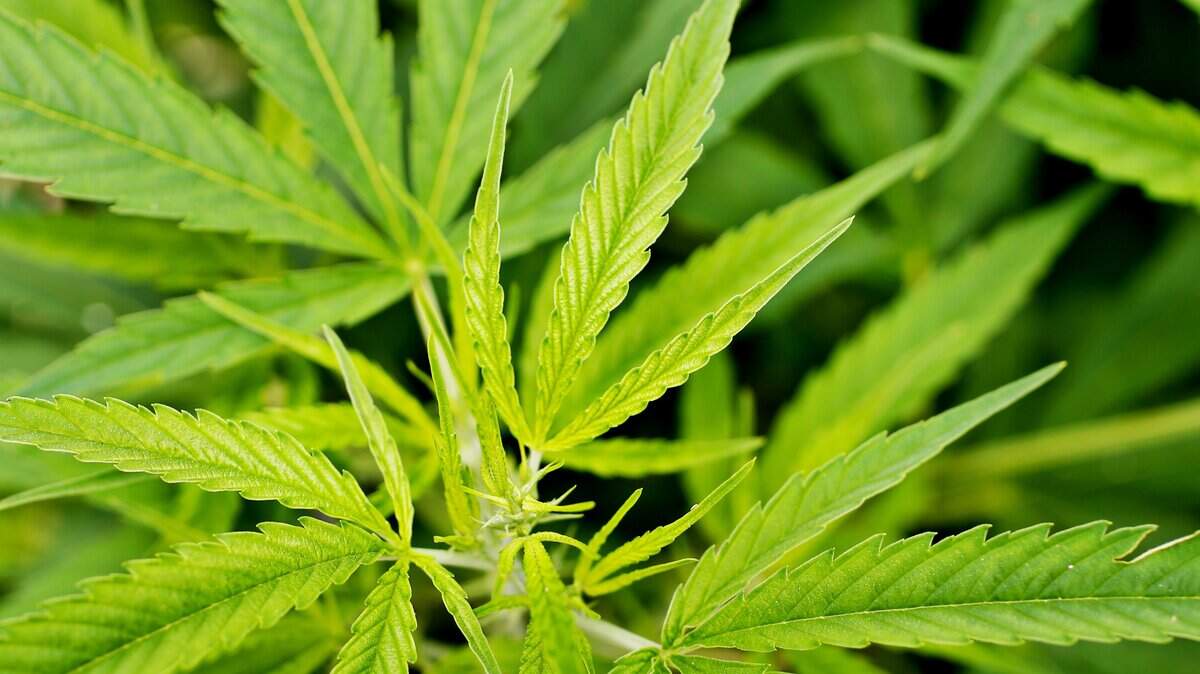
Hemp and marijuana stem from the cannabis plant. The difference is that hemp must have 0.3% or less of delta-9 tetrahydrocannabinol by dry weight under the current federal definition.
Delta-9 THC is what is typically associated with marijuana’s classic “high,” but it is not the only cannabinoid in the cannabis plant. Other cannabinoids — often found in hemp products — such as delta-8 THC can also produce intoxicating effects.
There have been several attempts across the years to regulate hemp products in North Carolina, so minors cannot access them. There have also been failed attempts to legalize medicinal marijuana by a powerful Senate GOP lawmaker.
But the House and the Senate, both led by Republicans, have disagreed on what exactly the regulations on both hemp and marijuana should be, and also on other provisions tacked onto those bills.
That included last June, when the Senate rewrote a House bill that had some restrictions on hemp and tobacco products for minors, expanding it into a bill that could effectively ban most hemp products on the market today, allowing only hemp products with delta-9 THC in very small doses. The House rejected those changes on April 21, the first day back in the short session this year.
Sen. Amy Galey, a Burlington Republican, said at the time that that bill was not “written by the cannabinoid industry for the benefit of the cannabinoid industry. This bill was written with public good front and center, and we’re going to make sure that what is being sold in our communities has no toxins, no synthetics, and keep them, and keep these products out of the possession of minors.”
The Trump administration changed the definition of hemp. That new definition, which goes into effect Nov. 12, requires hemp to be classified based on total THC levels, including delta-9 and other forms. The change is expected to remove several hemp products from shelves, and multiple hemp shop owners in the state have told The News & Observer that it will effectively gut the hemp industry.
The rewritten bill notes that nothing in it “shall be construed as authorizing the sale, delivery, or possession of any hemp, hemp product, or hemp-derived consumable product that is not otherwise authorized by State or federal law.”