Ferry tolls in Eastern NC draw rare Republican dissent on state budget
.JPG "Ocracoke Island Ferry terminal on Thursday, July 1, 2021 in Ocracoke, N.C.")
AI-generated summary reviewed by our newsroom.
- Two Eastern NC GOP senators initially opposed the budget over ferry tolls.
- Budget requires tolls on all ferry routes starting in January; four are now free.
- Budget directs DOT to set tolls to fund vessel replacement and provides funding.
An Eastern North Carolina Republican lawmaker voted against the GOP-drafted budget because of the inclusion of a provision that would require tolls on all ferry routes starting in January.
In an initial vote, the lawmaker, Sen. Bobby Hanig of Powells Point, was joined in his opposition by Sen. Norman Sanderson of Minnesott Beach. They were the only two Republicans across both chambers to vote against the bill Wednesday. Several Democrats joined the GOP in support.
Hanig, on Wednesday, said the toll could be called a “fee, but it is a tax.” He was absent for the final vote on Thursday.
Sanderson, before the vote, said he was “in the valley of indecision” and would make his final decision during the five seconds that senators are given to vote. He voted no.
On Thursday, Sanderson voted yes.
North Carolina operates seven ferry routes. The budget, which now heads to Democratic Gov. Josh Stein’s desk, would add tolls to the four ferry routes that are now free. Fares are already charged on the two routes serving Ocracoke Island, the route to Fort Fisher, and the seasonal Ocracoke Express passenger ferry.
The budget requires the Department of Transportation, which houses the Ferry Division, to establish tolls for all ferry routes. It does not specify toll amounts but says they must be set at levels sufficient to fund passenger vessel replacement costs. Residents and active-duty military personnel in coastal counties would be eligible to purchase a commuter pass for $150 per year. The budget provides about $40 million in new funding for the Ferry Division, including $3 million for ramp and gantry crane rehabilitation and maintenance at ferry terminals, bringing the division’s total appropriation to just over $100 million.
“No North Carolina citizen should have to pay a toll to ride on a ferry,” Hanig said. “I made a promise to my constituents a long time ago that I would not vote for a ferry tax,” and ”so for that reason, I have to be no on this budget,” he said.
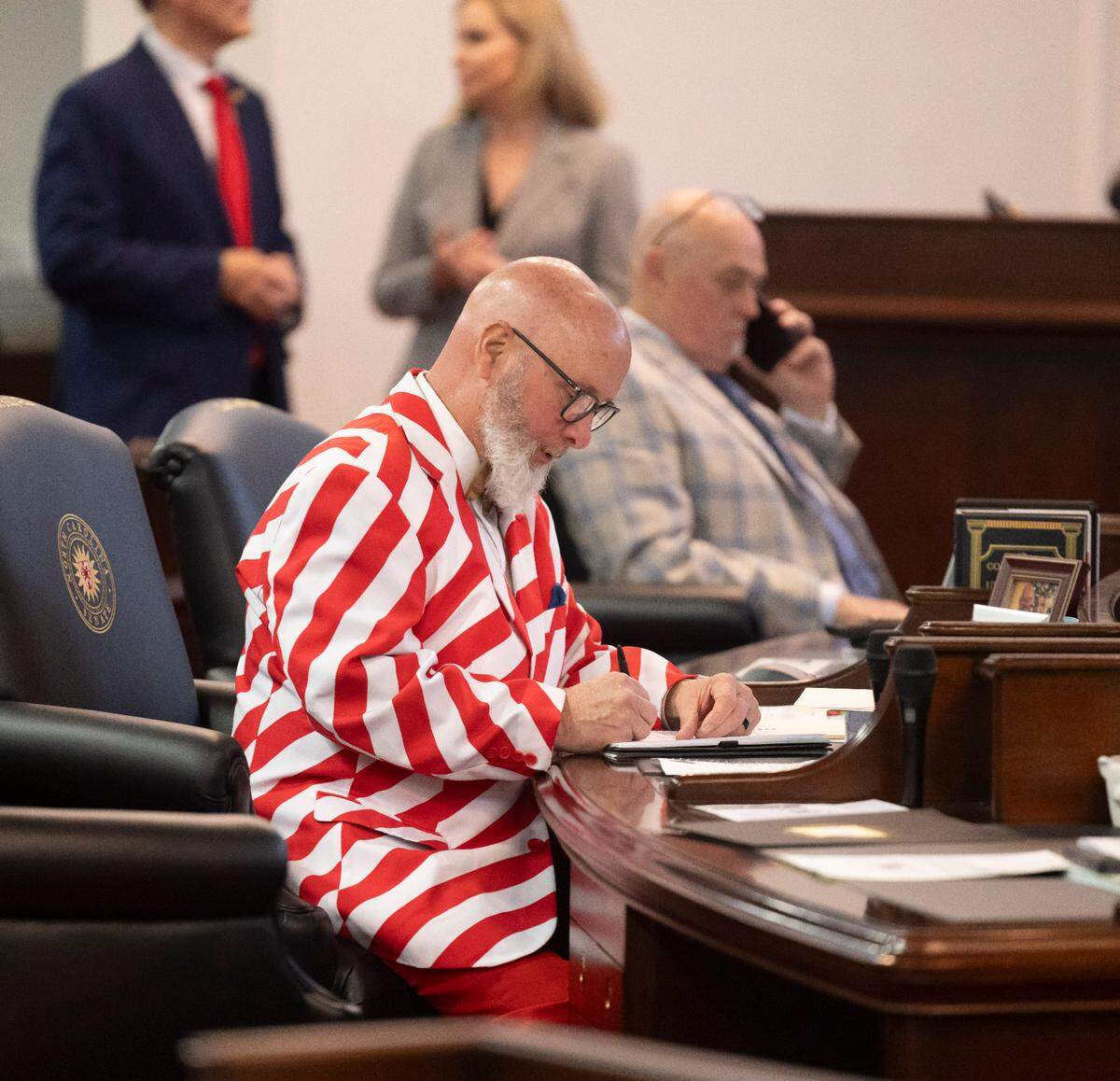
Sanderson, similar to Hanig, asked his Senate colleagues to reconsider the ferry tolls. He said a complete audit of the ferry system could find savings elsewhere.
The House on Thursday passed a bill previously approved by the Senate directing the Office of the State Auditor to conduct a performance audit of the Ferry Division. The audit will examine, among other things, the feasibility of a percentage-of-revenue funding model, under which funding would be based on income, such as ticket sales, rather than appropriations. The bill now goes to the governor.
Sanderson, of Pamlico County on the coast, said the ferry is “a part of our life. It really is. We don’t even think about using it anymore.”
“This is very important to the ones that live in coastal Eastern North Carolina,” he said. “It’s an intricate part of our transportation system, and it’s not something that I feel like that we should double charge our people to use.”
Sen. Mike Lazzara, an Onslow County Republican and a chair of transportation appropriations, wasn’t immediately available for comment by phone or email.
It’s rare for Republicans to oppose a state budget crafted by their party. But Senate leader Phil Berger told reporters on Wednesday that “we have members that have local issues that they perceive as very important to their constituents, and that’s just what happens from time to time.”
Berger is leaving the legislature after losing his primary in March after 25 years in the Senate and more than 15 years as the most powerful Republican in North Carolina.
Not as controversial in House
Republican House Speaker Destin Hall told The N&O as he talked with reporters after the vote on Wednesday evening that “on our side we had a strong vote today, so it really wasn’t an issue,” unlike in the Senate.
“I understand for the members that are in coastal districts, in particular, it can be a hot-button issue, but at the same time, it’s critical that we provide those ferries, and we do it in a way where they’ve got reliable equipment,” he said.
“Just like everything else, the cost of that has gone up — and so we think it’s reasonable to have some fee for use of those. And of course it’s folks who, not just who live there, but people who are tourists and on vacation, and so we want to make sure that that service remains.”
Hall also said the fees are an effort to reduce costs for the Ferry Division, and that he hopes “to keep those fees very low, but also continue to maintain a robust ferry system.”
Not the first time
It’s not the first time the two senators have broken ranks with their party.
Hanig opposed a similar toll provision in the 2025 Senate budget proposal. They also both opposed a bill last year that would have banned shrimp trawling within a half-mile of the coast. That bill drew fierce opposition from shrimpers in Eastern North Carolina, with many showing up at the legislature, and their business trucks passing in front of Jones Street at the General Assembly, horns blaring in solidarity. That episode has since been dubbed by many as “Shrimpgate.”
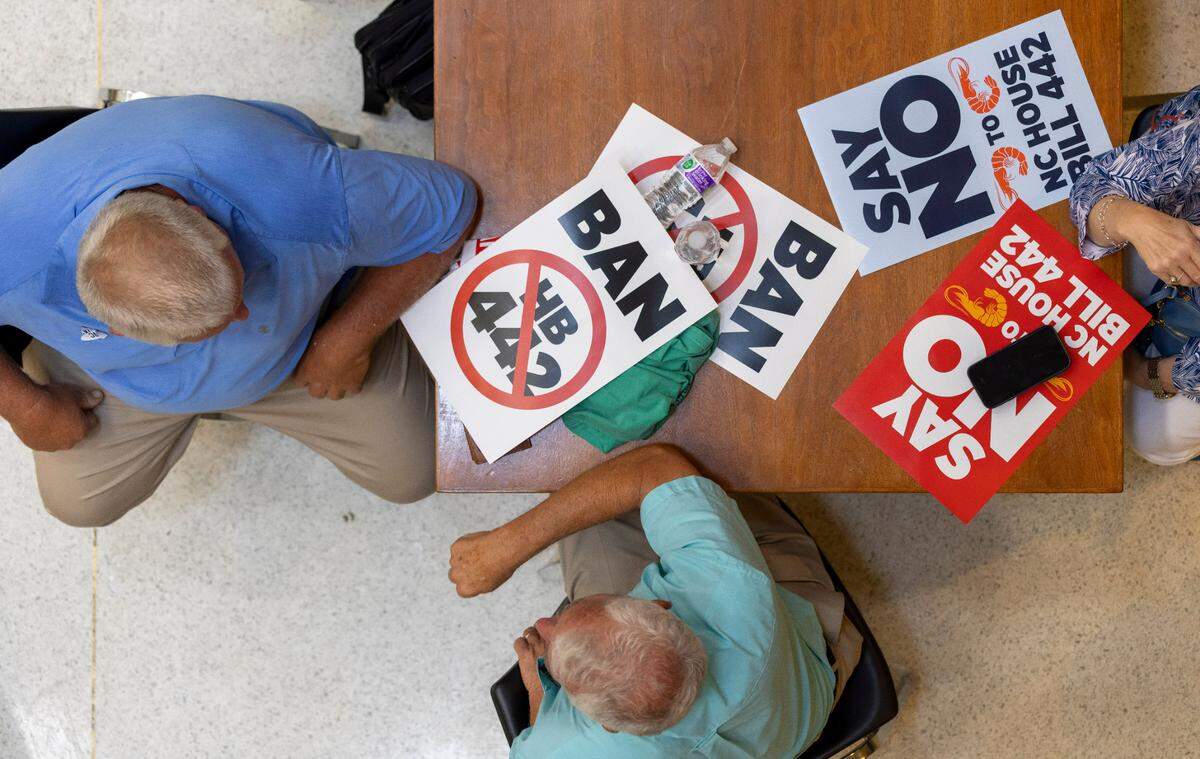
Hanig was a big part of that. He encouraged North Carolina residents to ask their senators to oppose the legislation, and he passionately opposed it during floor votes.
“We need to save our heritage. We need to save our fisheries,” he said during a floor debate then.
The bill passed the Senate overwhelmingly, but House Republicans decided not to take it up.
Hanig went on to attempt a run for Congress. And while the senator lost the primary to former Army Col. Laurie Buckhout, some Republican Party officials told The N&O that Hanig had name recognition in his area due to his role in Shrimpgate.
Rene’ Moseley Etheridge, chairwoman of the Currituck County Republican Party in Hanig’s home county, said in February before that primary that Buckhout and Hanig stood out in the congressional race — Buckhout for her past run in the district, and Hanig because he “went to bat for the fishing industry.”