NC gives up on its effort to regularly replace vehicle license plates
AI-generated summary reviewed by our newsroom.
- North Carolina has officially abandoned its seven-year mandatory plate replacement policy.
- The DMV said replacing plates every seven years would cost up to $15 million a year.
- The DMV will replace plates only as needed and follow national reflectivity standards.
North Carolina has officially abandoned an effort to replace vehicle license plates on a regular basis.
Car and truck owners in the state can keep their plates for as long as they remain legible and in decent shape. Some on the road today are decades old.
But in 2019, state lawmakers decided the state should replace its license plates every seven years, regardless of their condition. A bill signed into law that year ordered the Division of Motor Vehicles to begin swapping out older plates in 2020, ostensibly to improve visibility by law enforcement and license-reading machines.
But after a brief start, the effort never really got underway. And this week, Gov. Josh Stein signed another bill into law that rescinds the policy.
Lawmakers reversed their position at the request of the DMV. The agency said not only is regular replacement not necessary, but the General Assembly never provided money to pay for it. In its request for a repeal, the DMV said replacing every license plate every seven years would cost up to $15 million a year.
“The requirement represents a significant unfunded mandate that, if implemented, would place substantial strain on NCDMV’s operational budget and divert resources from core customer service functions,” the agency wrote.
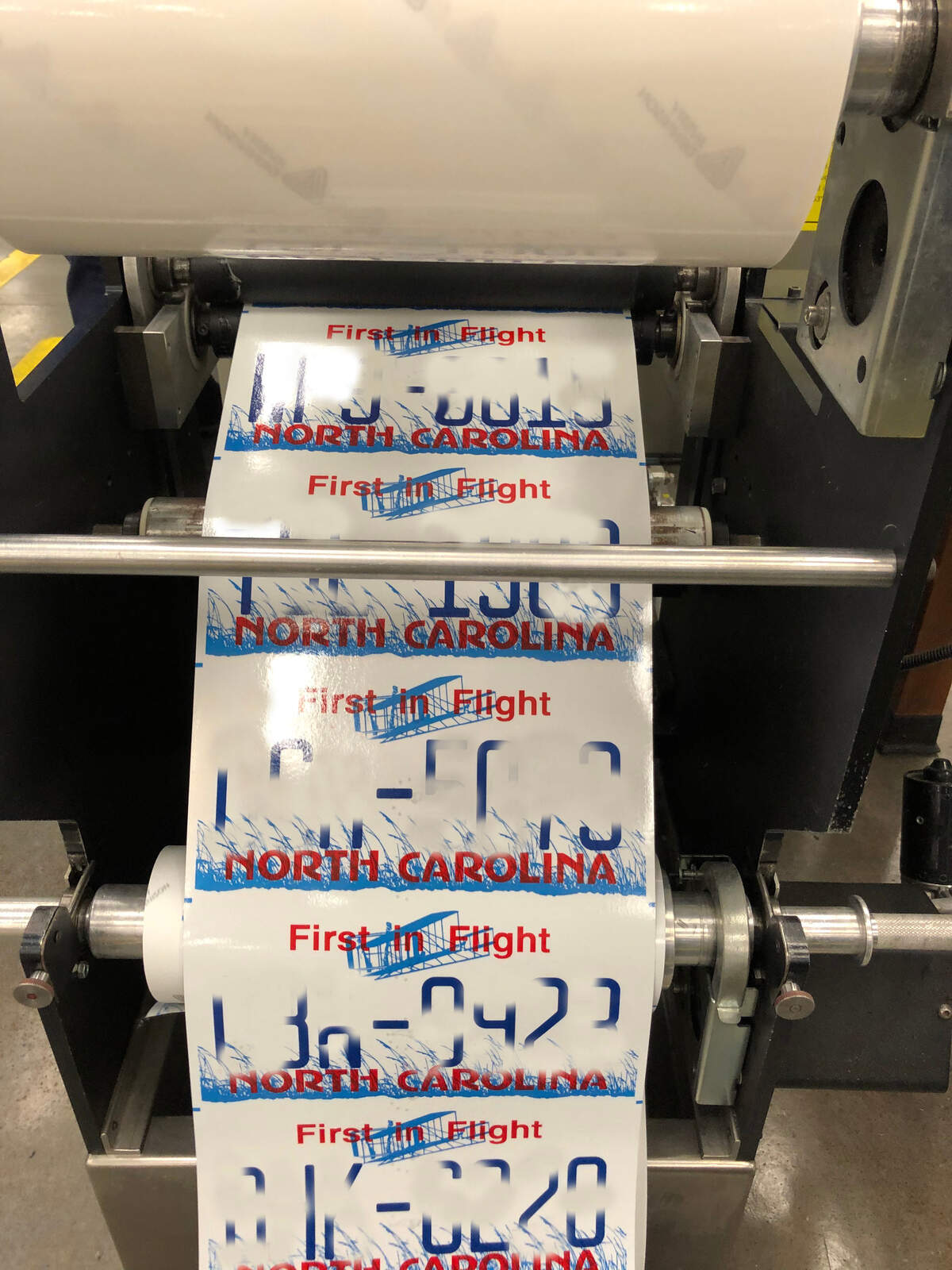
The DMV prefers that plates are replaced as needed. If a plate becomes damaged or faded, the vehicle owner can request a new one at no charge. (There is a $25.50 replacement fee if the plate has been lost or stolen.)
In general, license plates begin to lose their reflectivity and become harder to read at night after 10 years, according to the American Association of Motor Vehicle Administrators.
What makes a good license plate
The mandate to replace license plates every seven years was tucked into a larger transportation bill. That bill also said the state’s plates should be “treated with reflectorized materials” to make them easier to see at night and ordered the DMV to “develop standards for reflectivity that use the most current technology available.”
The part about developing state standards was also rescinded this week. The DMV says it relies on national standards set by the American Association of Motor Vehicle Administrators, which are updated every three or four years to reflect changes in technology.
“Continuing to follow these nationally recognized standards ensures consistency, cost-efficiency, and alignment with other states, without the need for separate state-level development and maintenance,” the DMV wrote.
The plate replacement effort faced hurdles from the beginning. The DMV was supposed to begin in July 2020, but asked for a six-month reprieve because the COVID-19 pandemic was playing havoc with the agency.
The effort started on Jan. 1, 2021, but was suspended five months later because Corrections Enterprises, which makes the plates at the N.C. Correctional Institution for Women in Raleigh, didn’t have enough aluminum on hand to keep up with the heightened demand.
The scarcity and cost of aluminum remained a problem two years later when the DMV first asked lawmakers to rescind the mandate. In 2024, the DMV studied the potential use of other materials for license plates, such as plastic, but determined that despite the cost aluminum is a better deal because of its durability.