
Already under water, North Carolina communities face rising river levels this week
Jones County has had limited contact with the wider world as the rivers swelled by Hurricane Florence’s rains began to inundate towns.
“We were completely cut off from everything,” Jones County Manager Franky Howard said at a news conference Tuesday. “Telephones went down. Data went down. We were pretty much stranded there.”
The county was able to communicate with first responders, though, Howard said, and 911 was working.
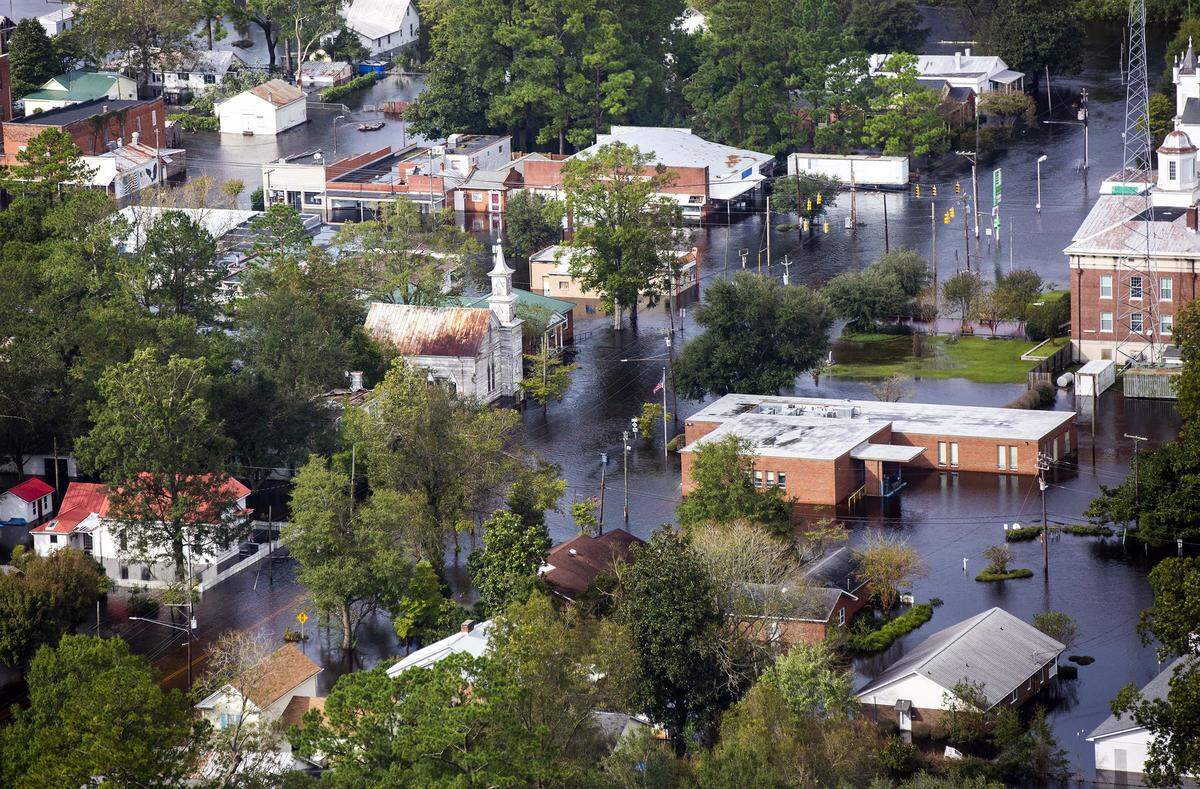
The Trenton and White Oak rivers run through Jones County. The Trent River at Trenton, the Jones County seat, crested Tuesday and will remain at major flood level until Thursday, state Emergency Management Director Mike Sprayberry said.
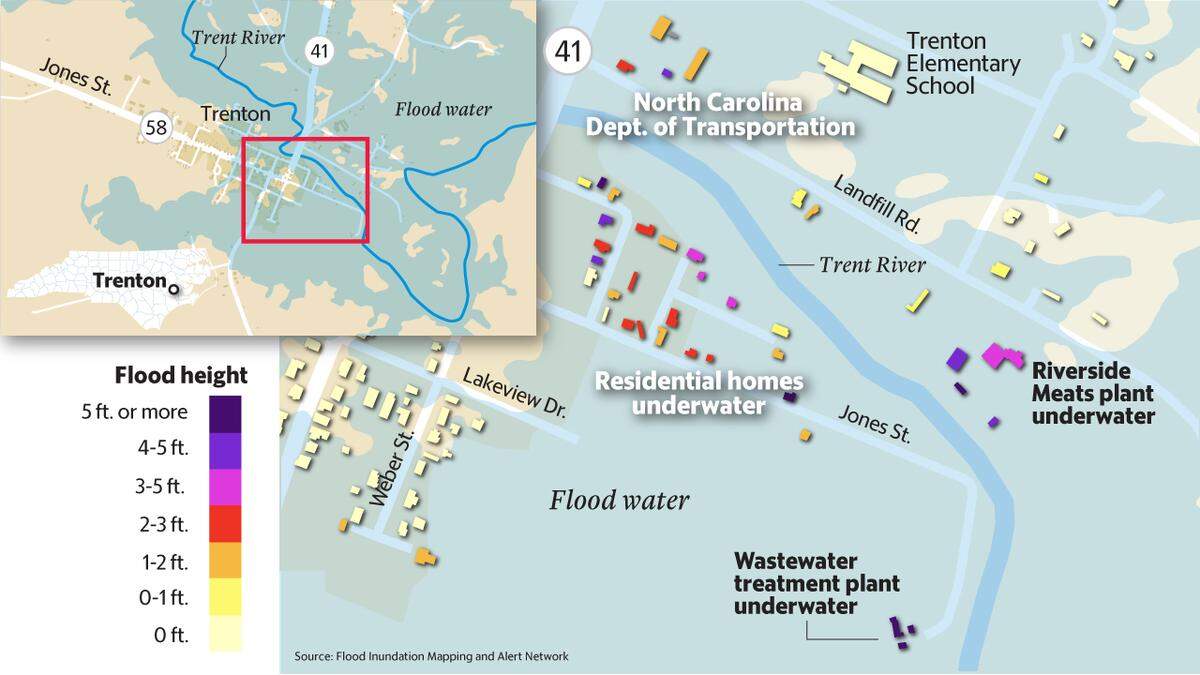
The state’s flooding map shows part of central Trenton and surrounding areas, including an elementary school and a middle school, sitting in water. Major roads leading to Trenton are flooded.
People were still calling to be rescued Tuesday, Howard said.
Other rivers in the Carolinas, including the Neuse and Pee Dee, won’t crest until later this week. Jones and other Eastern North Carolina counties remained under flood warning Tuesday.
The Cape Fear River in Fayetteville was at 60 feet Tuesday and was expected to reach about 62 feet. Flood stage is 35 feet.
A U.S. Geological Survey river gauge at Lillington showed the river was beginning to fall on Wednesday morning. A gauge at Fayetteville showed the river leveling off there.
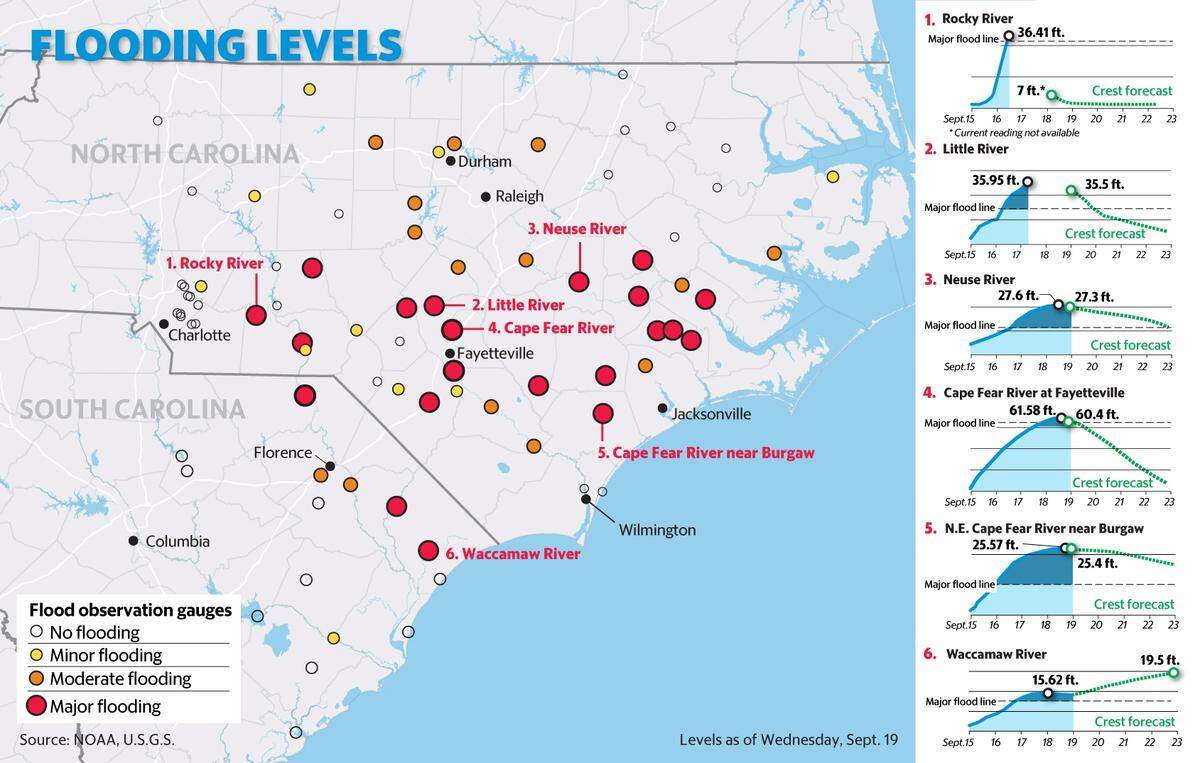
On Saturday, government officials in Cumberland County, Fayetteville and Wade told people living within a mile of the Cape Fear or Little rivers to evacuate. Land closest to the rivers remained a danger zone three days later. Dangerous conditions will last “well into the weekend,” the officials’ news release said.
Through Tuesday morning, 81 people from throughout Cumberland County had been rescued, according to the news release. More than 1,000 people were still in Cumberland shelters Tuesday morning.
A step in the recovery for Jones County will be setting up its own shelter for residents with damaged homes who want to stay close to their property, Howard said. “It’s going to take us years to get over this,” he said.
.JPG "RAL_ 091718-FLORENCE-TENTON-TEL-02 (1).JPG")
Mike Haddock, chairman of the Jones County board of commissioners, said floodwaters in his house got higher than the water from Hurricane Floyd in 1999. Haddock said family members were surprised by how high the water rose in their homes.
“It went in places nobody thought water would ever go in,” he said.
This story was originally published September 18, 2018 at 4:33 PM.