Sign marking Confederate history is one of latest to disappear in NC, officials say
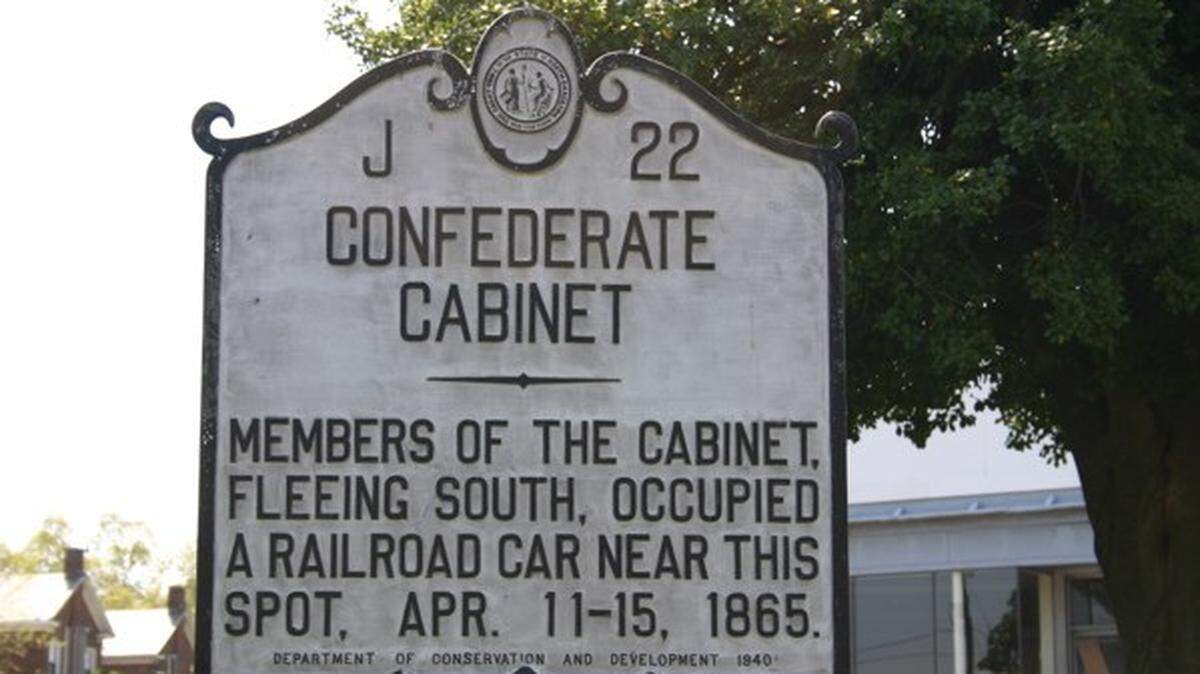
A sign that tells the story of Confederate leaders fleeing Richmond to Greensboro has disappeared , officials say.
The historic marker in Greensboro was gone as of Sunday night, according to the Facebook page for the North Carolina Highway Historical Marker Program. The sign was created in 1940.
The sign is titled “Confederate Cabinet,” referring to the advisers of Jefferson Davis, president of the Confederacy from 1861 to 1865. After their Richmond-based government fell, his fearful leaders fled south and stayed in a railroad car near the now-missing sign, according to the historic program’s website.
Across North Carolina, Confederate symbols have sparked controversy in recent years.
Several monuments have come down, and two towns canceled Christmas parades over fears of clashes about Confederate heritage groups’ participation this year, The News & Observer reported. Supporters of the displays have argued they conserve Civil War history, but others contend they stand for white supremacy.
While officials haven’t said how the Greensboro sign went missing, it isn’t the only sign to vanish in the Tar Heel State.
Nearby, a marker for the University of North Carolina at Greensboro is also out of sight, the historic marker program wrote Sunday in its Facebook post. It commemorated the institution first started in 1891 as the State Normal and Industrial School, historians say.
“Please keep an eye out,” officials wrote. “State historical markers should never be in private hands or sold in a scrap shop or antique shop.”
Earlier this month, a marker honoring Olympic medalist Jim Thorpe went missing, too, The News & Observer reported.
But later, officials say they discovered a mower hit the post, and his employer had taken down the sign for repairs.
Other signs that went missing this year commemorated the U.S. Marine Corps base at Camp Lejeune and a destroyed Native American community near Goldsboro, among other historic sites.
Due to maintenance demands and increasing costs, the historic marker program committee decided to temporarily stop adding signs next year, The News & Observer reported earlier this month. At the time, 32 markers were “out of commission due to damage or theft.”
Throughout the state, there are more than 1,600 informative signs, according to the N.C. Department of Natural and Cultural Resources, which runs the highway marker program.