TV anchor held her baby for less than 2 hours. But she’ll hold onto her memory forever.
When Allison Latos kicked off the noontime broadcast of Channel 9’s “Eyewitness News” from the anchor chair on Monday, her first time doing live television in 88 days, it was as if she’d never been gone.
Without acknowledging her absence, the nine-year veteran of WSOC-TV dove headlong into an introduction to a story about teachers rallying in support of remote learning amid the pandemic, looking as polished as ever.
She did not look like someone who had spent so many days over the last three months crying.
Three days earlier, in fact, her eyes had filled with tears over and over again as she explained to the Observer the devastating, life-changing events that were responsible for keeping her off the air. When the topic of returning to work came up, she wiped them away to say:
“I am looking forward to having some familiar part of my life from before back again, in that it will be good to feel like, ‘OK, I’m going to put my professional hat on and this isn’t going to be what I think about all day every day.’ Not that I don’t want to think about it, but just so it isn’t all-consuming.”
And on TV on Monday, she seemed to be all business. But what viewers couldn’t see on camera was the giant hole that’s been in her heart now for 2-1/2 months, since the night of May 13.
At 8:09 p.m. that Wednesday, Latos and her husband Josh welcomed their second child into the world.
Less than two hours later, they had to say goodbye.
The struggle to start a family
Allison Latos (pronounced “LOTT-us”) and Josh Lucas dated for three years in their shared hometown of Wheeling, W.Va., during high school, but drifted apart in college despite the fact that they were only 70 miles apart — he at West Liberty University and she down the road at West Virginia University.
In 2011, five years after they’d earned their degrees, he was working as a youth minister for Young Life in Pittsburgh, while Allison was an anchor at WTOV-TV in Steubenville, Ohio, just across the state line from Wheeling.
They found an excuse to catch up over coffee, which turned into lunch, which turned into dinner. Soon after that, they were dating long-distance. Soon after that, she moved to Charlotte to take the job with WSOC. Eventually, he found a job in Charlotte, too, and on June 1, 2013, they were married.
Josh was ready to start a family immediately. Allison, meanwhile, wasn’t in a rush. Her approach won out.
When they decided they were ready, a few years into the marriage, they ran into an unexpected obstacle.
“I think like a lot of people who haven’t experienced infertility before, you just assume that it’ll work when you’re ready and you’ll just be able to have children,” Allison says. “So it was hard to accept and understand why it wasn’t going to work the way we planned.”
It took eight, almost nine months of treatments at the REACH Fertility Center — and of stress, struggles and disappointments — for the couple to get pregnant, but they finally found success in the summer of 2017. Allison says everything went “remarkably smooth” from start to finish.
The only true unknown throughout the process was the gender, which they decided to have withheld from them. On March 18, 2018, though Allison was sure it was going to be a boy, she gave birth to a perfectly healthy baby girl they named Hope.
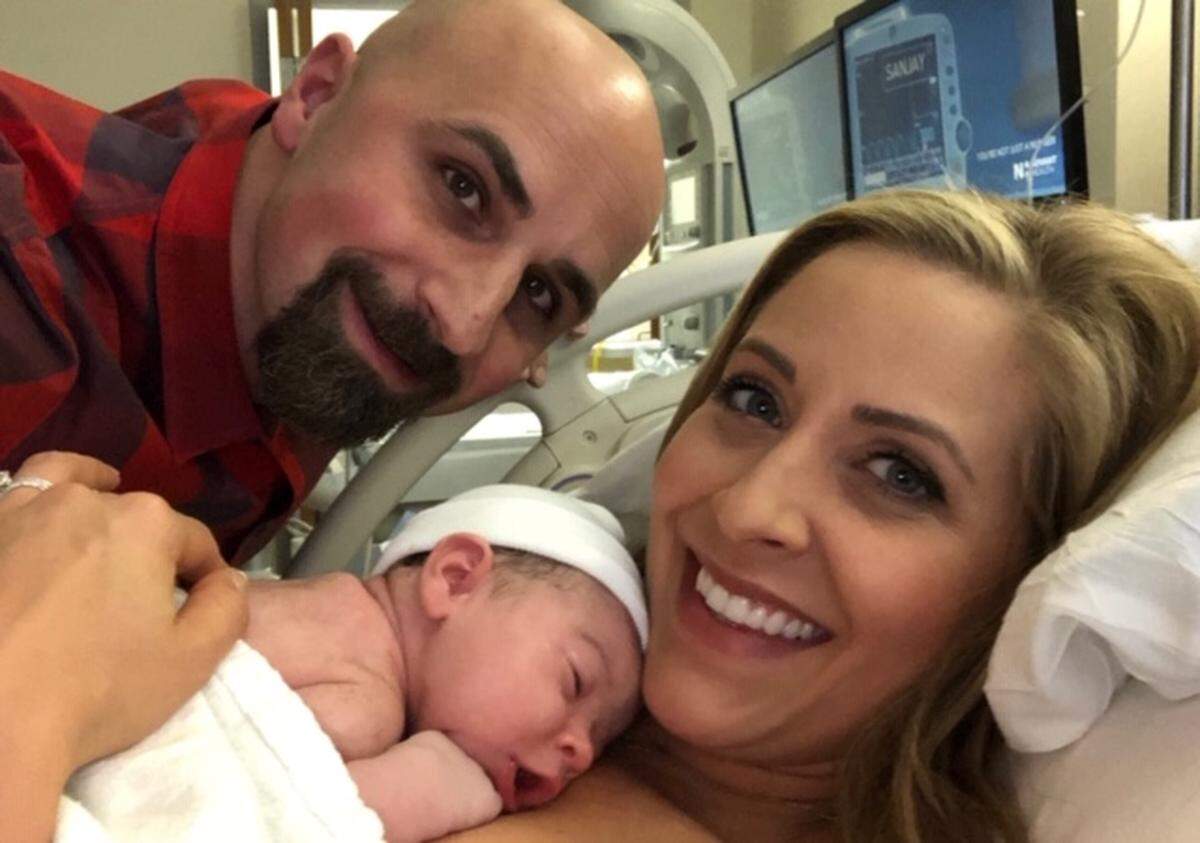
A year later, Allison and Josh started trying for No. 2, again with help from REACH, but due to certain risk factors they had to suspend treatment after just one round of fertility-drug injections. After a pause, she went in for tests to see if they could start up again, but the results were abnormal. They had to wait some more.
Then she went in to get re-tested, and they realized the test results weren’t abnormal, but that — surprise! — she was pregnant again. Without the help of fertility treatments.
“Because we needed REACH and all of the meds to have Hope,” Allison says, “I think we both just assumed it wasn’t going to happen again without medicine. But it did. It was a huge shock. We felt like, ‘What an incredible story for our second child.’
“And for a long time, I thought the infertility was going be the obstacle that we had to overcome — the thing that tried us, or that challenged us — as a family and in our marriage.”
Their struggle to get pregnant, however, was nothing compared with what they would go through next.
How it all began to unravel
Allison and Josh again kept themselves in suspense about their second baby’s gender, and she basically felt great throughout the first two trimesters.
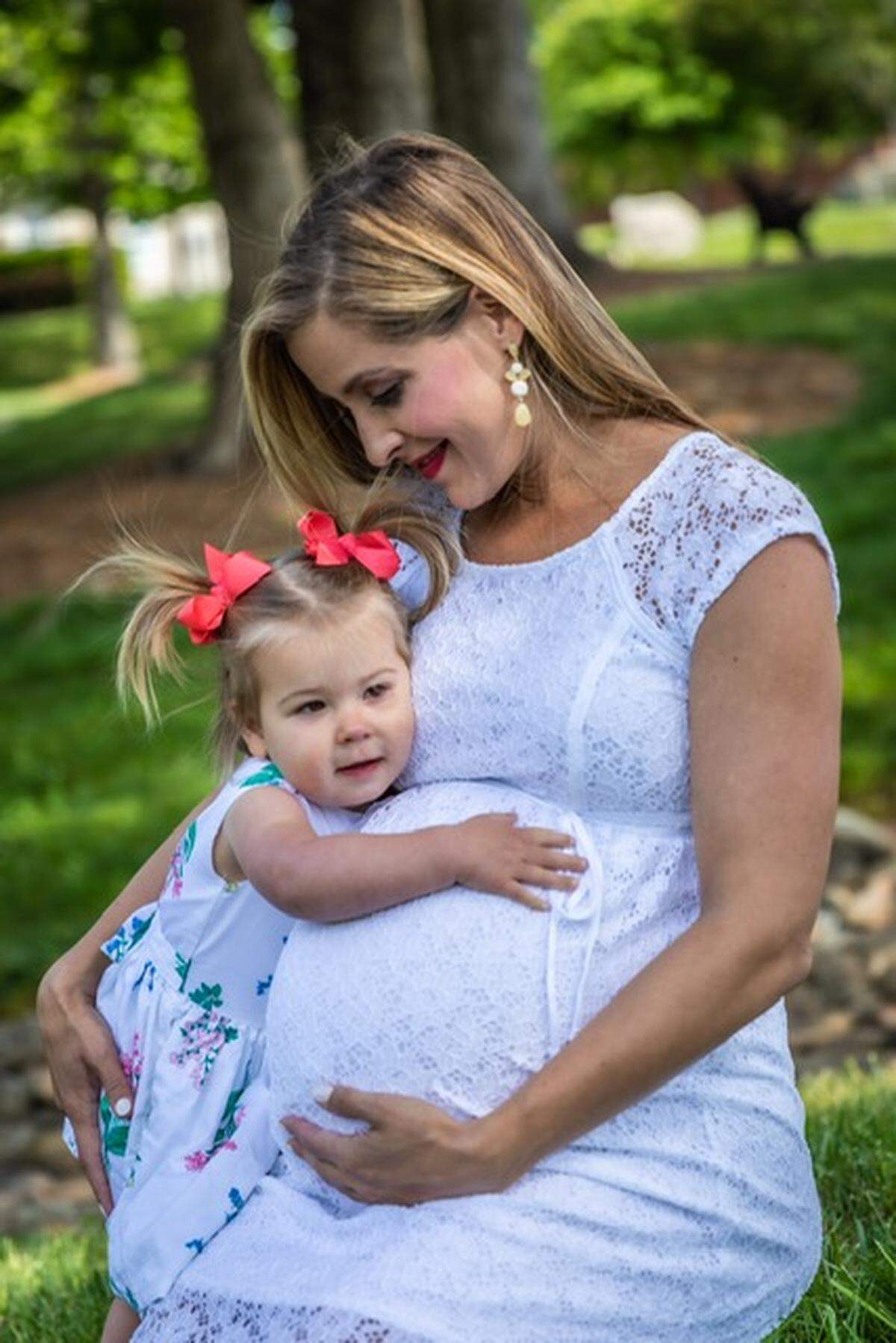
The only curveball came in mid-March, around 27 weeks, when she had to start working from home due to COVID-19 and her suddenly being in a high-risk category.
Things began to unravel soon after. She started feeling the sensation that her whole body was itchy, from head to toe. In late April, at around 33 weeks, she couldn’t take it anymore and made an appointment with her obstetrician, Kim Hopkins of Novant Health Randolph OB/GYN.
The culprit: Cholestasis, a liver condition common among pregnant women that slows or stops the normal flow of bile from the gallbladder and — in addition to causing extreme discomfort for the mother — can potentially lead to fetal complications such as stillbirth, Hopkins says.
So Allison was told she needed to have an ultrasound weekly to keep tabs on her baby. (In a healthy pregnancy, expectant mothers typically have two over the course of the pregnancy. Her 20-week ultrasound had looked clear.)
The next day, on April 30, Allison anchored the noon newscast and then headed to get the first of those ultrasounds.
It would be her last time on the air for nearly three months.
Very shortly after the ultrasound technician started looking at the scan, Allison recalls, “she said she needed to adjust some setting or do something with the computer. I don’t remember what it was. But she left the room and I started to freak out.”
“Why is she leaving?” she asked Josh, who was participating via FaceTime due to COVID-19 restrictions. A few minutes later: “She’s been gone for too long. Everything she needs is here.”
Josh tried to calm his wife down over the phone. “Well, we don’t know that. Maybe there’s a server issue that she has to go into another room or ... who knows? Could be a variety of things.”
But eventually, a doctor came in and told them there were multiple concerns: For one, Allison had way more amniotic fluid than she should have (a condition called polyhydramnios, which while unrelated to the cholestasis can also put both mother and child at risk for complications); on top of that, her baby’s head was measuring abnormally large — and its heart was enlarged.
“At that point, I think I was just in a state of absolute shock,” Allison says.
And the news was about to get worse.
‘We didn’t know what to do’
Another ultrasound was inconclusive, so she was admitted to the hospital. The next morning, a fetal MRI revealed that the baby had a very rare condition called a dural arteriovenous fistula.
The easiest way to explain this — and it’s still complicated — is to say:
An artery, which carries fast-pumping, oxygenated blood to all body parts and has a thick, muscular wall, managed to fuse directly to a vein, which carries slow-moving, deoxygenated blood to the heart and has a thin, almost floppy wall. The vein’s response to trying to manage all this rapidly pumping blood is to just stretch out wider and wider and wider.
This abnormal passageway between an artery and a vein occurred in Allison’s baby’s brain. And it actually turned into a pouch that was taking up more than three-quarters of its brain, says Erin Kiehna, chair of neurosurgery at Novant Health Presbyterian Medical Center, who had been brought in to consult on Allison’s case.
Meanwhile, that abnormal process can steal up to 80 percent of blood flow from the other parts of the body, Kiehna says. “So, instead of your brain getting good blood flow through all the vessels, it’s stolen to this malformation. ... And the heart is desperate to keep up.”
Their baby, the couple would learn, was also in congestive heart failure.
“We didn’t know what to do at that point,” Josh recalls.
But he also remembers thinking, “‘This isn’t part of the plan. This isn’t supposed to be how this happens. Clearly, there’s another option and we can fix this still.’”
Yes, there were potential surgery options. But no, it was extremely unlikely that any surgery would be successful. “And then we’re asking, ‘Well, what does success look like?’” Josh says. “‘Because if there’s a chance of our baby living and surviving and being healthy, we want to pursue that.’“
Dural arteriovenous fistulas, the couple would learn, tend to occur later in life and can be treatable. Meanwhile, they only occur in babies in the womb at a rate of about 1 in 3 million pregnancies, Kiehna says, and in fetal cases, they are typically not survivable.
“If you look at all the best studies, over 70 percent of these infants die,” she says. “And that’s even attempting to treat them. For those that live, they are completely devastated. ... All of this happened so early that the brain never really got a chance to develop.”
The bottom line: Their baby had severe irreversible brain damage, and once born, there would be a limited amount of time before its body would just not be able to tell itself how to breathe.
While reeling from this heartbreaking news, Allison and Josh were asked if they wanted to know if it was a boy or a girl.
They had to think about it for a minute, but decided that they did want to know this time.
On the same day they learned their baby was going to die, they found out they were having another girl.
‘To love her as best we could’
Allison carried her daughter for two more weeks.
One of the main reasons she had to do so is because doctors are bound by an ethics policy that prohibits them from delivering a baby early for the primary purpose of hastening its death, even if death is inevitable.
It was as emotionally distressing as it sounds. On the one hand, Allison didn’t want to be pregnant anymore, because she was so physically uncomfortable from the issue with her liver; on the other — and her voice starts to break as she explains — she knew that “as long as I was pregnant, she was still alive.”
But she wanted nothing to do with the decision about when her daughter would be born, because she was aware that also meant she would be deciding the day her daughter would die.
Her only wish: When the time did come, she wanted to hold a living, breathing child in her arms — even if just for a few moments.
So she and Josh followed the guidance of their doctors, who had Allison in for another ultrasound the week after the fateful diagnosis and then again the week after that.
At that second checkup, on the afternoon of May 13, Allison’s blood pressure was elevated. She and Josh were sent to the hospital. A couple hours later, Kim Hopkins, her OB, called and said the baby needed to come out that night, via C-section.
As much as they could be, Allison and Josh were ready for this.
“There’s a part of me that wishes we didn’t have to go through that,” Josh says, of the 13 days Allison had to carry her baby knowing it was going to die. “But at the same time, in a weird way it was a blessing that we were given time to process that and to think about it. ...
“If we have an hour, or if we have 15 minutes, we didn’t want that time to be time that we are sad or angry or frustrated. We wanted to make sure that we were very deliberate ... that we were able to love her as best as we could in the short time we had.”
Just after 8 p.m. on that Wednesday, in the delivery room, Josh held Allison’s hand and they prayed. And at 8:09, they heard the first cries of their daughter.
The couple looked at each other. Neither of them said it out loud, but their mouths broke into smiles as tears spilled down their cheeks the instant they realized: She’s alive.
They ended up having a little less than two hours.
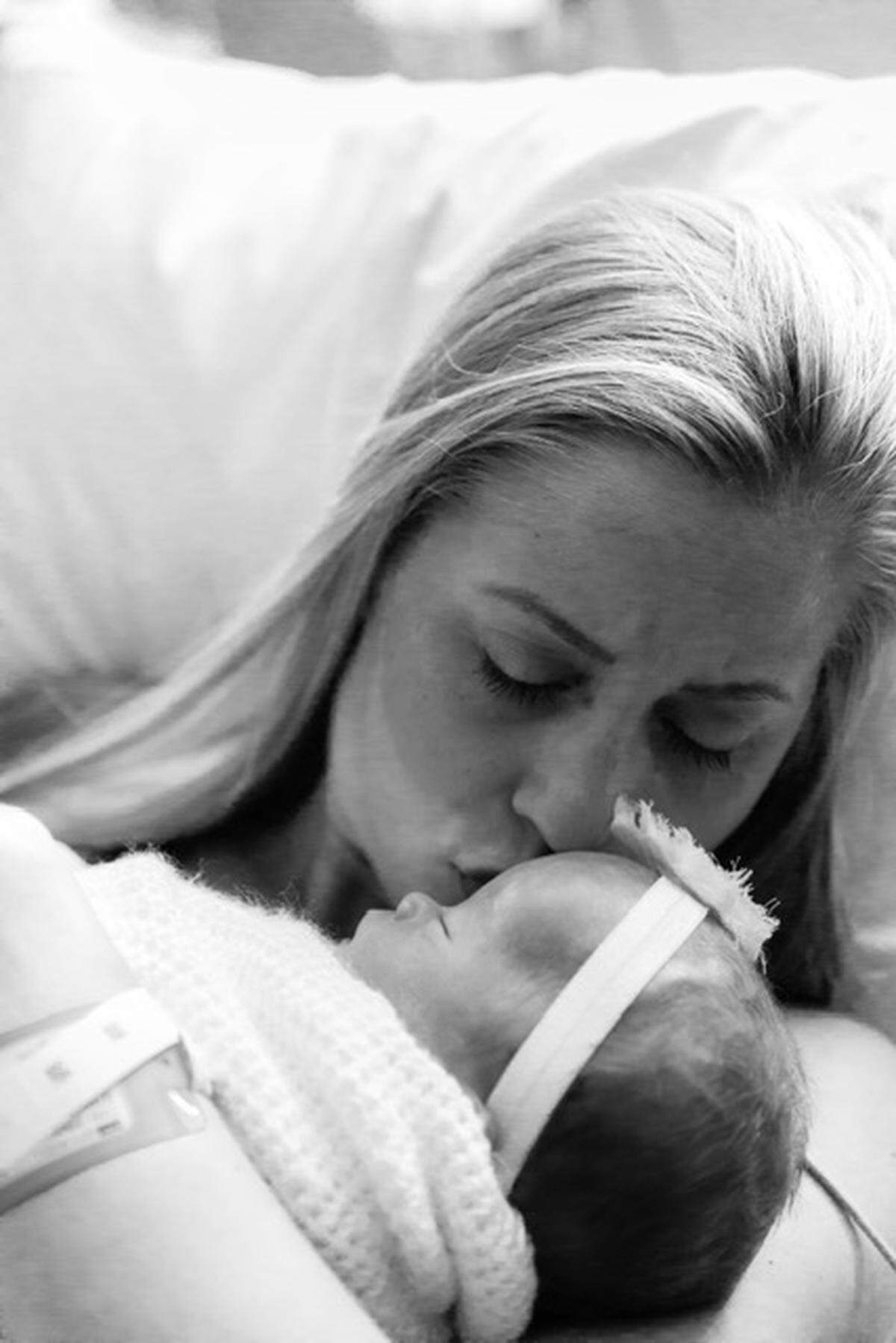
And it’s important to recognize that that time could have gone so much differently.
If doctors hadn’t discovered this was happening to Allison and her daughter in utero, Kiehna says, they would have realized within minutes after the birth that something was wrong. The infant would have been whisked off to the neonatal ICU, would have had a breathing tube inserted, and would have been pumped full of medications to try to address the heart failure. In all likelihood, Allison’s daughter would have died in an incubator, on a ventilator, away from her mom.
“We could have done a lot of — personally, I would say bad — things to her, just because we could (to try to prolong her life),” Kiehna says.
“But I think it brings into account of what you should do as a medical team. And I think what we should do as doctors and surgeons is sometimes say ... ‘Can I make her better? Or should I take a step back and respect her and the dignity of her life?’ To say, ‘I can’t change what’s happened over the last 30 weeks of pregnancy, 35 weeks of pregnancy. But I can let you live in peace and in grace for the time that you have with us.’”
So the doctors stayed away, the machines and medicine didn’t intervene, and instead Allison and Josh’s daughter was able to spend her brief life being prayed over and talked to and sung to by her parents, hearing stories about her big sister Hope, and meeting various extended family members.
Then, just before 10 p.m., she died peacefully surrounded by a roomful of loving energy — and in her mother’s warm embrace.
The significance of her name
It’s been 2-1/2 months since the day she lost her daughter. Since then, other than this interview, Allison has made just two public statements about what happened.
The first came on June 1, the day of her seventh wedding anniversary, when she announced her loss in a written message on social media that read, in part: “We are heartbroken but we know that she has been made whole and is now in His arms. We believe that one day, we will see her again.”
The second was posted to social media last Wednesday as a video, in which she tearfully expressed thanks for the support she and her husband have received.
But while you might not ever hear Allison mention her during the news, she and Josh otherwise want to talk about their daughter as much as they can, as painful as it may be.
They’ll tell you about how the nursery they’d started creating has been converted into a workspace: “I knew that if it stayed empty,” Josh says, “it would become a place of sadness. ... I want it to be a source of joy and a source of comfort.”
Or about how Josh made an urn for her ashes out of wood found at Allison’s childhood home in Wheeling.
Or about how they’ve told their 2-year-old daughter Hope that thunder is created by her sister bowling with Jesus in heaven. (During a recent violent storm, Josh says, Hope excitedly exclaimed, ‘Oh! She must have a big ball!’”)
“We do have two children,” Allison says, “and I want to be as proud of her as I am of Hope. Because her life has meaning and her life is valuable. ... Even if we only had her for 90 minutes, those were the most precious minutes. So even though we may be emotional and we might cry, we want to share her story.”
Her voice shakes. She collects herself. Then, as she sits in the would-be-nursery-turned-workspace with her husband beside her:
“If it’s OK, I think we probably would both like to share a little bit about how we picked her name. We actually had her name picked before we knew the gender, before we knew anything about the diagnosis.”
Allison explains that their late daughter’s first name means God’s grace, and that her middle name was chosen because “we were so excited to celebrate another life in our family.”
“And I think her name is even more significant now, because it’s become a prayer in and of itself for us that ... even on those really hard days we have said to each other — that we just pray for the grace to get through the really hard moments,” she says, and the ability to find happiness in them.
Their second daughter’s name is Hannah Joy.
This story was originally published July 28, 2020 at 10:48 AM with the headline "TV anchor held her baby for less than 2 hours. But she’ll hold onto her memory forever.."