
Videos showing NC inmate’s fatal injury will be released
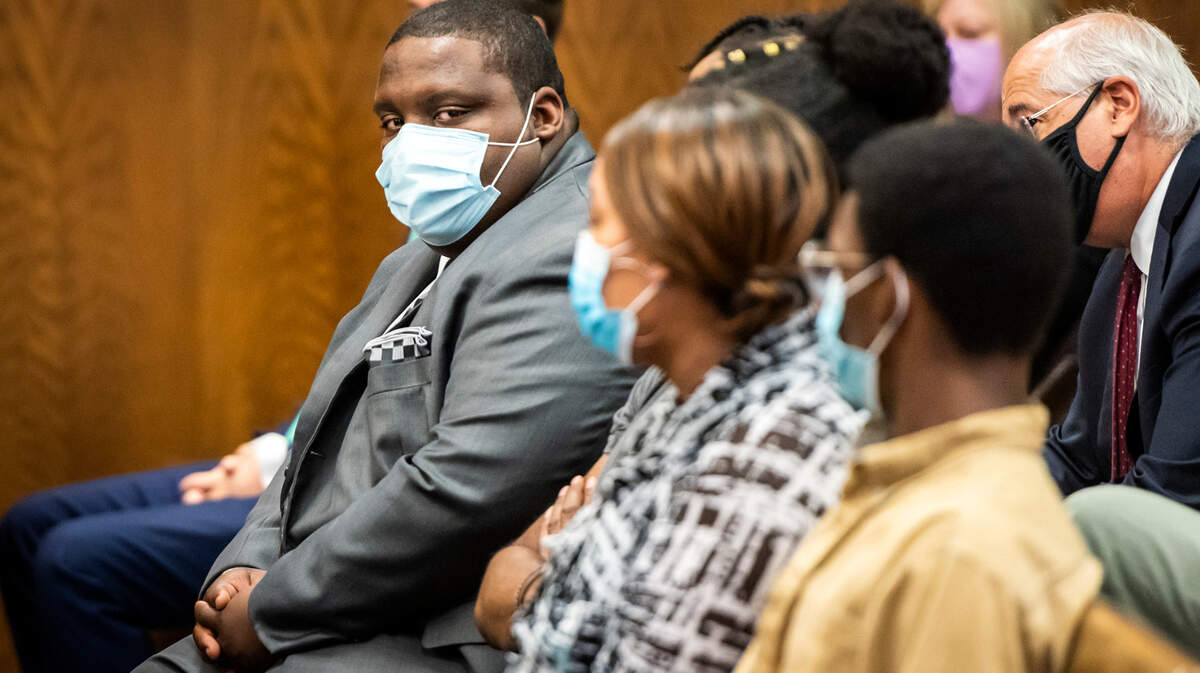
Superior Court Judge Greg Horne on Friday ordered the release of two videos capturing an incident at the Forsyth County jail that led to a Greensboro man’s death.
The News & Observer, later joined by 10 other media outlets, petitioned the courts June 17 to release video of what happened to 56-year-old John Neville in the jail more than seven months ago.
Horne’s order said the videos must be provided to the media outlets by noon on Wednesday.
“All parties acknowledge, and the courts conclude, that there is substantial public interest in this case,” Horne wrote. “The public interest is only furthered by that the fact death was not publicly reported for at least 6 months after it occurred.”
Some of Neville’s family members have already seen the footage. And after watching the videos Wednesday afternoon in the district attorney’s office, two of Neville’s adult children detailed the moments leading up to his fatal injury to The News & Observer.
Natasha Martin said the public will see deputies making jokes.
They’ll see her father struggle for air.
They’ll hear inmates sing “Amazing Grace” as her father’s body is carried out of the jail.
Martin, who lives in Maryland and is a reserve military police officer, is Neville’s 35-year-old daughter. She is Neville’s oldest child and one of four who has seen the video.
“It was disgusting,” Martin said. “For me to be law enforcement and see, even if this wasn’t my father, this is someone’s father, this is someone’s son.
“To treat another human like that.”
She added that she and her siblings initially asked the sheriff not to speak publicly about their father’s death while they navigated their grief. The family also at first opposed release of the video, but in the end sided with the news organizations in asking for its release.
Martin watched the video with her brother Tre Stubbs, a 30-year-old chemist from Winston-Salem who said he, too, has been the victim of police brutality.
“I feel rage,” Stubbs said after seeing the video. “Pure rage. I’m angry.”
An autopsy report said Neville died after suffocating from being held in the prone position at the Forsyth County jail. In prone restraint, a law enforcement officer places a person on their stomach, handcuffs their arms behind their back and raises their legs to their wrists.
The video
Martin said the video begins on Dec. 2, 2019 with Neville on the floor having an asthma attack. Like her father, Martin suffers from asthma and recognized the symptoms in the video, she said.
Stubbs said he heard the signs, too, and could see his father try to get a breath.
It was a day after Neville was brought to the jail on a misdemeanor charge of assault on a female and two days before he died in a hospital.
Martin said a nurse is seen rubbing Neville’s chest with her knuckles until he became alert. Authorities have charged a nurse, Michelle Heughins, along with Cpl. Edward Roussel and Detention Officers Sarah E. Poole, Antonio M. Woodley and Christopher Stamper and Sgt. Lavette M. Williams with involuntary manslaughter in Neville’s death.
Martin said her father wasn’t riled up but was confused because he was surrounded by at least five people.
“They said several times he was having a medical emergency,” Martin said. “Then why not take him to the infirmary?”
That angered Stubbs as well.
“This man died on the floor,” Stubbs said. “He could have been in an infirmary, he could have been in a hospital for as long as this video is but he died on the floor.”
Instead Martin said a group of deputies known as the special response team was called in and restrained Neville by his arms, legs and shoulders.
Still confused, she said her father began to struggle and made it difficult for the nurse to get his vitals.
“He begged them to let him up,” Martin said. “He was cussing, not at the deputies but in general because he was being held down.”
Stubbs said his dad was on the floor crying and that it was clear throughout the video that his father had no idea where he was or who was around him.
“The man was calling out for his mom,” Stubbs said. “My grandma, and this lady is dead.”
He said he watched his father beg them to let him up and help him breathe.
But Martin said the deputies then handcuffed her father, put him in a wheelchair and moved him to what the district attorney told her was the suicide room. A suicide room is a cell that houses a single inmate who deputies fear may harm themselves.
At that point, her father was placed on the ground and put into prone restraint.
Martin was quick to point out that there’s a difference between “hogtying” someone, a term that some have used to describe Neville’s death, and prone restraint. To hogtie Neville, officers would have secured his legs to his arms with a rope, she said.
In this case, the detention officers held his legs.
‘I can’t breathe’
Martin listened to her father cry out “over 20 times” that he couldn’t breathe.
A detention officer told him that if he could talk, he could breathe, she said.
“I can’t breathe,” Neville would repeat.
Martin said at some points her father was gasping for air so much he could barely get the words out.
She said a detention officer repeated the same phrase back to Neville multiple times.
Martin, who took notes on the video, said she couldn’t remember if it was one or multiple officers who repeated the phrase in response to Neville’s warnings.
Neville stopped moving.
Someone then said that since he was asleep, they could take the cuffs off, Stubbs said.
When detention officers did try to remove the handcuffs, the key broke inside the lock.
A detention officer said the damage would come out of the other officer’s paycheck, Martin said.
“That one was with a chuckle,” Stubbs said.
One deputy ordered someone to get bolt cutters. Another detention officer asked why the officers didn’t use a key on the part of the handcuff on Neville’s other wrist, but was told to wait for the bolt cutters.
Martin said she can’t imagine what her father went through in those moments. She said the weight the detention officers were putting on her father’s back mixed with his asthma attack and not having an inhaler must have made his condition worse.
The autopsy report said that Neville ultimately died from being held in prone restraint leading to his suffocation, a heart attack and brain injury. It also noted that his asthma condition was listed on his jail intake record from the day prior.
Martin said at some point a detention officer asked if the other detention officers were good.
She said they all said they were good before one laughed and said her father was not.
The officers said he was in medical distress, and yet, “they think it’s OK to make jokes about handcuffs and whether he’s OK or not,” Martin said.
The detention officers were able to cut the handcuffs from Neville’s wrists, but not before he lost control of his bowels.
Once the handcuffs were taken off they stripped Neville of his clothes and the nurse came in to check him.
Stubbs said everyone then left the room.
“Nobody cleaned him up,” Stubbs said. “Nobody turned him over on his side. They left him face down still in the hogtied position. He didn’t have cuffs on him but because he’s unconscious his legs are still in the air.”
Martin said she doesn’t know what happened outside the cell but everyone came back in, and the nurse took out a stethoscope and told the detention officers she couldn’t find a pulse.
“They flipped him over and did CPR at least 25 times before the fire department showed up,” Martin said.
She said paramedics asked detention officers to move Neville outside the cell so they could do chest compression.
As they did, Martin said she heard a chorus of “Amazing Grace” fill the air from other inmates, then shouts, including an inmate shouting that Neville had been killed.
Martin said it would be another 20 to 30 minutes before they took Neville out on a stretcher.
Paramedics were able to get a pulse back, but he died two days later.
Transparency
The N&O first read Neville’s name in March in a state Department of Health and Human Services report that characterized his death as “out of custody.”
Jailers had asked a judge to release him while he was in a hospital.
DHHS received little information about Neville and never looked into what happened.
Asked by the N&O in late March and early April about the death, a Forsyth County official said that Neville had become infirm at the jail, and was taken to a hospital, where he died out of custody from a cause that hadn’t been determined.
The N&O later received a tip about the circumstances that led up to Neville’s death.
But officials offered few answers about Neville, his charges and his time in the jail. Questions about public-record portions of the deputies’ personnel files went unanswered until after charges were filed.
In June, the N&O petitioned the court for the release of body-worn camera footage capturing the incident. The Winston-Salem Journal then wrote about Neville’s death, followed by the N&O.
The charges followed in July.
Horne said Friday that the videos don’t contain confidential information that is exempt from release under state or federal law.
The judge said any safety concerns for the deputies and nurse involved were already present after charges were filed.
He said the recording would not create a serious threat to the fair, orderly and impartial administration of justice and confidentiality was not needed to protect an active criminal investigation.
Horne ordered the release of two videos, saying the others were redundant, with limited stipulations including that one inmate’s face be edited and any nudity be blurred.
“Today is a big day in the continuing conversations about increasing transparency of law enforcement’s interaction with all members of the public,” the media organizations’ attorney, Mike Tadych, said in a written statement. “There is compelling public interest in understanding what happened. Hopefully, the recordings to be released next week will begin to answer that and many other questions.”
Tadych thanked Horne for his diligence and care and his recognition of the “significant public interest” in understanding what happened in the jail.
He also thanked both Forsyth County Sheriff Bobby Kimbrough and the Neville family for joining the 11-newsroom coalition in asking for the video’s release.
Questions about the release
After the judge’s order Friday, the family released a statement supporting the decision while acknowledging the pain it will cause their family.
“Next Wednesday will be an emotional day not only for us but for so many others in this city, state and across the country, the statement said. “We would like to reiterate our strong desire that any protests be peaceful and honorable and free from violence or destruction in any form towards businesses, property and citizens including the individuals who have been charged in our father’s death. Justice for our father will not result from violence, pain, or suffering.”
Martin said initially her siblings asked for Kimbrough’s silence to let them grieve and process and to keep a State Bureau of Investigation probe into his death untainted.
Even on July 8, when District Attorney Jim O’Neill announced he would charge the six officials, family members said through their attorney Mike Grace that they didn’t want the video out to the public.
Martin said the family also feared there might be looting and riots.
Stubbs said he supported withholding the video until he decided the issue is bigger than his family.
Neville died months before George Floyd’s death in Minneapolis sparked protests that in some cases turned destructive.
The charges didn’t come for seven months, and Martin said the sheriff has been accused of a coverup for abiding by the family’s wishes. The family has been accused of being part of the coverup for making those requests, she said. And the rumors floating in the community are far from accurate.
Most of all, Neville’s children don’t want their father’s death to be in vain.
They want reform.
Law enforcement
Stubbs wants the police training manual thrown out, rewritten and an emphasis around the state on better treatment of inmates.
Neville was Black. But Stubbs said that his death was not “a Black Lives Matter issue” because the same thing would have happened to any inmate regardless of their race and many of the officers involved were also Black.
Martin served as a federal police officer who became a military police reserve officer after giving birth to her son. She also was an Army sergeant who worked at Guantanamo Bay, she said.
She has training handling inmates. She said she also has “special reaction team” training, the military equivalent of those who responded to Neville’s jail cell.
And Martin said she was torn watching the video.
“It’s not that I don’t understand sometimes why law enforcement has to use a certain level of force,” Martin said, “but there are definite clear cases, and this is unfortunately one where it is excessive.”
Martin said for the majority of the video Neville wasn’t struggling and officers had “positive control” of him.
“It just didn’t make any sense to take him to a suicide room instead of the infirmary, to wait for bolt cutters instead of undoing the side of the cuffs,” Martin said.
She said she knows that criminals sometimes exaggerate what they’re going through.
“But sometimes they also tell the truth,” Martin said. “Call me crazy.”
And one immediate change Martin wants is for prone restraint to be banned from use. It’s been controversial across the country for causing deaths like Neville’s.
Martin said after watching the videos Wednesday she told her siblings that for a moment she wanted to leave her field. And she knows that people are already quick to say they hate the police.
“But when you see something like that,” Martin said, “you want to prove society wrong. You want to show them that there are good people out there.”
This story was originally published July 31, 2020 at 1:01 PM.