What did North Carolinians do with those mystery seeds from China? A lot, records show
Unsolicited packets of seeds from China began arriving in mailboxes across the U.S. earlier this year, setting off a flurry of warnings from state officials not to plant them while some consumers fret over catching COVID-19 via mail order.
North Carolina was no exception.
Records show state officials with the N.C. Department of Agriculture & Consumer Services have been meticulously tracking reports of unsolicited seed packages since July 27, including who received them and when, whether they were destroyed or planted, and what they grew into — if anything.
Phil Wilson, director of the Plant Industry Division at the state agriculture department, told McClatchy News they decided to document the reports in a spreadsheet to “remove as many possible out of circulation.”
“We have picked up approximately 1,000 seed packets across the state,” he said in an email. “Our goal was to limit any disease, insect or invasive concerns.”
What happened to the seeds
When random seed packets first started arriving in North Carolina mailboxes, McClatchy News reported state officials thought it could be linked to an online scam.
They were also worried about introducing an invasive species to the state and asked that anyone who received unsolicited seeds report it to the state’s plant industry division, resulting in a spreadsheet with 1,493 entries — the most recent of which were recorded Tuesday, according to data provided to McClatchy News.
Of the roughly 1,500 reports, data show at least 67 planted the mystery seeds.
Someone said clover grew when they planted them, and another said they “ate the oregano that grew.”
One person reported nothing came up when she planted the seeds in a pot so she “dumped” them in the garden. That’s when officials said a plant that looked like squash started to grow.
“They have flowered but not produced fruit,” an inspector wrote in the report.
The woman was subsequently told to dig up the plants and their roots. Many of those that initially planted the mysterious seeds have since destroyed the crop by digging up the soil and sending it to a landfill, while others had them picked up by inspectors with the agriculture department.
“We have some concerns about seed being put in landfills,” Wilson told McClatchy News. “Fortunately, most landfills are lined and deep burial of the material hopefully will eliminate any risks with the seed being discarded in the trash.”
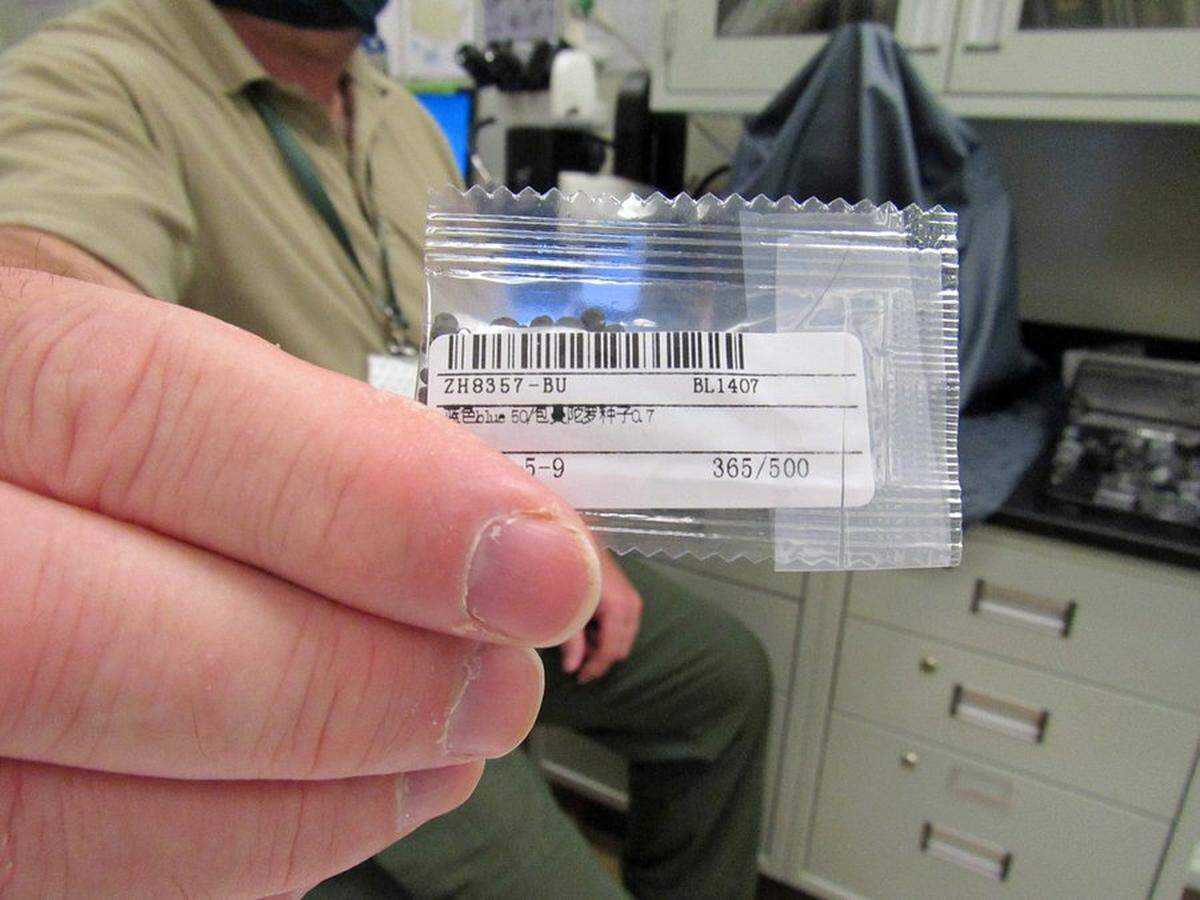
More than 1,000 residents still had the seeds in their possession when they reported it to the Plant Industry Division, while less than 30 said they’d already destroyed them.
Their methods of destruction included sealing the seeds in a plastic bag and throwing them in the trash, flushing them down the toilet and burning them, according to the spreadsheet.
One person “poured gas and set fire to the first batch,” officials said.
Less than 500 of the nearly 1,500 people who reported receiving the packets said they had previously ordered seeds from various online retailers earlier this year.
The number of seed packets received per person ranged from zero to 30, with one person reporting they ordered craft foam from eBay and found the seeds inside. Several others said they received unsolicited packages containing jewelry, gloves and teeth whitening gel — but not seeds.
One person in North Carolina told officials they didn’t receive any seeds but did get “a suspicious package from China with a spoon and a fork in it,” VICE reported.
“My concerns are that it is full of Covid,” the person said, added according to VICE.
How it started
Residents in Washington, Utah and Virginia were the first to report receiving mystery seed packets postmarked from China, according to McClatchy News.
Washington officials said “the seeds are sent in packages usually stating that the contents are jewelry.”
Within a few days, dozens of people in at least 27 states had reported receiving similar packages — including California, Mississippi, Idaho and North Carolina, McClatchy News reported.
The packages were sealed, and officials said they should not be opened but reported to the U.S. Department of Agriculture for agricultural smuggling.
The USDA has since identified some of the seeds in a report published last month.
They include mustard and cabbage, herbs such as mint, sage, lavender and rosemary and morning glory, roses and hibiscus flowers, according to McClatchy News.
Wilson said officials in North Carolina haven’t yet identified the seeds received here but “will at a later date.”