
Seabirds won’t come to you. Head off the NC coast to get a glimpse of the elusive birds
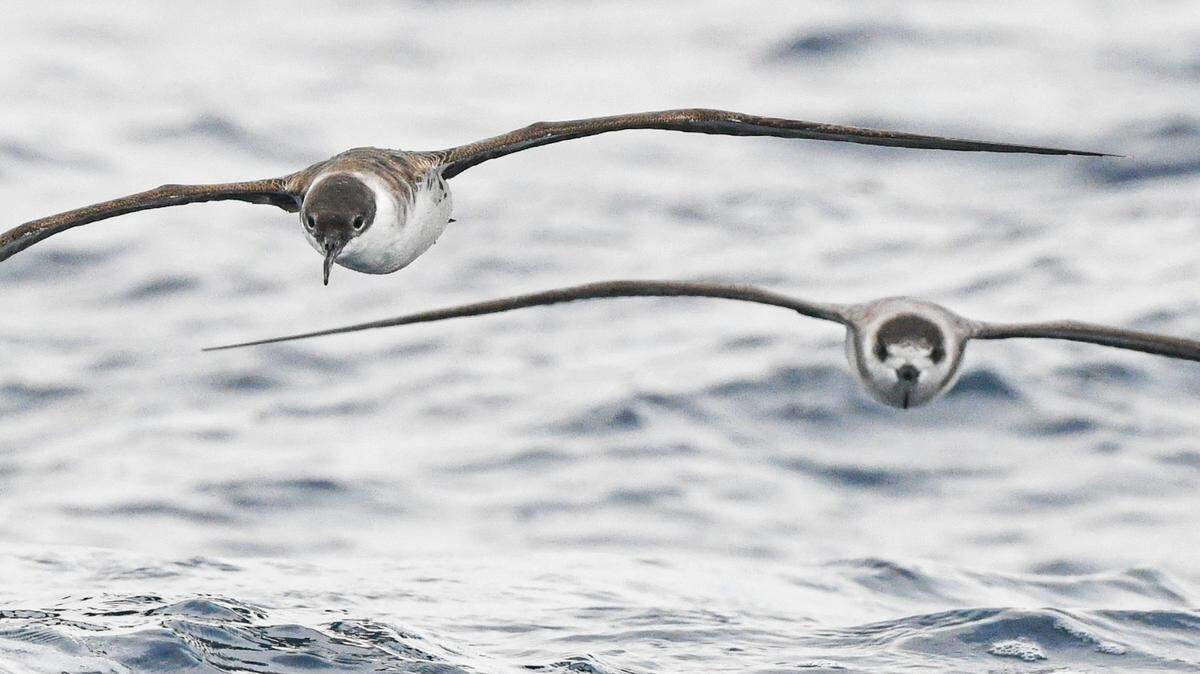
The first Black-capped Petrel appeared nearly two hours into the trip, well off the bow of the boat, zipping along the ocean’s surface like a missile. It was mostly a blur, but it gave us a taste of what was to come.
By the end of that day, over the course of a 12-hour boat trip off the Outer Banks, we’d seen hundreds of elusive seabirds, among the most impressive and endangered species on Earth. They live on the open sea, weathering harsh elements, rarely coming to shore, flying hundreds of miles at a time and feeding on fish.
Seabirds won’t come to you. If you want to see petrels, shearwaters, skuas and jaegers, you have to go to them.
It so happens that one of the best places in the U.S. to do that is off the coast of North Carolina, where the Outer Banks jut far out into the ocean at the same time as the Gulf Stream veers close to land. Here, the warm Gulf Stream that attracts seabirds comes close enough to reach in a single day’s boat trip.
We set off from Hatteras before dawn on a clear fall Saturday aboard the Stormy Petrel II, a 61-foot fishing boat piloted by Brian Patteson. The captain has done as much good for seabirds along the Atlantic Coast as anyone. Every year, he makes 40 to 50 trips to the Gulf Stream, ferrying hundreds of visitors out to sea for a precious look at the birds collectively called pelagics.
On every trip, Patteson and his crew count the birds and submit their data to Cornell Lab of Ornithology’s eBird list, which helps scientists track the health of the species. Patteson and his assistant, Kate Sutherland, also compile their own data over time to help them analyze how the pelagic populations are faring in the long run.
The most popular seabird trips are in the spring, when the birds are most plentiful. There are also a limited number of winter trips, starting in February, with just a few slots still open.
Birds take to the air
Our first seabirds of that day appeared as soon as we moved into the Gulf Stream. That’s where the ocean changes color to a translucent dark blue — not far from where the Continental shelf falls off from the shallows of the coast. This phenomenon produces the nutrient-rich water full of fish and squid the seabirds live on.
Right on cue, we went from occasional glimpses to entire flocks. When we finally reached the edge of the Continental shelf about 30 miles offshore, where the depth falls off to as much as 6,000 feet, scores of mostly shearwaters and petrels covered the surface of the ocean in places.
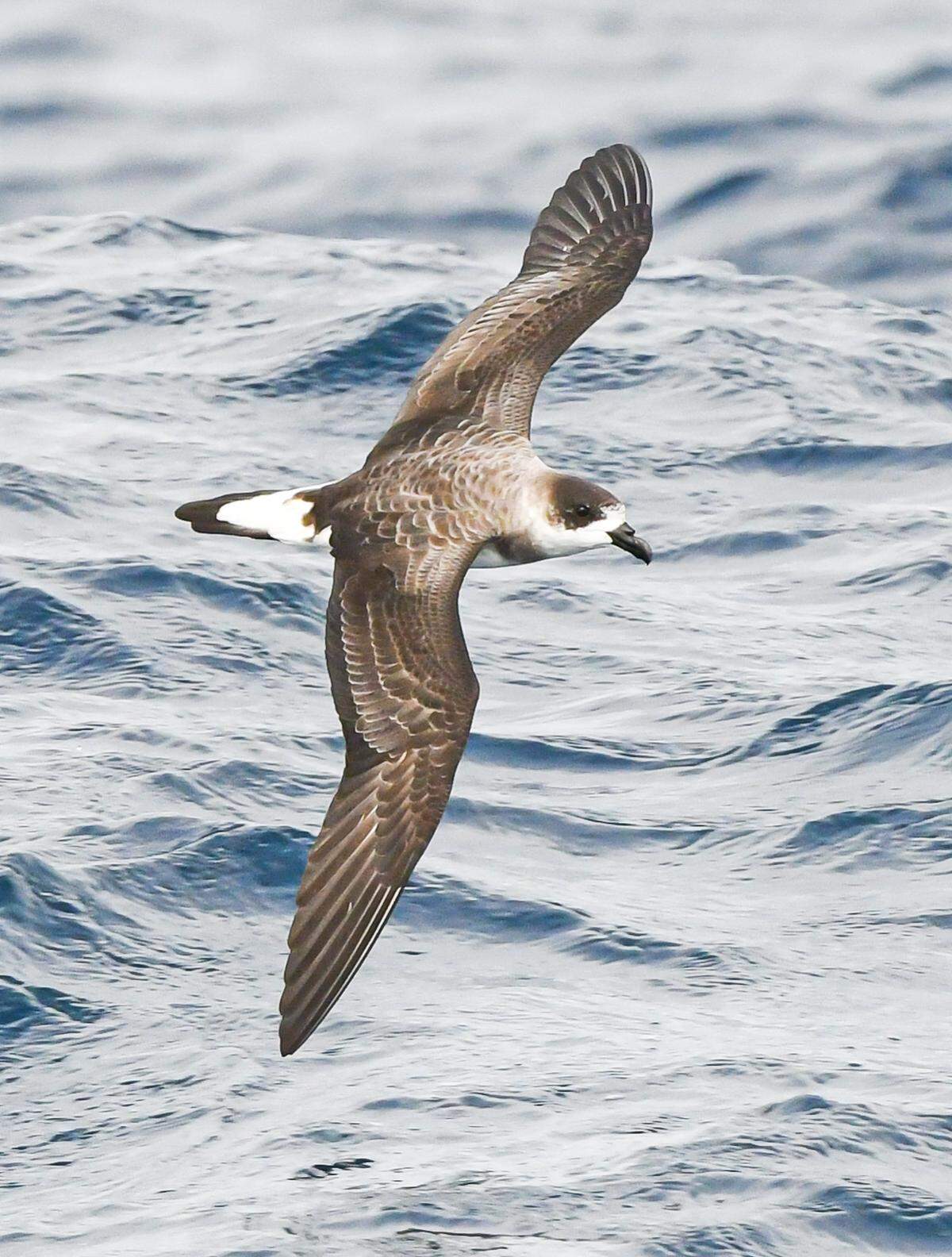
The birds take off from the water with their legs peddling furiously, as if they’re running on the surface. Once in the air, they turn into acrobats, rising and falling with the wind, swooping down to snag food from the surface. Mostly a blurry black and white from a distance, their plumage is actually a complex weave of patterns and colors.
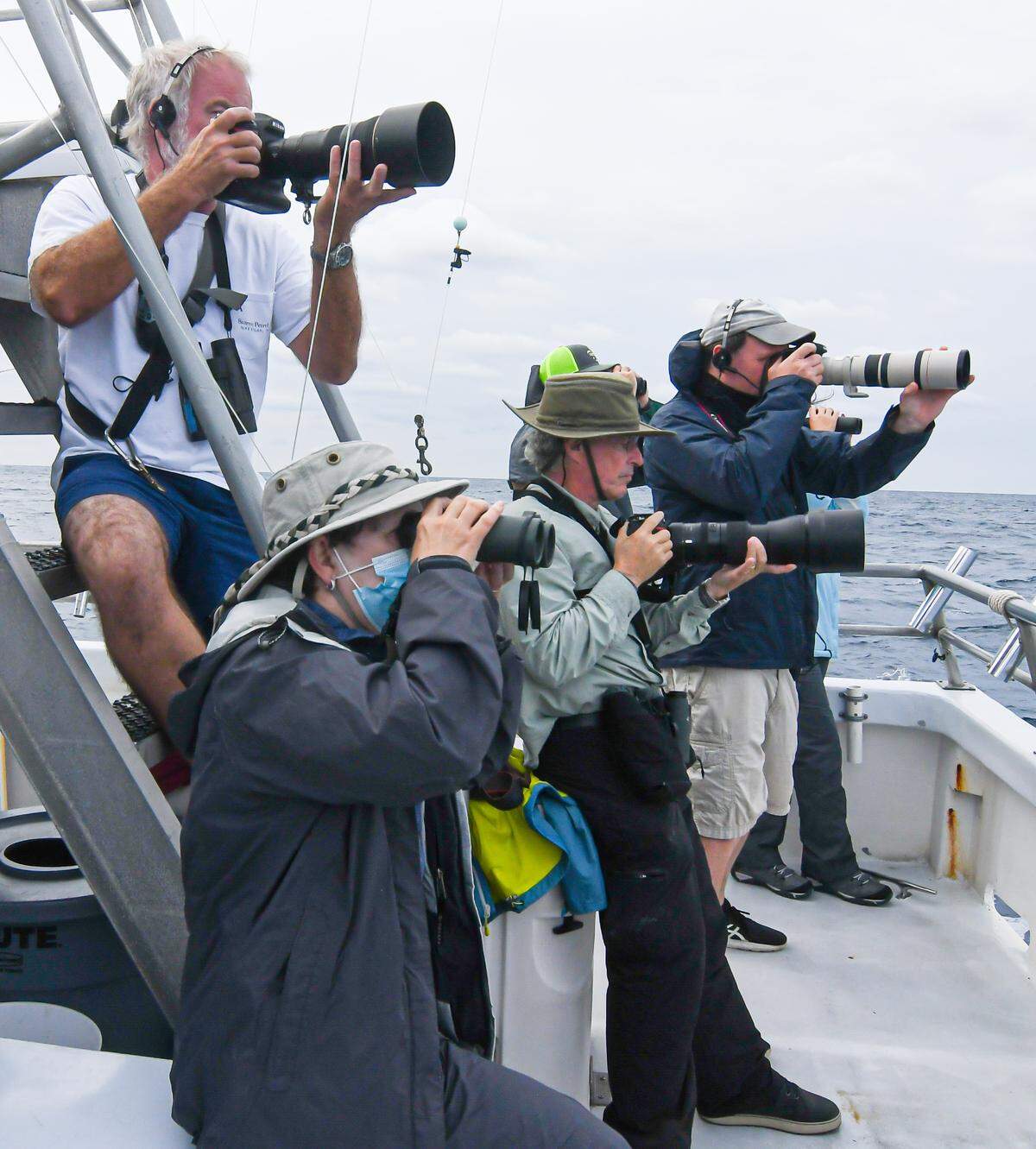
These are sights that draw bird lovers from all over the country as well as overseas. Though the birds are wary of the boat and the two dozen humans aboard, they are so busy patrolling the ocean that they put up with the intrusion.
As we approached a flock, Sutherland poured a stream of fish oil behind the boat and scattered bits of food on the surface by releasing ropes attached to wire baskets full of chopped fish. This is called a chum line, and these tasty morsels coax the birds even closer as the boat lumbers slowly through the water.
Endangered birds
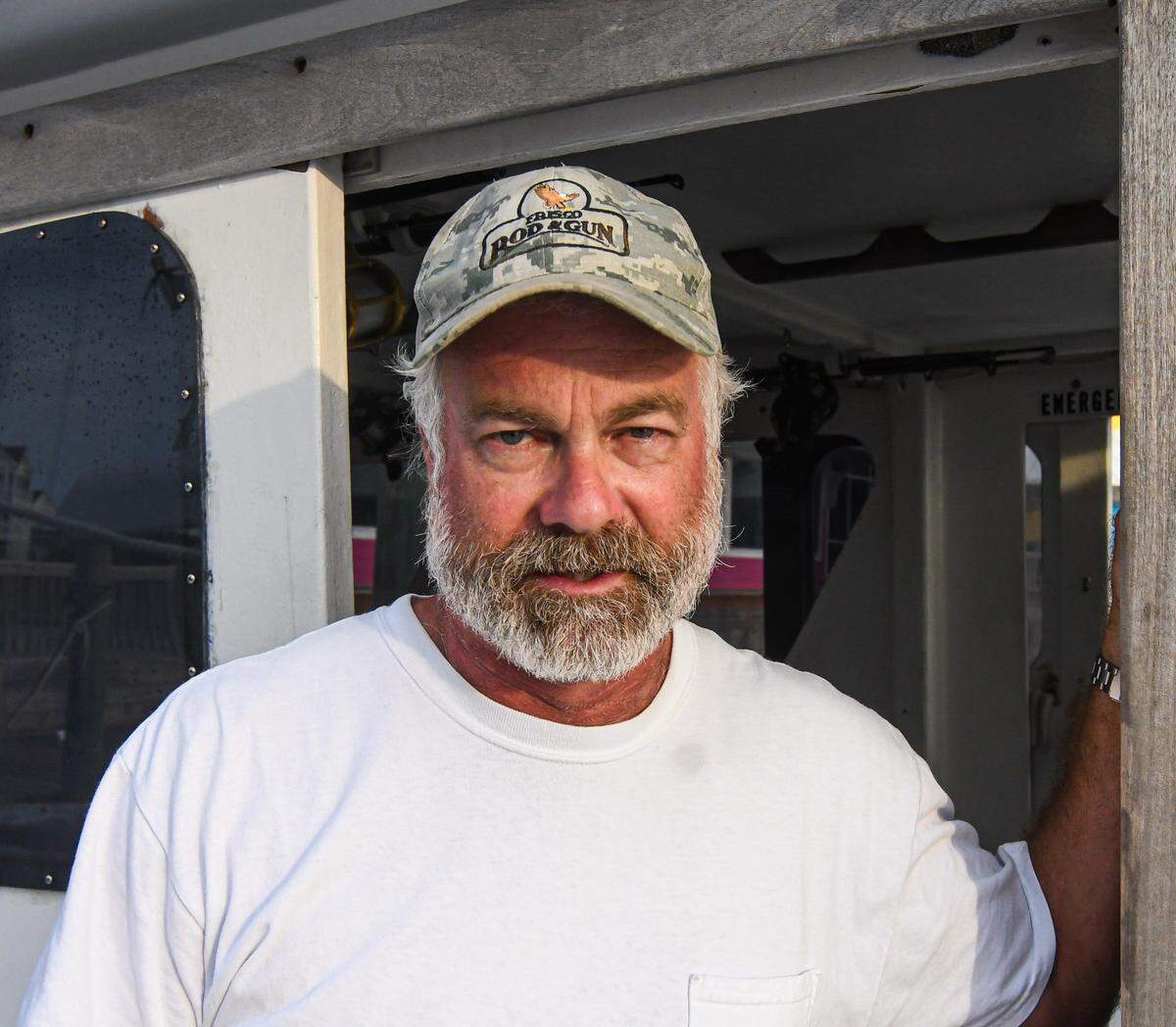
Patteson looks the part of the proverbial bearded sea captain with his deep tan and quiet intensity. Patteson has been chasing birds since he was a teenager, and even at 52, he’s still just as fascinated with them. When we found ourselves in the midst of flocks, he’d turn the helm over to a crew hand and join the rest of us in chasing around the boat for close views and sharp photos.
“It’s pretty amazing when you compare them to land birds,’’ he said later. “When you think about what they have to go through, the weather they have to deal with at sea. These birds live a long time in a pretty hostile environment.’’
While the birds can indeed live decades, part of what’s drawing attention to them is that they’re gradually disappearing.
Ocean water quality is deteriorating, while the Caribbean islands, where seabirds migrate for breeding, are being carved up for housing, farms and timber harvesting. These threats have helped make seabird species the most threatened groups of birds in the world.
The Black-capped Petrel is one of the most endangered of them. Thought to be extinct until it was rediscovered in 1963, an estimated 1,000 pairs remain today. They are spread along the Atlantic coast, and in breeding season — the one time they come to land — on hidden nesting sites in the mountains of Haiti and the Dominican Republic.
“I’m not seeing the parade of Black-capped Petrels that I used to see,’’ Patteson said. “They’ve definitely declined.”
Unlike troubled species on land, seabirds are difficult to research beyond simply counting each one. It’s hard just to see them, much less conduct the kind of closeup study researchers are doing with other birds.
Patteson’s very detailed website lists more than 30 species it’s possible to see off the Carolina coast, depending on the season. Worldwide, however, there are more than 350 species of seabirds, many of which are facing the same pressures as these birds off the Outer Banks. As seabird populations have decreased, early efforts to protect them have begun.
A group of organizations and agencies, including the American Bird Conservancy and the U.S. Geological Survey, have started a study of the Black-capped Petrel. With the help of Patteson and his crew, they’ve attached tracking devices to the birds and are trying to learn about their breeding routines.
Still, the work is in the early stages. “There’s a lot we don’t know,’’ Patteson said.
The one thing they do know is that public support for protecting birds is one of the keys to saving them. That support isn’t easy to generate for birds that people don’t see.
In that sense, the sea-birding trips are one of the best things that can be done for the pelagic species.
“A huge part of this,’’ said Sutherland, “is that the more people know about seabirds, the more people will care about them, and the more conservation there might be.’’
How to see seabirds off NC coast
Here’s what you need to know about going on a pelagic trip from Hatteras:
▪ The website for Captain Patteson’s company, called Seabirding, is detailed, incredibly helpful and mandatory reading. You’re embarking on a true adventure at sea, taking off from the far edge of a relatively remote island. Start reading all of the articles and instructions well ahead of time at patteson.com.
▪ If you want to go, reserve a spot on the boat well in advance. Just a few slots are still open for the winter trips. About 25 spots are normally available for each of the spring trips, but just 14 spots with COVID-19 restrictions. Due to the pandemic’s forced cancellations last spring, those passengers are now first in line for future trips. You can sign up for notifications at Patteson’s website for winter trips and the announcement of the 2021 spring and fall schedule.
▪ Cost is $177 per person, and you can request a reservation on the website. You’ll get an email letting you know if space is available, and then payment is accepted online via credit card or by a mailed check.
▪ The spring and summer trips are just one-day commitments, but winter and fall reservations are a two-day commitment. If weather conditions aren’t safe for sea travel the first day, the trip goes the following day. If both days are a no-go, you get a full refund.
▪ Plan to arrive for the trip the day before to meet the boat at dawn. Eat a hearty breakfast to forestall seasickness. The Seabirding website lists multiple lodging options.
▪ A final bit of advice: While whales and other marine life are sometimes spotted, this is a trip catering specifically to people who are intensely interested in birds. Think hard before inviting friends or family members who don’t fit this profile. For birders, though, this is a trip of a lifetime.