
Two NC inmates fought until one was dead. Did jailers try to stop it?
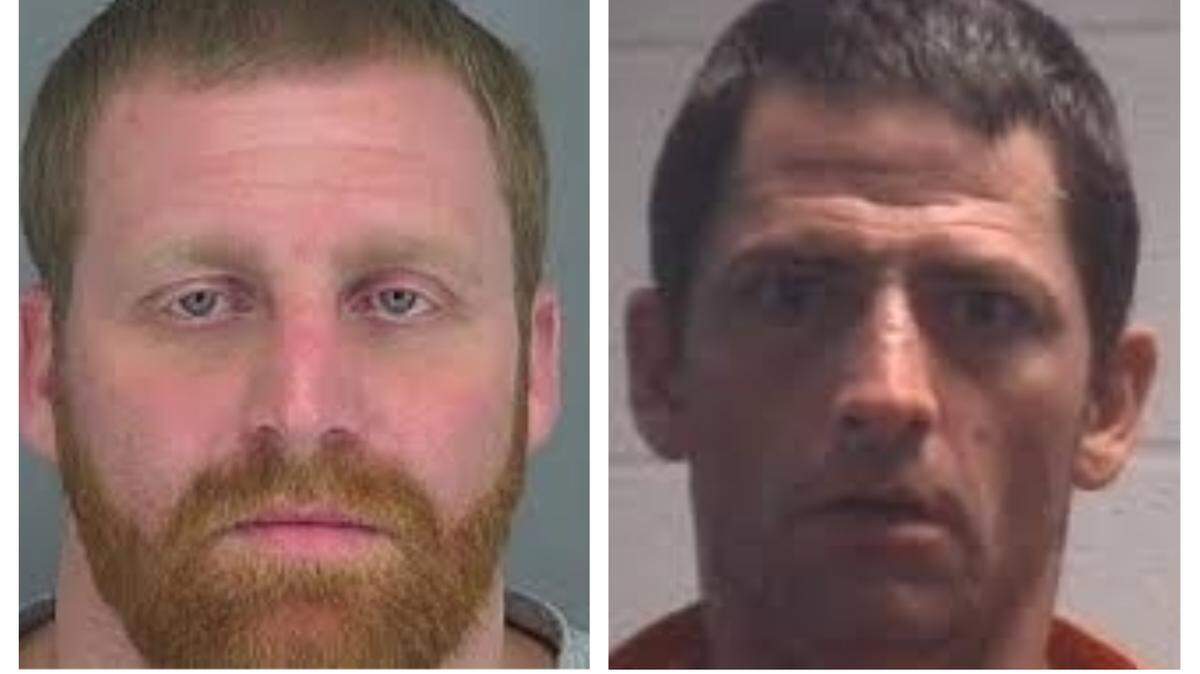
The family of an inmate killed in the Cleveland County jail nearly two years ago claims in a lawsuit that jailers knowingly placed two violent, mentally unstable men in a cell and ignored them as they battled until one was dead.
In a lawsuit filed this month, the family of Jeffery Todd Dunn, 37, said he and the man accused of killing him, Kenneth Eric Darby, 40, each should have been held in isolation with increased monitoring after they were arrested in separate incidents and booked into the jail.
They were placed in a cell that had a badly cracked window no one could see into, a state health department investigation previously found. But the lawsuit also claims to have drawn other alarming details of staff negligence from the State Bureau of Investigation’s probe of Dunn’s death on April 1, 2019. An autopsy said he had been asphyxiated and beaten about the head. Darby has been charged with murder.
“As I read the SBI report, the fact that they could not see into this jail cell without opening the door and put these two prisoners together who by all descriptions were kind of out of control seemed a recipe for disaster,” said Luke Largess, a Charlotte attorney who represents Dunn’s family.
Jeffrey Schwartz is a national expert in the San Francisco Bay area with more than 35 years’ experience in jail safety and security. He said the claims made in the lawsuit, if true, mark the first time he’s ever seen jailers knowingly place two dangerous inmates in a cell and then fail to respond when they fought.
“This is sort of setting up a gladiators school, and then walking away from it,” Schwartz said.
The lawsuit names Cleveland County Sheriff Alan Norman and seven of his employees as being responsible for Dunn’s death. They are David Acuff, Jasmine Dye, Roberto Marcial, Kayleigh Yarger, Phillip Dendy, Wayne McCraw and Richard Palmer.
The News & Observer requested personnel information for the seven. The information shows that Acuff, 55, a detention corporal, was dismissed April 15, 2020. Dye, 23, a detention officer, was dismissed June 2, 2019. Dendy, 55, had been promoted to deputy sheriff for detention two months after Dunn’s death, but was subsequently terminated on Jan. 16. The sheriff provided no explanation for the dismissals. Palmer, 31, a detention officer, resigned Jan. 15, 2020.
State law requires a dismissal letter that is public record when state or local employees are fired. Elliot Engstrom, a lawyer for Cleveland County, said Norman doesn’t have to provide that letter because his employees serve at his discretion. The personnel law makes no explicit exception for sheriffs’ employees.
The same law gives sheriffs and other public agency heads the discretion to make public the reasons for personnel actions to show they operate with integrity.
Norman did not return a News & Observer reporter’s phone and email messages seeking comment. A captain at the jail declined to provide contact information for the staff. Only one, Phillip Dendy, could be reached by phone. In an interview on Saturday, he said he opened the door to the cell and checked on the two men minutes before Dunn was found dead at about 8 a.m. that day. He said he saw no signs of struggle.
“All I can say is, look at the camera footage at that time, and if you don’t see somebody open that damn door between the hours of 7:40 and 8 o’clock or whatever, if you don’t see somebody open that damn door, then you know I’m a liar and I need my ass kicked,” Dendy said.
SBI investigates
SBI spokeswoman Anjanette Grube said in an email that, at the Cleveland County Sheriff’s Office’s request, the bureau investigated whether the sheriff’s staff committed any crimes. The SBI completed its investigation July 24, 2019, she said.
SBI reports are not typically public records. Grube said she could not comment on the findings or release the report.
She referred questions to District Attorney Michael Miller. He did not respond to a reporter’s emailed questions about the SBI’s investigation or to a request to release the report. He said in an email the court case against Darby is pending.
Prosecutors will sometimes allow attorneys representing families of inmates who have died in county jails to review SBI investigations after they’ve closed. The prosecutors do not allow the attorneys to make copies. Largess, the lawyer for Dunn’s family, said he took notes from the SBI report on Dunn’s death.
Cleveland County Attorney Tim Moore and Deputy County Attorney Martha Thompson did not respond to an emailed request for comment. Moore, a Republican, is also speaker of the state House.
The N&O first reported on Dunn’s death last year, when state health records showed jail staff had failed to check on him at least twice an hour as required under state regulations. The state health department investigation found jailers had checked on Dunn and Darby only one time in the two hours leading up to Dunn being discovered dead.
In an interview last May after the N&O report, Dunn’s mother told the newspaper her son had struggled with drugs much of his life. Dunn was her only child, and he had no children.
Dunn worked construction jobs, said his mother, Freida Winters, and tried to straighten out his life, but was back using drugs when he died.
“That was his downfall,” she said. “He spent probably over half of his life in prison doing drugs and stuff. I mean he wasn’t a saint, but he didn’t deserve that.”
What the lawsuit says
The lawsuit depicts a harrowing sequence of events that culminated in Dunn’s death:
Dunn had been arrested 11 days before his death, on March 21, following a domestic dispute with his mother. At that time, a Cleveland County jail nurse found Dunn to be intoxicated and a suicide risk. A magistrate later released him and told him to stay away from his mother.
About a week later, sheriff’s deputies in Cherokee County, S.C., arrested him on a disorderly conduct charge. He was released the next day, March 31, and called EMS from outside the jail. He was overwhelmed mentally and needed help, he told them. The EMS took him to a nearby medical center for treatment.
Winters picked him up. On the drive home, Dunn became paranoid, saying people were after him. At her home, his paranoia continued. A neighbor observed him in his mother’s yard, swinging and cursing at “imaginary enemies.”
The neighbor called Cleveland County sheriff’s deputies. When they arrived, Winters asked them to remove her son from the home. They suggested dropping him across the state line if he couldn’t find a way to leave, but they discovered he had violated a restraining order and arrested him.
Despite Dunn’s known history of drug abuse and violent behavior, and being identified as a suicide risk days earlier, McCraw, a detention corporal, didn’t view Dunn as a high-risk inmate needing increased monitoring, the lawsuit says. McCraw placed Dunn in holding cell D-108 at 6:09 p.m. with another inmate, Matthew Boheler.
Six hours later, a Shelby police officer noticed Darby in a parking lot “acting strangely and reportedly moving erratically.” The officer searched Darby and found a syringe that tested positive for fentanyl and arrested Darby. The officer said Darby had admitted to using methamphetamine.
Acuff and Palmer booked Darby into the jail. Acuff wrote in a report that Darby was babbling and visibly intoxicated with dilated pupils. Palmer reported that Darby was extremely hostile, the lawsuit says.
Darby resisted being strip-searched until Palmer pointed a Taser at him. Darby later claimed to have been stunned with a Taser. Palmer disputed it, but a Taser barb was found in Darby’s hair the next morning, the lawsuit says.
Acuff and Palmer found methamphetamine in Darby’s rectum. Acuff initially put Darby alone in a holding cell because of his agitated behavior, the lawsuit says. But he didn’t classify him as a high-risk detainee requiring increased monitoring in isolation.
Meanwhile, back in holding cell D-108, Boheler became fearful of Dunn. Dye, Acuff and two other jailers responded to a radio call to come to the holding cell. They removed him.
Dye later reported Boheler appeared to be having a panic attack. He had tearfully told Dye that Dunn had screamed at him and threatened to kill him. He believed Dunn was high on something. Acuff reported Boheler was in tears, and Dunn’s face was red and “he looked angry,” the lawsuit says.
“Though Acuff would later report that he knew Dunn’s history of violence and drug abuse from booking him on prior occasions, he still did not classify him for special observation,” the lawsuit says. “Instead, at 4:40 a.m., either cynically or at least heedlessly, Acuff decided to put his two troubled, unstable and violent detainees together.”
Once together inside, Darby repeatedly hit the intercom. He wanted to be removed, threatening to kill Dunn, the lawsuit says. He got no response.
“Defendant Dendy was in the control room and later confirmed that he heard the multiple calls on the intercom from D-108 asking for help that included threats to kill, but that he did not respond to them,” the lawsuit says. In the phone interview Saturday, Dendy disputed that claim.
At about 6:30 a.m., Dye and Marcial opened the door for an inmate count. Darby tried unsuccessfully to force his way out of the door. Darby yelled that he wanted to fight the officers. Dunn yelled that he wanted Darby removed. The jailers left the two men in the cell and told Dendy what had happened.
Other nearby inmates then heard shouts for help along with banging noises in the cell. One called for help on the intercom. No one responded, the lawsuit says.
At about 7 a.m., Yarger was on rounds. She couldn’t see into the window and since she was alone, she didn’t open the door to look inside.
An hour later, it was time to take Dunn and Darby to appear in court. An officer opened the cell. He found Dunn on the floor “covered head to toe in blood.” Dunn was pronounced dead at the jail a half-hour later.
Darby consented to a videotaped interview that day. He described hitting the intercom seeking to be removed but getting no response. He said he hit Dunn multiple times in the back of the head, and then choked him until he stopped breathing. He said he had been using meth for “three or four straight days” before his arrest, the lawsuit says.
Three days later, on April 4, the jail replaced the shattered window.
What a jailer says
In the interview with The News & Observer, Dendy disputes several of the key allegations in the lawsuit. He said he only received one intercom call from Darby, and he does not recall Darby threatening to kill Dunn. Dendy cautioned during the telephone interview that he might not remember everything accurately from an event from nearly two years ago, and that he didn’t have statements he gave back then to refresh his memory.
Dendy said he never heard any inmates contact him while he was in the control room to report that Darby or Dunn needed help. But he said he listened in on Darby and Dunn over the intercom at one point and heard them in an “agitated state.”
That’s when he said he went to the cell to check on Darby and Dunn. He said that was a risk because of the cracked and clouded window. As a result, the detention officers had an unwritten rule to open that cell with backup in case an inmate tried to jump them.
“So devil be damned, I opened the door and there’s Darby all in my face, waving paperwork,” Dendy said.
The lights were out in the cells at that point, so Dendy could not see Dunn, but he heard him use an expletive.
Dendy told them they both would be in court soon, and Darby’s question about his arrest paperwork would be answered. Dendy closed the door. He said he saw no blood on Darby’s orange jumpsuit.
Later, when the officer found Dunn on the floor, Dendy said he rushed out of the control room back to the cell. His face had taken several blows, and he showed no signs of life. Dendy said he and another officer performed CPR before EMS arrived, but no one could revive Dunn.
A short time later as a nurse drew a blood sample from Darby, Dendy described Darby acting as if he had no idea what had happened.
“He couldn’t tell you if he was Mr. Potato Head,” Dendy said. “I mean, he was just that screwed up.”
Dendy said the sheriff’s office fired him for taking a patrol car assigned to him out of the county to a place that he was staying temporarily. He said he lied about how long he had been staying there.
“I’m no longer associated with that facility, but I’m not going to sit there and throw shade at them and say they dropped the ball and they caused this or whatever,” Dendy said. “And if you get two people who — it just happens, man. Hurricanes happen without warning. It just happens.”
Self-defense claim?
The sequence of events leading to Dunn’s death, as described in the lawsuit, raises another question: Were authorities right to charge Darby with murder?
Schwartz, the jail security expert, said based on the information in the lawsuit, Darby has a self-defense claim.
The evidence as described in the lawsuit points to an ongoing battle between the two men, Schwartz said. Darby had repeatedly asked to be removed from the cell — calls that brought no response according to the lawsuit, though Dendy disputed that in the interview. Darby was placed in a cell with a man who had previously threatened another inmate.
“So, I think they may have ruined their own murder case,” Schwartz said.
Sarah Ziomek, Darby’s attorney, did not respond to a reporter’s request to talk about the case.
Dunn was among a record 46 inmates who died in North Carolina’s jails in 2019 or in a hospital after becoming ill or injured behind bars, state records show. In at least 19 of those deaths — or 41% — state health department inspectors tasked with making sure jails are safe found supervision failures.
That year also included another death police say was caused by another inmate, in the Craven County jail. State health officials also found a lack of supervision.
In July 2020, Forsyth County District Attorney Jim O’Neill identified a third wrongful death from 2019.
He charged five sheriff’s deputies and a nurse with felony involuntary manslaughter in the death of John Neville. The inmate had been put in a prone position on the floor of a cell with his hands and legs cuffed in a position that made it difficult to breathe. The jail had reported to state health officials that Neville died out of custody, even though the events that caused him to die took place in the jail.
In 2019, Cleveland County paid $303,000 to settle another death in the jail. Archie McNeilly Jr., 40, died of renal failure in 2015. He had gone unchecked at one point for more than two hours. Largess represented his family in that case.