
Stinging fish invasion along East Coast may have begun off North Carolina, USGS says
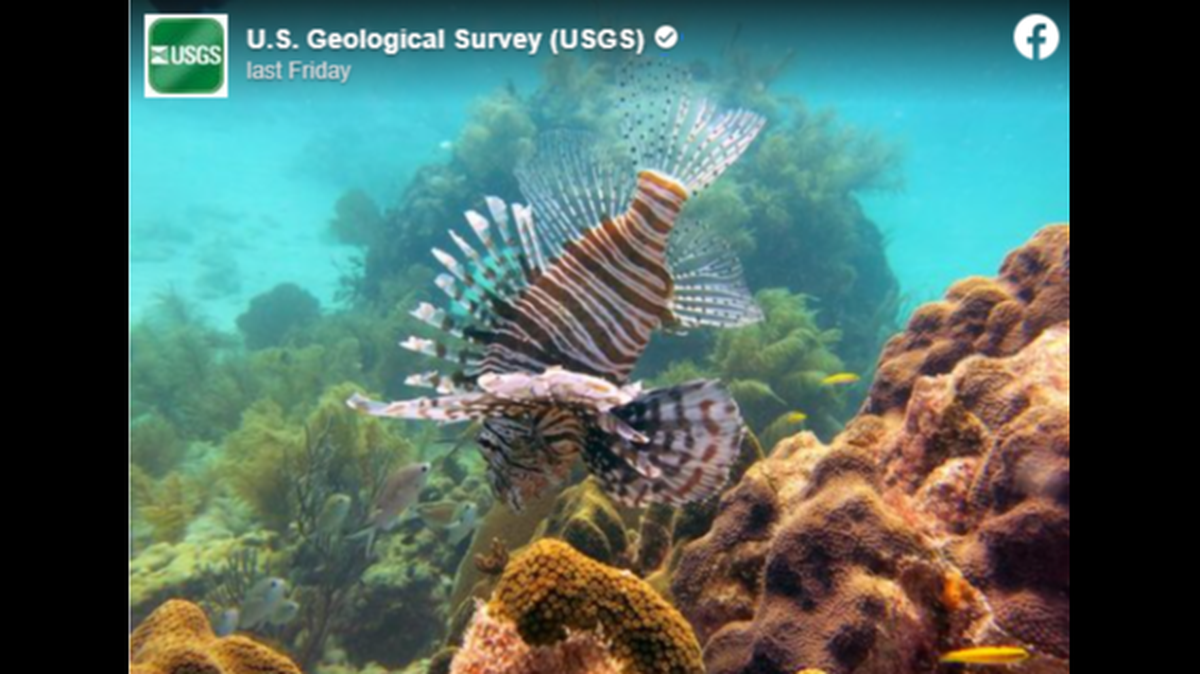
North Carolina may owe Florida an apology.
The lionfish invasion plaguing waters off Florida may have begun in North Carolina, according to a new study from the U.S. Geological Survey.
Lionfish are native to the Pacific Ocean, and experts have long maintained someone in Florida likely unleashed the stinging species when they emptied an aquarium in open water.
However, it appears that may have actually happened in North Carolina, the USGS wrote in a Facebook post.
It matters because the species of “ambush predators” have no natural enemies in the region and bear venomous spines that require victims to seek medication attention, according to N.C. Department of Environmental Quality.
“Lionfish were first reported off the Florida coast in 1985, leading many scientists and environmental managers to believe that Florida was the invasive fish’s only introduction point before it rapidly spread into the western North Atlantic, Caribbean and Gulf of Mexico,” the USGS said.
“A new ... study suggests the invasive species may have been introduced in the Bahamas or North Carolina, or the spiny invader may have been introduced at multiple locations, including the Bahamas, North Carolina and/or Florida.”
The big clue, experts say, is genetic. Scientists collected nearly 1,800 lionfish along the East Coast and checked for the same set of DNA variations. It turned out the Florida lionfish did not share the same DNA variation as those found in the Bahamas, North Carolina, and Bermuda.
“The results of this study support alternative invasion scenarios, in which Florida was colonized as a secondary introduction site or by individuals from the Northern Region,” the study says.
Experts aren’t exactly sure when the red lionfish managed to get from the Pacific Ocean to North Carolina, but they were first reported off the state in 2000, UNC-TV reported.
It is believed “they were most likely released into the ocean by people emptying their home aquarium,” according to UNC-TV.
“There is also increasing concern among fishery scientists that lionfish, having no natural enemies, may adversely impact natural fish populations,” N.C. Environmental Quality reports.
“In addition, this fish has venomous spines and may pose a danger to divers and anglers alike. NOAA would like to encourage divers and fishermen to be extremely cautious and to avoid contact with the venomous spines of the lionfish ... If someone gets stung by the venomous spines ... seek medical attention as soon as possible.”
This story was originally published October 11, 2021 at 8:07 AM.