
‘A fierce advocate for the people.’ Wilmington Journal editor, publisher dies.
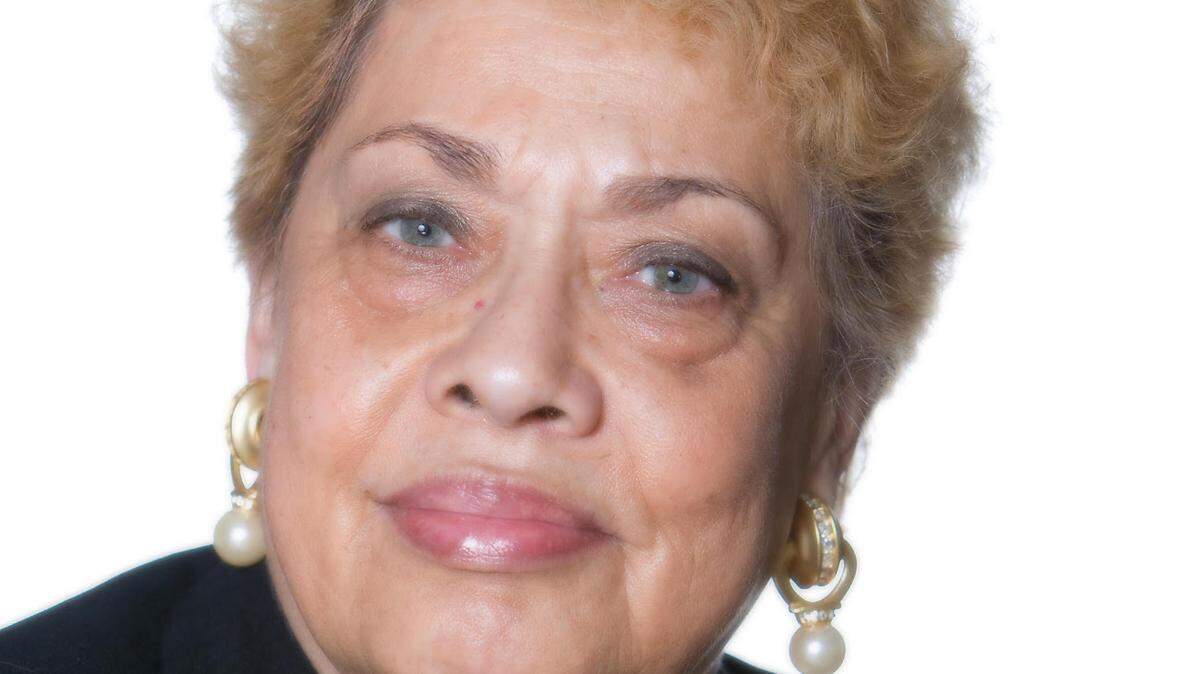
Mary Alice Jervay Thatch, the third-generation editor and publisher of North Carolina’s oldest Black newspaper and a key organizer of the effort to secure pardons for the Wilmington 10, died Tuesday, according to her family.
She was 78.
Thatch had led the Wilmington Journal since 1996 and was president of the NC Black Publishers Association at the time of her death. In 2015, Thatch said, “A family-owned newspaper is really part of the community,”
Under Thatch’s leadership, the Journal held civic leaders accountable while also celebrating the accomplishments of Wilmington’s Black community. Thatch was known for holding those around her to high standards and carried decades of Wilmington history.
“Mary Alice was just a fierce advocate for the people. She touched more lives than people will ever realize,” said Deborah Dicks Maxwell, the longtime president of the New Hanover County NAACP who is now president of the NC NAACP.
“She didn’t advertise what she did,” Maxwell continued. “It wasn’t just the voice of her through that newspaper, it was her voice in the community, her voice for mentoring people like me and countless others.”
The Journal provided the city’s Black residents with key political information, Maxwell said, including making endorsements in local elections. In an obituary, Thatch’s family recalled her push for voter rights and demands that political parties also purchase advertisements in Black media.
R.S. Jervay, Thatch’s grandfather, started The Wilmington Journal in 1927, originally calling it The Cape Fear Journal. Nearly three decades before, the Daily Record, another Black newspaper in Wilmington, had been targeted during the Wilmington Massacre of 1898.
Thomas C. Jervay Sr., Thatch’s father, led the paper through the civil rights movement, including a 1973 firebombing of the newspaper’s offices. That period included the wrongful convictions of the Wilmington 10, nine Black men and one white woman, in connection with the 1971 firebombing of a Wilmington grocery store.
Thatch continued the paper’s support of the Wilmington 10 when she became publisher in 1996. A federal appeals court overturned the Wilmington 10’s convictions in 1980, but the group had never been pardoned.
In editorials, Thatch called on North Carolina’s leaders to clear the Wilmington 10’s names. Thatch was an organizer of the Wilmington Ten Pardons of Innocence Project in 2011 and successfully urged the National Newspaper Publishers Association to join the effort.
More than 150,000 people signed a petition calling on then-Gov. Beverly Perdue to pardon the group. Perdue issued the long-awaited pardons in 2012 just before she left office.
“Mary Alice Thatch was a freedom fighting publisher, journalist, and activist. The Black Press of America extends our sincerest condolences to the family of Mary Alice Jervay Thatch,” Dr. Ben Chavis, a member of the Wilmington 10 who is now president of the National Newspaper Publishers Association, told the NNPA Newswire.
The National Newspaper Publishers Association named Thatch its Publisher of the Year in 2013.
“She was a force,” Maxwell said.
Linda Pearce Thomas, a Wilmington community leader who is the retired CEO of Elderhaus adult day care, recalled Thatch’s endorsement playing a pivotal role in local elections.
“She fought against all that was bad in this town, and there was a lot of it,” Thomas said. “And she fought almost single-handedly to make a difference, to get Black people elected so they would then have the power to make changes.”
Thatch pledged to print what she believed “without fear or favor,” Thomas recalled, and always lived up to that even if it meant losing business by taking a stand or endorsing a given candidate.
“If you ever got on the right side of her, there wasn’t a more loyal friend in the world. If you got on the wrong side of her, you were going to have to climb a mountain to get back,” Thomas said.
The Journal also served a vital community function, cataloging the accomplishments of the city’s Black residents. And Thatch made the paper available for free in many of the area’s Black churches every week.
When Brandon “Bigg B” Hickman was named the local Boys and Girls’ Club’s youth of the year, his godmother found out by reading about it in the Journal.
Hickman, who is now the program director at Wilmington’s Coast 97.3, got his first job working as a paperboy for the Journal. He said Thatch told him he had to commit himself to the position.
“Once you start, you cannot quit,” Hickman recalled Thatch telling him.
Thatch’s own commitment could be found throughout the pages of the Journal, not only during her work on the Wilmington 10 but also in more recent years. Since 2016, for instance, the Journal has put a photo of Ebonee Spears on the front page of every weekly edition. Spears disappeared in 2016 after trying to make a phone call from the Wilmington Police Department’s lobby.
“She meant a lot to Wilmington,” Hickman said of Thatch. “She continued her father’s legacy by doing some of the most straight-to-the-point editorials about things that were going on in our community, which is what her father did.”
Cash Michaels, a longtime writer for the Journal, remembered Thatch in a Facebook post. Thatch “never took any mess,” Michaels wrote, and was committed to her community.
“She believed in the power of the Black Press. Believed we should be telling our own stories. Believed (in) Black empowerment in all areas. Mary Alice Thatch was a dynamic force of nature,” Michaels wrote.
Like many newspapers, the Journal has faced financial struggles.
The Wilmington StarNews reported earlier this year that a GoFundMe campaign and telethon raised more than $95,000 to help keep the paper’s longtime South Seventh Street headquarters in the family.
“The Journal is a staple,” Hickman said. “It’s the oldest African-American paper in North Carolina and for it to lose its fearless leader is a big hit, but I think the family will continue that legacy just like she did with her father’s legacy.”
Thatch earned her bachelor’s degree from Elizabeth City State University and her master’s degree from UNC-Greensboro. Prior to leading the Wilmington Journal, she worked as a teacher.
Thatch is survived by her husband, Rev. John L. Thatch, and three daughters, Robin Thatch Johnson, Shawn Thatch and Johanna Thatch-Briggs.