
PFAS detected in blood of horses and dogs too near DuPont-built factory in eastern NC
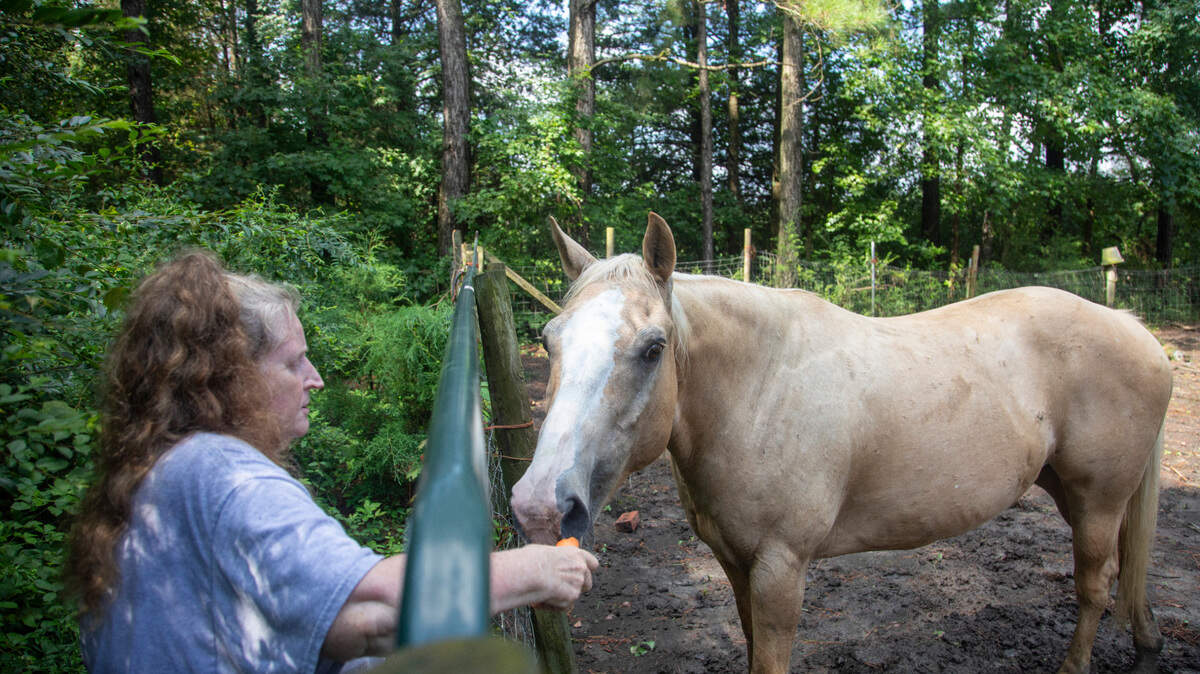
Debra Stewart walked toward a horse paddock with a bag of carrots in hand. Whisper, a splashed chocolate and white paint horse, met her at the fence.
Flies shrilled as they bounced off Whisper’s body and her hooves plopped in ground softened by an overnight rain. But Whisper’s thick, forced cough made the most pronounced sound.
“C’mon, c’mon,” Stewart said, gently encouraging Whisper to step free of mud as she crunched on carrots in between coughs.
Whisper moved to Debra’s property a few miles south of Fayetteville from another county in 2017. After arriving, the horse developed heaves — a common, allergic, respiratory horse disease characterized by chronic cough, nasal discharge, and respiratory difficulty.
That was the same year that news broke that a factory near her Gray’s Creek neighborhood for decades had released a family of Industrial chemicals known as PFAS that polluted river water and drinking wells.
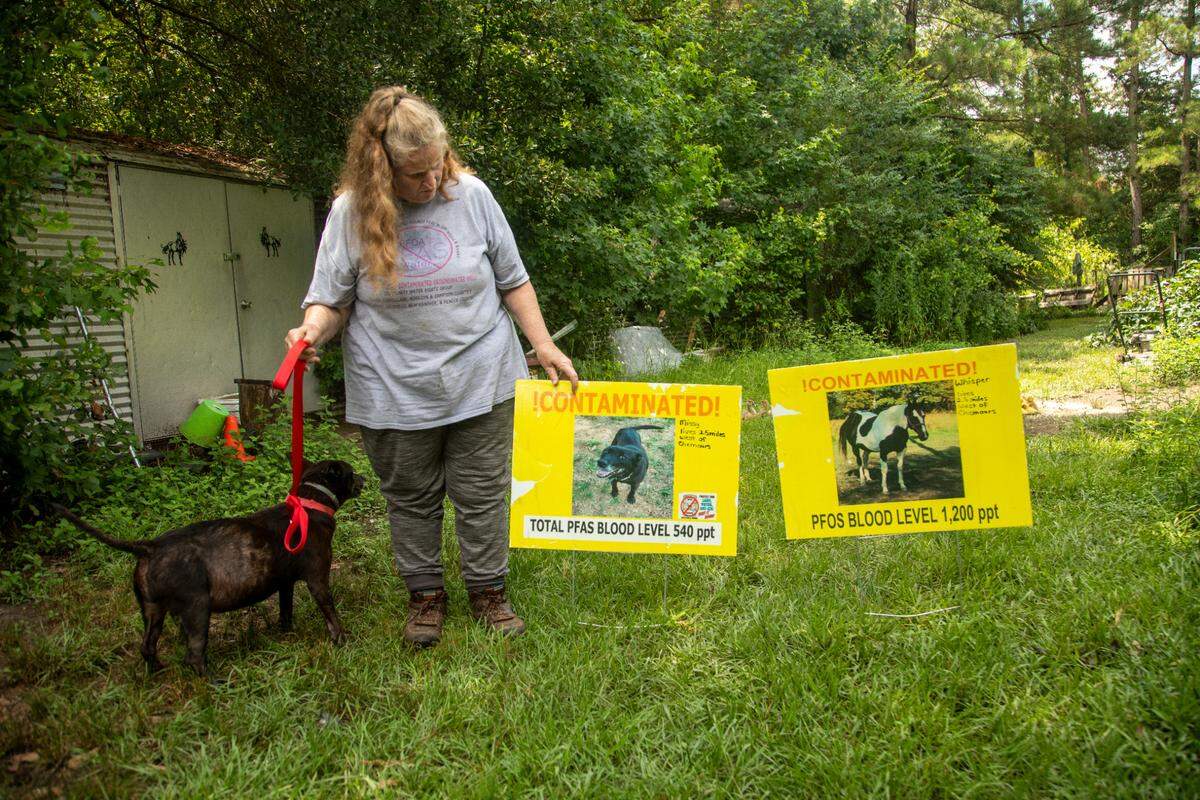
Experts can’t confirm that Whisper’s cough is tied to PFAS exposure on Stewart’s property. But in a recent study prompted by concerned community members, NC State University researchers detected the industrial compounds in dogs and horses, including Whisper, in Gray’s Creek.
The wind-broke horse
Whisper’s condition is most similar to asthma in humans. Horses with it are often described as being “wind-broke.”
Six months after Whisper arrived in Gray’s Creek, Stewart noticed the horse had developed a cough. “She was completely fine before I brought her down to this area,” said Stewart in an interview at her home, “My vet said she had environmental allergies — but her cough is year round.”
Gray’s Creek sits a few miles north of the Fayetteville Works Facility. The NC Department of Environmental Quality has stated the plant may have started releasing PFAS into the environment as early as the 1980s.
In 2017, Stewart started attending local forums about PFAS polluting the Cape Fear River area. She was concerned that animals, as well as people, were exposed and raised that alarm to state regulators, Cumberland County commissioners and staff with Chemours, which now operates the factory.
In 2018, Stewart had to euthanize a pig named Wilbur after he developed a massive testicular tumor. Like Whisper, Wilbur drank well water contaminated with PFAS on Stewart’s property.
Mike Watters, a local advocate pushing for protections from pollution released by Fayetteville Works Facility, introduced Stewart to Scott Belcher, an N.C. State environmental science professor.
Belcher and his team had detected PFAS in the blood of many animal species in the Cape Fear River Basin. Dogs and horses were of particular interest because they share environments with people, including drinking water sources.
Something in the water
PFAS are tough, human-made compounds that can accumulate in people’s bodies. Some have been linked to health problems, from decreased fertility in women and developmental delays in children to behavioral changes and increased cholesterol levels, according to the state Department of Health and Human Services.
When researchers collected blood samples from 1,020 people in the Cape Fear River Basin from 2020 to 2021, they detected four types of PFAS compounds in nearly every person. But two types recorded in people living near or downstream of the Chemours factory were distinctive, according to researchers. They were either produced at or a byproduct of what was produced at the factory.
Belcher’s previous studies revealed elevated levels of contaminants in fish and alligators in the Cape Fear River Basin when compared to the same animals in different regions of the state.
In Gray’s Creek, Belcher’s team analyzed the blood of 31 dogs and 32 horses. They detected clear differences in PFAS exposure in animals with different drinking water sources.
Fluoroethers, a type of PFAS associated with Fayetteville Works were found only in dogs given well water. A different suite of chemicals were detected in dogs given bottled water, said Belcher.
Dogs who drank well water had higher concentrations of two PFAS types — PFOS and PFHxS — as compared to dogs given bottled water. These PFAS are known to contaminate the plants and animals near the Cape Fear River watershed, according to the study.
The horses, which all lived outdoors, drank well water and had a lower average concentration of PFAS than dogs.
Belcher and his team found higher total PFAS concentrations in dogs living indoors, which could be due to their contact with tainted water, house dust or PFAS-treated materials, according to the study.
Out of the 20 types of PFAS the researchers were looking for, 12 were found in more than half of the animals. When analyzing the dogs and horses blood, they also saw proteins and other biomarkers associated with changed liver and kidney function — two major biological effects that have been associated with PFAS exposure in people, said Belcher.
PFAS tend to stick to blood proteins, and since a lot of blood flows through the kidneys and liver, they can accumulate in these organs at high levels, presenting the most opportunity to have toxic effects, explained Belcher.
How animals can signal exposure risks in people
The study proves that dogs and horses could signal potential PFAS exposure risks in people and the environment, said Belcher.
The median concentrations of two kinds of PFAS — PFOS and PFHxS — in dogs consuming well water was similar to the concentrations found in children residing in Wilmington, NC, according to the study.
Dogs, who live closer to the ground, could potentially indicate PFAS exposure risks in children and babies, who crawl on the floor and are more sensitive to chemical exposures than adults, said Belcher.
The type of PFAS detected in horses have also been consistently detected in humans and animals in the Cape Fear River Basin, according to the study.
While the researchers can’t make direct correlations between health effects in the Gray’s Creek animals with PFAS contamination, Belcher said they’re coming closer to understanding how much PFAS is in their environment.
This story was originally published July 21, 2023 at 6:00 AM.