
Water temperatures off the NC coast are up, but does it count as a marine heat wave?
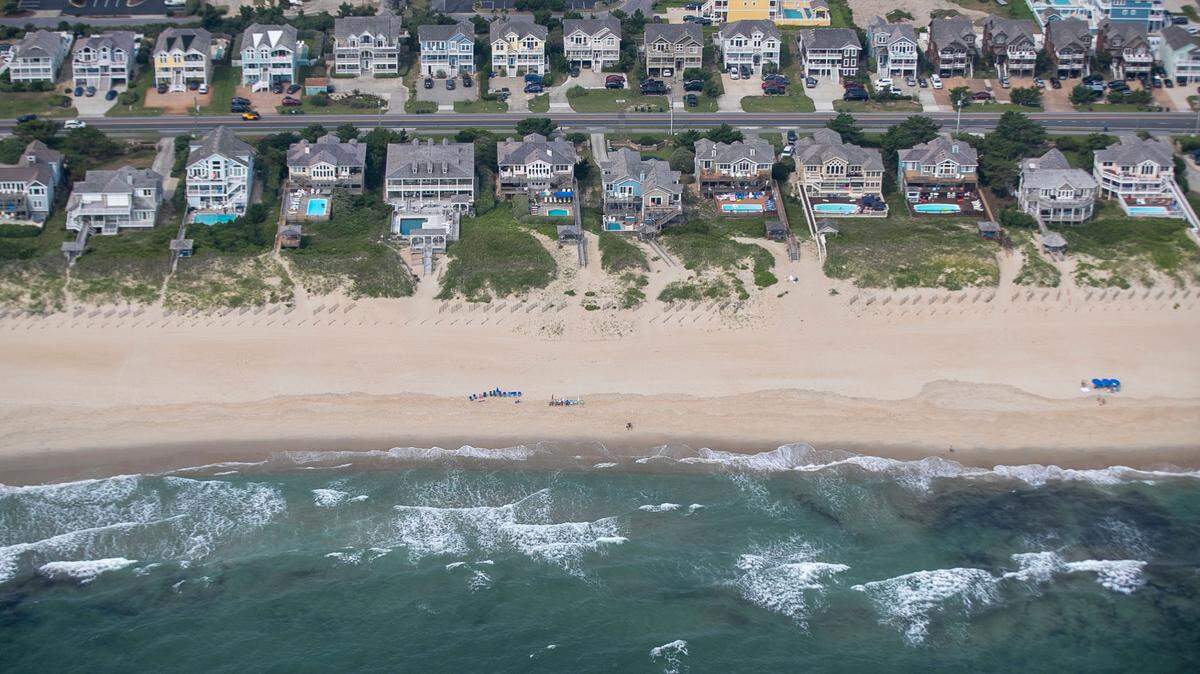
The Atlantic Ocean is warmer than usual off of the Outer Banks this month, but a marine heat wave hasn’t yet set in, a federal oceanographer told The News & Observer Thursday.
As of noon Thursday, this month’s average water temperature from NOAA stations between Beaufort and Duck were all at least 1 degree Fahrenheit above average. Buoys in Wilmington and Wrightsville Beach were either at or below average.
Here’s what that looks like:
- Duck: 73.5 degrees this month, 70.3 July average
- Oregon Inlet Marina: 82 degrees this month, 80.3 degree July average
- USCG Station Hatteras: 82.4 degrees this month, 81.1 degree July average
- Beaufort, Duke Marine Lab: 83.8 degrees this month, 82.5 degree July average
- Wilmington: 83.6 degrees this month, 83.4 degree July average
- Wrightsville Beach: 81.7 degrees this month, 81.9 degree July average
A marine heat wave is defined as an event where a region is experiencing, over a five-day period, the highest 10% of all recorded temperatures. They can be caused by warm air, weak winds or displaced currents, among other events, Sutara Suanda, a University of North Carolina Wilmington coastal physical oceanographer, told The News & Observer.
Dillion Amaya, a research physical scientist with the National Oceanic and Atmospheric Administration, said the warmest waters in the mid-Atlantic region are further off coast, roughly where the Gulf Stream normally flows. That area, Amays said, seems to either feature a warm current that has bobbled east or west or to be taking more water than usual from around the Caribbean islands and moving it northward.
NOAA says there’s a better than even chance of a marine heat wave setting in off of the North Carolina coast by October. As the Gulf Stream moves warm water northward, Amaya said, areas along the Eastern Seaboard could start to warm up.
“To the extent that climate change will make for more extreme conditions and larger swings of atmospheric patterns, there is a strong likelihood that we will have more uncharacteristic ocean patterns with climate change,” Suanda said.
The Earth’s oceans have absorbed as much as 90% of the human-caused warming that has taken place in recent years, according to NASA. When heat enters the ocean, Suanda said, it doesn’t stay in one place.
“That heat in the ocean is not always trapped at the surface. Strong winds can deliver that heat to deeper ocean regions. Ocean currents also can move abnormally warm waters from one location to another,” he said.
A warmer Atlantic means more energy for hurricanes to develop and grow. Hotter-than-usual conditions have already caused Colorado State University researchers to increase the number of hurricanes and major hurricanes they are forecasting this year.
Those warm waters can also affect fish and aquatic plants that live in the ocean. Florida scientists, for example, are worried about fish kills and bleaching of coral reefs with water temperatures in the Keys and around the southeastern corner of the state breaking 91 degrees Fahrenheit this week.
Janet Nye, a fisheries ecologist at UNC Chapel Hill’s Institute of Marine Sciences, studies how climate change affects fish.
When the waters warm, cold-blooded fish respond by becoming more active. They need to eat more, with fish that are usually near the top of the food chain more likely to turn into prey. And they need to find cooler water, if they can..
“There’s different kind of heat waves but the ones that last a long time tend to be from top to bottom so there’s not much that they can do if they try to move deeper,” Nye told The News & Observer.
Until the last five years, Nye said, those effects were largely confined to the northern Atlantic. But warmer temperatures have started to show up further south, including off North Carolina, and Nye thinks the region might be entering its own transitional period.
“This year has been really, really warm and certainly we’ve seen many, many more heat waves in the Atlantic in the last 10 years,” Nye said. “We probably should anticipate that these things are going to keep happening.”
This story was produced with financial support from the Hartfield Foundation and 1Earth Fund, in partnership with Journalism Funding Partners, as part of an independent journalism fellowship program. The N&O maintains full editorial control of the work.
This story was originally published July 14, 2023 at 12:37 PM.