
DEQ warns public to avoid blue-green algal bloom in eastern NC river
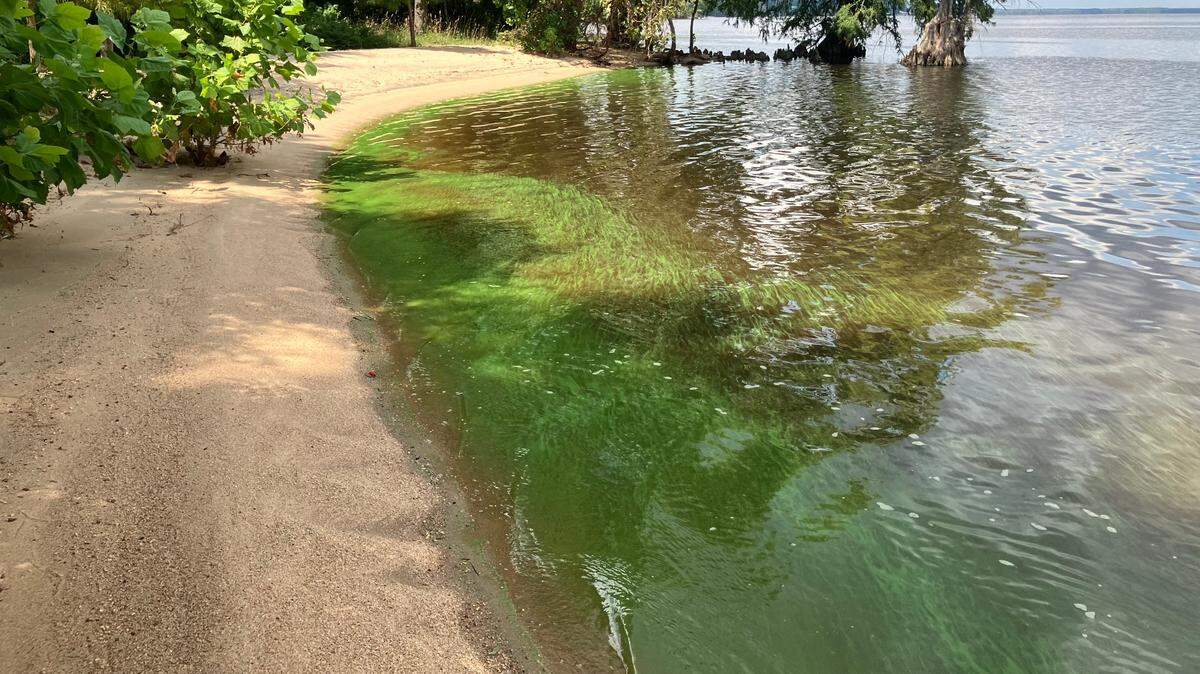
The N.C. Department of Environmental Quality is warning people to stay away from blue or green water in the Chowan River in Bertie and Chowan counties because of a lingering algal bloom.
N.C. Division of Water Resources staff received its first report about the algal bloom on Aug. 16, since receiving reports along about eight miles of the river from the Rockyhock community to south of the U.S. 17 bridge in Edenton.
Samples taken confirmed the bloom contains microcystin, a toxin that can harm humans and pets. Concentrations of the toxin could be above the eight parts per billion public health advisory level, a DEQ release warned.
DWR is testing samples to determine the concentrations of microcystin, Laura Oleniacz, a DWR spokeswoman, wrote in an email. Results are expected next week.
Cyanobacteria, also known as blue-green algae, is naturally found in freshwater. But when conditions become hot and dry or excess nutrients like nitrogen and phosphorous are discharged, the bacteria can multiply rapidly.
That’s when a harmful algal bloom can develop.
The Chowan River has struggled with blue-green algae blooms in recent years. Last July, a different bloom lasted for about a week in a similar span of the river. Algal blooms are capable of moving with wind and waves, and algae can accumulate in shallow water along river banks.
While no human health effects have been reported from this algal bloom, DEQ’s advice is to keep children and pets away from water that appears blue or green. Algal blooms that contain cyanobacteria typically appear bright green, but the color can change to a milky blue as the bloom starts to decay.
DEQ also recommends:
- Don’t touch large mats of algae.
- Don’t touch or cook any dead fish that might be near the bloom.
- Wash any part of yourself that touches the algae.
- Use clean water to rinse off pets that may come into contact with the algae.
- Immediately seek medical attention if your child appears ill after being in water that contains a bloom.
- Immediately seek veterinary attention if your pet stumbles, staggers or collapses after being in a body of water like a pond, lake or river.
Anyone who wants to report an algal bloom or fish kill can do so by visiting DEQ’s website.
This story was produced with financial support from the Hartfield Foundation and Green South Foundation, in partnership with Journalism Funding Partners, as part of an independent journalism fellowship program. The N&O maintains full editorial control of the work. If you would like to help support local journalism, please consider signing up for a digital subscription, which you can do here.
This story was originally published August 24, 2024 at 9:08 AM.