
Legendary wild stallion dies after nearly 40 years on NC’s Outer Banks, officials say
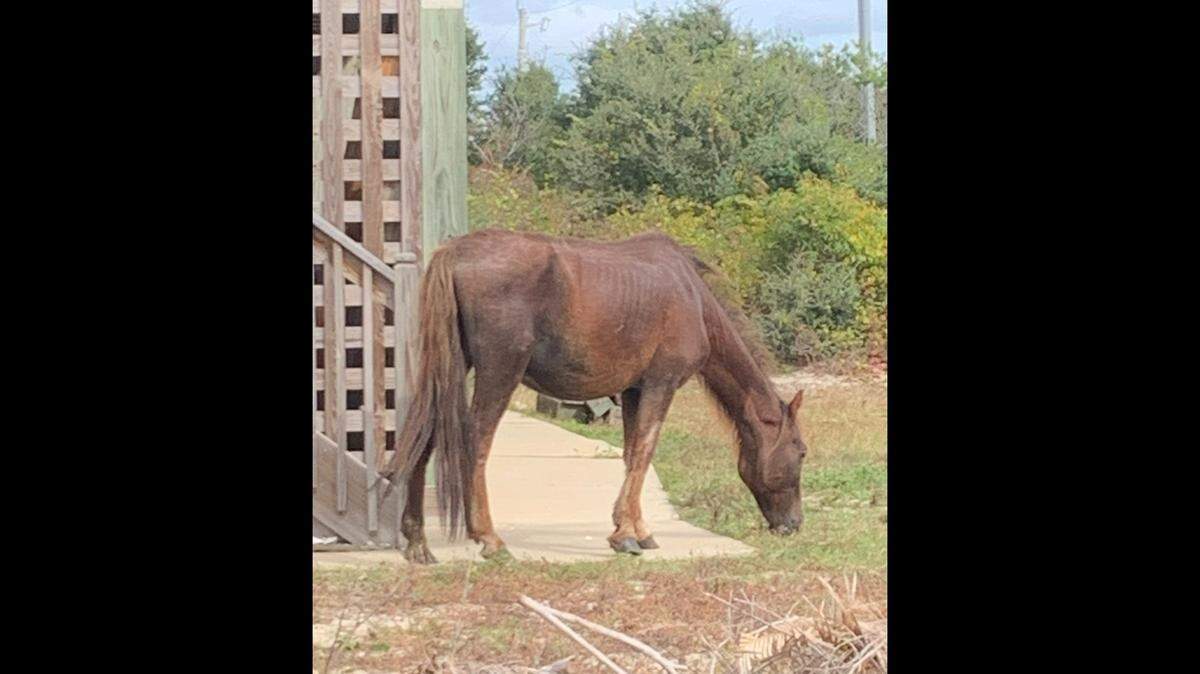
A legendary wild stallion that was among the oldest horses on North Carolina’s Outer Banks has died with multiple old-age afflictions — including losing all his teeth.
It’s estimated Flint, as he was known, was in his late 30s, which is about 15 years longer than most “banker” horses survive on the barrier islands, experts say.
However, it was his way with the ladies that made Flint a legend, according to herd manager Meg Puckett of the Corolla Wild Horse Fund.
“He was pretty prolific. We’re still working on matching up offspring using DNA but we’re pretty sure he sired quite a few offspring. Flint had mares until about a year ago, which is really remarkable for a horse his age,” Puckett told McClatchy News.
“Not all stallions are able to do that. It definitely takes a strong, driven horse to maintain a harem and produce foals for as long as he did. ... Because of his age it is unlikely we will ever know for sure who his parents were, which means he is a foundation stallion for the Corolla herd. That is quite an esteemed honor.”
.jpeg "flintcloseu_fitted (1).jpeg")
The only known way to age wild horses is to measure wear on their teeth and Flint “had some of the oldest teeth we’ve ever seen.” It’s suspected his was of “a very old bloodline,” which is significant in a herd linked to the arrival of Spanish explorers 500 years ago.
The nonprofit Corolla Wild Horse Fund posted an alert Oct. 10 that Flint was showing signs of “approaching the end of his life.” He had lost a lot of weight and was moving much slower, the fund noted.
A veterinarian began monitoring Flint’s condition on a weekly basis in recent months, and the fund braced itself for the possibility he might have to be euthanized to prevent suffering.
That point of no return came Monday, Oct. 21, when Flint’s many ailments became insurmountable, the fund reported in a Facebook post.
He appeared “listless” and X-rays revealed he had no functional teeth left and was suffering from a severe sinus infection that left streams of drainage running from his nostrils.
“At that point there was no question that the best thing for Flint would be to help him pass safely and peacefully,” Puckett wrote.
He was buried “in a quiet spot in the woods” at a farm the fund used to tend horses deemed to fragile to return to the wild.
“Our goal is for each and every Corolla Banker to live wild and free, and that means we must also do our best to ensure they die wild and free. A long, well-lived life is something to celebrate and Flint has certainly accomplished that,” the fund wrote.
“His story certainly did not die with him; it lives on in his countless offspring and the mark he left on the herd, and in the memories of him that we will share for many, many years to come.”
The herd on Corolla, at just over 100 horses, is tended to and protected by the fund with the help of donations.