Helene’s winds topped 100 mph in the NC mountains. Here are the official readings
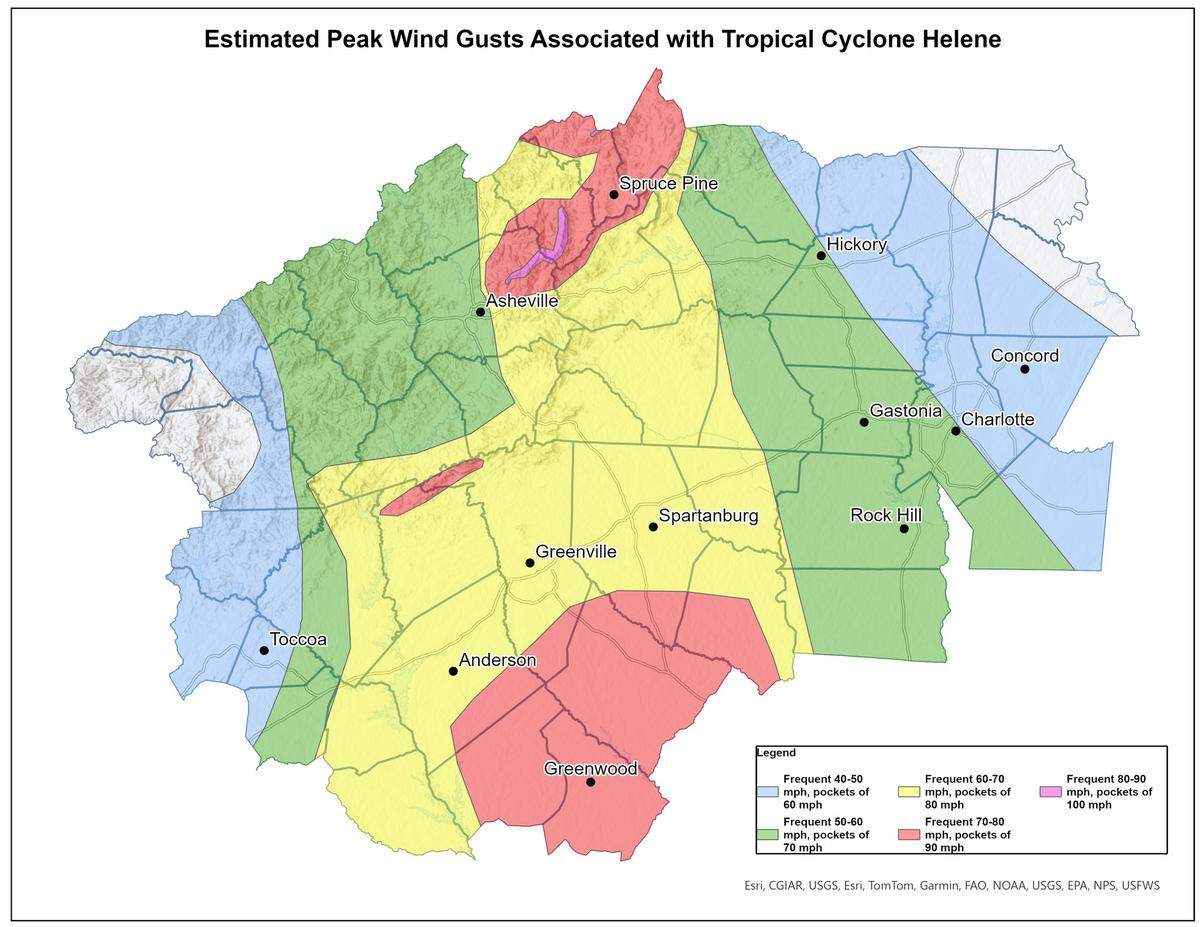
Though it lacked some of the structural elements of a hurricane when it reached the state, Helene brought 40- to 90-mph winds to Western North Carolina and topped 100 mph in at least one spot in the mountains.
Those are the findings released Wednesday in a Facebook post by the National Weather Service’s Greenville-Spartanburg, S.C., office. Weather officials presented the findings in color-coded maps of upstate South Carolina and Western North Carolina, which were heavily impacted by the storm on Sept. 27.
Where were Helene’s strongest winds?
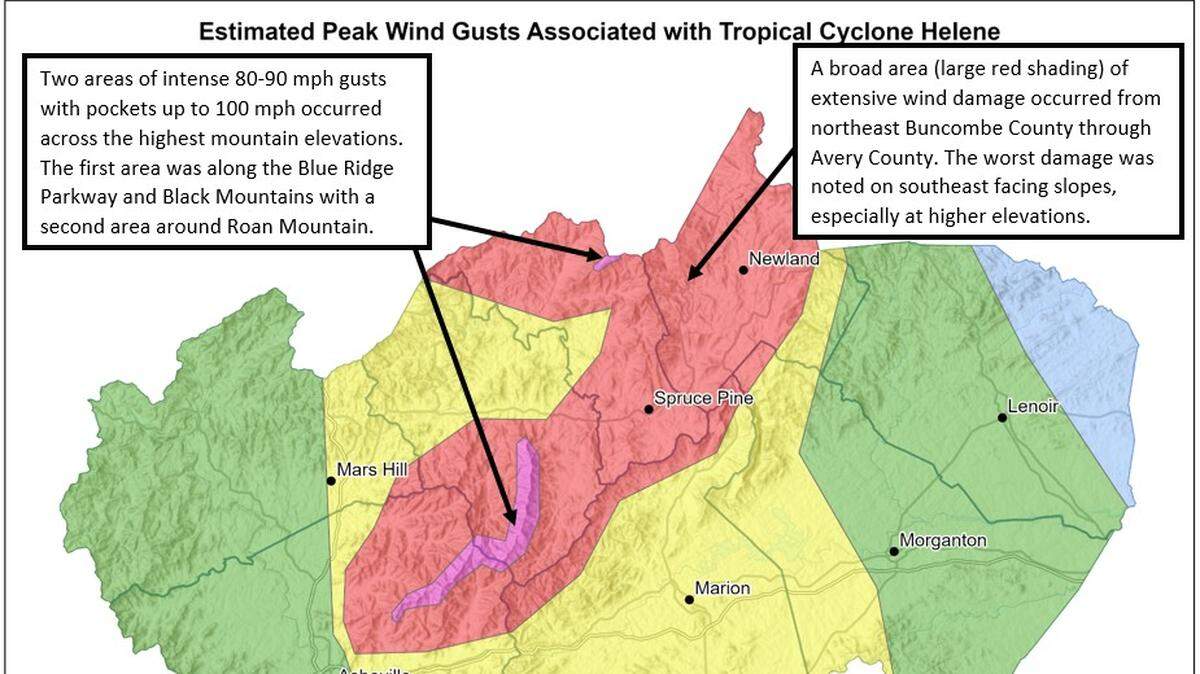
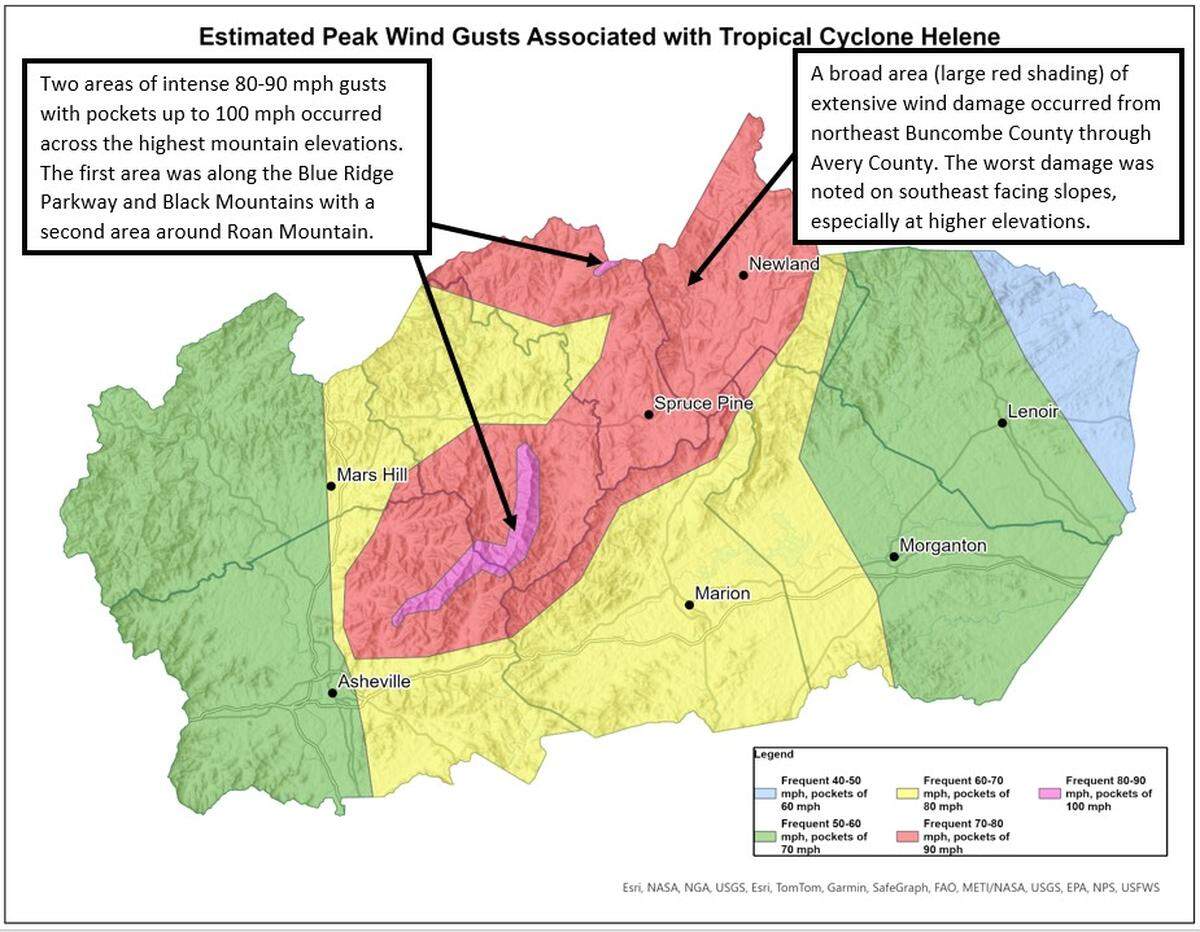
The Weather Service found two areas of especially intense winds, both at high elevations, where gusts were running at 80 to 90 mph and occasionally hitting 100 mph.
▪ The first was along the Blue Ridge Parkway and in the Black Mountains, the Weather Service said, in an area straddling Buncombe and Yancey counties, northeast of Asheville..
▪ The second was around Roan Mountain, farther north along the North Carolina-Tennessee line.
The highest wind gust recorded in North Carolina during the storm was 106 mph at Mount Mitchell, the Weather Service said. Mount Mitchell, the highest peak east of the Mississippi River, is within the Black Mountain Range. Mount Mitchell State Park, at the top of the mountain, has been closed since the storm as crews clear downed trees and make other repairs. Besides the punishing winds, Helene brought 23 inches of rain to the mountain.
How do we know Helene’s wind speeds?
In addition to anemometer readings, the Weather Service said it determined Helene’s wind speeds by piecing together “hundreds of crowd-sourced damage pictures/videos, drone and aerial imagery, and high-resolution satellite imagery.”
How did wind gusts do so much damage?
Though the winds weren’t constant, the Weather Service said, “these wind gusts were persistent for multiple hours, compared to a thunderstorm where the most intense winds last for only a few minutes. A longer duration of high-end wind gusts combined with very saturated soils and full foliage on trees resulted in an incredible amount of trees downed.
“In many cases, trees were rocked back and forth by frequent gusts until the soaked soils could no longer support them, leading to the eventual falling of the tree,” the Weather Service wrote. “The winds also changed direction as the center of circulation passed by to the west, thus resulting in trees falling across each other and not necessarily in one direction.”
Across the North Carolina mountains, estimates are that millions of trees were lost in the storm. Analysis by the U.S. Forest Service shows that southeast-facing mountain slopes took the heaviest beating.