North Carolina

This NC site was crucial to the Civil Rights Movement. It was just named a historic landmark

An iconic North Carolina building that played a pivotal role in the Civil Rights Movement is now officially a historic landmark.

The F.W. Woolworth Company Building in Greensboro was recently designated as a National Historic Landmark by the National Park Service.

The building was the site of historical sit-ins by the Greensboro Four, an effort during the Civil Rights Movement that sparked similar sit-ins around North Carolina and a national movement that led more than 700,000 students, clergy members and others to fight for racial equality.

What happened during the sit-ins?

On Feb. 1, 1960, David Richmond, Franklin McCain, Jibreel Khazan and Joseph McNeil, four Black students from N.C. A&T State University, visited the F.W. Woolworth department store’s lunch counter to protest against the business for serving lunch only to white customers, The News & Observer has previously reported.

The group entered the Woolworth store in downtown Greensboro to buy school supplies, with a plan to challenge the store’s racial inequalities. They knew they would be allowed to buy the supplies, but they also knew that the lunch counter in the store would turn them away for being Black.
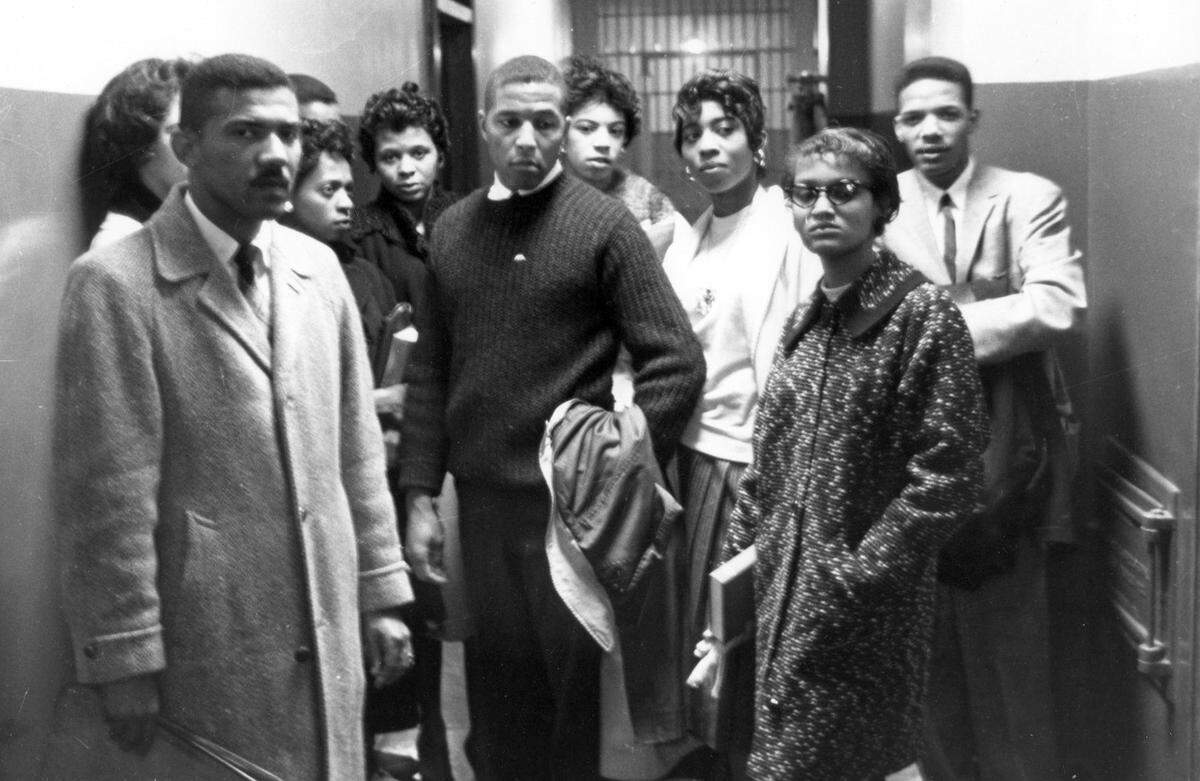
On Feb. 12, 1960, 41 students from Shaw University and St. Augustine’s College were arrested on trespassing charges at Cameron Village in Raleigh after refusing a request to leave by an official with the shopping center. The students had earlier staged a sit-in at the F.W. Woolworth lunch counter at Cameron Village. George Greene, left, a Raleigh lawyer, met with some of the arrested students at the Wake County jail. The protest was among a wave of demonstrations that followed a lunch counter sit-in on Feb. 1, 1960, by four N.C. A&T State University students at Woolworth in Greensboro.
On Feb. 12, 1960, 41 students from Shaw University and St. Augustine’s College were arrested on trespassing charges at Cameron Village in Raleigh after refusing a request to leave by an official with the shopping center. The students had earlier staged a sit-in at the F.W. Woolworth lunch counter at Cameron Village. George Greene, left, a Raleigh lawyer, met with some of the arrested students at the Wake County jail. The protest was among a wave of demonstrations that followed a lunch counter sit-in on Feb. 1, 1960, by four N.C. A&T State University students at Woolworth in Greensboro. News & Observer file photo

The four planned to make the argument that if the store was willing to take their money for school supplies, then they could also take their money at the lunch counter. When the store refused, the police were called and the four stood their ground, staying at the counter until the business closed.

The men, which later became known as the Greensboro Four, returned daily and read at the lunch counter with a growing number of others joining their protests.

In this Jan. 7, 2010 photo, the lunch counter at the former F.W. Woolworth is shown at the International Civil Rights Center and Museum in Greensboro, N.C. Four college freshmen walked into a Greensboro, N.C., dime store on Monday, Jan. 1 1960, bought a few items, then sat down at the “whites only” lunch counter, and sparked a wave of civil rights protest that changed America.
In this Jan. 7, 2010 photo, the lunch counter at the former F.W. Woolworth is shown at the International Civil Rights Center and Museum in Greensboro, N.C. Four college freshmen walked into a Greensboro, N.C., dime store on Monday, Jan. 1 1960, bought a few items, then sat down at the “whites only” lunch counter, and sparked a wave of civil rights protest that changed America. Chuck Burton AP

They continued to hold a peaceful protest despite being insulted, hit with water balloons, having counter-protests formed against them and bomb threats being made.

Nearly six months later, on July 26, 1960, Woolworth agreed to integrate the lunch counter, with many other businesses doing the same.

Source: newsobserver.com/news/politics-government
UNCHBU11-NE-012314-CCS
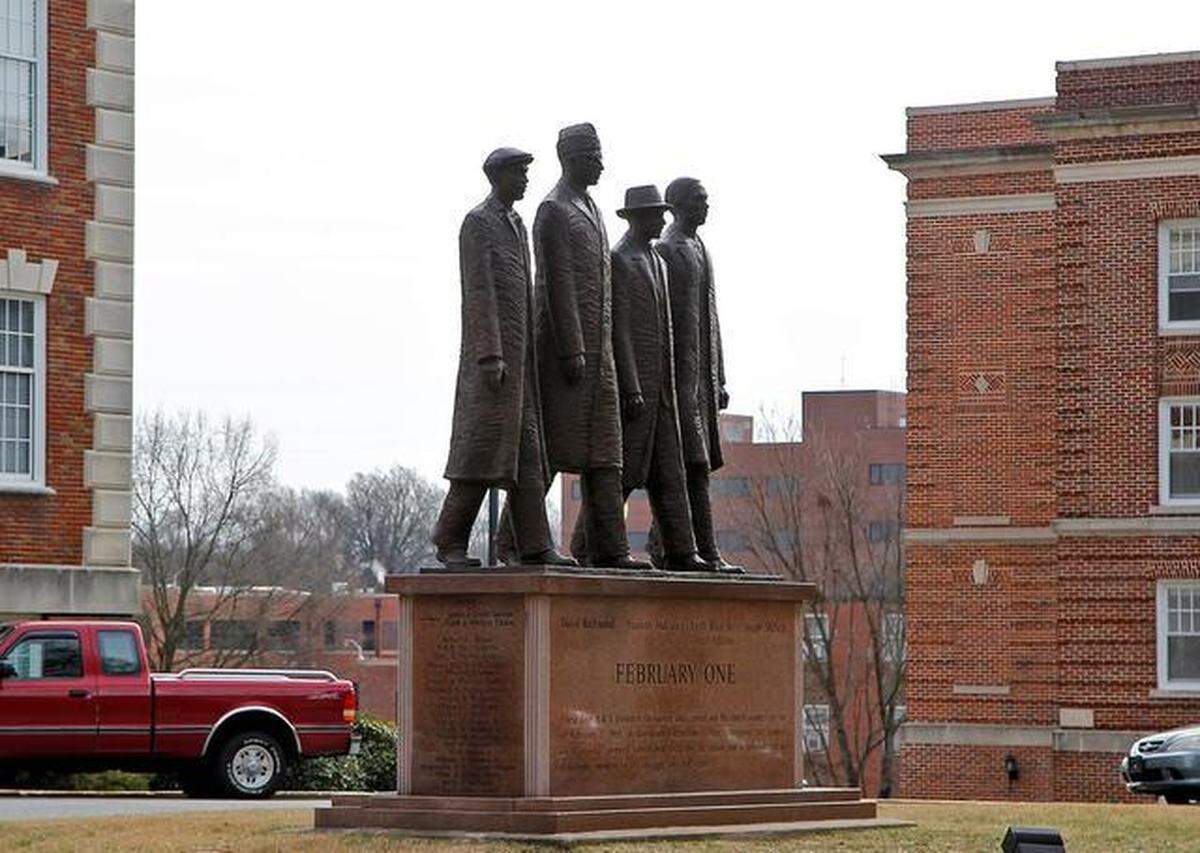
A statue of the four students who staged a civil rights sit-in at a Greensboro lunch counter in 1960 stands on the campus at N.C. A&T University in Greensboro NC on Jan. 23, 2014. cseward@newsobserver.com

How to visit the Greensboro lunch counter

The site is now home to the International Civil Rights Center & Museum (134 S. Elm St. in Greensboro). It includes the restored, original lunch counter, along with 35,000 square feet of exhibit space with original artifacts, interactive exhibits and powerful narratives.

In April 2021, Vice President Kamala Harris visited and took a seat at the lunch counter before touring more of the museum with officials, The N&O previously reported.

The moment — the first Black vice president of the United States sitting at the same lunch counter where four Black students peacefully protested for civil rights decades prior — was captured in photos and gained national attention.

Vice President Kamala Harris visited North Carolina April 19, 2021, to promote the infrastructure law signed by President Joe Biden. But she made an unannounced stop at International Civil Rights Center & Museum in Greensboro, sitting at the historic F.W. Woolworth lunch counter, where four Black college students sat on Feb. 1, 1960. The sit-in launched a wave of similar demonstrations across the country during the civil rights movement. Harris is the first woman vice president, as well as the first Black vice president and the first of Indian descent.
Vice President Kamala Harris visited North Carolina April 19, 2021, to promote the infrastructure law signed by President Joe Biden. But she made an unannounced stop at International Civil Rights Center & Museum in Greensboro, sitting at the historic F.W. Woolworth lunch counter, where four Black college students sat on Feb. 1, 1960. The sit-in launched a wave of similar demonstrations across the country during the civil rights movement. Harris is the first woman vice president, as well as the first Black vice president and the first of Indian descent. Travis Long tlong@newsobserver.com

The museum is open 10 a.m.-6 p.m. Monday-Saturday. You can buy tickets online for tours ranging from $15-$20. Learn more at sitinmovement.org.

Danielle Battaglia’s reporting contributed to this story.

Ask the North Carolina Service Journalism Team

Questions about life in North Carolina? Or have a tip or story idea you’d like to share? The service journalism teams at The News & Observer and The Charlotte Observer want to hear from you.

You can submit your question by filling out this form.

Read Next
Read Next

This story was originally published January 2, 2025 at 7:00 AM with the headline "This NC site was crucial to the Civil Rights Movement. It was just named a historic landmark."

Related Stories from Raleigh News & Observer
Evan Moore
The Charlotte Observer
Evan Moore is a service journalism reporter for the Charlotte Observer. He grew up in Denver, North Carolina, where he previously worked as a reporter for the Denver Citizen, and is a UNC Charlotte graduate.
Get unlimited digital access
#ReadLocal

Try 1 month for $1

CLAIM OFFER