
Helene victims were unfairly ousted from hotels, senators claim. Was FEMA at fault?
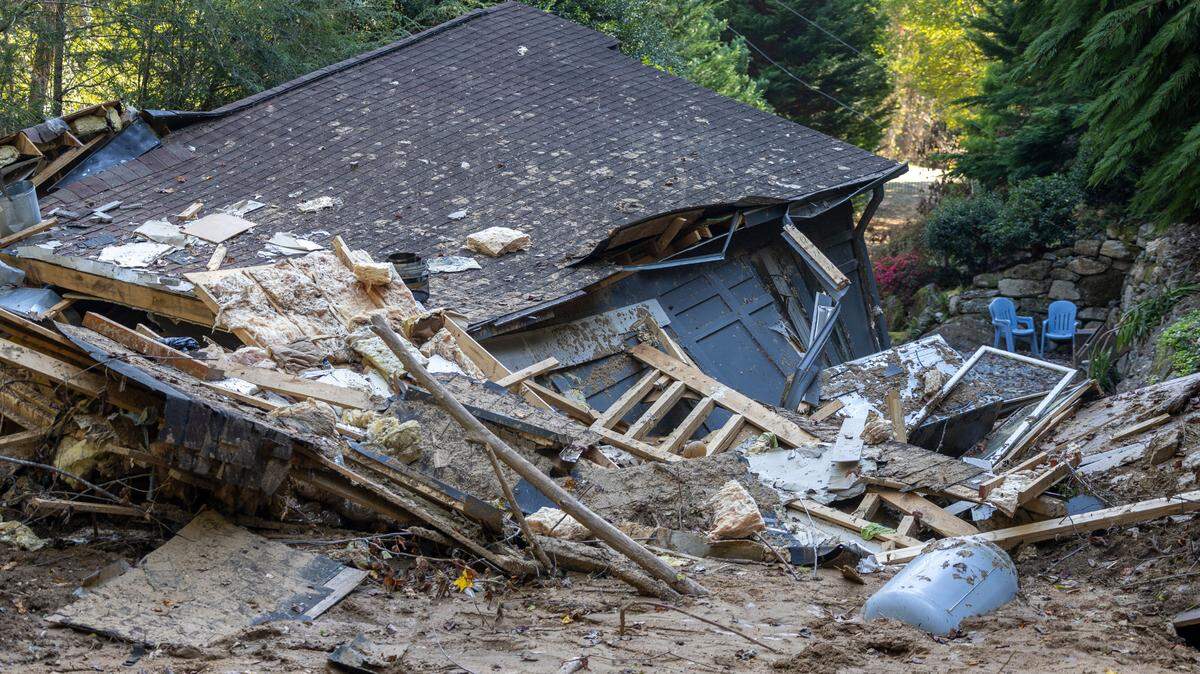
In social media posts Tuesday, U.S. Sens. Thom Tillis and Ted Budd said their offices had heard from dozens of people displaced by Hurricane Helene who were being kicked out of their hotels because their FEMA housing vouchers had expired.
But much remains unanswered about what led to those complaints and whether missteps by FEMA contributed to the problems.
The controversy comes as N.C. Gov. Josh Stein is asking FEMA to extend its temporary housing assistance for all eligible North Carolina residents by six months.
FEMA announced Monday at 8 p.m. that it would extend its Transitional Sheltering Assistance (TSA) program, which pays for hotel stays, until Jan. 25 for more than 3,000 households. In the announcement, posted on X, the agency also said that people who were expected to check out of hotels the following day were returning to habitable homes or had withdrawn from TSA.
On Tuesday, however, Tillis and Budd complained that some people in Western North Carolina were ousted from hotels with nowhere to go.
“My office has been helping dozens of Helene victims today who have been told their hotel vouchers expired despite not having a safe and livable home to go back to. Their homes have mold and broken windows...it’s 20 degrees tonight,” Tillis, a North Carolina Republican, posted on X on Tuesday. “Hotels are trying to help them, and a number of nonprofits are stepping up to pay for victims to stay in their hotels so FEMA has another day to get its act together.”
Budd, also a Republican, made a similar post on X, saying dozens of people called his office after being forced to leave hotels. Since then, Budd’s office has been working with FEMA to get people back into suitable shelters.
“Last night, Senator Budd and his team got in touch with FEMA leadership and went line-by-line, person-by-person to identify issues, fix communication breakdowns, and get eligible individuals back into hotels,” a spokesperson for Budd said in a statement to the Observer.
But staff at both senators’ offices told The Charlotte Observer that, for privacy reasons, they could not share the names or locations of people in that situation.
Leaders of a regional agency and a nonprofit in Western North Carolina say a lack of clear communication has left many uncertain about who’s been granted extensions, who’s ineligible and why.
What we know
FEMA’s TSA program is designed to assist people looking for shelter up to six months after a disaster.
Eligibility is evaluated on an ongoing basis, according to FEMA. Participants become ineligible if their homes are deemed habitable, if they don’t respond to FEMA’s outreach efforts, or if it’s determined that they have other affordable housing options, according to a FEMA fact sheet on the program.
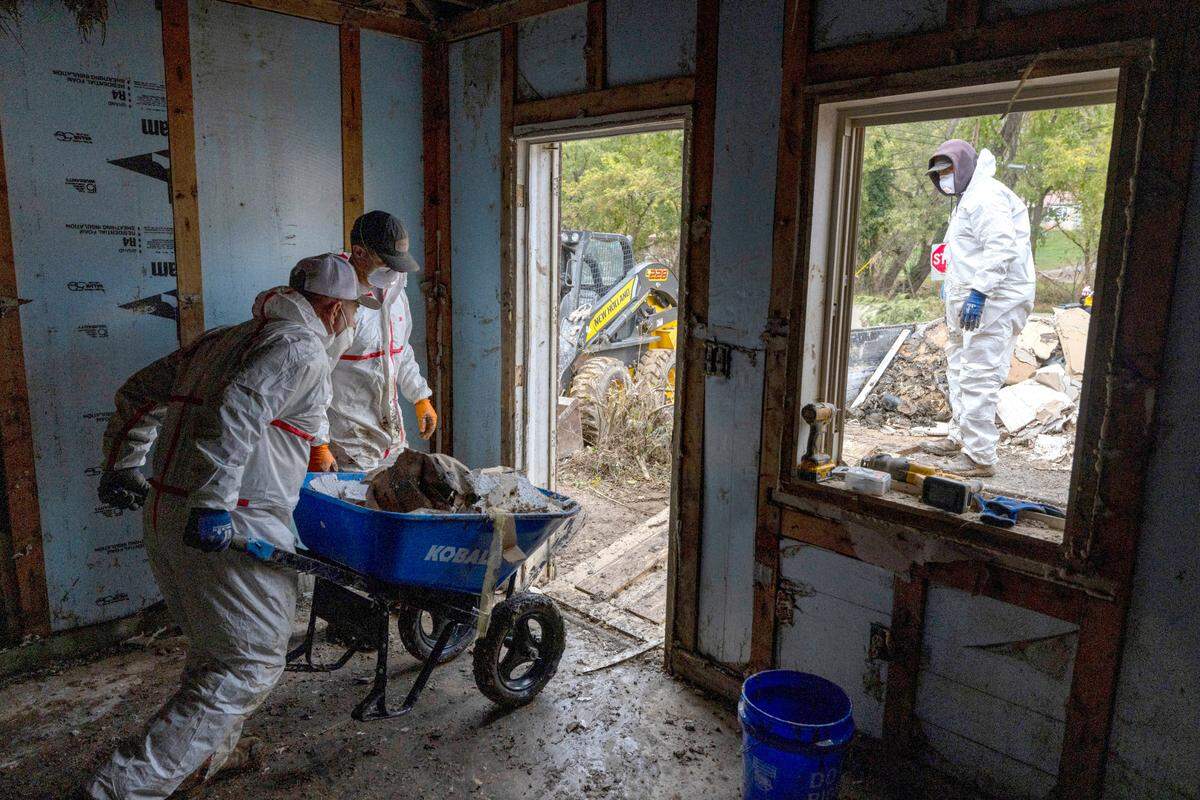
FEMA may deem a home habitable if it doesn’t have any disaster-caused hazards, the agency wrote in an email to to the Observer Thursday night. A home with broken windows and mold, as mentioned by Tillis, may be deemed habitable by FEMA if the home is “safe, sanitary and fit to occupy,” the email said.
It’s unclear how many households are likely to lose TSA by Jan. 25. But not all enrolled in the program will. People who remain may stay in hotels paid for by FEMA until the end of March, FEMA said Monday on X.
An eligibility review will be conducted Jan. 17 to determine who will lose their vouchers after Jan. 25, the FEMA email said. Anyone who checked out on Jan. 14 was deemed ineligible for the program and was notified their TSA would end on Jan. 3, the email said.
North Carolina Rep. Jake Johnson, who serves on Stein’s Rebuilding Western North Carolina Advisory Committee, said his office has heard of isolated incidents of people being forced out of hotels despite having no home to return to, but he isn’t sure how widespread the problems are. He suspects the reason for the discrepancies could have to do with who is inspecting the homes and deeming them livable.
“It may be getting condemned at the local level, through the county or somewhere else, but that’s not getting relayed to FEMA,” said Johnson, a Republican who represents four Western North Carolina counties. “They’re going in and… there’s clearly water damage and potential mold, the roof is leaking, or something like that, that is not habitable. And then you got FEMA, who’s not seeing that on their end.”
Communication between FEMA and victims and hotels has been “substandard to say the least,” Tillis’ spokesperson Adam Webb wrote in an email to the Observer. In some cases, notices of the extended deadline were communicated just hours before people expected to vacate their hotels, Webb said.
Canton Mayor Zeb Smathers said he and other public officials have also reached out to FEMA to ask them to extend hotel voucher deadlines. The most recent deadline extensions weren’t announced until the day before the vouchers were set to expire, which frustrated him.
“These are not just policies. These are people,” Smathers said. “They have families and they’re trying to hold it together. And doing it at a very cold time of year. The idea that anyone is placed in the cold because someone didn’t get their ducks in a row is unconscionable.”
Some people confused, frustrated, desperate
Nathan Ramsey, director of the Land of Sky regional council, said hurricane survivors have faced confusion around FEMA’s TSA deadlines. He helped a woman get connected with the governor’s office after her FEMA voucher ended suddenly, he said.
He recalls her crying non-stop. Hurricane survivors need support when it comes to navigating government assistance, Ramsey said.
“There’s definitely confusion,” he said. “I’m the director of a regional council. I can’t look at it the way I would look at it based on my experience, my education, my background. Because most people don’t have that same background, and they’re not used to government programs and dealing with government agencies in the same way I would.”
Ramsey said misinformation around FEMA could play a role in people not responding to the agency. Spurious claims about FEMA did spread widely on social media after the storm.
Ramsey emphasized the importance of having trusted people in these communities to break down communication barriers. But he also acknowledged that FEMA, while greatly helpful, isn’t a cure-all for Western North Carolina.
“A lot of people feel like FEMA is supposed to be the answer to all our problems,” he said. “FEMA was never designed to be the answer to all our problems. FEMA is just one piece of that.”

Vicki Meath, director of Just Economics, has assigned staff to help a nonprofit organization called Swannanoa Communities Together working directly with Helene survivors. She said there was a lot of confusion about when FEMA TSA eligibility was supposed to end and who was granted extensions.
She’s heard second-hand that some people were found to be ineligible for vouchers because FEMA couldn’t get in contact with them or they missed an inspection appointment, she said. But some people lost their phones in the storm or didn’t have the money to keep them activated. Others were using TSA assistance to stay in hotels out of town and couldn’t make it back to Asheville in time for inspections to determine whether their homes were habitable, she said.
“There is no place for people to go if you do not have a habitable home to return to,” she said.
The Red Roof Inn in West Asheville provided rooms to dozens of people displaced by Helene, said Ron Smith, a front desk attendant for the hotel.
Of those who were under the impression their vouchers expired on Jan. 14, he said, at least one or two felt their eligibility should have been extended.
He recalled one person saying: “I don’t understand where they want me to go. My house is gone.”
In a news release issued Thursday, Stein said he has asked FEMA Administrator Deanne Criswell to extend the TSA program by six months.
“The people of western North Carolina are experiencing chaos and uncertainty that is untenable,” Stein said in the release. “That is why I am urging FEMA to extend its Transitional Sheltering Assistance program for six months to get folks through the winter in safe, secure shelter as they rebuild their homes.”
This story was originally published January 17, 2025 at 5:30 AM with the headline "Helene victims were unfairly ousted from hotels, senators claim. Was FEMA at fault?."
.JPG)