Radar data suggests Black Hawk was flying too high before fatal Washington crash
Investigators are still gathering information about the flight of the U.S. Army helicopter that collided with a passenger jet over the Potomac River last week, but preliminary data suggests the aircraft was flying higher than its authorized altitude and that the crew failed to avoid the jet as instructed by air traffic controllers.
The flight data recorder from the Bombardier CRJ700 regional jet put its altitude at the time of the collision at 325 feet, plus or minus 25 feet, according to the National Transportation Safety Board. Radar data collected by the control tower at Reagan Washington National Airport put the altitude of the Sikorsky H-60 Black Hawk helicopter at 300 feet, though that data is rounded to the nearest 100 feet.
NTSB investigators say they’ll get more precise information from the helicopter when it is recovered from the river later this week.
The Black Hawk was following an established route for helicopters that limits their altitude to no higher than 200 feet.
The altitude of the Black Hawk is one piece of the investigation into why the two aircraft collided over the river at 8:48 p.m. on Jan. 29. All 64 people on the American Eagle flight and all three soldiers on the helicopter were killed.
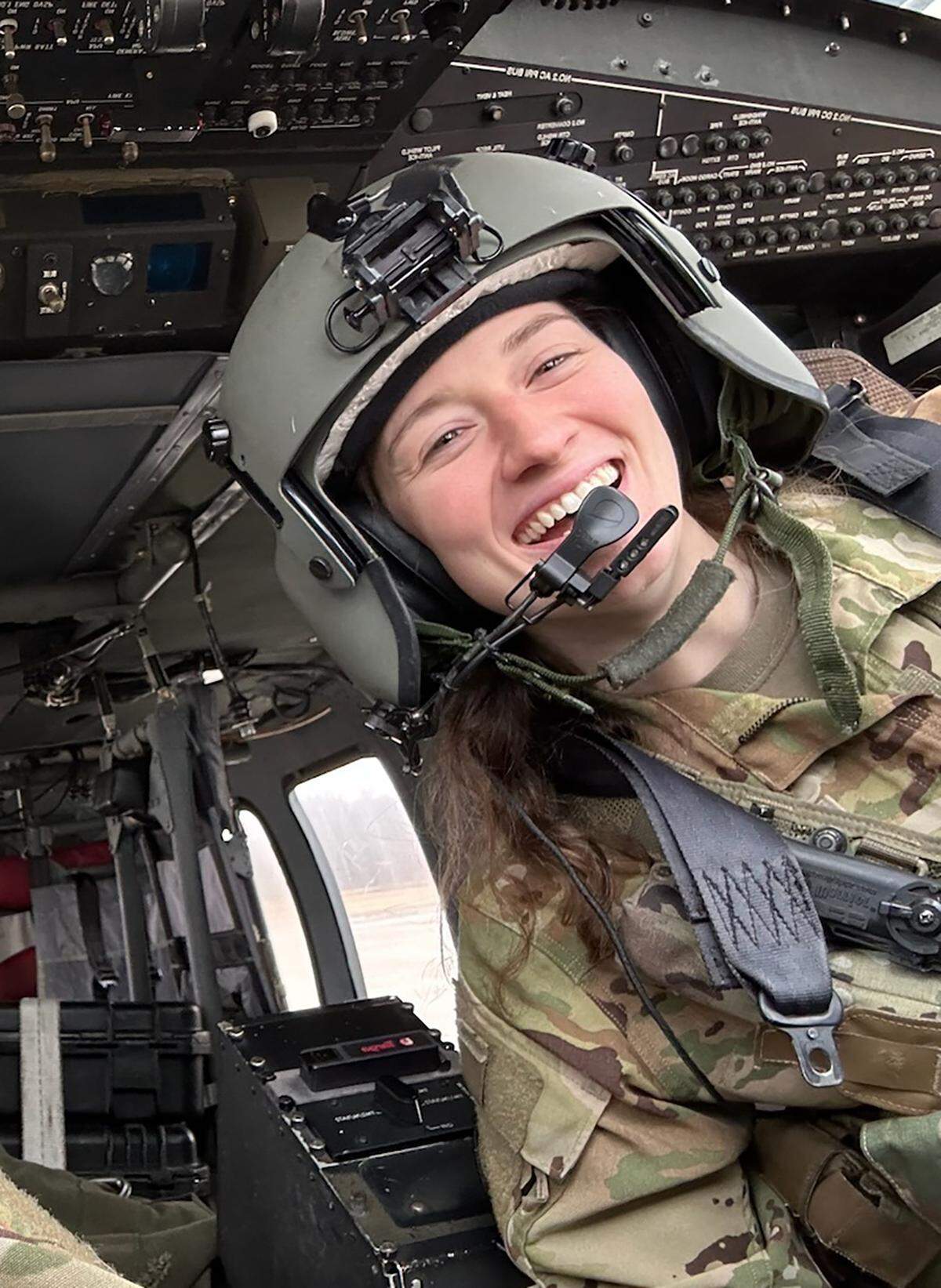
Among them was Capt. Rebecca Lobach, who grew up in Rougemont in northern Durham County and graduated from UNC-Chapel Hill in 2019. Lobach completed UNC’s Army ROTC course in two years and became a pilot after finishing flight school.
The four-person crew of American Eagle Flight 5342 was based in Charlotte. They had left Wichita, Kansas, and were preparing to land at Reagan Washington National Airport when the collision occurred. The plane was operated by PSA Airlines, a subsidiary of American Airlines.
The Black Hawk was on a training flight for what U.S. Defense Secretary Pete Hegseth identified as “a continuity of government mission,” meaning the evacuation or movement of senior government officials in case of an attack or catastrophe.
On such a flight, the crew would routinely have worn night-vision goggles, NTSB board member Todd Inman said. It’s not known yet if this crew was wearing the goggles, Inman said, or “what factor it may play in the overall accident.”
Several media outlets have quoted military officials saying that Lobach was undergoing an annual proficiency evaluation during the flight.
What data recorders say about timeline
Investigators have recovered the voice and flight data recorders from both aircraft. The jet’s recorders were found first, and during a press conference Feb. 1, Brice Banning, the NTSB’s investigator in charge, summarized what the CRJ700’s voice recorder picked up:
▪ At 8:39:10 p.m., the crew was cleared to approach the airport from the south using Runway 1, the longest at Washington National.
▪ At 8:43:06 p.m., the crew made initial contact with the control tower and was asked if it could switch to Runway 33, a shorter runway running southeast to northwest. “After a brief discussion between the crew, they agreed to Runway 33,” Banning said.
▪ At 8:46:01 p.m., a radio transmission from the tower was heard informing the Black Hawk helicopter that a CRJ was just south of the Woodrow Wilson Memorial Bridge at 1,200 feet, turning toward Runway 33.
▪ At 8:47:29 p.m., an automatic signal told the CRJ crew that they had reached an altitude of 500 feet.
▪ At 8:47:39 p.m., a radio transmission from the airport tower to the Black Hawk can be heard asking if the CRJ was in sight. Army aircraft transmit on a different frequency than commercial planes, so the response, if any, was not captured on the CRJ’s voice recorder.
▪ One second later, the CRJ crew received an automatic advisory, “Traffic. Traffic,” indicating that another aircraft was close.
▪ At 8:47:42 p.m., a radio transmission from the tower can be heard telling the Black Hawk to “pass behind” the CRJ.
▪ At 8:47:58 p.m., the crew of the CRJ “had a verbal reaction” to something, Banning said, and flight data showed the plane beginning to increase its pitch, as if to begin increasing altitude.
▪ One second later, the recorder captures the sound of impact.
The NTSB has not released flight or voice data from the Black Hawk. The agency says it “needs additional information to verify data points from the Black Hawk” and that the helicopter must be recovered from the river before that information will be available.
This story was originally published February 5, 2025 at 4:58 PM.