A North Carolina mountain community was reborn — and thriving. Then came Helene.
As torrents of rain from the remnants of Hurricane Helene cascaded down the Blue Ridge Mountains, latte-colored water churned through the Yancey County community of Micaville at the confluence of Ayles and Little Crabtree creeks.
The water carried away the post office, filled the basement of the Presbyterian church with mud and pushed seven feet deep through the old general store, which had been converted into an art gallery and museum called the Micaville Outpost.
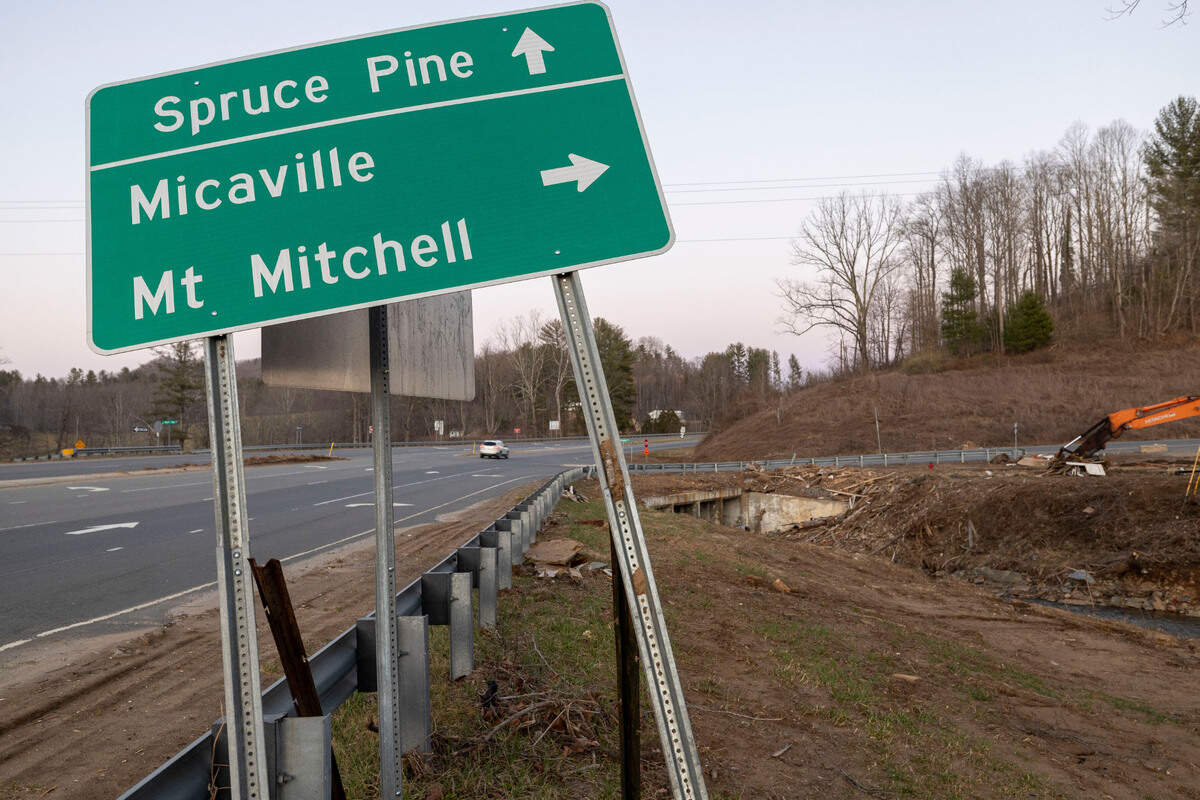
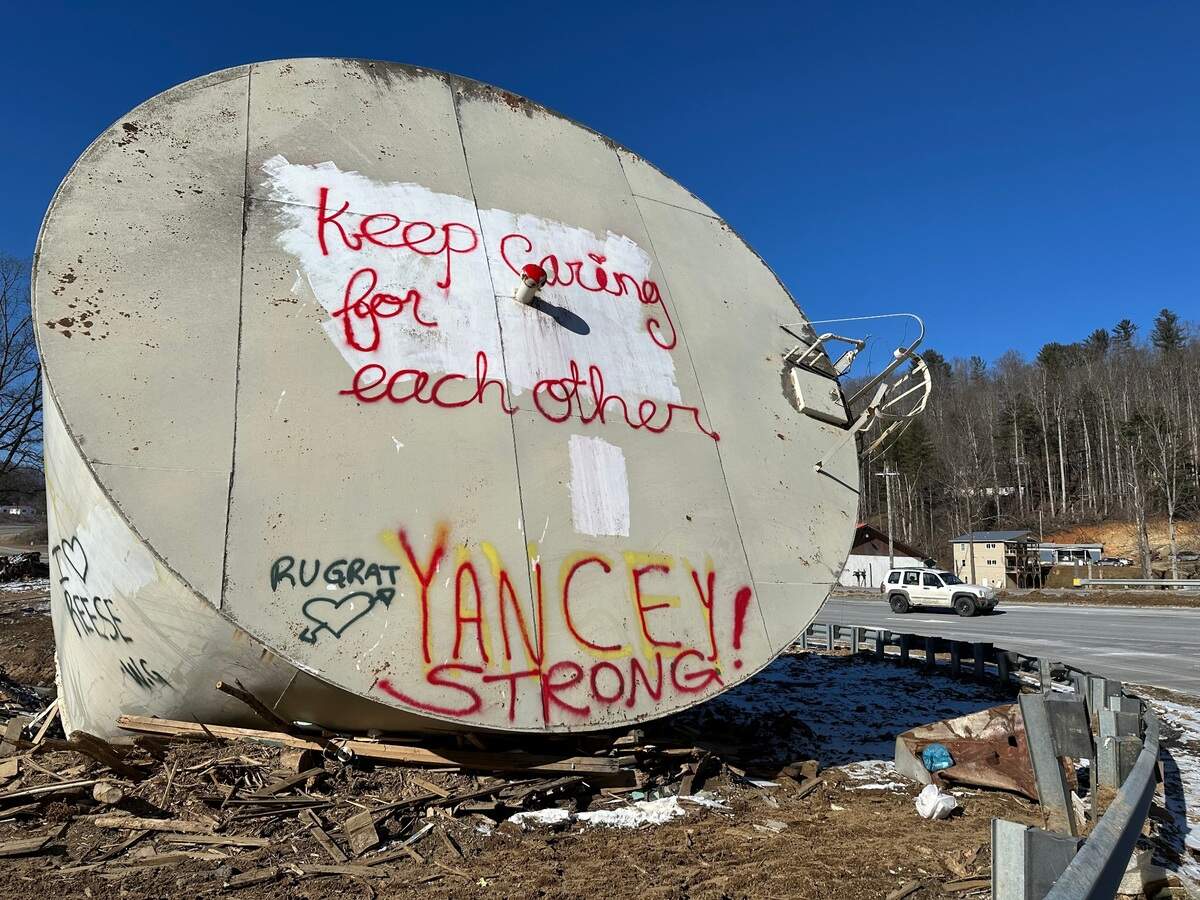
And somehow the flood lifted the big white water tank next to the old Taylor Togs textile plant. The steel tank bobbed along for about 100 yards before it became lodged on a culvert where the Micaville Loop road meets U.S. 19E. There it sat for months as a symbol of the power of the flood, shared around the world in photos and videos.
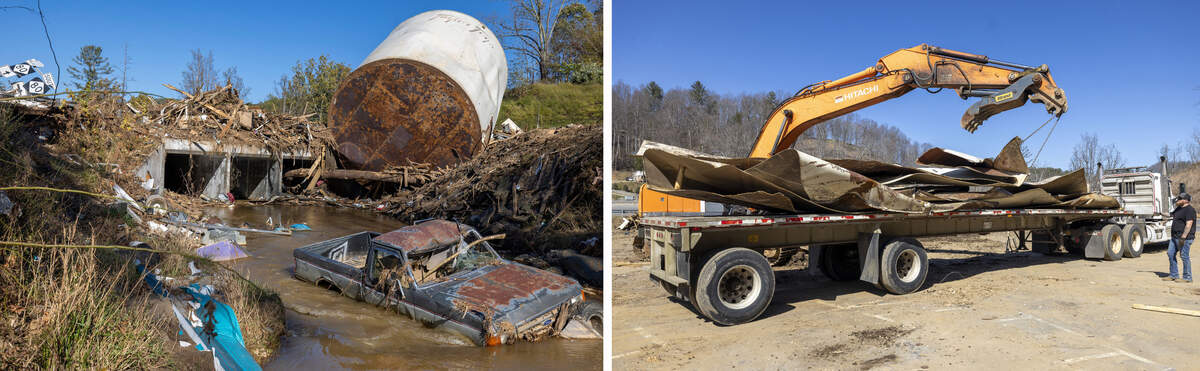
Even before the storm, the tank was a landmark in Micaville, a crossroads community that, like many in Western North Carolina, was born from industry and evolved into a destination for tourists and others drawn by the beauty of the mountains. After the storm, when Noah Styles finally made his way back to the Micaville Outpost to see what was left of his business, it was the tank that first made an impression.
“The fact that something that big was moved that far, I think that was the first time I realized what kind of disaster we had just survived,” Styles said. “It was serious.”
The tank, 35 feet tall and 25 feet across, held water for the fire-suppression system at the textile plant, which opened in 1968. Sherry Housley went to work there that year, right out of high school, attaching belt loops and zippers to blue jeans until appendicitis forced her to miss work a few months later and she was fired.
“It was very, very hard work,” Housley said. “We had to carry our own stacks of jeans to the machine, and we had only so much time to get that stack of jeans finished and out the door.”
Housley returned to the building last year to sell her jewelry and claywork in a place called The Find Vintage Warehouse. The Find’s owner, Kayla Bustle, leased a big chunk of the building early last year and divided it into more than 50 booths where local artists, collectors and antiques dealers sold a little bit of everything.
“It was a magical place,” Housley said. “She created a community unknowingly when she started building a business. She didn’t know how it was going to turn out, and it just turned out amazing.”
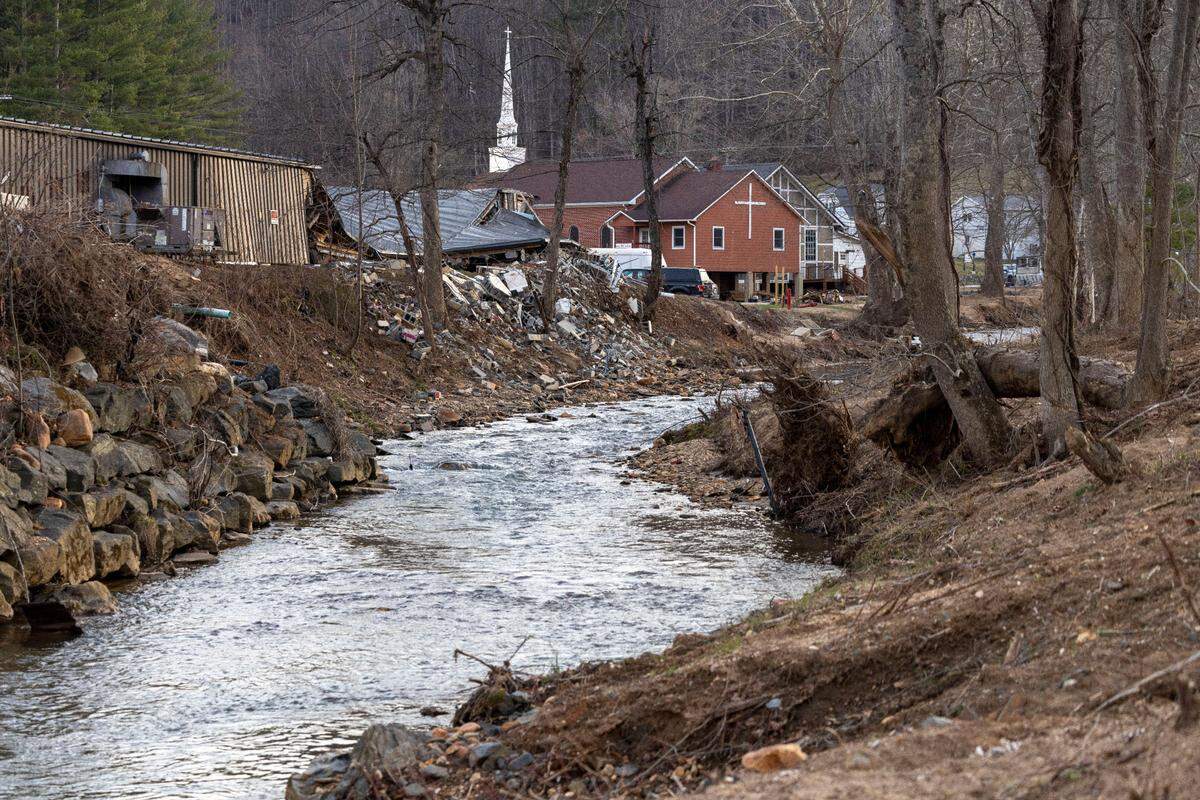
The Find was one of a half-dozen tenants in the old Taylor Togs plant. They included a community health clinic, a fitness center, and a bakery and coffee shop that hosted live music and a sewing collective and sold the best cinnamon rolls around.
Styles said the businesses shared customers and attracted both locals and visitors on their way to and from nearby Mount Mitchell State Park and the Blue Ridge Parkway.
“All of these things were just in this one little Micaville Loop area,” he said. “We were really gaining traction.”
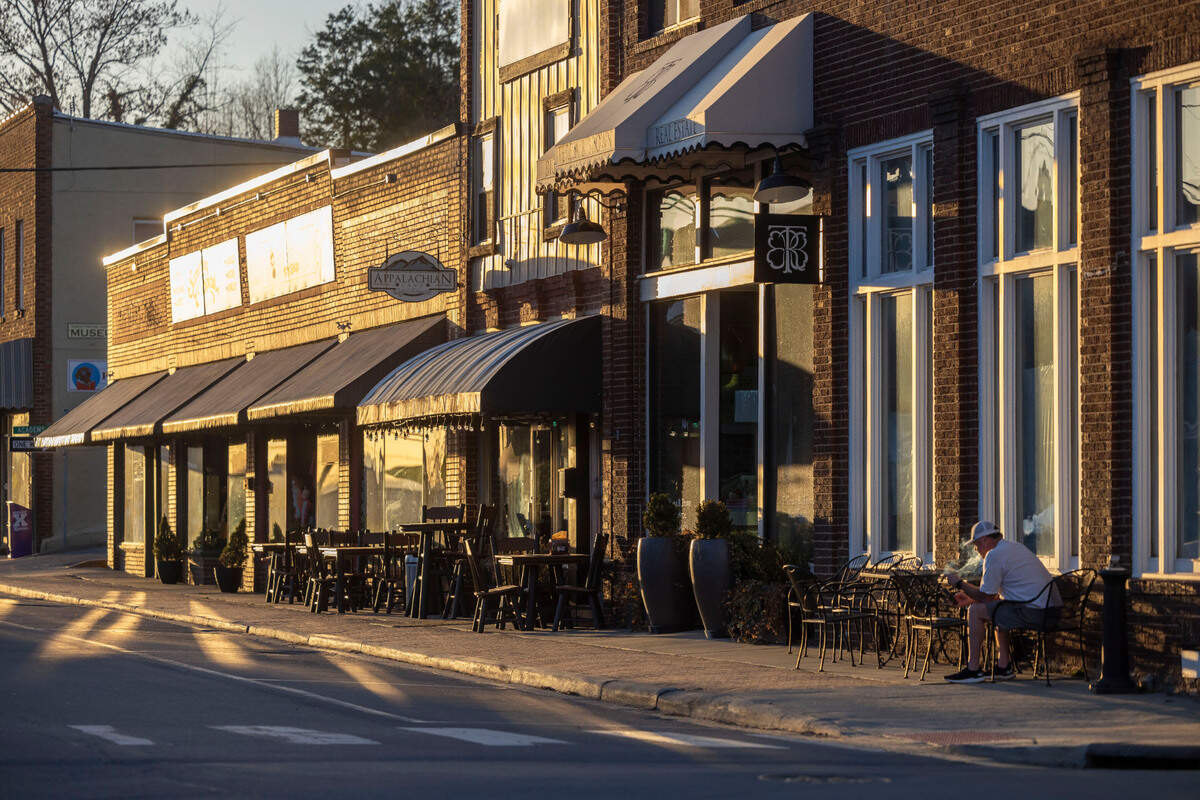
An old textile mill reborn as community hub
Micaville was named for the minerals that are still mined in these mountains. Styles would send customers behind his store to look for shiny pieces of mica in the shallow creeks. The building that housed the Outpost was built as the Harris Clay Company office and store a century ago, and later became J.L. Robinson’s General Store.
Housley, who was born in Micaville in 1950, says Robinson’s was the center of a thriving hamlet that included the post office, a barber shop and a gas station. She said it withered, like a lot of small communities, especially after Taylor Togs shut down in 2007.
George and Whitney Brasington moved their circuit board repair company into part of the old factory in 2017, then bought the entire 57,000-square-foot building in 2022. The couple spruced up the exterior, redid the parking lot and built walls inside to create new spaces.
“We felt really proud that we could take an old building and renovate it and make it kind of a hub of this community,” Whitney Brasington said.
Little Crabtree Creek runs beside the building, and the couple had seen water rise to the parking lot after big storms. They bought good liability insurance, but their agent told them they wouldn’t be able to afford flood insurance for a building that size.
As Helene approached and the rain started falling on Sept. 26, Whitney Brasington said she started thinking about the new ramp and entranceway they had built on one side of the building near the creek.
“My worst-case scenario going through my head was, ‘Oh, no, we’re going to lose the big handicapped ramp and entrance that we just put in,’” she said. “I even said to George in the morning, I’m like, ‘Dang, what if it’s gone?’ He was like, ‘Oh, the water tank is there. It will divert the flow around it. It should be fine.’”
A seemingly safe place that wasn’t
Susan Scoggins also worried about flooding before Helene arrived, but it was her apartment in nearby Burnsville she was thinking about. Water had seeped in before during big storms, starting with the skylights.
So Scoggins decided to move some of her valuables to Maples, her bakery in the Taylor Togs building in Micaville. She figured the industrial building up on a concrete foundation would be the best place for things like the jewelry that had belonged to her mother and grandmother.
“I even had a basket of laundry there,” she said. “I mean it was ridiculous the amount of personal things that we had there, because we thought it would be safer there.”
Scoggins also figured she and her family would be safer at Maples when the storm hit. She put a blow-up mattress in the car and loaded up her granddaughter and great granddaughter. But on the way, the 2-year-old child pitched a fit, insisting that she sleep in her own bed.
“She was having none of it,” Scoggins said. “And so we took her home, and we said we’ll just deal with the flood.”
Sure enough, the next morning, the floor of the apartment was covered with water. Scoggins quickly told her granddaughter that they should have stayed at Maples that night.
“Because we didn’t know. We had no idea,” she said. “We just thank God every day that we didn’t.”

As the rain subsided and the clouds began to clear on Sept. 27, Scoggins worked on getting the water out of the apartment. That afternoon, she decided to go check Maples and found the roads in Burnsville blocked by floodwaters or, in one case, a large dumpster in the middle of an intersection.
It was then that she started to wonder about the creek next to the bakery. The next day, she called around seeking help getting to Micaville.
“I remember talking with someone and saying, ‘I’ve got to get to Maples. What if we had leaks?’” she said. “And she said, ‘Susan, honey, you’re not getting to Maples. Maples is gone.’”
What Helene left behind when the water receded
Kayla Bustle had wondered if she should move some things off the floor at The Find, just in case Little Crabtree Creek flooded after Helene. But she recalled being told that water had never gotten into the building before, so she didn’t bother before she left for Tennessee to ride out the storm at her parents’ house.
The first she saw of the store was a photo someone posted on Facebook two days after Helene had passed.
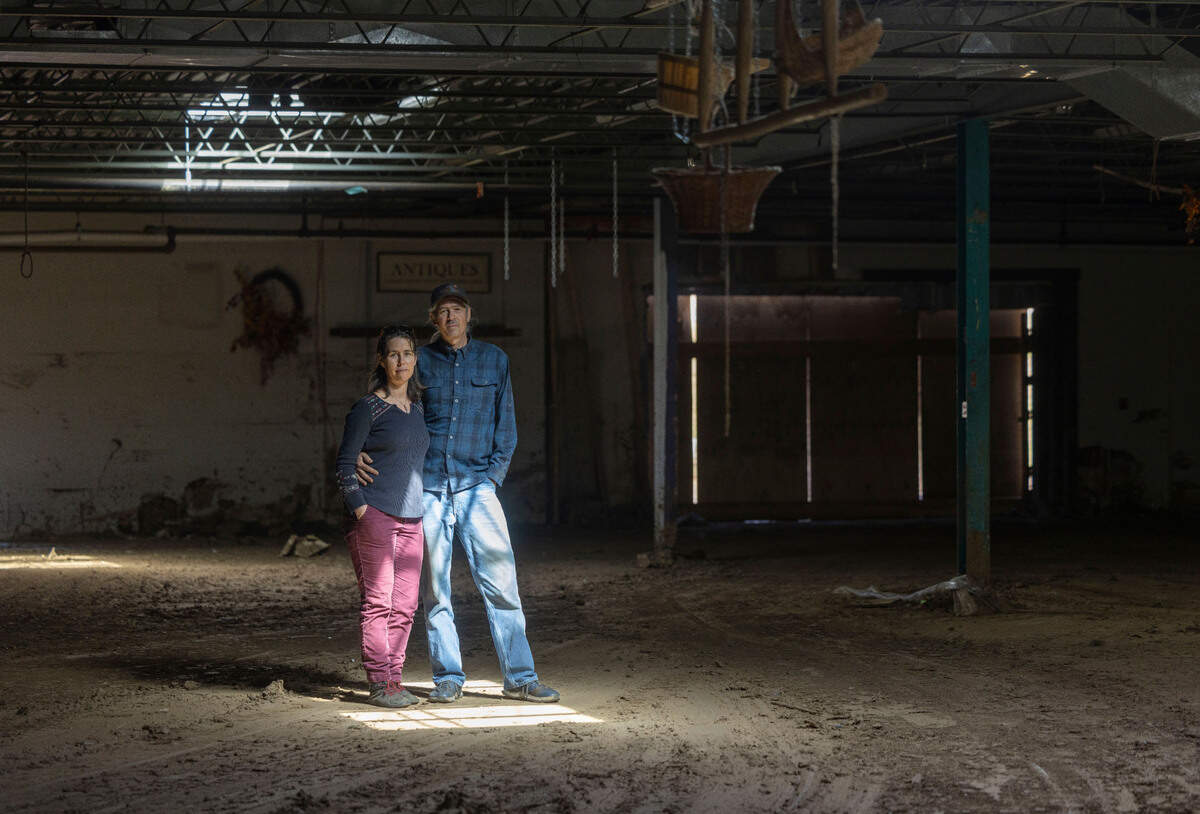
“Lo and behold, we had six feet of water in there. And about eight inches of mud,” she said. “Wouldn’t have really mattered if we had moved stuff up anyway.”
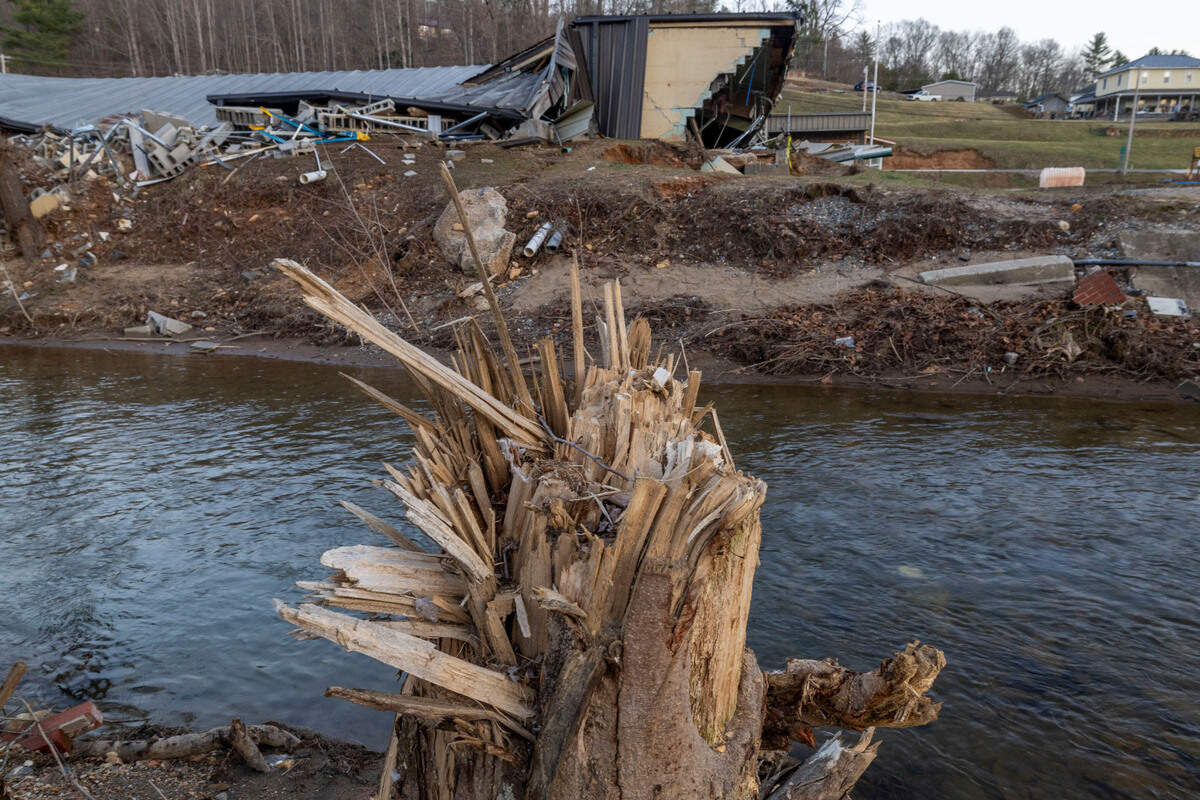
The water entered the building from the Maples side and pushed through walls toward The Find. Tables and chairs from the coffee shop and trees and other debris carried in from outside mixed with the pottery, blown glass and furniture.
“It just looked like the inside of a washing machine,” Bustle said. “It looked like the waters come in and just swirled everything around.”
The front wall of the building held firm, so the furniture stacked up there, a good 30 feet back into the store, with a big vintage Coca-Cola cooler perched on top.
“That thing was hea-vy,” Bustle said. “And it just floated that thing and that was sitting on the top of the pile of furniture.”
Some of the sewing machines and a big comfy chair from Maples ended up in the next door space where Chip Conrad opened his gym, Bodytribe, last April. Conrad had moved from California to be near family and sought to recreate the kind of fitness community he had cultivated there at a gym he owned for 18 years.
“And for not having a network here, it clicked really quickly with a lot of people — really great, wonderful people — creating quite a wonderful tribe,” he said. “Then it all just washed away.”
Not surprisingly, the flood destroyed his camera equipment and floor mats. But Conrad was amazed how much of his weight equipment disappeared. He dug in the mud looking for weight plates, barbells and kettlebells.
“You know, these big heavy lumps of iron,” he said. “Who knows where they’re at. They’re probably in Tennessee at this point.”
Then, referring to the water tank that once sat just outside his door.
“If that tank could get moved, my silly little heavy barbells could move around quite a bit,” he said.
A small business community now scattered
Conrad isn’t sure what comes next. Like other tenants in the building, his insurance didn’t cover floods. He began leading pop-up workouts around Burnsville for his customers this winter, but that’s been sporadic.
“I’m putting the word out, if there is a space where people want to create this again, then we should do it,” he said.
Noah Styles says he’s also in a holding pattern. His Micaville Outpost was a gallery for local artists, a store where hikers and fishers could buy provisions and a museum of dark oddities.
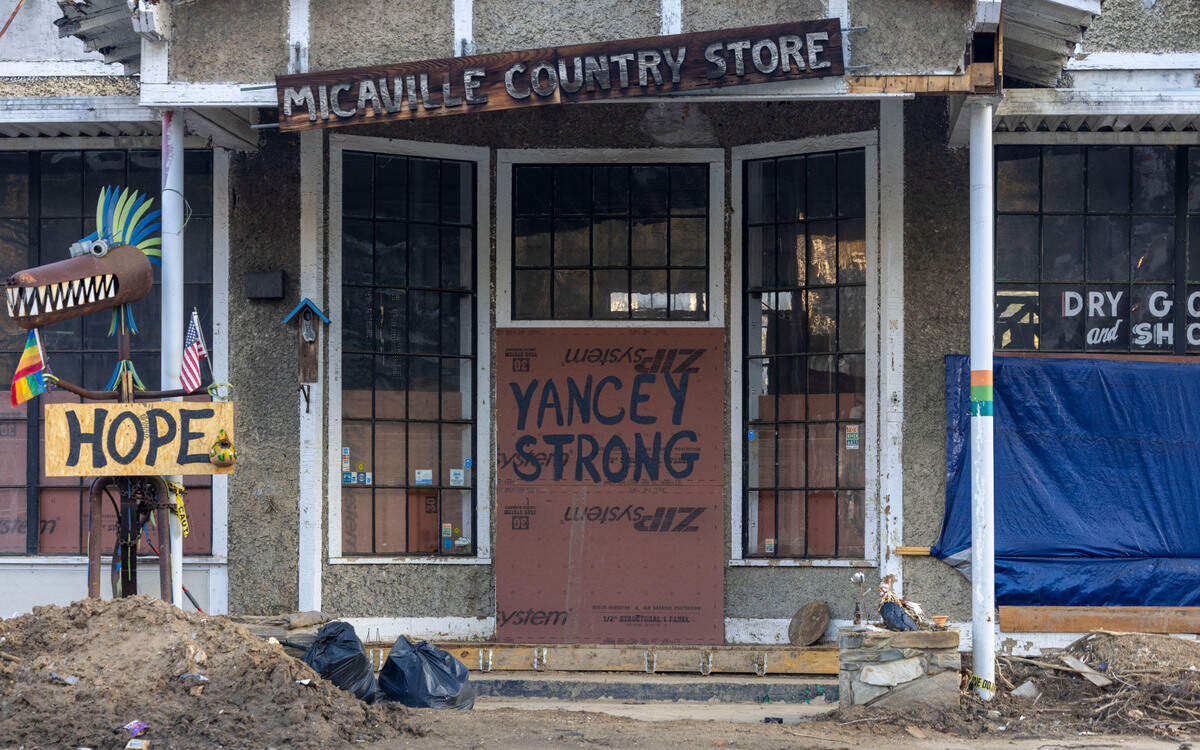
Among the items on display in an old gun case from the Burnsville Hardware Store were Victorian-era mourning hair, a portable embalming kit used in the region after the Civil War, and what’s believed to be the ax that Frankie Silver, or her family, used to kill and cut up her husband Charlie in nearby Burke County in 1831, depending on which version of the legend of Frankie and Johnny you believe.
“There’s no telling where this stuff ended up,” Styles said. “If I hadn’t branded myself specifically for that building as a location, I could maybe find another place. But my business was very specific to that building, that location.”
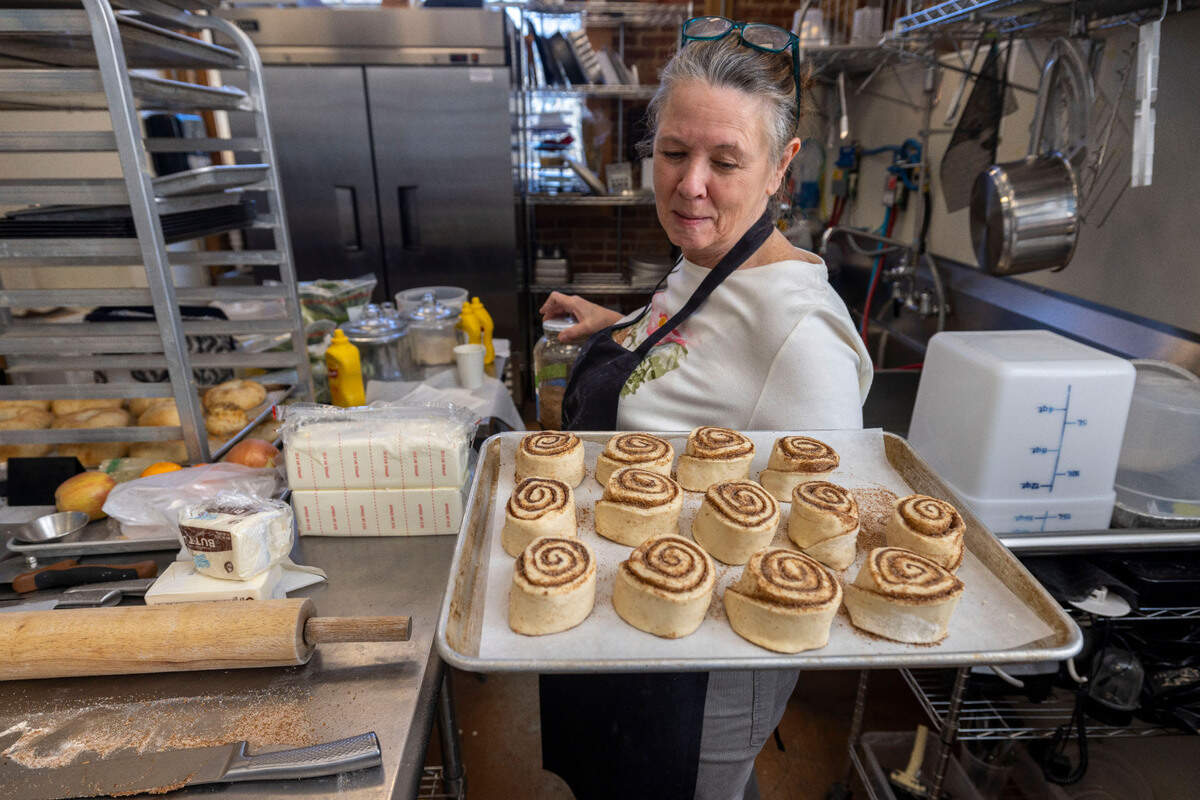
Others have been able to move on. Susan Scoggins was hired as a baker at Carriage House Sundries in Burnsville, where her scones, egg bites and cinnamon rolls live on. Kayla Bustle joined one of her vendors to open a new, though smaller, store about 28 miles away in Newland. Though parts of that town flooded, the building that houses the new Find Vintage Warehouse remained dry.
Sherry Housley, who lost her artwork in the old Taylor Togs building, also lost her home to Little Crabtree Creek, about a mile away. She doesn’t expect to be allowed to rebuild on her property in the floodplain, but has a plan: someone donated a school bus that she wants to turn into her permanent mobile home.
“Being an artist, I’ve wanted to do this for many years, one of those quirky things that goes on in my head,” she said. “It’s going to be quite a creative endeavor. And it will be good therapy for me.”
The future of the old Taylor Togs building
The Taylor Togs building itself isn’t salvageable. The Brasingtons could conceivably rebuild, but their single-story warehouse would need to be raised above flood level, a feat of engineering that would cost millions.
The building is empty and gutted now. More than 30 volunteers, including a church group from Irvine, California, attacked the mud and debris with gloved hands, shovels and six skid steers to clear the building in two days.
“That was just such a big help,” Whitney Brasington said. “We’ve both been blown away and humbled and are so grateful for all of the volunteers.”
The couple estimate they had $1.75 million invested in buying and renovating the building. They’ve applied for a FEMA hazard mitigation grant that they hope will help them recoup those costs, but it could be a couple of years before they learn if they get it.
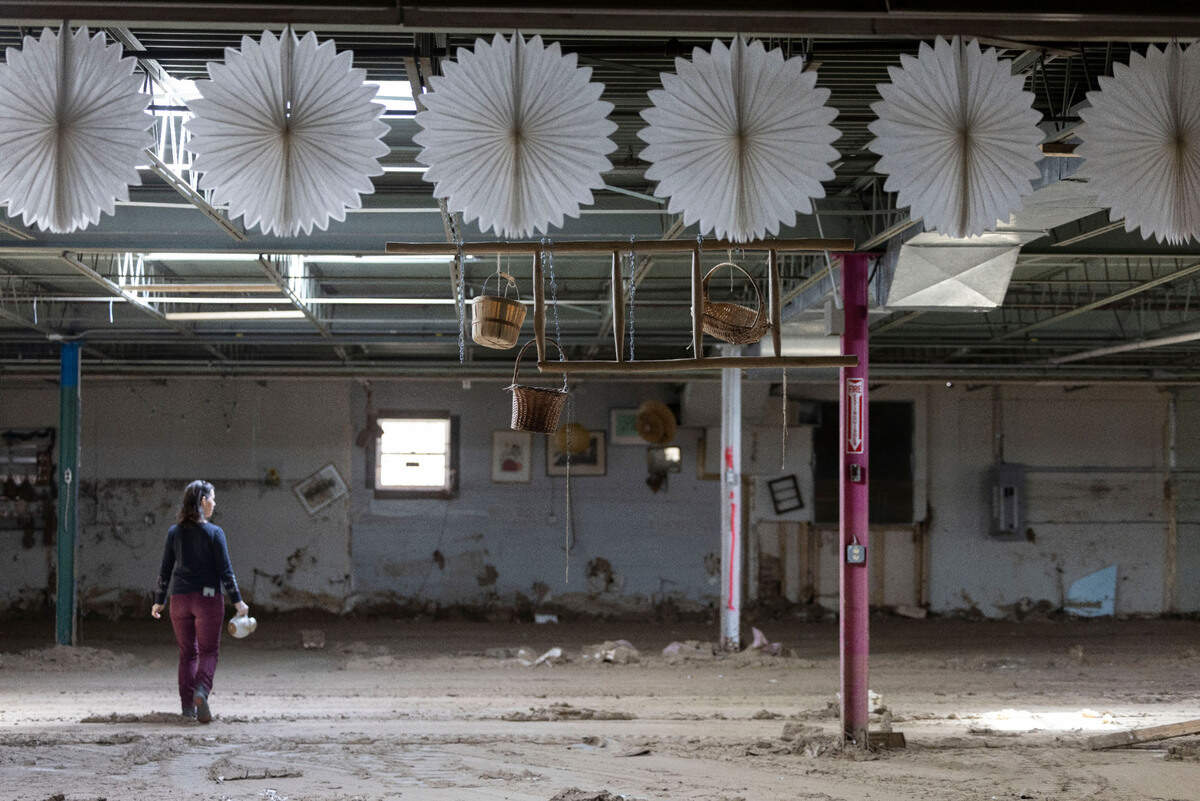
“Then they would demolish the building and turn it into green space, which would be turned over and managed by the county,” Whitney Brasington said. “Just to prevent this from happening ever again.”
As for the water tank, as the months passed, it became a canvas for graffiti. On the top, which faced the intersection of Micaville Loop and 19E, someone spray-painted, “Keep caring for each other. Yancey Strong!”
The task of removing it fell to Yancey County, which, through contractors, also had to clear tons of old vehicles, bits of buildings and all sorts of other debris from along highways and other public places.
“This will be a heavy lift and many discussions before removal because of its sheer size,” county manager Lynn Austin wrote of the tank in an email in late January. “More than likely, it will have to be cut up in smaller pieces before it can be removed.”
Which is what happened. Contractors spent several days cutting the steel into pieces small enough to lift onto flatbed trucks in early March, and a Micaville landmark before and after the storm was hauled away forever.
This story was originally published April 3, 2025 at 5:00 AM.