Carpenter bees can chew through your deck in NC. Here’s how to get rid of them
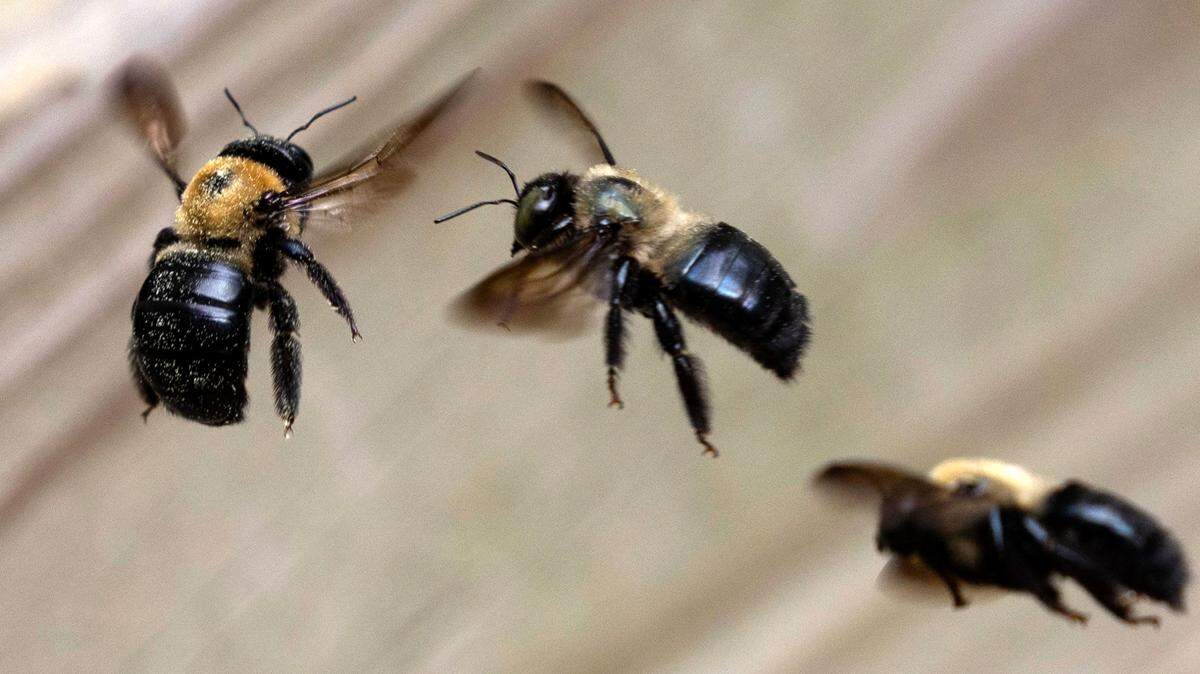
Spring is here, which means those giant bees buzzing around are back — and that could spell trouble for your porch or deck.
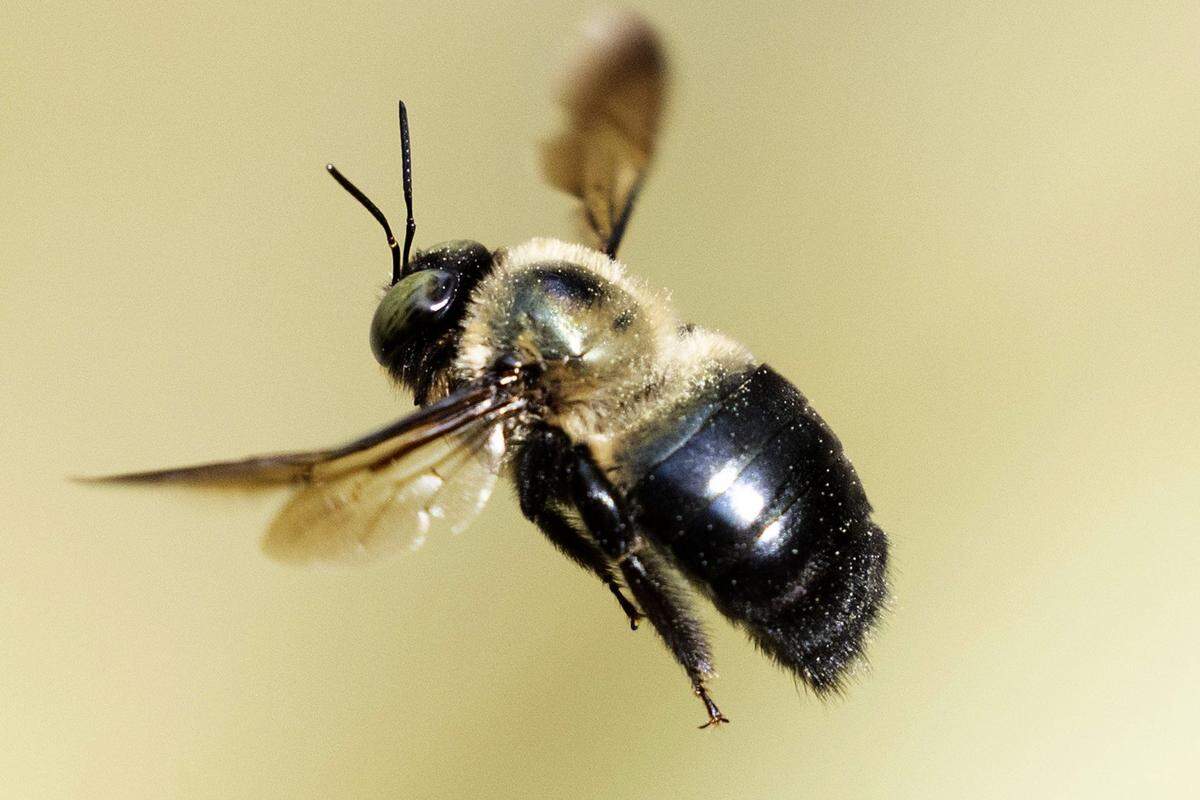
The insects you’re seeing are carpenter bees, which are large bees with shiny black tails, according to the NC State Extension. They have powerful jaws that they use to burrow into wood, creating tunnels for their habitat next year.
The bees are effective pollinators, but the holes they leave behind can be a nuisance and can lead to further damage from fungi and attacks by other insects, such as carpenter ants, according to Go-Forth Services, a North Carolina-based pest control company.
Are carpenter bees dangerous? Do they sting? How can you get rid of them?
The Charlotte Observer spoke to Chris Hayes, an extension associate of structural pest management at NC State University who specializes educating the pest management industry on critter habits, to find out.
Why do carpenter bees dig in wood?
Hayes said carpenter bees burrow in wood because it offers protection.
“They love habitats that are safe and secure,” Hayes said. “If there were no houses, they would do it in trees. Wood is the perfect environment for them.”
Female carpenter bees typically tunnel into wood to collect pollen and lay their eggs, often returning to the same tunnel each year. These tunnels can be found in trees, picnic tables, decks or even on your porch.
Do carpenter bees sting?
Male carpenter bees don’t sting, but females do, Hayes said.
“The male carpenter bees are typically the ones you’ll see hovering around the air,” he added.
But it’s rare that you’ll get stung by a female carpenter bee, according to the NC State Extension. They won’t sting unless they’re confined in your hand or become highly agitated.
Though the males do not have stingers, they can be territorial and will harass other carpenter bees and people who are near their nesting areas, the Extension says.
Do I have carpenter bees nearby?
Even if you don’t have holes in your deck or porch, there are other signs carpenter bees may be nearby, Hayes said.
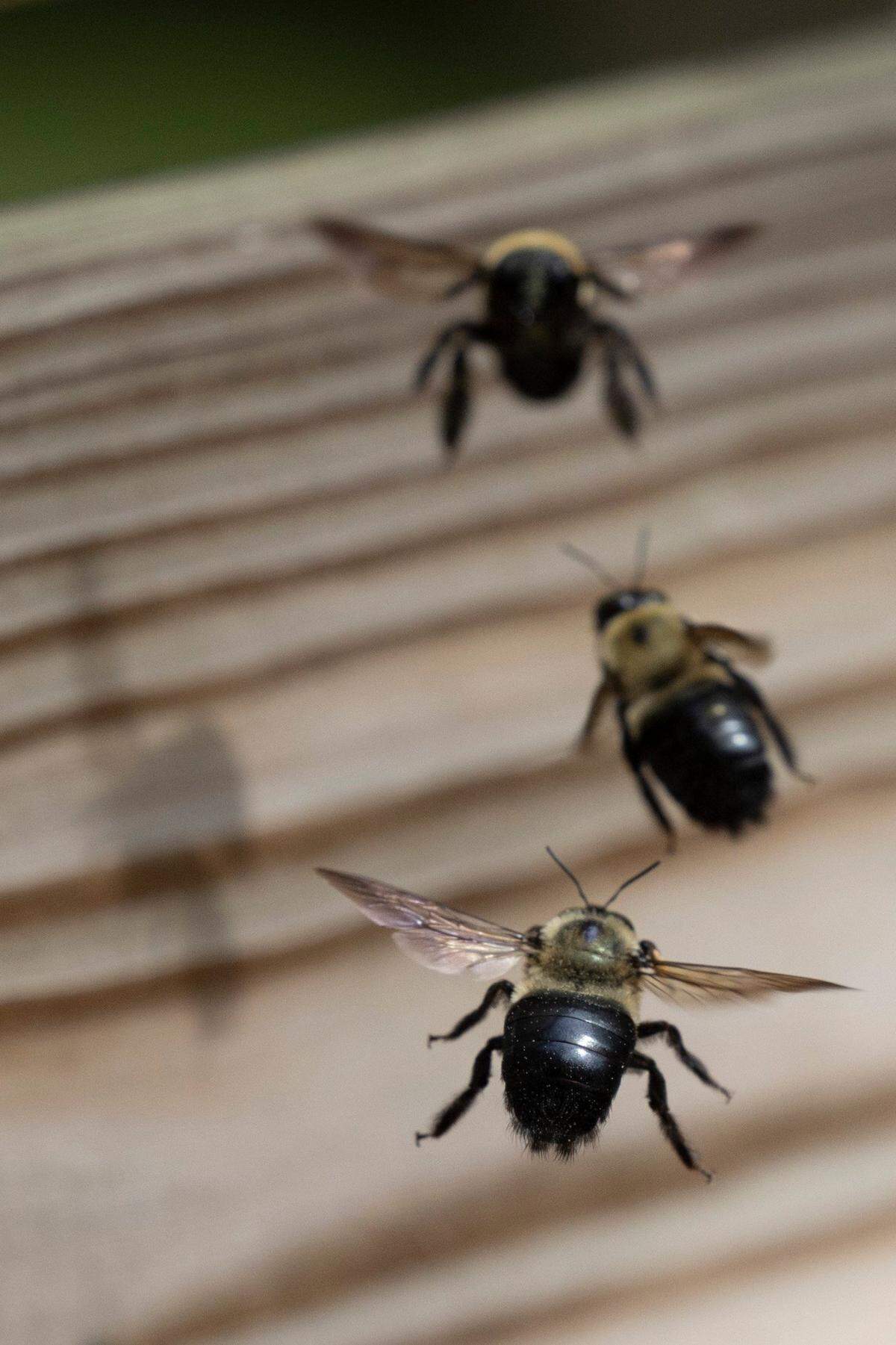
“You’ll see them looking for areas where they can burrow,” Hayes said, adding that carpenter bees typically hover around potential nesting areas. “Sometimes you can even hear them chewing.”
Having woodpeckers near your home could also be a sign that carpenter bees are near, since they’re known to go after their larvae, Hayes said.
If you see holes in your deck, you can take a closer look to see if carpenter bees were behind them — but don’t get too close. Hayes said the bees typically poop out of the holes, so a “light brown, yellow splattering” around the opening could mean carpenter bees are close.
How to keep carpenter bees away from your home
If you want to keep carpenter bees away from your home, you can try treating the wood on your porch or deck.
“Carpenter bees are less likely to get into wood that has been painted or stained,” Hayes said.
You can also encourage carpenter bees to nest away from your home, by suspending a log in a tree with the flat side hanging down. Hayes said. That will motivate the bees to build their nests there, instead of in your home.
How to get rid of carpenter bees
Carpenter bees are effective pollinators, and NC State Extension discourages killing them if you can avoid them.
But if they’re causing significant damage, the safest way to get rid of carpenter bees is to bring in a pest control professional, Hayes said — though there are methods homeowners can use to get rid of them.
Liquid and dust insecticides that contain pyrethroids, or synthetic insecticides derived from chrysanthemum flowers used for insect control, can be helpful for controlling carpenter bees, Hayes said — but you shouldn’t use them at the same time, since the dust needs to be dry to work. He also offered a crucial piece of advice when using these products.
“If you spray these holes, they’re going to be mad,” Hayes said. “I always tell people to spray the holes then get out of Dodge, because the bees will sting you.”
Carpenter bee traps can also work, but they’re not 100% effective, Hayes warned.
“I’ve seen them work, and I’ve seen them not work,” said Hayes. “They’re not necessarily a silver bullet for carpenter bees.”
This story was originally published April 8, 2025 at 4:49 PM with the headline "Carpenter bees can chew through your deck in NC. Here’s how to get rid of them."