After mystery staph infection, heart surgery, Charlotte girl is back on her feet
If you’re wondering what might go through the mind of the average teenager facing the sudden prospect of open-heart surgery, Margaret Van Bruggen won’t hesitate to provide you with that window into her psyche:
“I was planning my own funeral. And having thoughts about planning your own funeral isn’t exactly pleasant.”
This wasn’t long after she’d been felled in November — at age 14, as a freshman at Covenant Day School in Matthews — by a mysterious staph infection that had found its way to her heart’s mitral valve ... which as a result was starting to deteriorate rapidly ... which meant she would definitely need a repair or a replacement.
“I didn’t really know what heart surgery meant, what it entailed. So, I mean, I was scared, ’cause I knew I was supposed to be scared, but I didn’t really know exactly what I was scared of. I was just scared that they would mess something up and I would die.” Margaret even went so far as to imagine what she was going to wear in her casket: “This really pretty dress. It’s expensive, and it looks like a butterfly.”
As it turns out, she’ll be able to wear that garment to a much happier occasion.
In the nearly six months since first confronting those fears, Margaret underwent the world’s first living mitral valve replacement surgery at Duke Children’s Hospital and Health Center in Durham; met the North Carolina girl who donated the valve to her as well as a third N.C. girl who got swept up in the story; and appeared with both of them on NBC’s “Today” show.
All because of a staph infection no one has any idea how she got in the first place.
Duke doctors’ fix for heart problem
The first sign of trouble materialized on the first Saturday morning in November, when Margaret woke up, climbed out of bed, and collapsed to the floor.
She was able to get downstairs with help, and her dad proceeded to try to get some fruit into her, thinking maybe her blood sugar was just low. Margaret promptly vomited them back up. Over the next 72 hours, she developed a fever, experienced more vomiting, and generally stayed in bed or on the couch.
John and Elizabeth Van Bruggen have kicked themselves for not getting her to a doctor sooner, but they also have given themselves some grace. How could they have known? Margaret had no prior health history of any concern at all.
She was about to, though.
After multiple rounds of misdiagnoses (not Rocky Mount Spotted Fever, not Lyme disease), doctors determined it was indeed staph. Maybe from a minor, unnoticed injury. Maybe from a brief, glancing exposure to the bacteria. In any case, the good news was that it could be treated with antibiotics.
The bad news? One of its targets had been her heart’s mitral valve — responsible for regulating blood flow between chambers — and it had caused devastating and irreversible damage. Holes that had developed in the valve were causing blood to leak into other chambers, and unchecked would almost certainly lead to an array of problems, from breathing issues to arrhythmia to congestive heart failure.
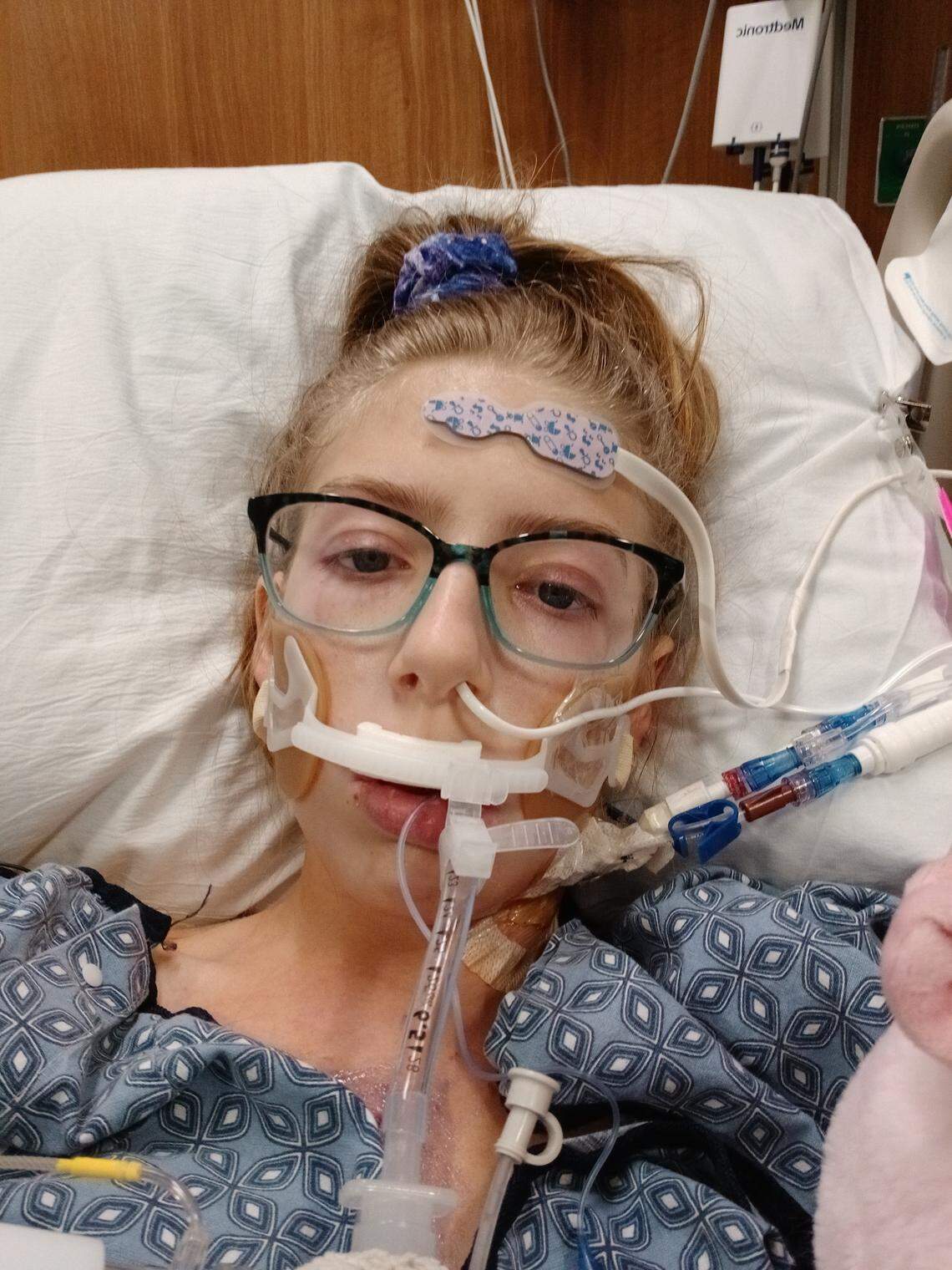
The treatment options being presented were complicated. By late December, the Van Bruggens decided they wanted a second opinion.
John had grown up in Durham, and he and Elizabeth had lived there for several years after getting married; so when Duke Children’s was suggested as the source of that second opinion, it seemed like an obvious choice.
After the holidays, they had a Zoom call with a Duke team led by Joseph Turek, the hospital’s chief of pediatric cardiac surgery.
The Van Bruggens recall him saying: “We’ve looked at the latest findings, and we don’t think repair is on the table. There’s too much damage. So, at this point, we’re talking about replacement. And the two traditional options are a mechanical valve or a bioprosthetic valve. The mechanical valve will last forever. But the problem is, you have to go on blood thinner for the rest of your life. The bioprosthetic valve, those are only good for about 10 years” — meaning potentially many more heart surgeries in her future.
“Or,” they remember him saying, “I want to tell you about a new option that might be a really good fit for Margaret. ... We have a patient that is getting a new heart. But the valves on her old one are still good. We want to know if you want to have one of them.”
How soon do you need to know?, they asked.
He replied: “I’m doing the heart transplant tomorrow.”
A domino transplant links 3 NC girls
It’s called a domino heart transplant, and in this case, here’s how it worked:
- Right at the end of 2024, Journi Kelly — an 11-year-old girl from Wilson, about 40 miles east of Raleigh — suddenly fell ill and was determined to be in heart failure. The only way to save her life was a heart transplant.
- Although Journi’s heart’s pumping muscle was the culprit, its valves were still perfectly fine. So her family agreed that when doctors removed her old heart, they could harvest those perfectly fine valves and transplant them into other children who were living with failing ones.
- The recipient of her pulmonary valve would be Kensley Frizzell, an 8-year-old girl from Pembroke (about 45 minutes south of Fayetteville) born with a rare heart condition that had been corrected via open-heart surgery at age 2 weeks. As an infant, she had been given a valve from a pig’s heart; it was never meant to be a longterm fix, her father Kenan says, and last fall it began breaking down.
- The recipient of Journi’s mitral valve, meanwhile, would be Margaret. And Margaret’s case would also represent a medical breakthrough — that first-of-its-kind mitral valve transplant.
“It’s a very significant innovation,” says Turek, who performed Margaret’s surgery (as well as the other two) with fellow Duke surgeon Douglas Overbey. “The thought is that it should grow with her, to give her an adult-size valve when she is of adult size.”
“But whenever you do a first of anything, a lot of things have to align. You have to feel really good about all the background research and work you’ve done in the laboratory to make sure you’re doing the right thing, and a high success rate. You have to have kind of the right patient, and ... I didn’t want to do this on a newborn child. I wanted a healthy, (older) kid, somebody who was gonna bounce back pretty well from this operation. ...
“You also have to have a family that’s courageous enough to move forward,” Turek adds. “It took a lot of courage on the part of the parents and Margaret to choose this option.”
It also took a snap decision.
Says John Van Bruggen: “On one level it was good, though, because rather than having weeks or months to worry about, Ohhhhhhh, what’s gonna happen?, and how’s it gonna feel?, and all that, we didn’t have time for our minds to go into weird places that probably aren’t so good to go. It was just kind of, OK!”
Barely 24 hours later, they were at Duke, awaiting for word that Margaret had made it through surgery. As soon as they got it, Elizabeth Van Bruggen leaped to her feet, exclaimed “Thank you, Jesus!,” and began to cry. John then started calling and texting family and friends who had been asking for updates. “And there was an older couple there,” he says, “who heard us making the calls.”
“You’re where we were yesterday,” one of them said. “Our granddaughter got a whole heart transplant.”
“And we knew, like, Duke only does so many heart transplants,” Elizabeth says. “We knew that whoever was giving their valve to Margaret had gotten a heart transplant the day before. And so we’re like, ‘We think our daughter got your granddaughter’s heart valve.’”
There were goosebumps, hugs, more “thank-yous,” and more tears.
Nearly a month and a half later, Duke would more formally unite all three North Carolina families, who were subsequently featured on NBC’s “Today” show. The kicker to the segment? A quote from Margaret about Journi: “There’s no way I can forget her, she’s literally inside of me.”
There was a setback for Margaret in March, when she was re-hospitalized after doctors found excess fluid around her heart and considered it a possible sign of rejection. But the scare was short-lived; the problem resolved itself soon after.
Things have steadily improved since, and just this past week, Margaret was able to return to something she hadn’t done since getting sick in November.
Something that made her feel, finally, like a normal kid again.
Running again, on new mitral valve
Although Margaret had been running cross-country since the seventh grade, she didn’t feel a strong connection to her teammates until after she became a part of the high school team last fall.
She came down with the staph infection one week after the season-ending championship meet.
“Yeah, I think it was especially hard because, like, finally everything was working out,” Margaret says. “I had just had an amazing cross-country season with an amazing cross-country team. ... I had a good, strong, stable group of friends. Classes were going pretty good.”
“I was grateful that it felt like she had found her niche,” John Van Bruggen says. “So then when she did come down with the staph infection, you know, to me, it was kind of like, Golly. ’Cause middle school had been kind of tough on her, and she was finally coming into her own and had found her people. And then to have to stop, it was kinda, Golly. So I felt bad for her.”
During an interview at the family’s Charlotte home in April, Margaret said she hadn’t run since December.
Part of it was due to the fact that she was still spending much of her free time catching up on all the schoolwork she missed when she was recovering from her surgery. On top of that, even though her doctors had technically cleared her to run at that point, she felt like “my heart ... just isn’t in that good shape yet. So it’s not like I don’t want to. I do. There’s just been several different things that just made it hard.”
Said Mom at the time: “Only she can really know what she can be able to do or what her body will tolerate.” Added Dad: “Right. We’ll see how it goes. But if her times aren’t what they were last year, oh, well. I mean, the important part is that she’s back out and running.”
Just shy of two months later, this past Monday morning, now-15-year-old Margaret re-joined her cross-country team for her first practice with “her people” since last fall.
She didn’t want cameras there, Elizabeth Van Bruggen says. Her daughter “really didn’t want me to make a big deal out of it.”
“But” — and Margaret’s mom knows this as well as anybody — “it is a big deal.”
This story was originally published June 6, 2025 at 5:01 AM with the headline "After mystery staph infection, heart surgery, Charlotte girl is back on her feet."