NC’s Helene plan made 1,000 trailers available. Why have only 6 been filled?
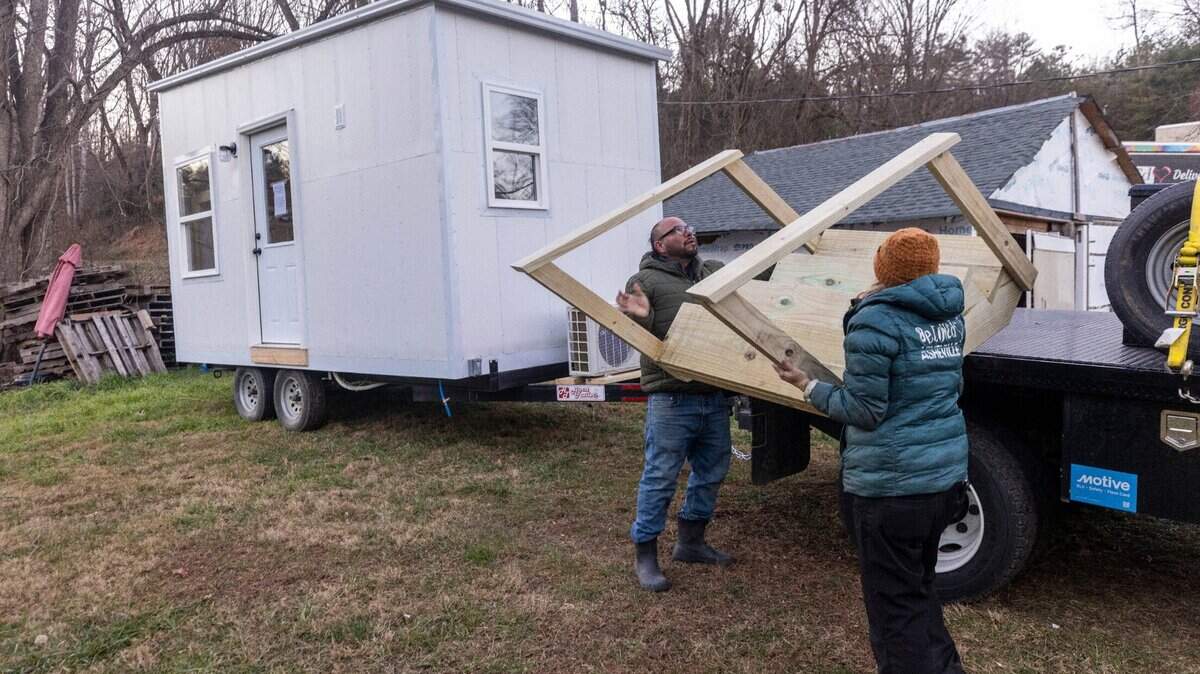
One day after taking office, Gov. Josh Stein stood in Asheville and signed an executive order meant to jump-start the supply of temporary housing for those unable to go home due to damage from Helene.
The order authorized the Department of Public Safety to buy up to 1,000 travel trailers or mobile homes for storm-hit counties and waived certain state bidding rules to speed things along.
The state also secured full FEMA reimbursement for units purchased through March 24, with the state covering 10% of costs after that. They are available to people unable to return home for six months.
“While we are not losing focus on our longer term rebuilding goals, I want to reiterate that people need temporary housing now,” the governor said at the time.
Four months later, however, only six state-purchased trailers have been installed and are occupied.

Kate Frauenfelder, a spokesperson for Stein, said the state launched its trailer program quickly in January “to provide disaster survivors more options as quickly as possible, especially during the cold, winter months.”
The program is still active and ready to help, with no households on a waitlist and “no challenges experienced” in terms of building and deploying the units, Department of Public Safety spokesperson Justin Graney said.
So why did so few use these trailers?
According to DPS, it comes down to a lack of interest. The state contacted more than 3,000 disaster survivors but found “not much interest in participating in the program,” Graney said.
Disappointment over not being able to keep the trailers and distrust of government programs factored into survivors’ decisions, Graney said. He also said FEMA criteria played a role.
Barriers to acceptance
The state’s trailer program is governed by FEMA’s non-congregate sheltering program, which falls under the agency’s Public Assistance Program, said Ray Williams, director of Emergency Management, during a committee hearing on Helene in late January.
With the state program “our goal is to expedite housing as quickly as possible,” he said.
“We have to play within the guidelines of the federal programs that we have access to. But our direction — from a number of levels — has been to get creative and to move things as fast as we possibly can, because of the size, scope and scale of this event,” he said then.
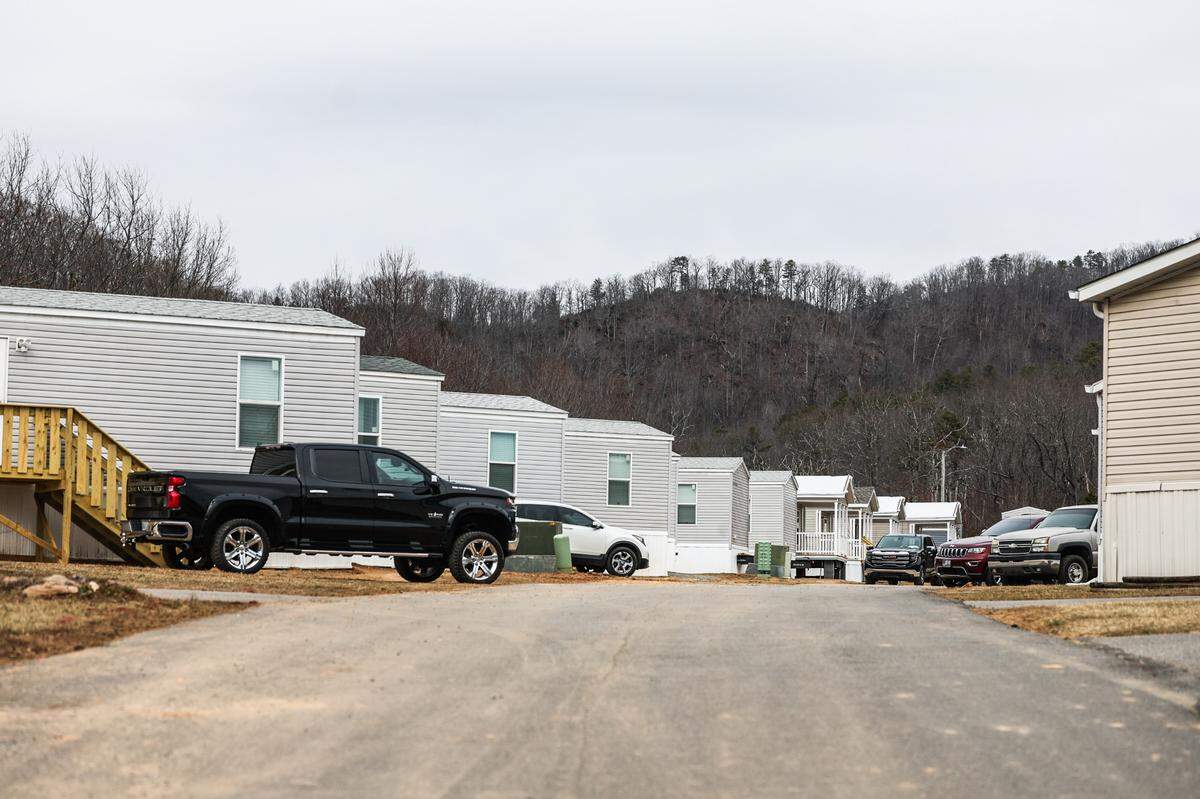
FEMA has limits for building on a floodplain. It also must ensure proper utility hookups for water, sewer and electricity are available “and in working order,” before anyone can move into a temporary housing unit, according to FEMA’s description of its Direct Temporary Housing Assistance Program, which provides mobile homes and trailers.
The News & Observer asked FEMA on April 24 about the requirements the state trailer project was subject to, but FEMA deferred to the state.
Prior to publication, Graney did not respond to multiple inquiries on what exact FEMA requirements and guidelines the state is subject to — or opted to follow.
After this story published, a FEMA representative said the state has its own set of qualifications and requirements for its sheltering program that allows the state to place units without having to abide by FEMA’s Direct Housing Program.
It was not “FEMA’s Direct Housing requirements that played a part in the state’s minimal success placing trailers,” the email said.
The N&O again reached out to state officials again but has not received further clarification.
Rep. Dudley Greene, a Republican lawmaker who represents various Western North Carolina counties, on April 23 said the lack of uptake for the state program “is not necessarily a lack of need for temporary housing.”
Many times homes were not only destroyed but also the surrounding infrastructure “so it made them kind of impractical for a lot of folks,” he said.
FEMA has helped more than 159,000 households statewide with financial assistance for help with repairs, rent, personal property loss and other needs. In addition to placing more than 13,200 families in hotels through its Transitional Sheltering Assistance program, it has provided 242 temporary housing units statewide.
The agency tries to place temporary housing units on survivors’ private property whenever possible, but the site must meet space, safety and utility requirements. Alternatively, units can be put on sites such as campgrounds but FEMA warns in its website that can take longer due to land leases and site work.
Greene noted many residents prefer staying on their land over relocating to trailer parks.
Rep. Jeffrey McNeely, a Republican representing Iredell County, questioned at the January hearing whether FEMA’s utility hookup requirements hindered uptake. Meanwhile Rep. Mark Pless, a Republican representing Haywood and Madison counties, criticized the state’s promotion of 1,000 trailers when floodplain restrictions limited placements.
Jonathan Krebs, Stein’s disaster recovery advisor, noted then that many survivors contacted by the state were open to mobile homes or trailers if titled in their names, as some nonprofits offer.
“But in terms of true temporary housing structures within the confines of what FEMA will allow, most people don’t want them,” Krebs said.
The state trailer program, like the FEMA trailer program, also requires meeting with a disaster case manager monthly to monitor the progress of their damaged home, Graney said.
Some disaster survivors expressed distrust of government programs as a reason for their disinterest “which may have been the result of misinformation,” Graney said.
Nonprofits fill in gaps
Nonprofits have had more success finding people to take trailers.
North American Ministries for Samaritan’s Purse, which relies on private donations rather than government funding, has delivered 143 campers to people in need after Helene, and has 14 more to distribute, said Luther Harrison, a vice president of the organization.
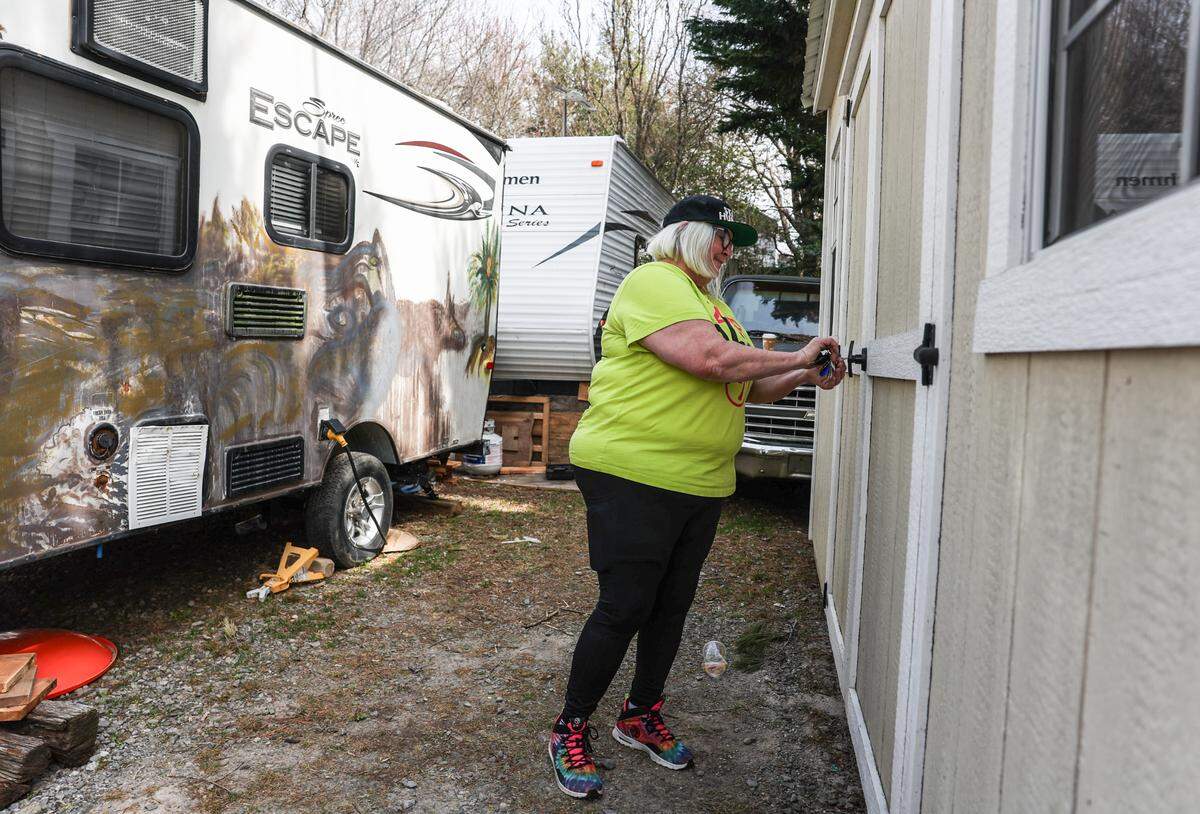
But at this stage of its recovery efforts, Samaritan’s Purse is now focusing more on repairing or replacing homes, Harrison said. This includes providing mobile homes. Harrison said 256 families have requested new mobile homes, with 10 already on site and being hooked up to utilities and undergoing inspections.
These homes, available in two- and three-bedroom models, are titled in the families’ names and often placed on the sites of their former homes. In some cases, families have had to purchase new lots, he said.
The organization also raises homes to reduce future flood risk and provides in-house case management to ensure applicants are financially prepared for taxes, insurance, and utilities.
Volunteer organizations, many of which are partnering with the state, could provide trailers quickly with fewer requirements, Graney said.
“There was no requirement for survivors to meet with state or FEMA personnel to work through the recovery process for trailers accepted by volunteer organizations,” he said.
The state is also working to address long-term needs. Stein on April 25 announced that the Trump administration had signed off on the state’s plan for deploying $1.4 billion in Housing and Urban Development block grants. Of that amount, $860.7 million would go toward repairing or replacing owner-occupied homes, with remaining dollars to help with rental housing needs, infrastructure and more.
Devin Taylor, director of Cabins for Christ, said temporary housing remains a pressing need in Western North Carolina. His group has placed over 250 households in campers or cabins. About 70% to 80% of the families his group helped are still in temporary housing, he said.
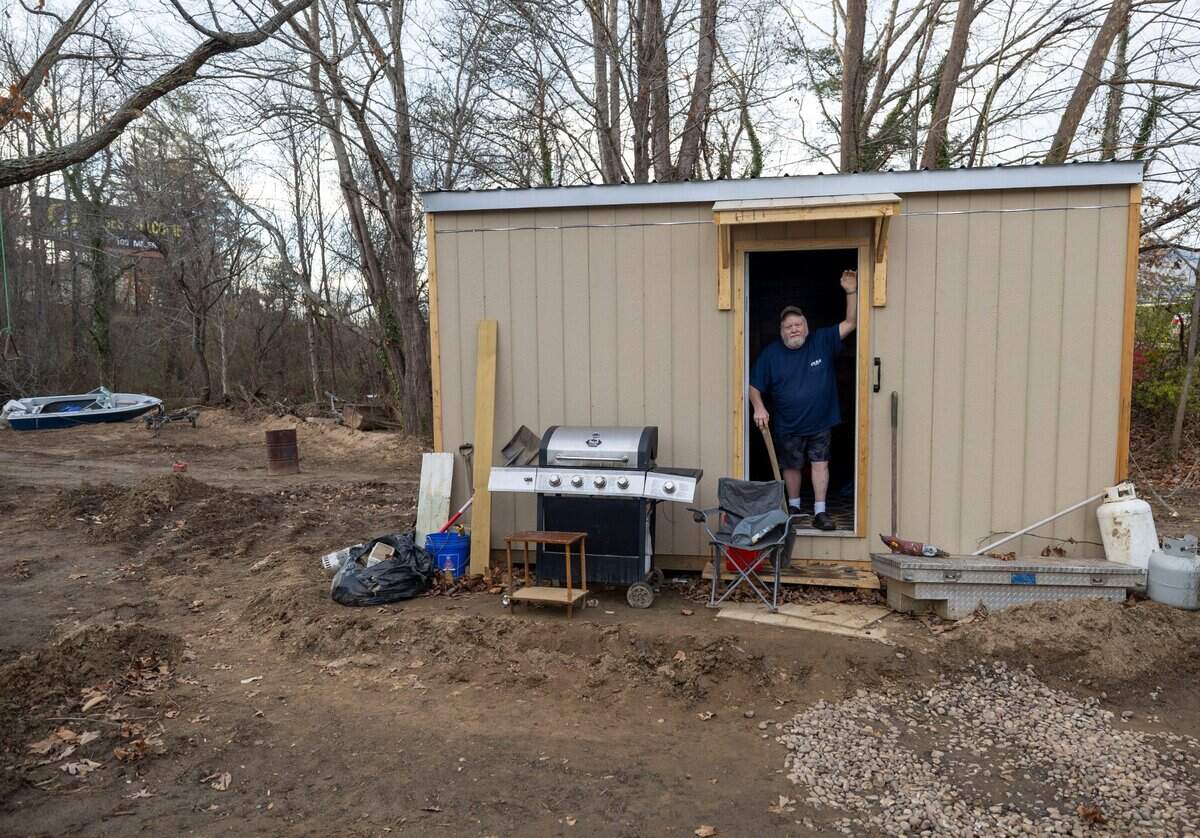
He heard from many that, had it not been for the churches and businesses from across the state and nation that came to aid, “we would not have been able to provide the level of shelter that was provided,” he said.
Housing needs differ by region, Taylor said. In Asheville, more families are beginning to seek permanent housing. But rural areas remain far behind in recovery.
Buncombe County spokesperson Kassi Day said more than 180 permits for temporary housing have been issued, with 72 of those FEMA permits. The remainder are split between private property owners and nonprofits, but has not been broken down, said Day.
The need for temporary shelter remains as families work through repairs or await rebuilding, she said.
Canton Mayor Zeb Smathers, who has noted several obstacles to Helene recovery, agrees people are still in need. He sees some people living in damaged homes.
It’s unclear if the families have insurance to cover repair costs or have the means to rebuild themselves, he said.
“Are they waiting for buyouts? I think there’s a lot of complicated issues,” he said, adding that Western North Carolina already struggled with affordable housing issues prior to the storm.
EDITOR’S NOTE: This story was updated after publication on May 5 to include new information from FEMA.
This story was originally published May 5, 2025 at 5:30 AM.