
A transgender man builds a life in NC while politicians debate his rights
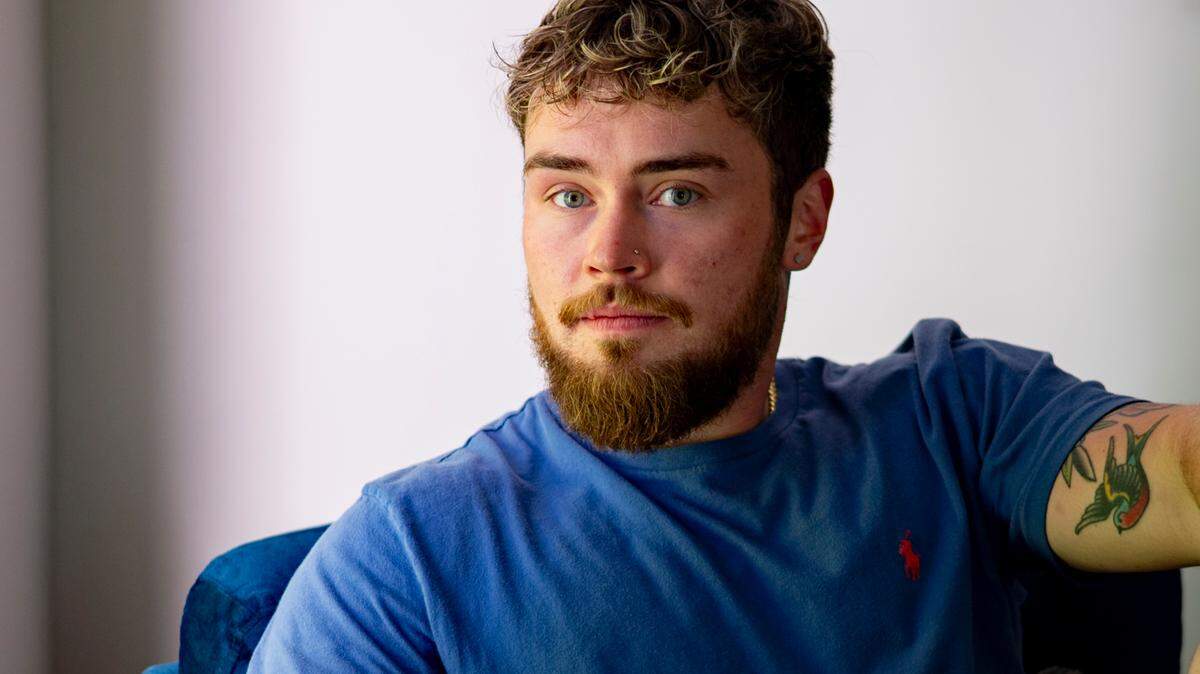
Editor’s Note: The News & Observer is withholding Zan’s last name for his safety after he reported a threat to his life. The story was updated Sept. 13, 2025, to reflect this change.
It was the hardest day of his life. Zan met his mom in a North Carolina park on an October afternoon in 2017 to talk. They sat down at a picnic table by the lake.
His mom, Lorraine Ahearn, knew what he was going to say.
Zan, who was assigned female at birth, explained that he didn’t feel like a girl. He didn’t feel good in his body.
“I’d love to say that I threw my arms around him and had tears in my eyes and said, ‘Oh, I’m so proud of you,’” Ahearn said. “But that’s not what happened. I was really angry and afraid. I was just so afraid for him.”
Ahearn told Zan he would lament the decision.
Instead, it’s Ahearn who looks back with remorse. “I really regret the way I reacted,” she said.
Ahearn was the first person Zan came out to as transgender. He was 19.
“I think a big part of it was her grieving a daughter,” Zan said of his mother’s reaction.
Zan’s story is like that of many other transgender people who face not only internal battles and difficult conversations with loved ones, but also escalating legal restrictions by the government.
From state laws restricting access to gender-affirming care to the federal rollback on gender designation policies on passports, the landscape is shifting around Zan, threatening the very milestones that shaped his young adulthood and pushing him into protest alongside others fighting back.
More than 72,000 adults in North Carolina identify as transgender — just 0.9% — according to the Williams Institute, a think tank at UCLA Law School. Approximately 1.6 million U.S. adults identify as trans.
‘A boy in a dress’
Ahearn and Zan left without a resolution and didn’t talk for a few months as Zan finished up his degree from the UNC School of the Arts. Zan remembers thinking he couldn’t transition if he was going to lose his mom.
“It hurt a lot, so I hit the brakes a little bit,” Zan said.
Zan’s parents are separated, and he and his dad aren’t as close as they were when he was a kid. Zan’s identity was often an elephant in the room.
Just two months before that hard conversation with his mom, Zan remembers sitting in the car with her when she asked if he wanted to go shopping for a dress to wear to a family wedding.
Zan had something to wear — his suit. But when he told her that, Ahearn hesitated, then said she didn’t know who was going to be there.
“Maybe we can do a dress just for this time,” he remembers his mom saying.
His immediate response was, “I’m going to look like a boy in a dress.”
That’s when he realized he was trans. And he wore a suit to the wedding.
Zan’s younger brother, Mickey, was the second person he came out to, soon after his conversation with Ahearn.
The two spent their childhood biking around their neighborhood in Greensboro, Zan wearing Mickey’s clothes. During the summer, they would ride to the arcade with a pocket full of change, or play in the mud — rambunctious kids who were always outside.
“I was worried that he would be embarrassed or ashamed to have a trans brother,” Zan said.
But when he did tell Mickey, he said he’d always wanted a brother. It was the kind of loving reaction Zan needed.
During the few months Zan and his mom weren’t talking, Mickey tried to bring them together.
Zan remembers the three of them meeting at Forest Hills Park in Durham. Sitting on a picnic blanket, Ahearn asked Zan if they could do anything to help him accept his identity without making permanent changes.
“At that point, she was just afraid for me. So she was like, ‘Is this something that you really feel like you have to do?’” Zan remembers.
“I was just like, ‘Hey, I am trans, and I need to transition now. I can’t do this anymore,’” he said. “I was ready to jump into this.”
‘This is my child’
After he graduated from the UNC School of the Arts, Zan began taking testosterone as a part of hormone replacement therapy. Hormone therapy helps trans people feel more comfortable with their physical appearance.
Zan originally got his prescription from Planned Parenthood. He gets his testosterone from his physician at Avance Care now, and his insurance covers it.
For Zan, access to gender-affirming care, like hormone therapy, is available in Durham. It’s harder for people in more rural areas due to a lack of knowledge about trans care among local providers.
Trans people who live in rural areas are three times as likely as all trans adults to travel 25 to 49 miles for routine care, according to research by the think tank Movement Advancement Project that advocates for LGBTQ+ issues.
It was hard for Zan not to be able to share milestones in his transition with his mom, like his facial structure broadening and facial hair coming in. She was the first person he wanted to call.
But Ahearn came around.
Six monthsafter starting hormone therapy, Zan called his mom and angrily told her that he wanted to share those important milestones with her.
“All of these things are happening, and they’re not going to happen again. It’s the one time that I’m going through all these things, and I want to be able to share my experiences with you, and you don’t even want to hear about it,” Zan remembers telling his mom over the phone.
Ahearn finally heard him, she said. She apologized for her initial response and made an effort to support him moving forward.
“I had to make a choice, you know, this is my child,” Ahearn said. “I love him, and there’s really no ‘but’ after that.”
Zan was still the kid who would always pick a “boy” character when playing a board or video game, or dress up as Spider-Man or a bearded pirate for Halloween. But he was also the same kid who played with dolls and liked the color pink.
Now, the two are as close as they were before. On Valentine’s Day this year, Zan took time off work — he works at a solar panel company — to drive an hour to bring his mom flowers and take her to lunch.
“Walking arm and arm with my son up the sidewalk in the small town where I work was quite a feeling,” Ahearn remembers. “Most perfect Valentine’s Day ever.”

Gender-affirming care
Cat de Miranda, Zan’s best friend since they were 14 years old, and his other friends threw Zan a surprise party celebrating his first anniversary of being on testosterone, complete with blue and pink balloons and a trans pride flag with “Happy T Day, Zan!” written on it.
He got top surgery, which removes breast tissue to get a flatter or masculinized chest, in San Franciscoin May 2020. His insurance covered it. After that, he remembers finally feeling at home in his body.
On May 1, the U.S. Department of Health and Human Services published a 400-page report that concludes gender transition care for trans children and teens lacks evidence of benefits and poses risks.
The authors were not named by HHS “to help maintain the integrity” of a post-publication peer review process, according to a press release from the department.
“Our duty is to protect our nation’s children — not expose them to unproven and irreversible medical interventions,” National Institutes of Health Director Jay Bhattacharya said in a statement accompanying the report’s release.
The HHS commissioned the review of scientific literature regarding gender dysphoria as required within 90 days of an executive order issued by President Donald Trump.
That order was aimed at ending federal support for medical transition care for trans youth who are 19 years old and younger. Hormones and surgeries are included in that care.
Sarah Kate Ellis, the president and CEO of LGBTQ+ advocacy organization GLAAD, called the report “discredited junk science” that is “grossly misleading and in direct contrast to the recommendation of every leading health authority in the world.”
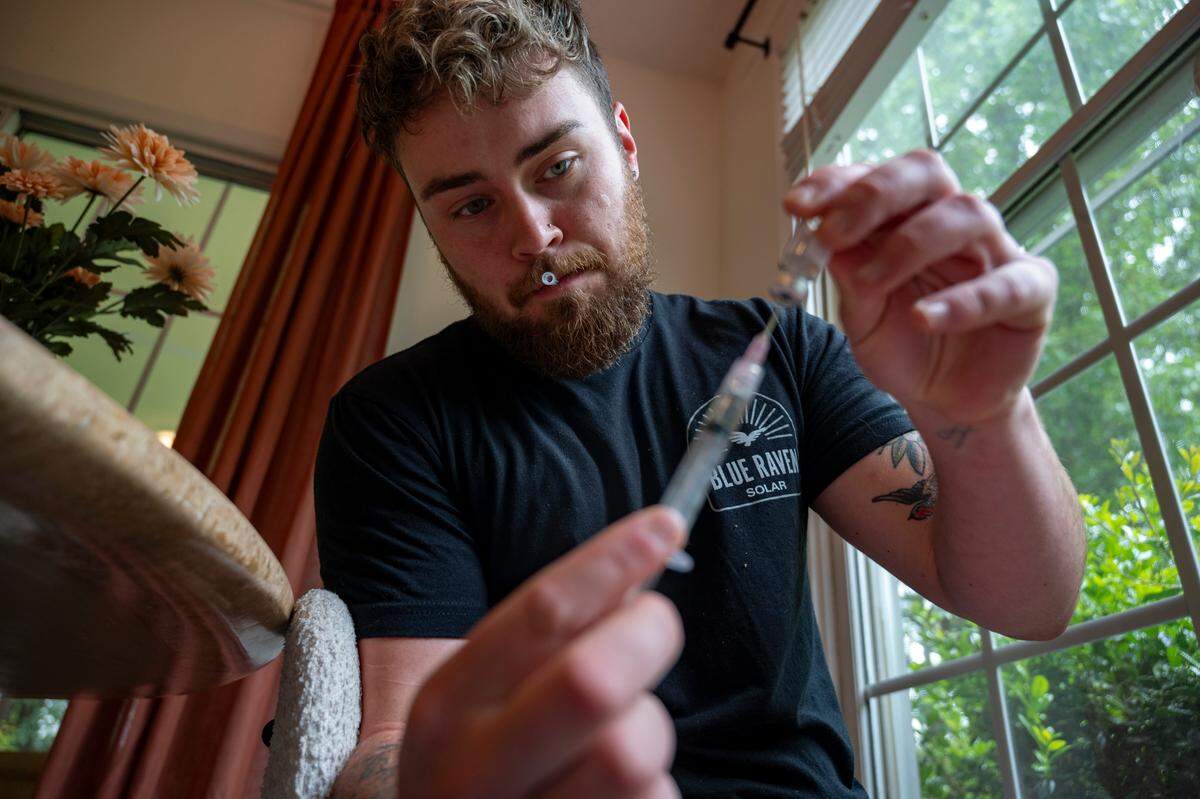
Zan turned 27 this week, but he was 19 when he got his testosterone prescription. He still does his T injections weekly. Now that he has passed all the physical transition milestones, it’s just become a part of his routine.
At home in Durham
Zan sits at his dining table every morning for breakfast with his girlfriend, Steph Rosen.
Mickey lives there too, and it’s his chubby tuxedo cat, Pierre, who lounges by the large kitchen windows, soaking in the warm sun beams filtering through the leafy trees of their backyard.
On a sunny Sunday afternoon, Jax, an energetic dog Rosen rescued, runs into the kitchen and barks hello.
“It’s a totally different dynamic than when we lived together when we were kids,” Mickey said.
“So that’s been really cool to experience our relationship as brothers.”
Besides the songs of birds, their Durham neighborhood is quiet.
This time is Rosen’s favorite, when she and Zan start their day together over waffles and eggs with some coffee before Zan heads to work. She craves it as soon as she wakes up.
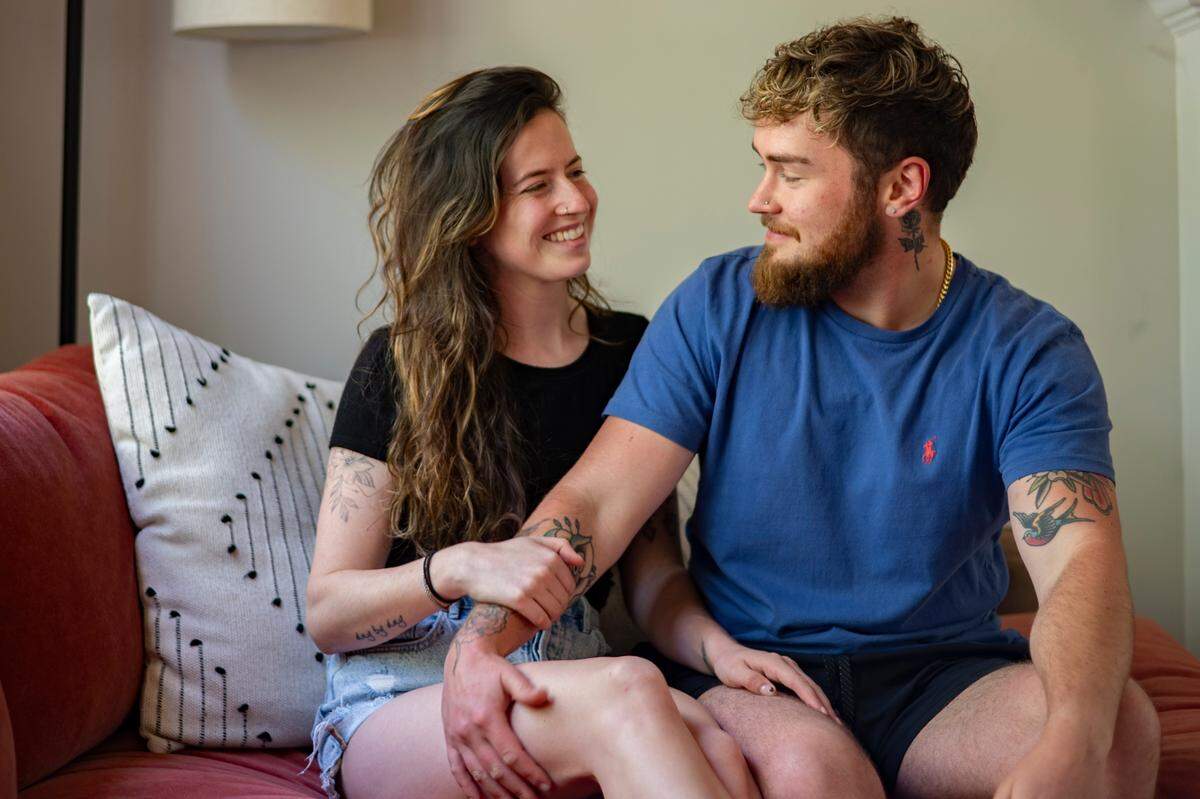
When Rosen pictures Zan and his brother as kids, she imagines two little boys. When they watch home videos of his childhood, it sometimes feels weird for Zan to see a little girl.
The two met in April 2021. Rosen and her friend went out for drinks at a bar in downtown Durham. When they arrived, her eyes immediately landed on a cute waiter. It was Zan.
Zan’s coworker was supposed to wait on Rosen’s table, but he was slammed, so Zan took it.
When he came up to take their order, Rosen remembers telling him she thought he was cute. She even convinced him to take a tequila shot with her and her friend.
The two waited for Zan’s shift to end. When it did, they grabbed a drink and instantly hit it off. The rest is history. “It was a meet-cute for sure,” Zan said.
Raleigh’s march for trans rights
A poster for “Trans Day of Visibility and Resistance Speakout and March” lives on Zan’s magnet-laden refrigerator.
During that event in March, advocates rallied outside the North Carolina Capitol after marching through downtown Raleigh to protest aggression from the federal and state governments toward the transgender and LGBTQ+ community.
Measures to limit transgender rights have seen mixed success since then. On May 6, the Supreme Court allowed the Trump administration to implement a ban on transgender people serving in the military.
State legislation to limit where transgender people could use bathrooms that align with their gender identity did not move forward ahead of a key deadline. That comes nine years after the state legislature passed House Bill 2, the controversial “bathroom bill” that it later repealed after backlash and boycotts.
But even if the new bathroom bill doesn’t make it far, plenty of anti-trans legislation remains.
That same day that the Supreme Court allowed the ban on transgender troops, the North Carolina House passed a bill to give minors more time to sue over gender transition care if they detransition, and to ban state funding for gender-affirming treatment for incarcerated people.
The next day, the North Carolina Senate passed a bill titled the “Parents Protection Act” that would mean that biological, adoptive or foster parents refusing to allow their child to receive gender-affirming and transition care would not qualify as abuse or neglect under law.
Neither bill has so far become law.
Zan spoke at the March rally and played the snare drum.
It was the first time he’s spoken so publicly about his own identity, and he was nervous and concerned for his safety, but now “most of that worry has washed over me,” he said.
His friends and family were there to support him.
“We face politicians who debate our right to exist, doctors who refuse to treat us, families who turn us away, and yet we persist, because living our true selves is an act of defiance, because we deserve more than just survival — we deserve joy,” Zan said at the protest in Raleigh as the crowd cheered.
Deciding whether to come out, and where
Zan describes himself as an artist first.
In high school and college, he studied drawing and painting, and in his free time now, he picks the paintbrush back up. In his recent pieces, which he donated to fundraisers, Zan has specifically wanted to draw attention to social issues. Revolutionary art, he calls it. It makes him feel empowered.
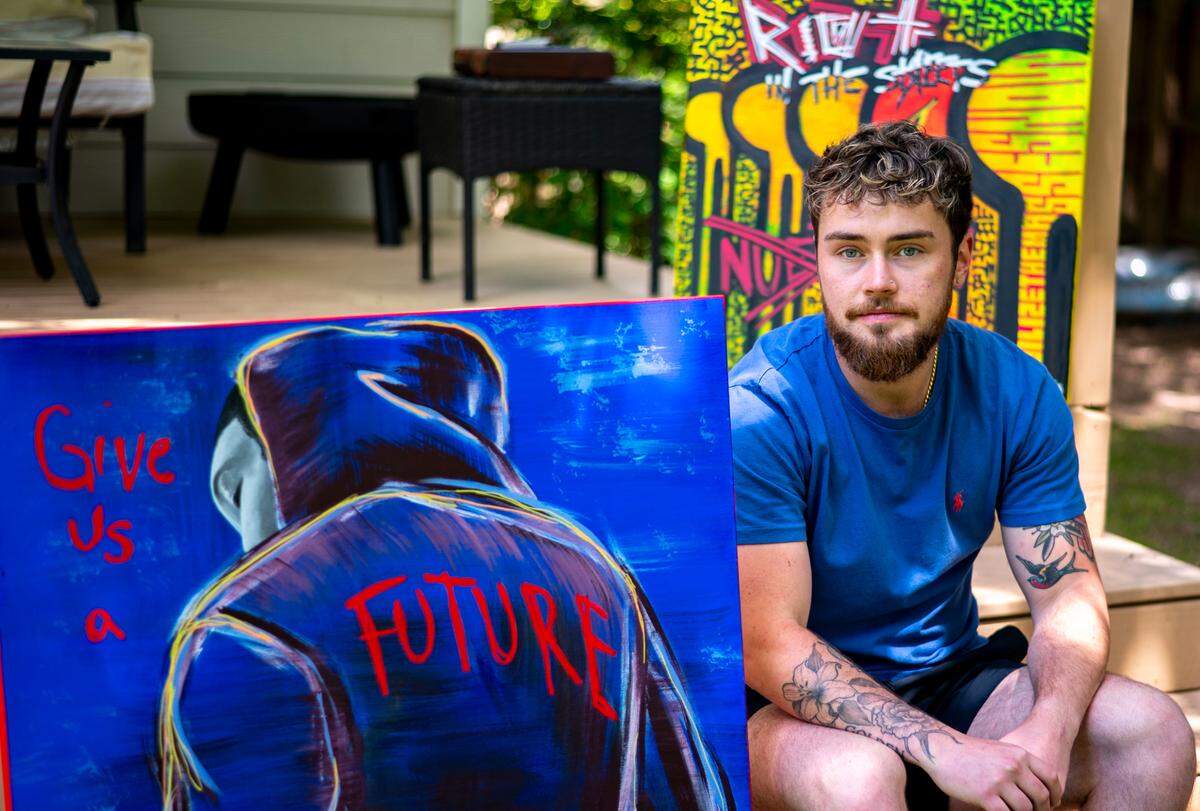
But at his day job in solar sales, Zan hasn’t told his coworkers he’s trans. It’s something that eats at him.
Every new environment forces him to decide whether to come out or stay quiet. It is a calculation he’s constantly making.
“I have to be hyper aware of what I’m sharing, what I’m doing, what I’m talking about, what’s on my social media and what people can see,” he said.
While he doesn’t think his coworkers would treat him differently if they knew, Zan feels that they “just wouldn’t look at me the same.”
But he’s not hiding. Asked if he was worried that his coworkers would see this article, Zan said they were bound to find out sooner or later.
Passport’s gender marker
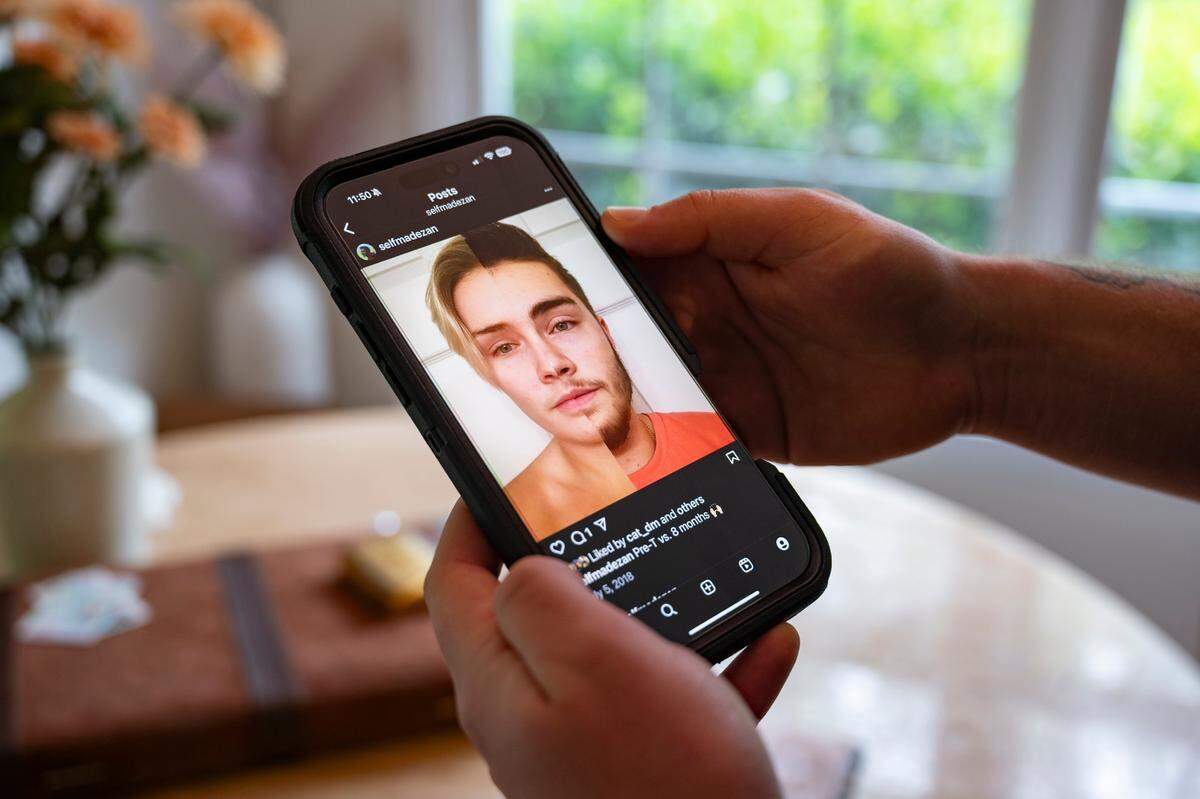
For privacy and safety, Zan has taken down photos from his Instagram from before he came out.
Trump has leaned into anti-trans messages in his campaign and administration, and “people are more comfortable expressing transphobia openly now,” Zan said.
One of the first executive orders Trump signed on his first day in office calls for refusing passports to trans and nonbinary people that reflect their gender identities.
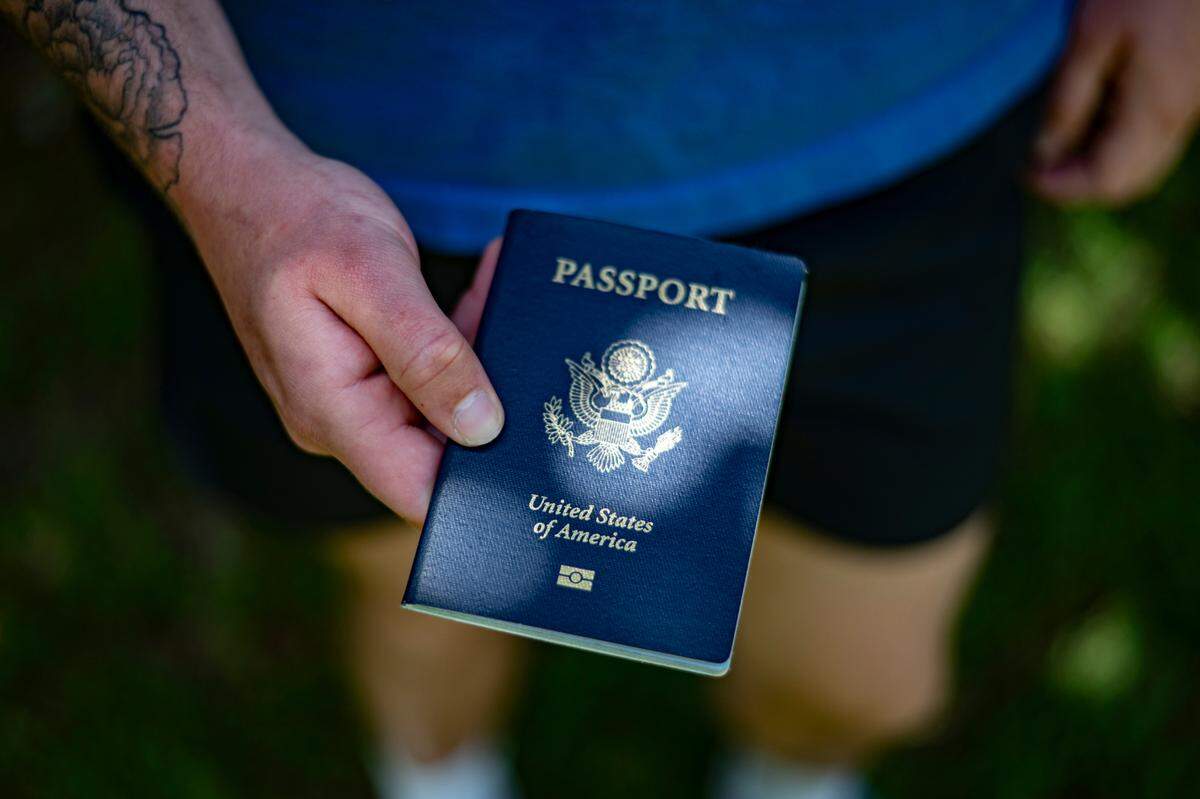
Zan corrected the gender marker on his North Carolina driver’s license several years ago. When he got his passport last year, the gender marker was automatically correct based on his driver’s license.
But he didn’t correct his first name to be Zan — he wasn’t in a rush. At least, not until Trump’s executive order.
Now, if he wants to apply for a new passport to correct his name, his gender marker could be female. According to the State Department’s website, only passports “with an M or F sex marker that matches the customer’s biological sex at birth” will be issued.
“All passports — including those with an X marker or those listing a sex different from your sex at birth — will remain valid for travel until their expiration date, under International Civil Aviation Organization (ICAO) policy,” the State Department’s webpage on sex markers in passports reads.
That would force Zan and other trans, nonbinary and intersex people to come out every time they present their passports, which adds to the unpredictable logistics and safety concerns of traveling.
“They don’t know anything about trans people or what it’s like to be trans, and it’s just really scary when something actually is affecting the person you love the most, and could affect your relationship or your future,” Rosen, Zan’s girlfriend, said.
Though a federal court temporarily blocked the executive order, the outcome has not been decided.
For now, Zan won’t take the risk of applying for a new passport. After all, his passport won’t expire until 2032. When that year comes, he hopes the federal requirements will have changed.
This story was originally published May 13, 2025 at 5:30 AM.